Tag: Tool Path Optimization

  • Siemens NX Multi-Sided Angle Head First Operation Programming: Master Wang Teaches How to Optimize T

    📝 Key Takeaways: For the first operation programming of multi-sided angle heads, Master Wang emphasizes the flexibility of tool axis settings in NX programming, especially in 4-axis horizontal machining scenarios. The core lies in judiciously choosing Linear interpolation (G01) instead of Rapid move (G00) for tool path output to prevent tool collisions and maintain accuracy. Through roughing, secondary roughing (rest milling), and finishing passes for the bottom and side walls, he elaborates on optimizing retraction strategies and controlling stock allowance to ensure machining efficiency and part accuracy.

    [VIDEO_HERE]

    Listen up, lads. Today, Master Wang is going to walk you through a tough nut to crack – programming the first operation for a multi-sided angle head. Don’t let the name intimidate you; once you grasp the underlying principles, operating it in NX isn’t all that complex. I’ve been doing this for years, seen and heard countless machine issues. What I’m sharing are hard-earned practical experiences, not something you’ll pick up from a textbook.

    Overview: Multi-Sided Machining Strategies and Tool Axis Definition

    Commonalities Between 4-Axis Horizontal Machining and Angle Heads

    Typically, once we get a part and complete the process analysis, we can jump straight into programming. Machining with an angle head is quite similar in principle to 4-axis horizontal machining. It’s essentially about reorienting the tool axis. With a 4-axis horizontal machine, you can rotate the part to the desired angle for machining, which is very convenient. An angle head works on the same principle; it rotates the tool axis, allowing you to cut from the side. So, whether you’re dealing with an angle head or a 4-axis horizontal setup, the programming approach is the same. Don’t overcomplicate it; the core concept is tool axis transformation.

    Remember this: any method that allows the tool to contact the workpiece in the right position and orientation is a good method. Don’t just stare at all the fancy features in the software; focus on how to get the job done efficiently and accurately on the machine.
    Flexible Specification of Tool Axis Direction

    Specifying the tool axis direction here is crucial. In NX, when selecting the tool axis, you can let it automatically determine the direction, or more reliably, directly select the face you need to machine. For instance, if you’re machining a side face, just click that face, and NX will automatically adjust the tool axis to be perpendicular to it. This is the most direct and least error-prone method. It will orient the tool axis outwards, allowing us to cut along that face.

    Don’t underestimate the tool axis direction; it directly impacts your tool’s cutting force direction, chip evacuation, and even determines whether you can successfully engage the cut. Especially when machining deep cavities or complex surfaces, precise control of the tool axis becomes exceptionally important.

    G-code Output Core Points: Linear Interpolation (G01) and Safe Movement

    Eliminating the Rapid Move (G00) Trap: Enforcing Linear Interpolation (G01)

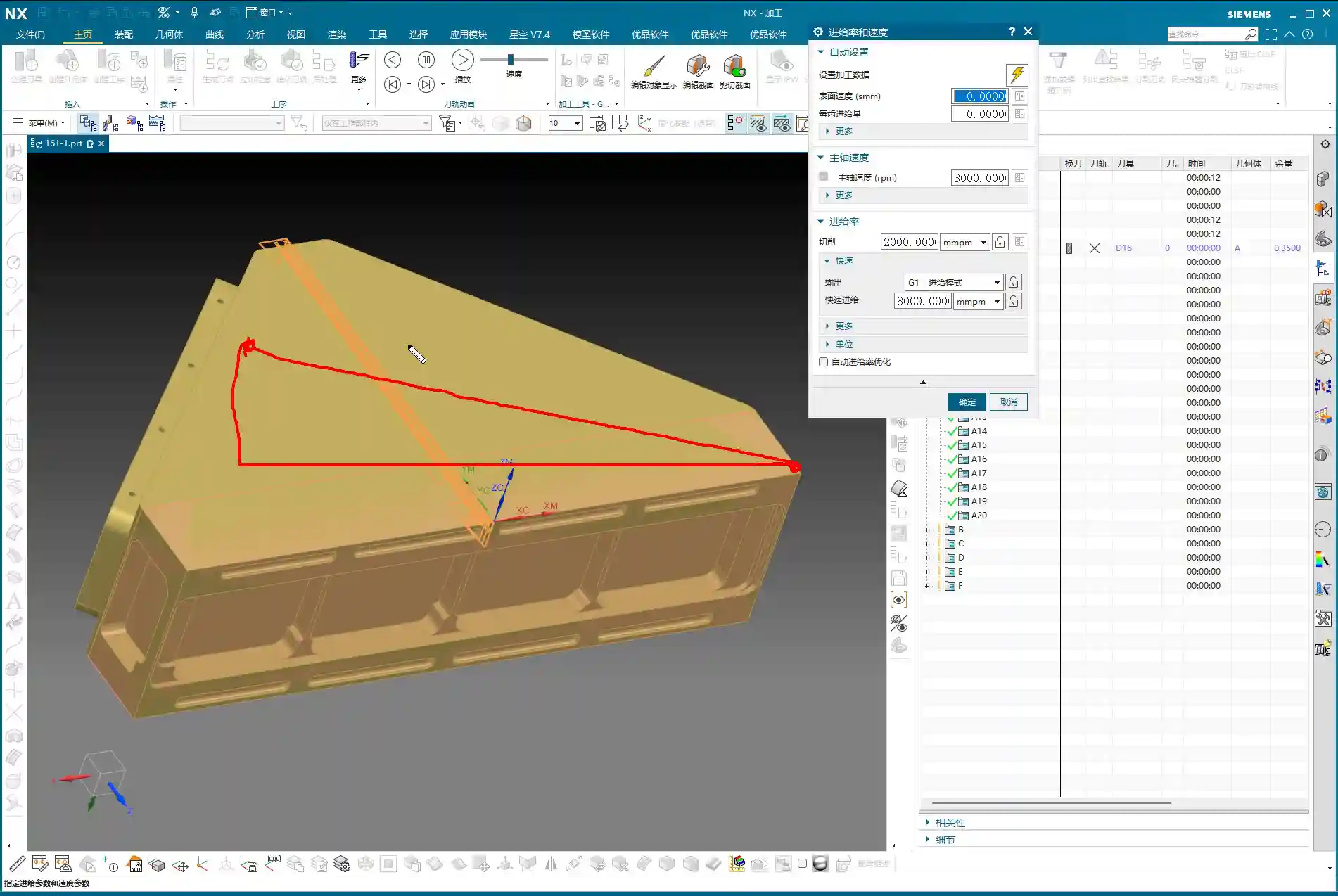
    Listen up! This is what Master Wang wants to emphasize, and textbooks might not tell you this in such detail. In NX programming, especially concerning rapid moves, it’s best, and in fact, essential, to output them using Linear interpolation (G01), not Rapid move (G00)! Why?
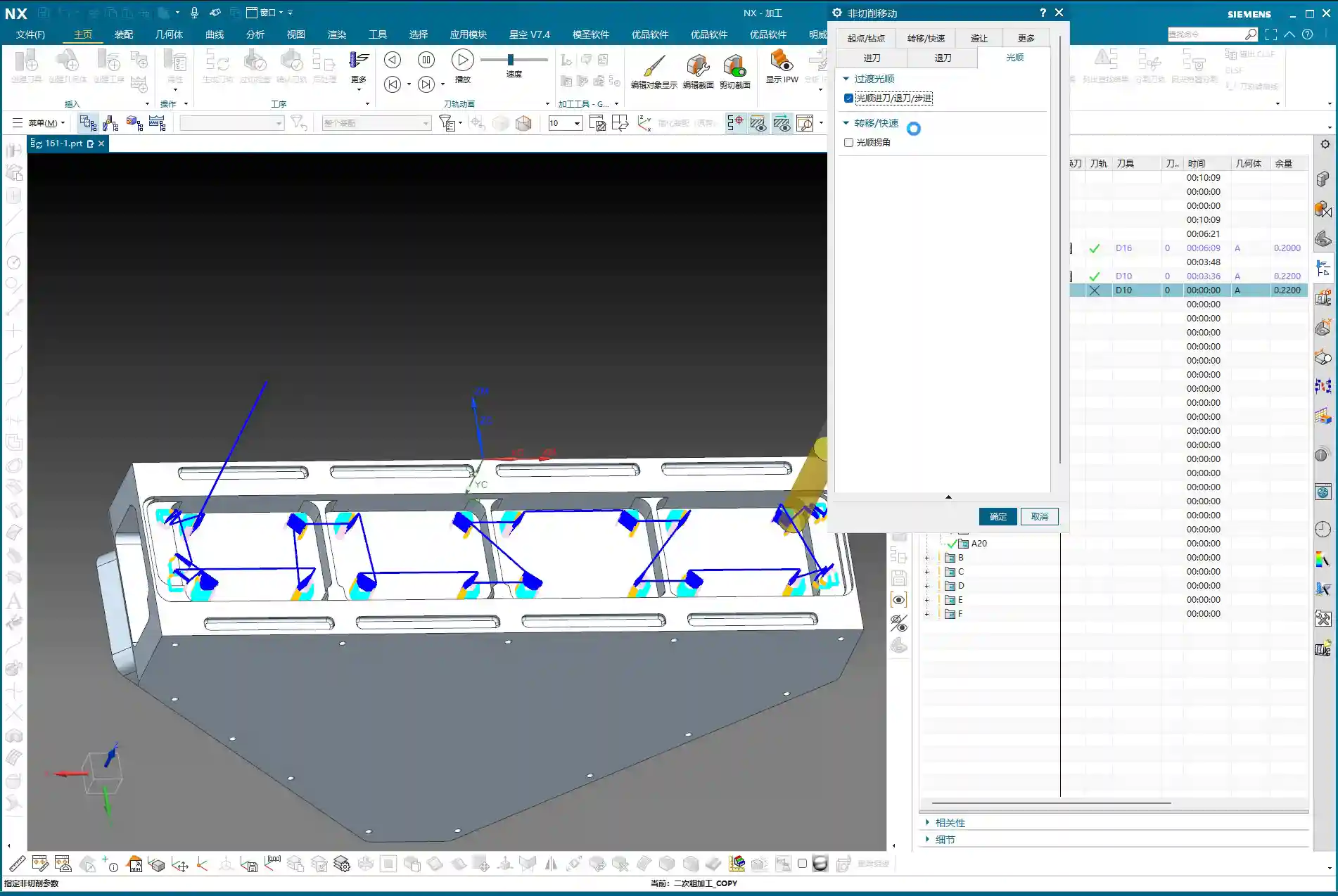
    Because some machine tools, especially older ones, don’t necessarily move in a straight line during a Rapid move (G00). It might move X first, then Y, or Z first, then XY. This can result in a path that looks like “steps” or even takes a wide detour. Your software simulation might look perfect, but once it’s on the machine, you might end up with a hard collision – a tool crash! Even if it doesn’t crash, those sudden changes in speed and travel patterns can easily affect machining accuracy and surface finish. So, for safety and to ensure accuracy, we’ll universally output with Linear interpolation (G01). While it might be slightly slower, the significant increase in safety and stability makes it well worth it!

    Post-Processor and G-code Behavior

    I just mentioned that a Rapid move (G00) might take “steps,” and that’s actually related to your post-processor. Some post-processors, even if you set up rapid movements in NX, will still output Linear interpolation (G01) straight-line movements, which is perfectly fine. However, if your post-processor defaults to outputting Rapid move (G00), and your machine doesn’t execute Rapid move (G00) as a straight line, then you need to be careful. Therefore, always check your post-processor settings to ensure that all rapid movements (such as tool entry/retraction and air moves) are executed as Linear interpolation (G01) or at least as safe, straight-line Rapid move (G00). Don’t just rely on software simulations; you need to see how the actual G-code runs – that’s the real test.

    First Operation Roughing and Retraction Strategies

    Optimizing Retraction Paths: Avoiding Unnecessary Movements

    When we’re programming, there’s one area that often gets overlooked: tool retraction. I see a lot of younger guys setting up retraction paths that are far too long and straight; that’s just a waste of machine time! For example, if a retraction path is too long, we can shorten it or change it to an arc retraction. Say, in your entry/retraction moves, set the retraction to an arc with a radius of 1mm. This makes the tool exit more flexibly and effectively reduces air-cutting time. Don’t underestimate a few seconds here and there; over time, that adds up to significant savings for a machine in a year! So, make it as short as possible, use an arc if you can, be flexible, don’t be rigid.
    Aluminum Roughing Parameter Settings

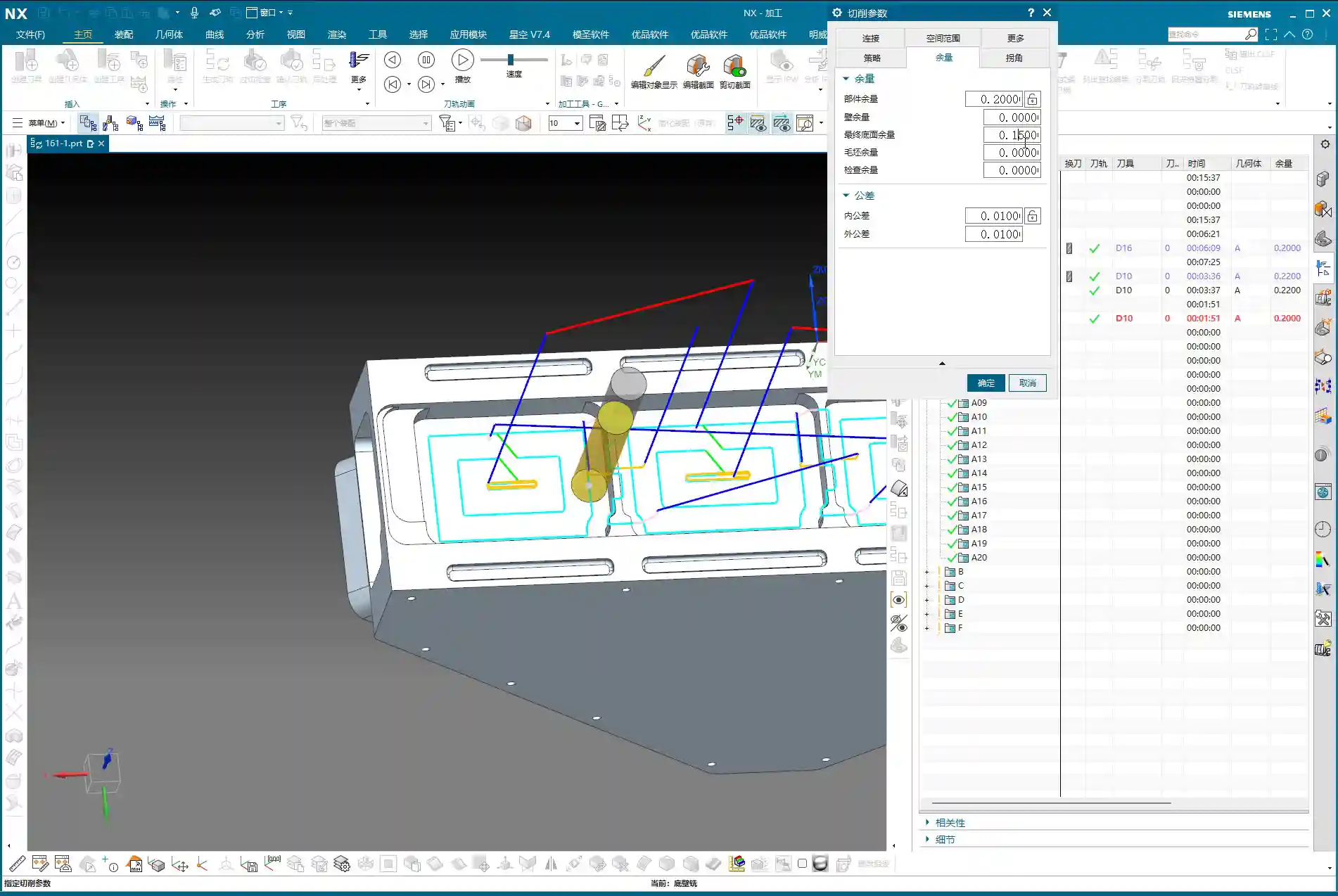
    Let’s assume we’re machining aluminum this time; aluminum is relatively soft and easy to machine. When roughing, tool selection is also critical. We’ll typically choose a larger tool, such as a D16 (16mm diameter) end mill, to quickly remove most of the material. The tool axis direction must be correctly specified, ensuring it’s perpendicular to the side face being machined. Feed rates and spindle speeds should be determined based on the tool, material, and machine capabilities; don’t blindly chase speed. Ensure smooth chip evacuation to prevent chip buildup. The stock allowance should also be set according to the actual blank dimensions; don’t let the tool take too heavy a Depth of Cut (DOC) right at the start, as this can easily cause chipping.

    Secondary Roughing and Finishing Strategies: Smoothing and Accuracy

    The Necessity of Secondary Roughing (Corner Cleanup)

    After roughing, don’t assume everything’s done. When roughing with a large cutter, material will inevitably be left in small corners and fillets. At this point, you need to perform a “secondary roughing” operation, which is essentially Corner Cleanup or Rest Milling. Select a tool one size smaller than your roughing cutter, for instance, a D10 (10mm diameter) or even a D8 (8mm diameter) end mill, to clean out the remaining material in these corners. This is done to reduce the burden on the finishing pass tool, preventing it from taking too heavy a Depth of Cut (DOC), which can affect tool life, cause chipping, or lead to workpiece surface quality issues. All corners that require machining must undergo Corner Cleanup to ensure smooth subsequent finishing passes. This step cannot be skipped; it’s the unsung hero that guarantees final part accuracy and surface quality.

    Smoothing Operations and Maximum Distance Deviation

    After secondary roughing, sometimes we use a “smoothing” function to achieve smoother tool paths and better surface finish. There’s a parameter here called Maximum Distance Deviation; don’t always stick to the default value. This value controls tool path accuracy, but if you want the tool path to be smoother, especially in less critical or transition areas, you can increase it appropriately. For instance, set it to 400%. This results in a cleaner tool path, reduces calculation time, and in actual machining, the impact on the final surface quality might be minimal, or even better. Of course, you must check the machining results; don’t adjust it blindly. A smoother tool path reduces frequent acceleration and deceleration of the machine, which also benefits machine wear.
    Bottom Surface Finishing Pass (Bottom Wall Milling)

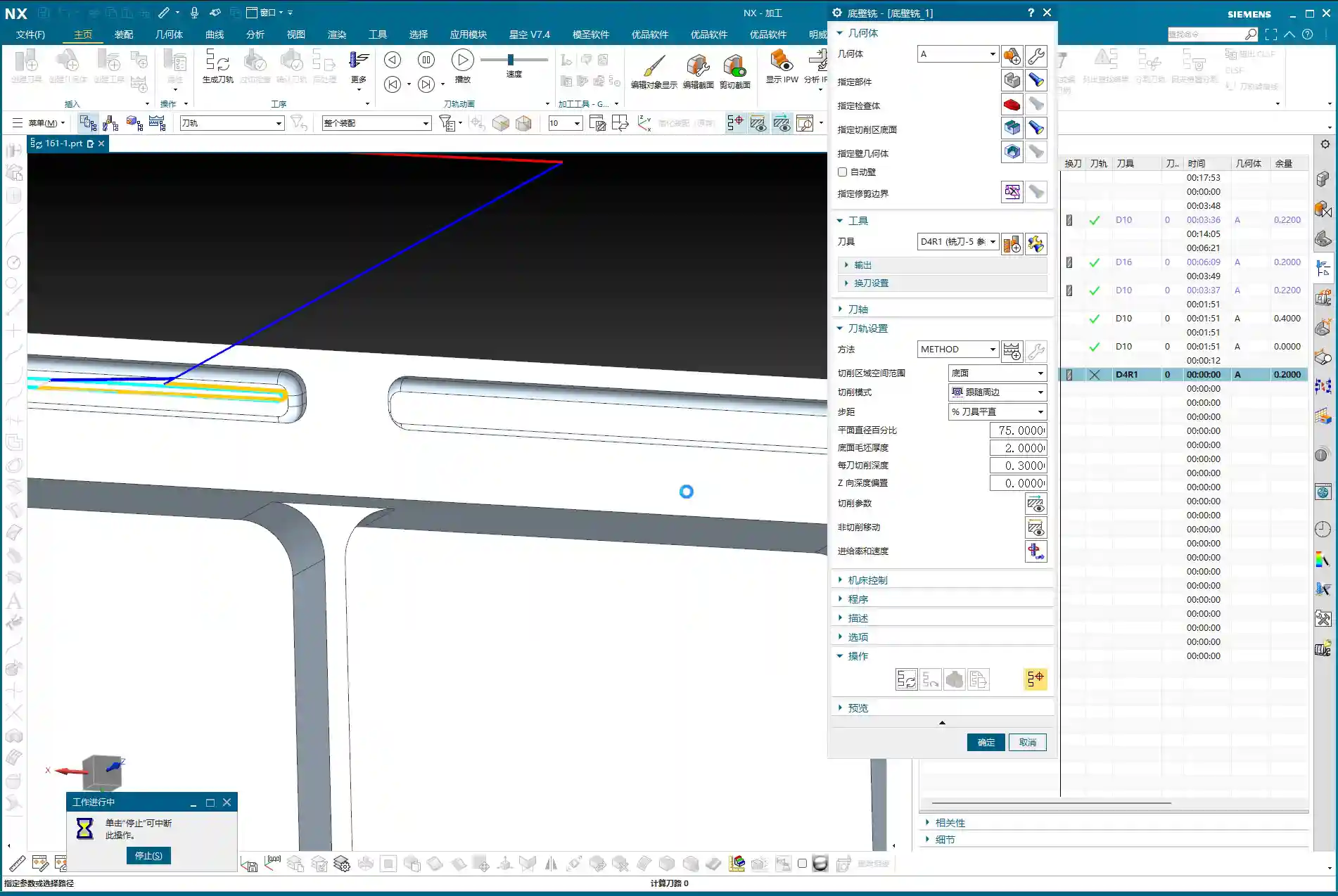
    For the bottom surface finishing pass, we’ll use the “Bottom Wall Milling” operation. Select all bottom faces that require a finishing pass. Remember, for bottom surface finishing, you don’t need to adjust the tool axis direction; it defaults to being perpendicular to the bottom face, which perfectly suits our requirements. For tooling, you can continue using a D10 or D8 cutter to ensure accuracy and surface finish for the finishing pass. Crucially, the stock allowance for the bottom face must be set to 0. That’s what a finishing pass is all about – aiming for a mirror-like finish. Don’t underestimate a single bottom face; its flatness directly impacts the part’s assembly accuracy.

    Side Wall Finishing Pass (Side Wall Milling)

    For the side wall finishing pass, similarly select the “Side Wall Milling” operation. Choose all side faces that require a finishing pass. At this point, the tool axis direction must be set to “upwards,” meaning along the normal vector of the side wall. When finishing side walls, there’s a crucial principle: if conditions allow and the tool length is sufficient, aim for a single-pass finish. This means the Depth of Cut (DOC) for each pass should be set to 0, allowing the tool to complete the cut from top to bottom in one go. This avoids tool marks and blend lines caused by layered cutting, ensuring the side wall’s surface finish and perpendicularity. The side wall stock allowance should also be set to 0. For corners, to ensure final accuracy, you might consider leaving a tiny allowance, such as 0.005mm, to be addressed in the final operation with a more precise tool or polishing. However, typically, for finishing passes, you’d set it directly to 0. This kind of single-pass, clean cut delivers both high efficiency and quality.

    Summary: Pitfall Avoidance Guide

    What I’ve covered today are hard-won lessons from my 15 years in the trenches, Master Wang’s blood, sweat, and tears. Listen up, there are a few critical points you absolutely must remember:

    1. Tool Axis Setting: For angle heads or 4-axis horizontal machining, the core is flexible tool axis transformation. If you can specify by selecting a face, do it – don’t shy away from the extra step.
    2. Rapid Move (G00) Trap: If a rapid move can be output using Linear interpolation (G01), absolutely do NOT use Rapid move (G00)! Unless you have 100% confidence in your machine and post-processor. Better to be a bit slower than unsafe.
    3. Retraction Optimization: Retraction paths should be short and flexible; use an arc if possible. Time is money, don’t waste it on air moves.
    4. Secondary Roughing / Corner Cleanup: This operation cannot be skipped; it’s a guarantee for your finishing pass. Clean up the remaining material, and the finishing pass will be much easier.
    5. Smoothing Strategy: Judiciously adjust the Maximum Distance Deviation to achieve smoother tool paths and improve efficiency.
    6. Finishing Pass Stock Allowance: For the bottom and side wall finishing passes, the final stock allowance should be set to 0 – this is a requirement for accuracy. For side walls, if conditions allow, aim for a single-pass finish.

    Don’t just get carried away by fancy software simulations; whether the final part is acceptable ultimately depends on the sparks flying from the machine and the feel of the finished surface. Think one step further, observe one step more, avoid detours, and save money – that’s what true skill is all about!

    👤 About the Author:
    The author is a veteran CNC machining professional with 15 years of industry experience, specializing in UG NX programming. This article is an original work representing personal practical insights.

    ⚠️ Copyright Notice: Unauthorized reproduction or distribution without prior communication is strictly prohibited.

  • Siemens NX Programming Best Practices: Master Wang’s Secrets for Building Connection Ribs on Complex

    📝 Key Takeaways:

    Siemens NX Programming Best Practices: Connection Ribs

    Hello everyone, I’m Old Wang, Master Wang. I’ve been in the machining industry for…

    [VIDEO_HERE]

    Hello everyone, I’m Old Wang, Master Wang. I’ve been in the machining industry for fifteen years, from the shop floor covered in swarf to sitting in front of the Siemens NX interface – I’ve seen it all. Today, let’s skip the theory and talk about the hard-earned, practical machining skills you won’t find in textbooks. Specifically, we’ll discuss creating manufacturing connection ribs for complex parts and how to program tool paths effectively to ensure your parts are produced quickly and accurately, while avoiding critical deformation.

    Don’t just stare at all the fancy commands in Siemens NX. Remember, software is merely a tool; the core lies in your understanding of the part, the material, and the machine. Listen up: do this job right, and it’s craftsmanship; mess it up, and you’re just making scrap!

    Step One: Part Geometry Analysis – Know Your Part, Know Your Process

    When you get a part, don’t rush into modeling and programming. First, look, and look carefully! That’s the first rule from us old masters. Only by understanding your part inside and out can you master the machining process.

    Identifying Surfaces and Planar Faces: Avoiding Pitfalls

    I always tell my apprentices: when you get a drawing or import a model, the first thing you do is use Siemens NX’s analysis tools to thoroughly understand the part’s geometric features. Don’t just glance at it; examine every single face clearly:

    • Which are planar faces? Planar face machining is simpler and more efficient, but you still need to pay attention to dimensional accuracy and surface roughness.
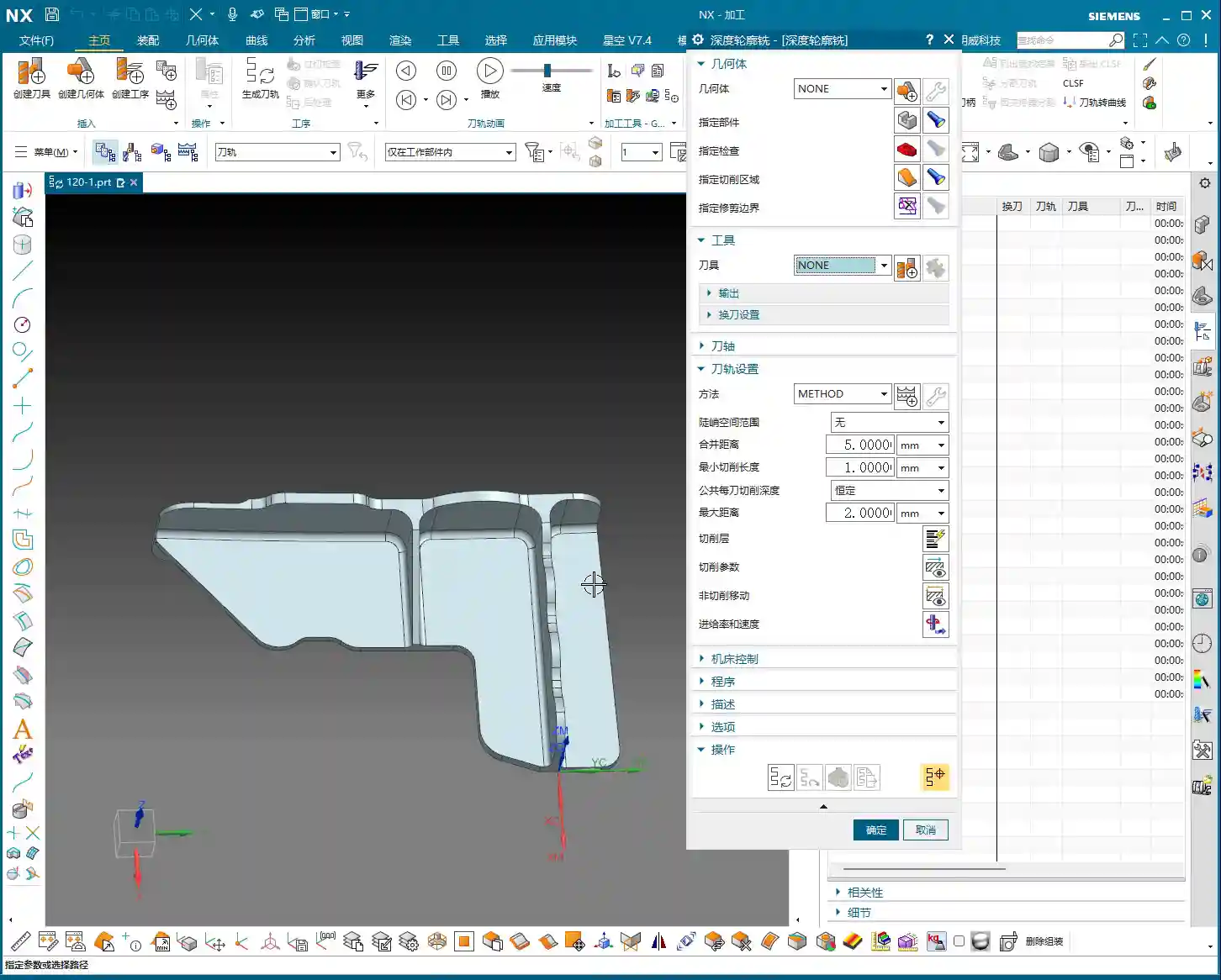
    • Which are curved surfaces? Especially freeform surfaces—this is where your Siemens NX expertise is truly tested. Curved surface machining involves complex tool paths and is prone to high cutting forces, so you need to pay extra attention to tool selection and feed strategies. Just now, when I analyzed that part, I found one area that wasn’t purely flat; it was a curved surface. That immediately raised a red flag. A standard flat-end mill definitely won’t work there; you’ll either need to finish it with a ball end mill or figure out another way to avoid it.

    Only by understanding these thoroughly will you know where the machining challenges lie and where problems are likely to occur. It’s like going into battle: you need to know where the enemy’s strongpoints are, not just blindly charge in.

    Considering Radii and Slopes: Key Factors for Tool Selection

    Small radii and slopes are critical information that determines which tool you use and how you machine.

    • I just measured, and the part has many radii: R4, R2, and even R5.5. This tells us that we might use a larger tool for roughing, but for finishing side walls and Corner Cleanup, we’ll need to switch to smaller tools. For example, for an R4 fillet, you’ll need at least an R2 ball end mill or flat-end mill for Corner Cleanup; otherwise, you won’t clear the corner properly, and all your effort will be wasted.
    • Next, consider the slopes. Some faces look flat but actually have a slight incline – that’s a slope. If the slope changes significantly and you use a flat-end mill, obvious step marks will appear, resulting in poor surface quality. In such cases, you need to consider using a ball end mill or bull nose end mill, or even engaging 5-axis simultaneous machining, to ensure a smooth finish.

    All of this can be identified using Siemens NX’s “Analysis Tools.” Don’t be lazy; a few extra clicks of the mouse now will save you a lot of hassle compared to re-working a part after machine issues arise. That’s real money down the drain!

    Step Two: Constructing Manufacturing Connection Ribs – Virtual Support, Real Stability

    Some parts are thin, weak, and complex, especially thin-walled components for aerospace applications, which are highly susceptible to deformation and chatter during machining. This is where manufacturing connection ribs come in extremely handy. They are not part of the final component but serve as temporary support during the machining process, and are cut off once machining is complete.

    “Enveloping Body” and Stock Allowance Setting: Ample Material, Sufficient Clearance

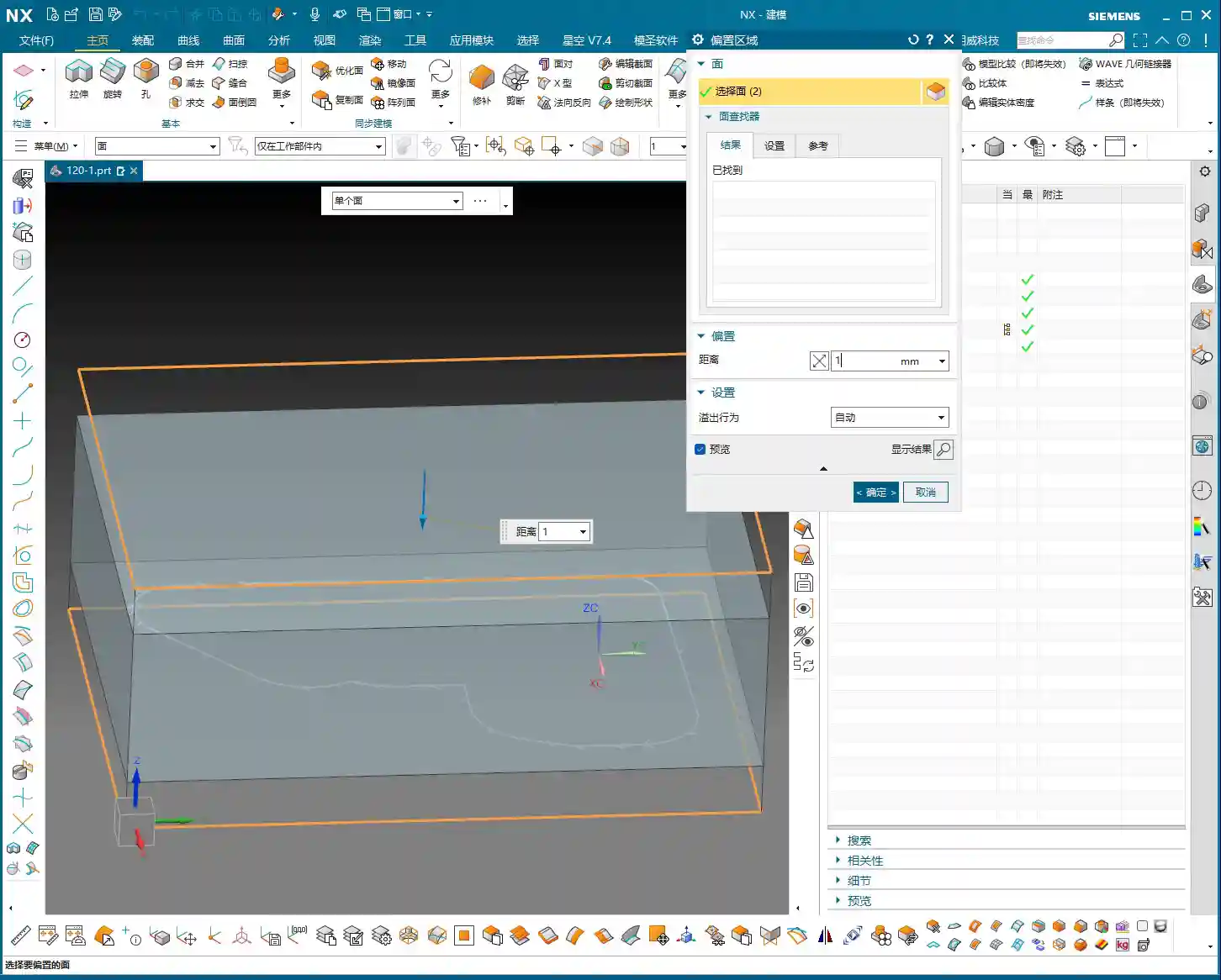
    First, in Siemens NX, we need to create an “enveloping body” for the part, which is essentially our raw material blank or machining boundary. This enveloping body must not only enclose the part itself but also provide sufficient space for our connection ribs. I typically offset additional allowance (extra material) on all sides (top, bottom, left, right) of the enveloping body. For instance, I might start with 20mm and then adjust it to 15mm or even 14mm based on actual requirements. This allowance is crucial; it directly impacts the thickness of your connection ribs and the clearance needed when you eventually cut them off. You can’t make the ribs too thin, or they won’t provide adequate support, nor too thick, as that makes cutting them off a hassle.

    Furthermore, if you want to leave some allowance when machining the connection ribs, for example, using a Ø25 tool for cutting them off, then our enveloping body at the connection rib locations must extend an additional 12.5mm (tool radius) outwards. This ensures there’s enough material to cut.

    Extruding and Adjusting Critical Faces: Meticulous Geometric Refinement

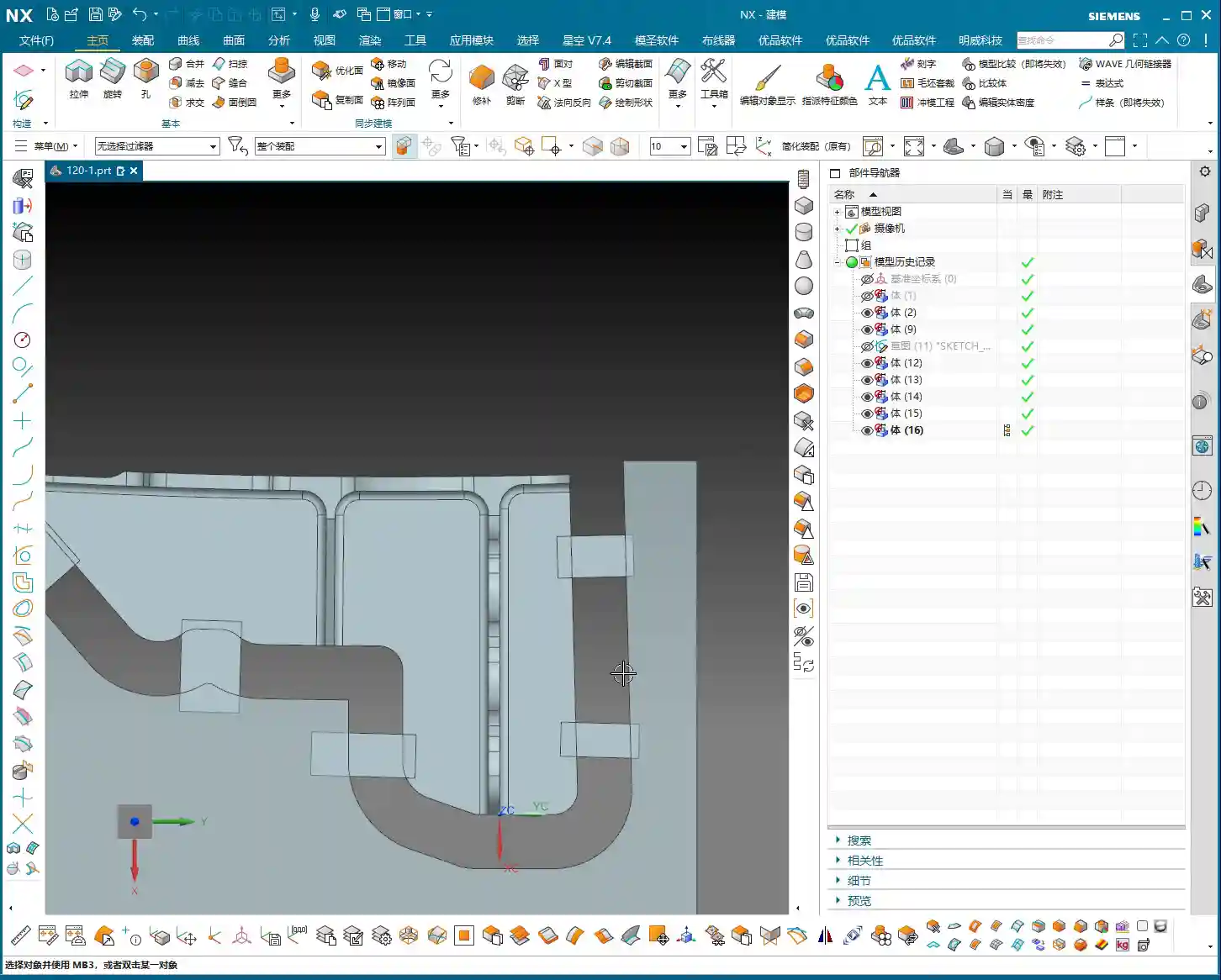
    Building connection ribs isn’t just about drawing a few lines. We need to precisely extrude and adjust the relevant faces of the part to provide a stable “foundation” for the connection ribs. For instance, I just noticed some faces were excessive or had small corners. To ensure the connection ribs connect and support better, I need to use the “Extrude” command to extrude these faces outwards by -1mm, or use “Replace Face” to replace irregular areas, thereby ensuring the integrity and smoothness of the geometric structure. This process is like sculpting, meticulously refining bit by bit. There can be no burrs or breaks, otherwise, the resulting connection ribs will be like a shoddy construction.

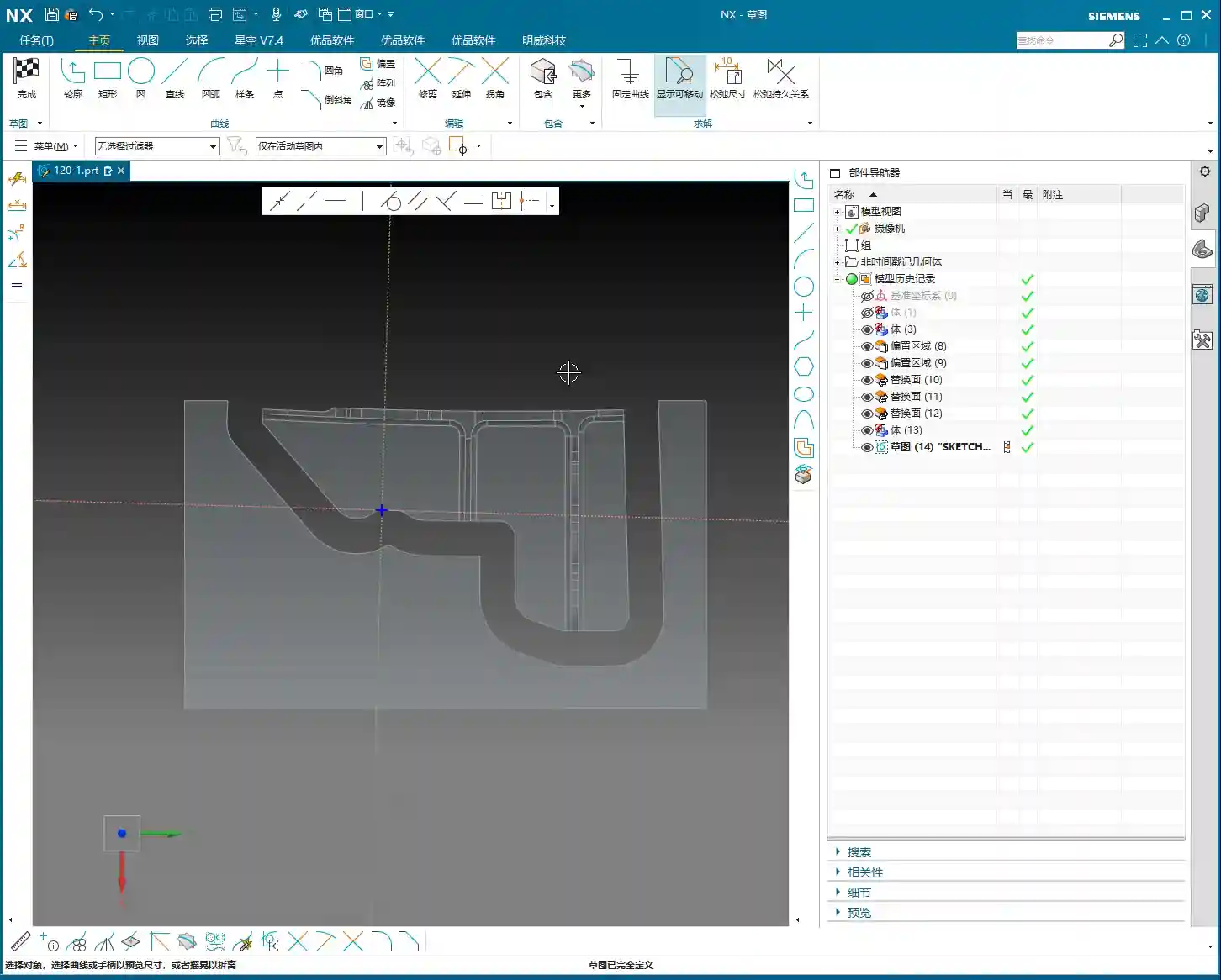
    Sketching and Extruding Connection Ribs: The “Lifeline” for Stable Machining

    Next comes the main event: drawing the connection ribs. This requires a strategic approach:

    • Placement: Connection ribs should be positioned at the part’s weakest points, where deformation is most likely, and at load-bearing areas. Generally, this means along the edges and thin-walled regions of the part.
    • Quantity and Density: Determine this based on the part’s rigidity and the magnitude of machining forces. Too few ribs won’t provide enough support; too many will increase subsequent cutting time and cost. You need to find a balance.
    • Sketching: Draw the connection rib sketches on the relevant faces of the part. Lines, arcs, or splines are all acceptable, but they should be as simple as possible to facilitate subsequent machining and cutting off. Just now, I sketched a few auxiliary lines and then used the “Extrude” command directly to extrude these sketches into solid bodies. I usually set the thickness to 5mm initially, which can be adjusted later.

    These connection ribs are the “lifeline” for the part during machining on the machine tool. They determine whether your part is machined stably and successfully, or ends up as scrap mid-process.

    “Replace Face” for Uniform Height: Ensuring Support Stability

    This is a highly practical “pitfall avoidance” technique! Because various faces on the main part might have different heights, if you simply extrude the connection ribs, they might not end up on the same plane, leading to unstable support or even gaps. I just noticed that many connection ribs had varying heights. In such cases, you need to use the “Replace Face” command to uniformly replace the top faces of all connection ribs to a single reference plane on the part (e.g., the highest point or a datum plane). This ensures that the tops of all connection ribs are at the same height, guaranteeing overall support stability and facilitating subsequent clamping with straps, thereby reducing chatter. Don’t underestimate this step; it’s critical for ensuring your part remains absolutely stable during machining!

    Step Three: Tool Selection and Tool Path Optimization – The Art of Balancing Efficiency and Precision

    Once the connection ribs are built and the raw material blank is defined, it’s time for programming. This is my forte, and with Siemens NX, it’s all about “finesse.”

    Deriving Tools from Radii: The Right Tool for Maximum Effectiveness

    Selecting the wrong tool is simply burning money. The radii we just analyzed now come into play. Determine the tool type and size based on the smallest radius and machining requirements.

    • For example, for side wall Corner Cleanup with a minimum radius of R2, you’ll need at least a Ø4 flat-end mill or an R2 ball nose end mill. I just decided to use a Ø10 or Ø12 flat-end mill to machine the side walls.
    • For the final cutting off of connection ribs, to ensure efficiency and surface quality, a slightly larger tool is typically used. I selected a Ø24 or Ø25 flat-end mill, leaving 12mm or 12.5mm of cutting allowance. The principle for tool selection is: while meeting dimensional and surface finish requirements, opt for the largest possible tool to reduce tool deflection and increase machining efficiency.

    Don’t just rely on software recommendations; you must make comprehensive judgments based on your machine rigidity, material hardness, and tool material. Otherwise, you’ll break tools and scrap parts, and it’ll be too late for regrets.

    Optimizing Cutting Layers and “Air Cuts”: Ensuring Every Cut is Productive

    This is paramount for efficiency! Tool paths automatically generated by Siemens NX often contain numerous redundant cutting layers and air cuts.

    • Managing Cutting Layers: I just did this – deleted all the default cutting layers generated by the system, keeping only the most effective ones, or manually adjusting them based on actual conditions. Don’t foolishly let the software calculate every single layer; many are just idle moves, wasting time, wearing out the spindle, and increasing program size. Only keeping layers with actual material removal is the optimal approach.
    • Reducing Air Cuts: When the tool moves in the air without cutting, that’s an “air cut.” More air cuts mean longer machining times. In Siemens NX, you can minimize air cuts by adjusting parameters such as lead-in/lead-out, connection methods, and non-cutting move strategies. Especially for complex surfaces and cavity machining, optimizing air cuts can save a significant amount of time. The version of Siemens NX I’m currently using, with high-efficiency tool paths like Adaptive Milling, can greatly reduce air cuts and ensure more stable cutting.

    Remember, time is money, especially in mass production. Every minute saved directly contributes to increased profit. This is a key “selling point” we can emphasize when promoting industrial products online: high-efficiency, low-cost precision machining – that’s what customers love to hear!

    Siemens NX Programming Best Practices: The Clever Use of Post Processors and Macros

    Siemens NX programming isn’t just about clicking a mouse. Advanced users also need to be proficient with Post Processors and Macros.

    • Post Processor Modification: Your machine tool might have specific commands or cycles. In such cases, you’ll need to modify the Post Processor so that the G-code generated by Siemens NX can perfectly adapt to your machine. This requires some understanding of machine parameters and control system codes like Fanuc and Siemens. Don’t be intimidated; master this, and your Siemens NX programs will run flawlessly on any machine. I even fine-tune Post Processors based on different machine characteristics to output more efficient G-code, reducing unnecessary tool changes or retract moves.
    • Utilizing Macros: For highly repetitive operations, such as standard drilling cycles or engraving, you can write macros to complete them with a single click, significantly boosting efficiency. It’s like installing an “accelerator” for Siemens NX, turning your experience into reusable code.

    When you master all of these, you won’t just be a Siemens NX operator; you’ll be a true Siemens NX expert, an “old master” of the industrial world. The reason our high-precision parts are promoted so successfully online, with keywords (such as “high-precision 5-axis machining” or “custom complex structural components“) consistently ranking on the front page, is precisely due to this solid process foundation and efficient programming capability, which ensures product quality and on-time delivery. Customers look for tangible benefits, not flashy advertising.

    Summary: Pitfall Avoidance Guide

    Alright, everything I’ve discussed today has been learned through hard-won lessons. Finally, let me summarize a few key points for you. Remember, these are Master Wang’s Ironclad Rules for avoiding pitfalls:

    • Never skip geometric analysis! Especially for curved surfaces, radii, and slopes – these are the soul of tool selection and tool path strategy. Don’t rush into it; first, think the job through carefully in your head.
    • Connection ribs are not to be sketched haphazardly! You must ensure their structural rigidity, proper placement, and uniform height (frequently use “Replace Face”). Otherwise, if chatter or deformation occurs during machining, your part will be scrapped.
    • Tool selection should be “clever,” not just “expensive”! Size, type, and material must be determined based on part characteristics and machine performance. Choose the wrong tool, and you’ll either break the tool or chip its cutting edge.
    • Tool path optimization saves money! Especially with cutting layers and air cuts – reduce them whenever possible. Don’t let your machine run idle; that’s literally burning your money.
    • Don’t just rely on software simulation; observe the cutting sparks! No matter how perfect the software simulation, it cannot replace the experience of actual machine operation. Cutting sounds, spark color, and chip evacuation conditions can all tell you if there’s a problem with the machining process.
    • Pay close attention to clamping and heat treatment! Even the best programming is useless without secure clamping and appropriate post-processing (e.g., heat treatment to prevent deformation). Every link in the entire machining chain must be robust.

    Alright, that’s it for today’s lesson. Practice more, think more, and summarize more, and you too can become the “Master Wang” of your shop floor!

    👤 About the Author:
    The author is a veteran CNC machining professional with 15 years of industry experience, specializing in UG NX programming. This article is an original work representing personal practical insights.

    ⚠️ Copyright Notice: Unauthorized reproduction or distribution without prior communication is strictly prohibited.