Tag: NX CAM

  • Siemens NX Secondary Roughing Programming Masterclass: Master Wang Teaches High-Efficiency Corner Cl

    📝 Key Takeaways:

    NX Secondary Roughing: Master Wang’s Practical Techniques

    Opening: Lingering Issues from the Last Program

    Hello everyone, I’m Master Wang. In our last session, we finished programming the roughing operations for the first side. However, in some areas, the program ran slowly, and the computer lagged a bit. In the workshop, time is money, and a slow program means lost production! So today, we need to address these lingering issues, especially those “unmachined” areas, which are regions that weren’t fully cleaned up.

    Checking and Addressing Residual Stock

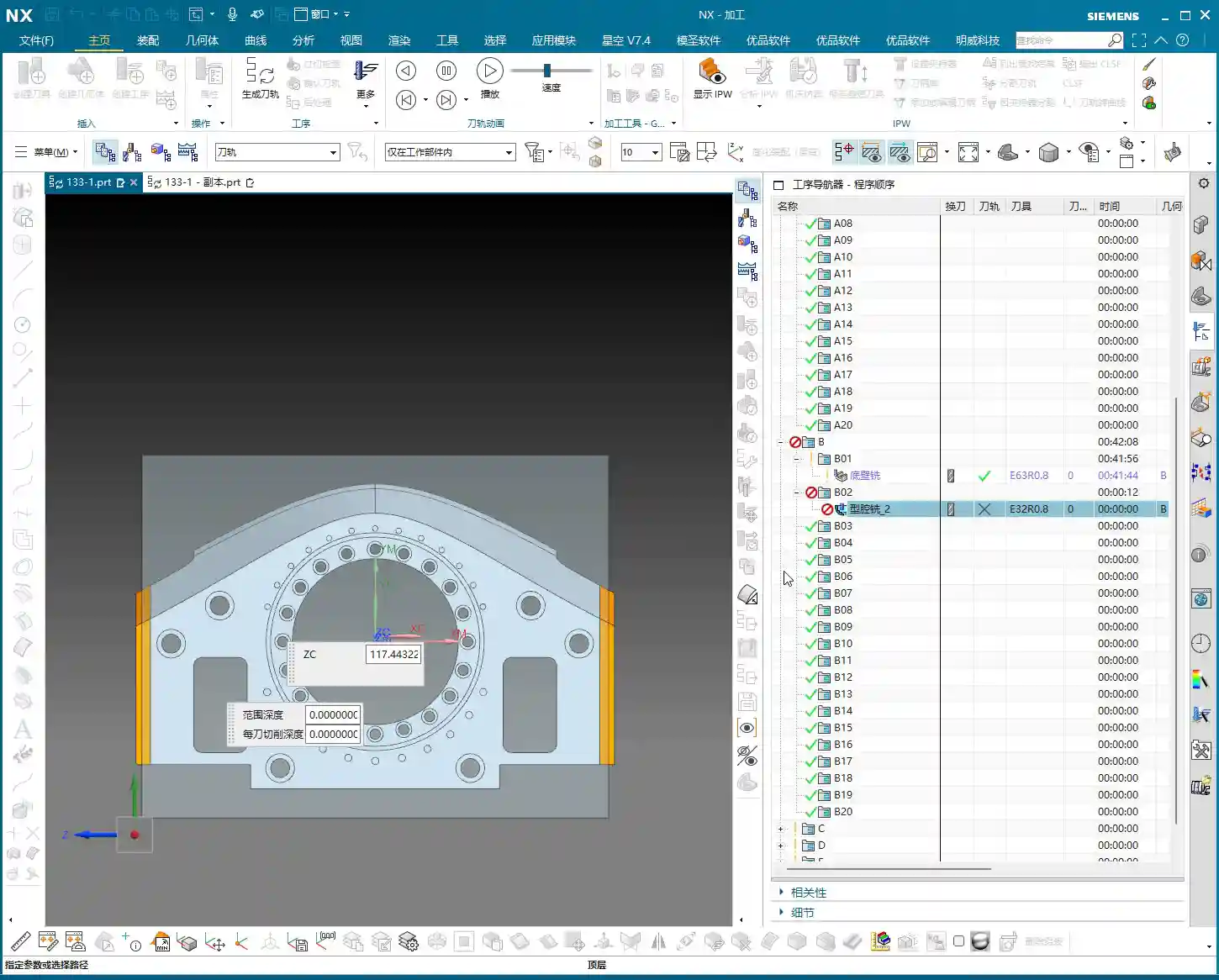
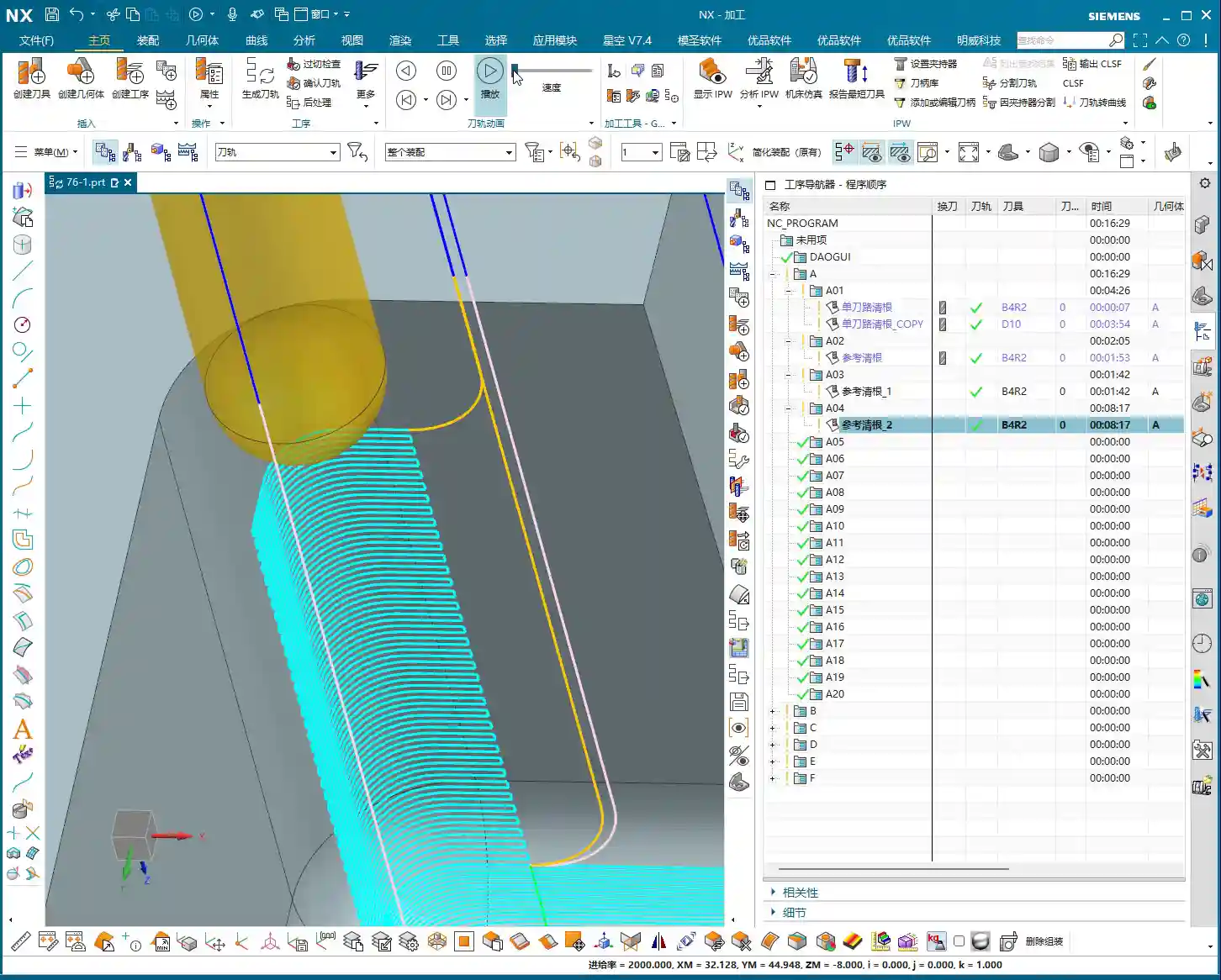
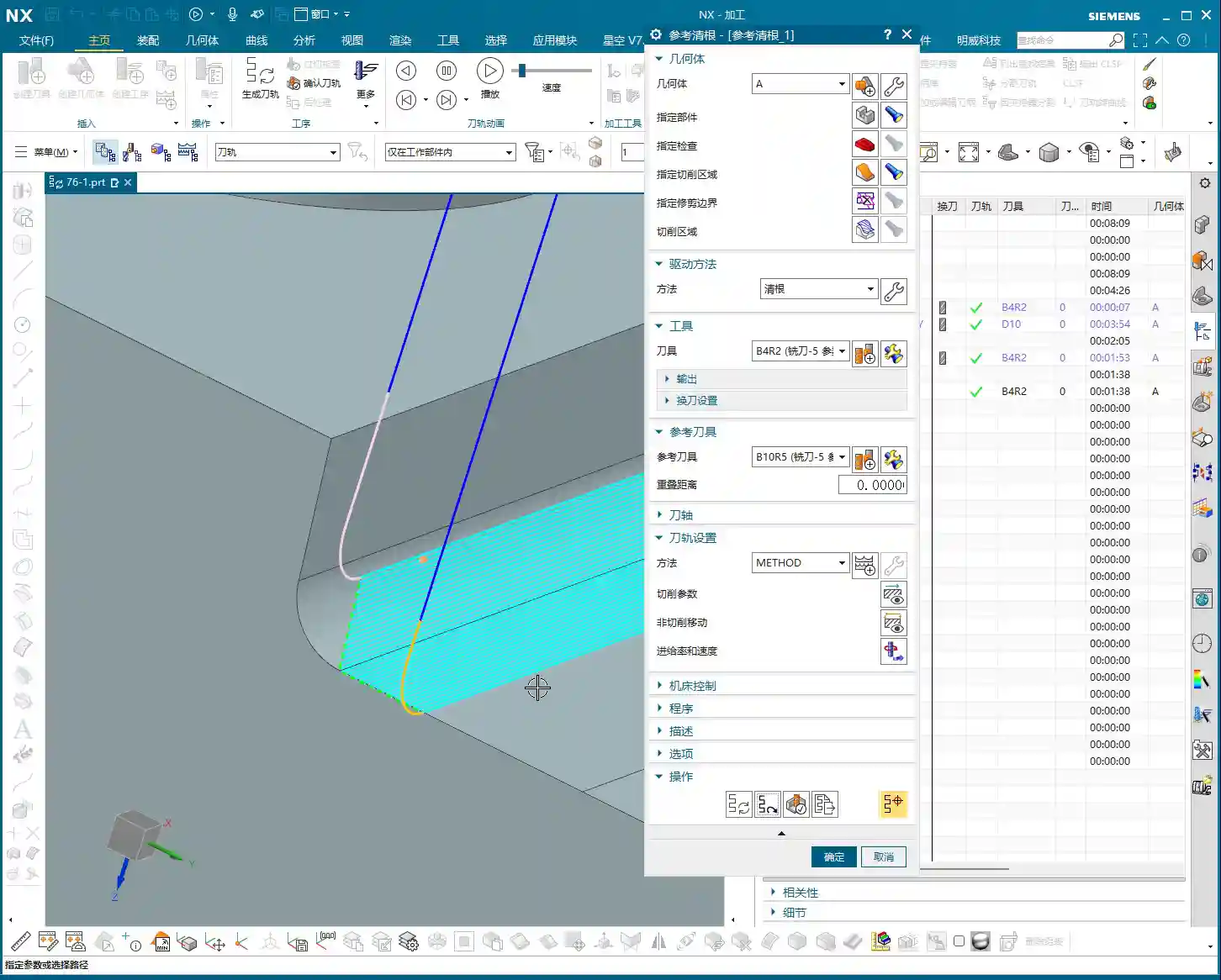
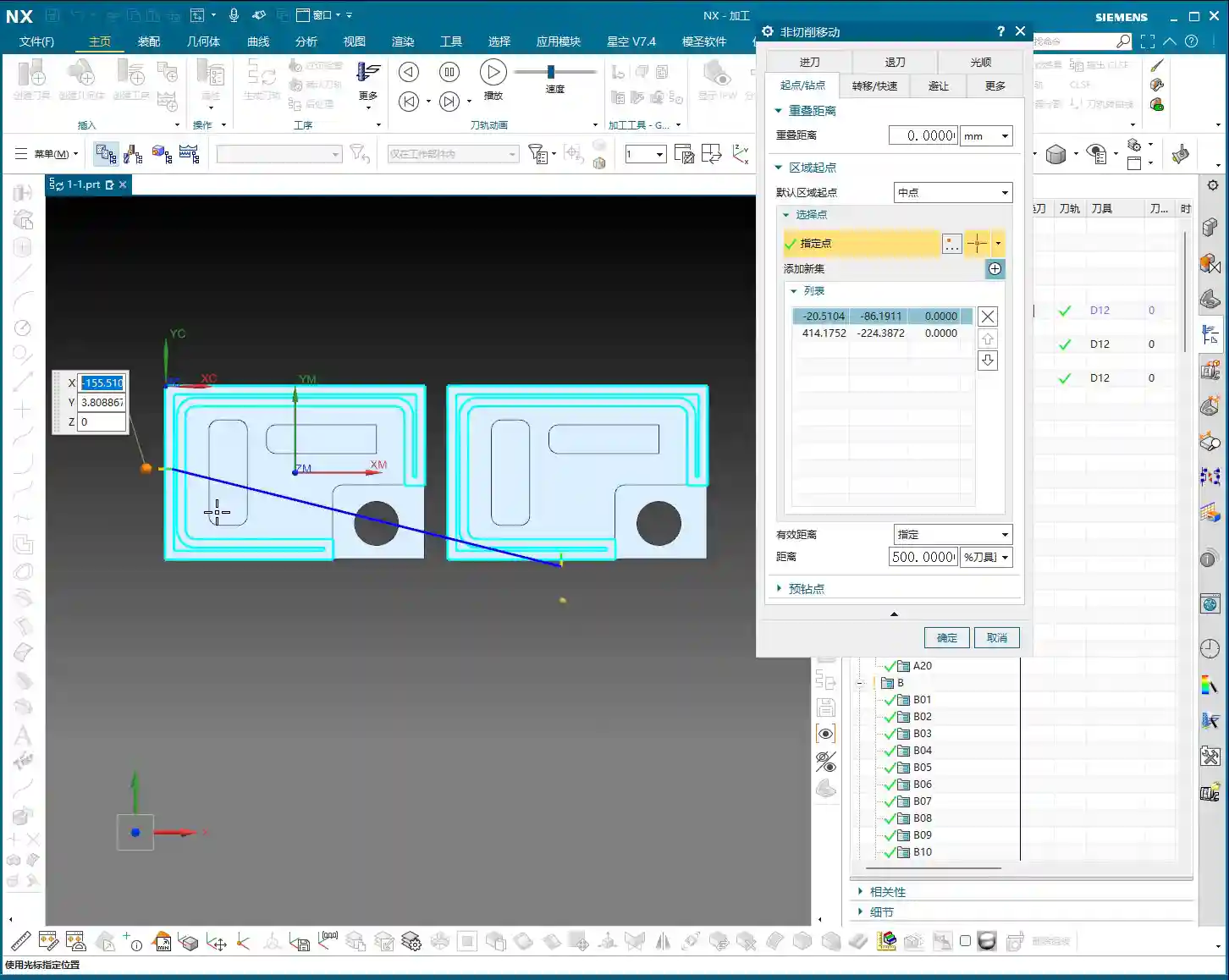
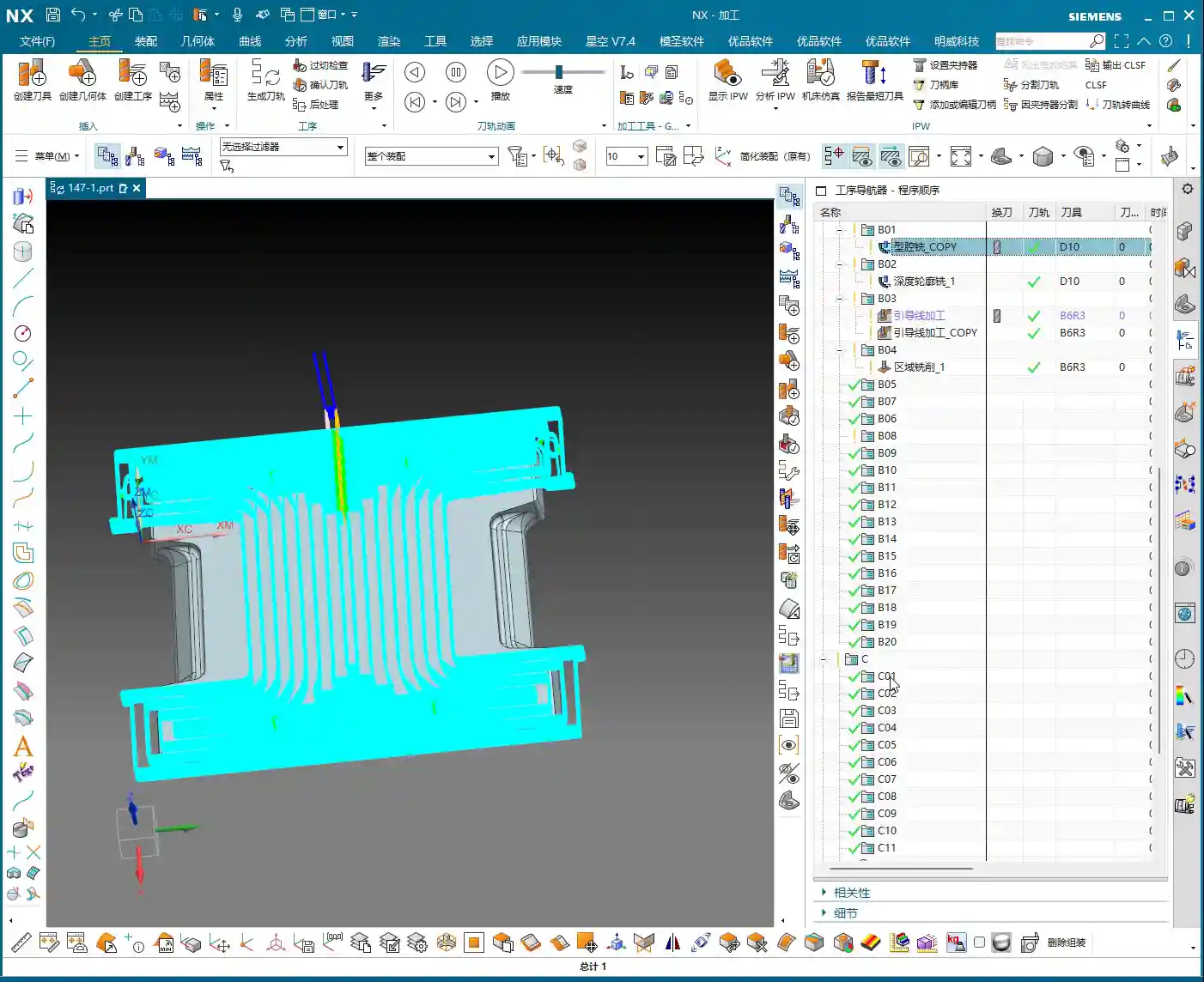
    Alright, let’s go back one step and quickly check which areas weren’t fully milled. Listen up: don’t just focus on the large flat surfaces. The real problem spots, where the tool is likely to engage heavily and cause issues, are often the small corners and grooves. I’ve noticed several areas that were “skipped” or “missed,” leaving behind a bit of residual stock. Some areas, especially on the side walls, still look like they have “remnants.”

    • Problem Areas: Found several spots, particularly edges and corners, where small amounts of stock remained after the previous program, looking “unmachined.”
    • Solution Approach: A “Corner Cleanup” operation is needed to remove this residual stock, preparing the part for subsequent finishing passes.

    First Corner Cleanup: Addressing Residuals on the First Side

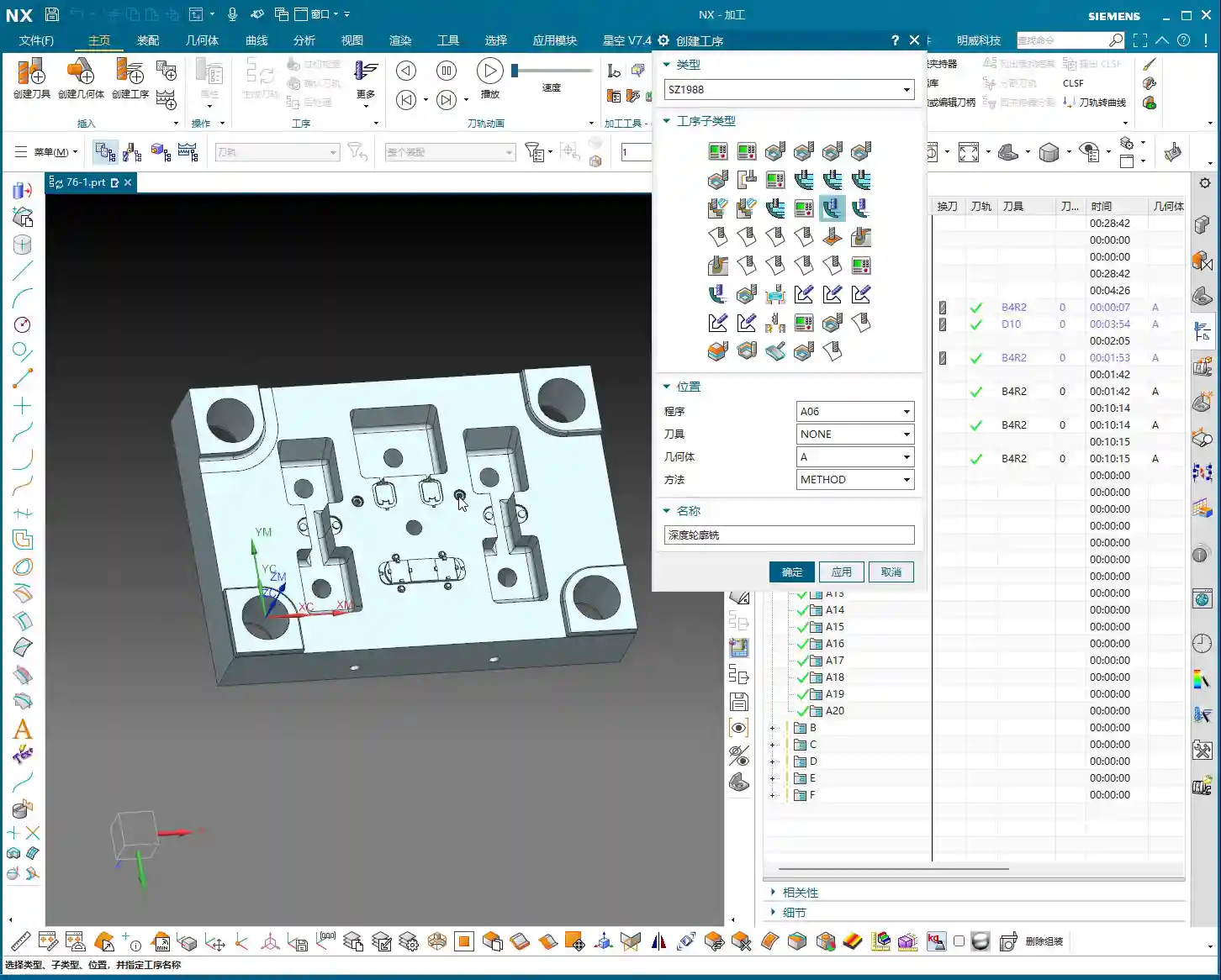
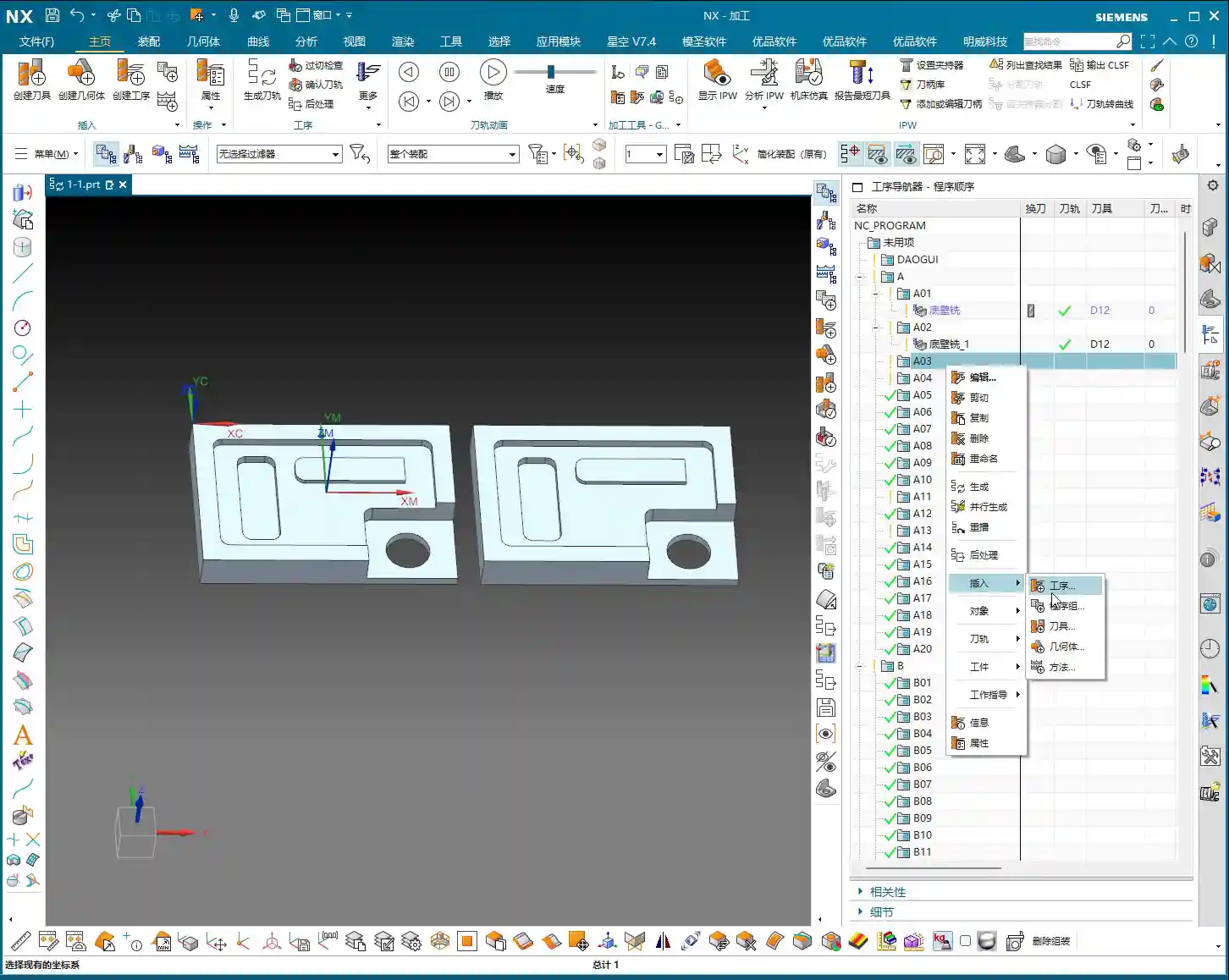
    For this residual stock, we can simply copy an existing program and make a few parameter adjustments. This is the most efficient method and minimizes errors.
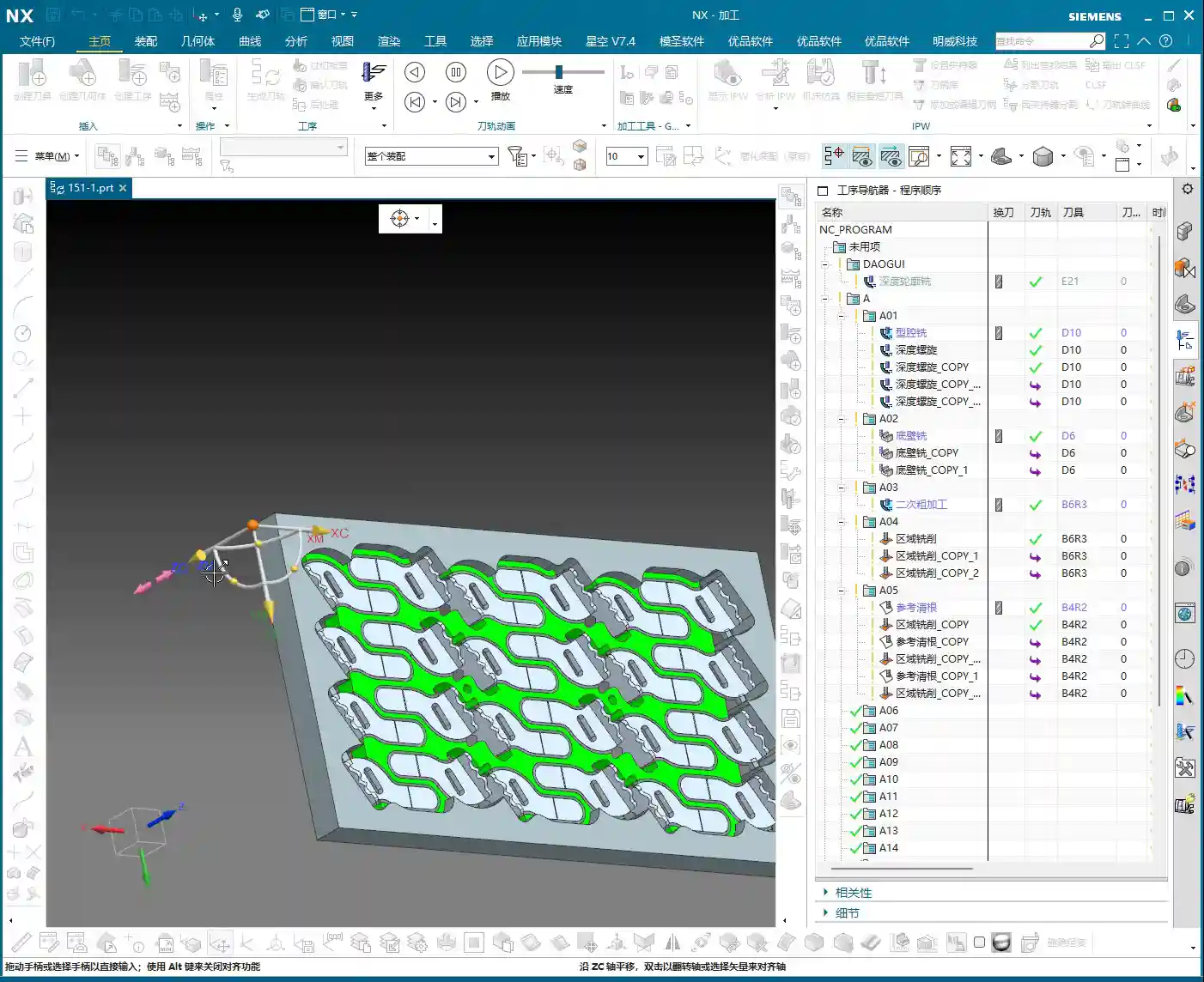
    Program Duplication and Parameter Adjustment

    I’ll directly copy one of our previous programs. Remember, after copying, the first thing you must do is check several key parameters:

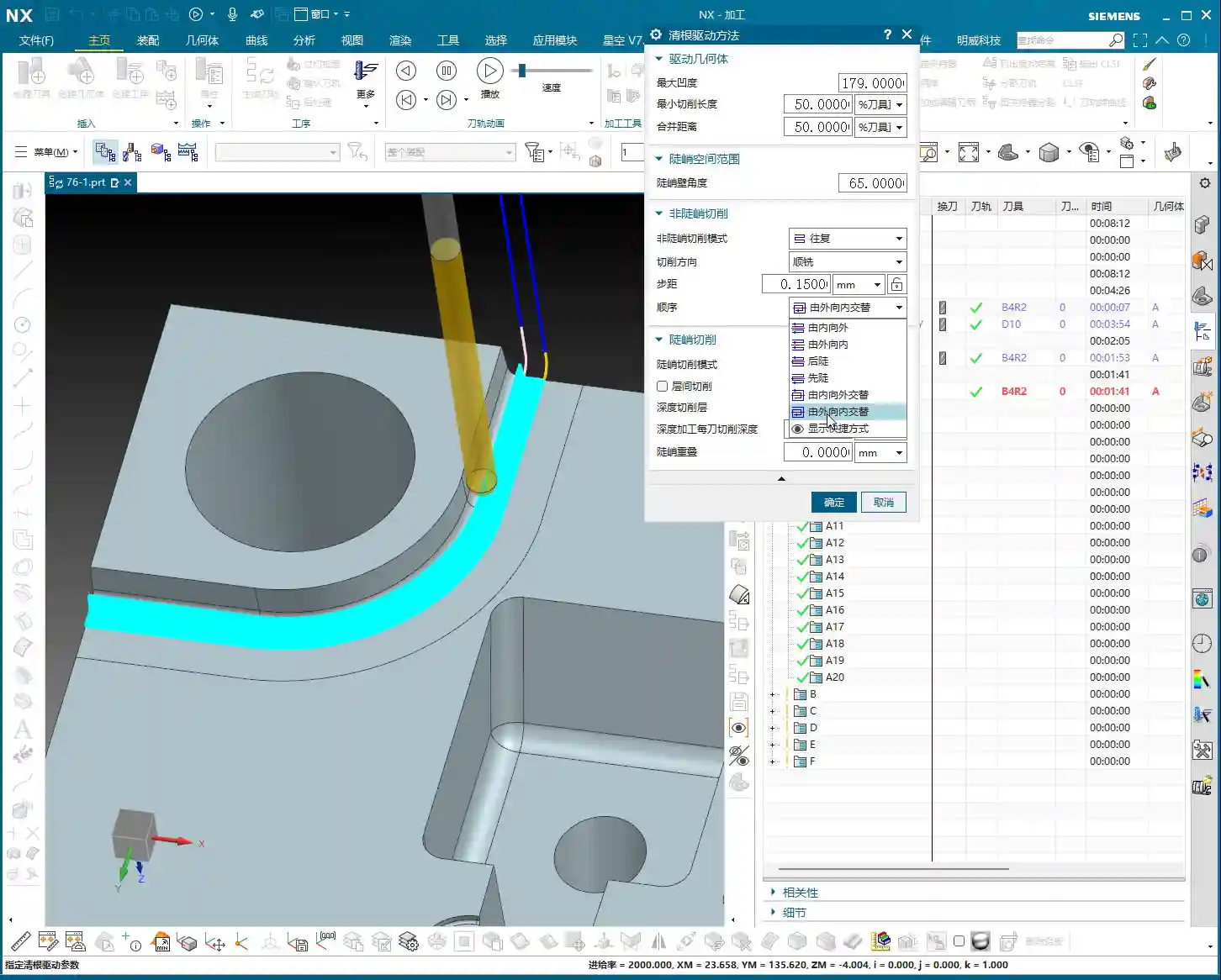
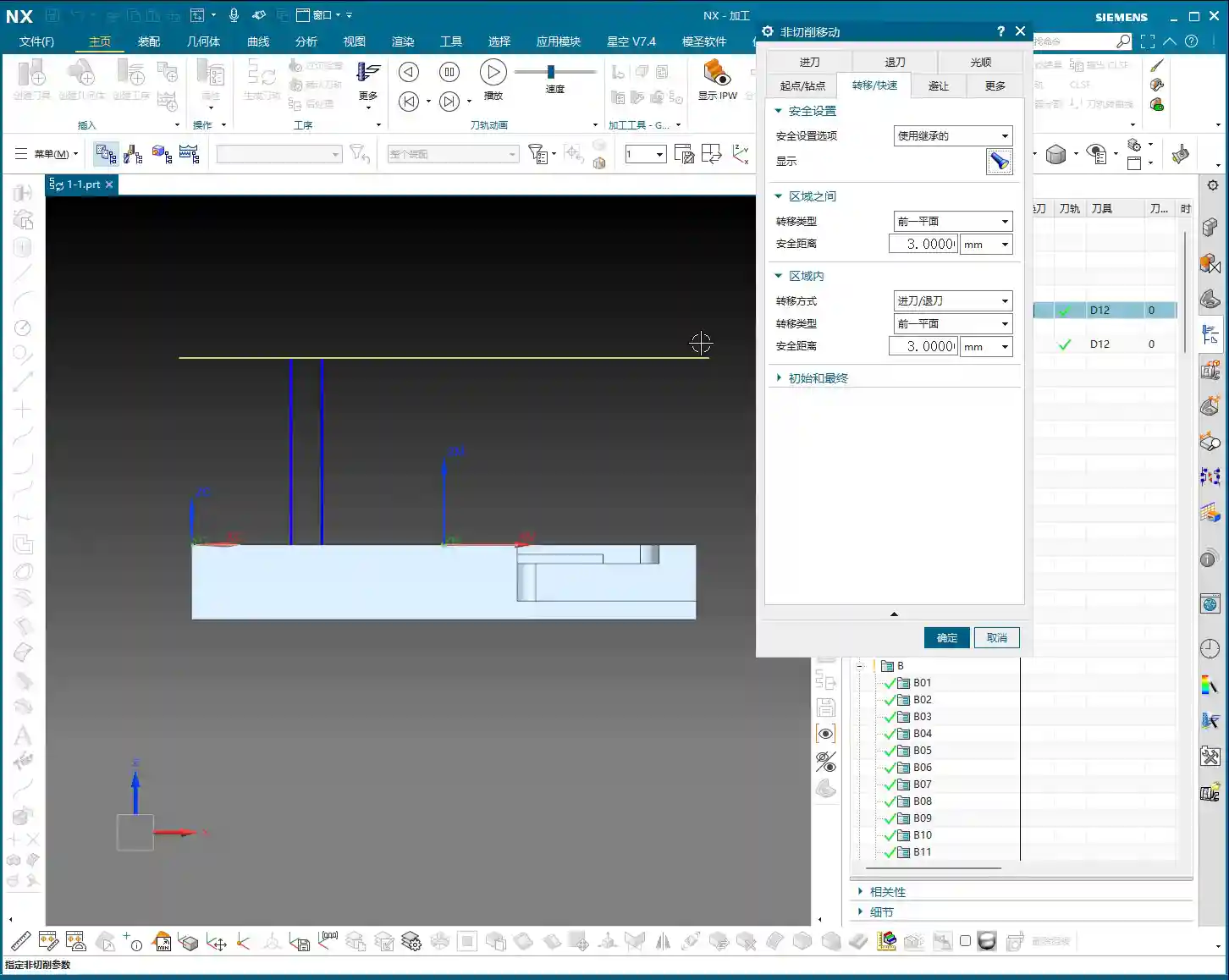
    • Connections: Change the connection type from default to “Move” to prevent unnecessary tool lifts and air cuts.
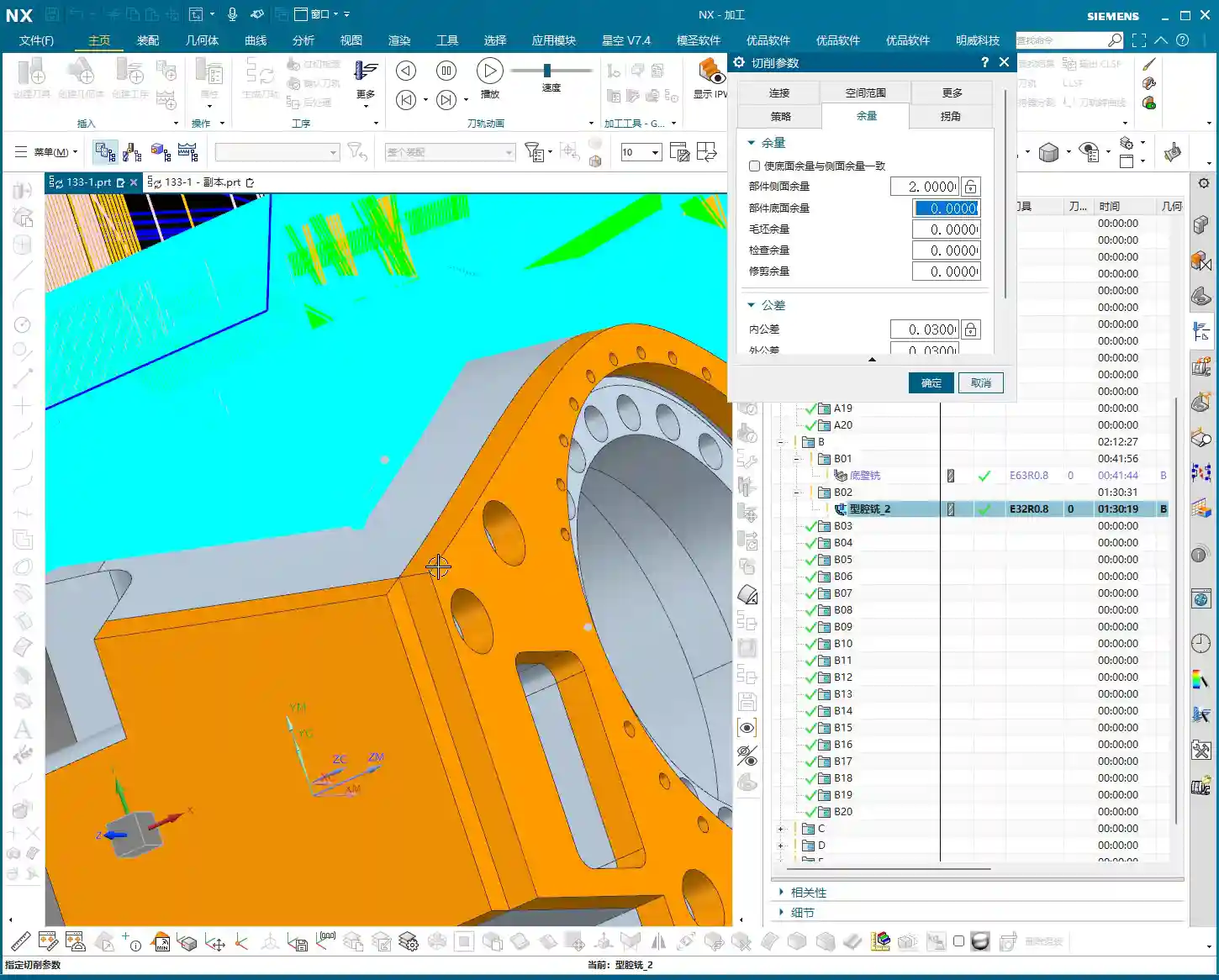
    • Stock: For a corner cleanup operation, set the stock directly to 0. Our goal is to remove all the excess material.

    Tool Entry/Exit Strategy: Avoiding Collision Risks

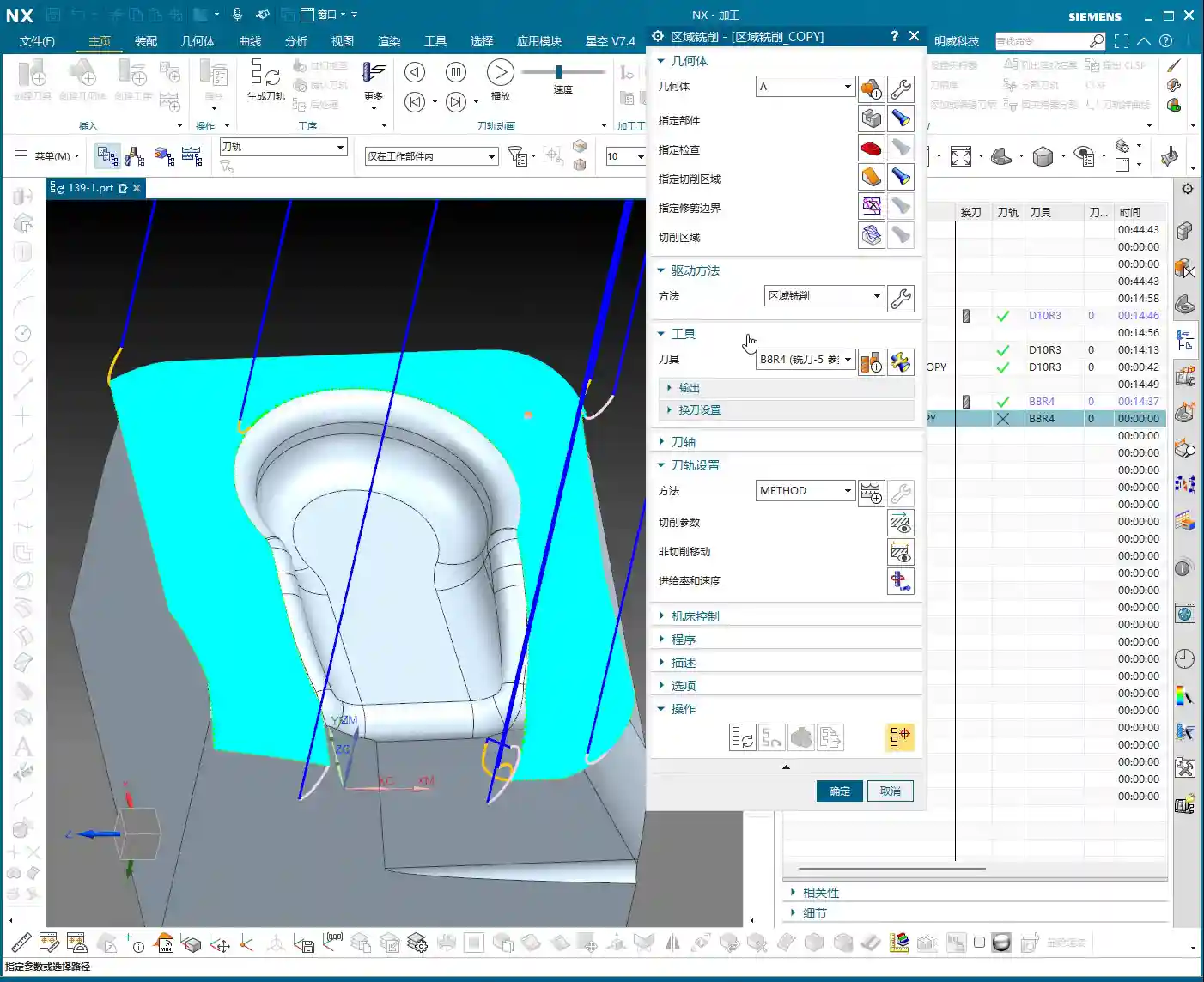
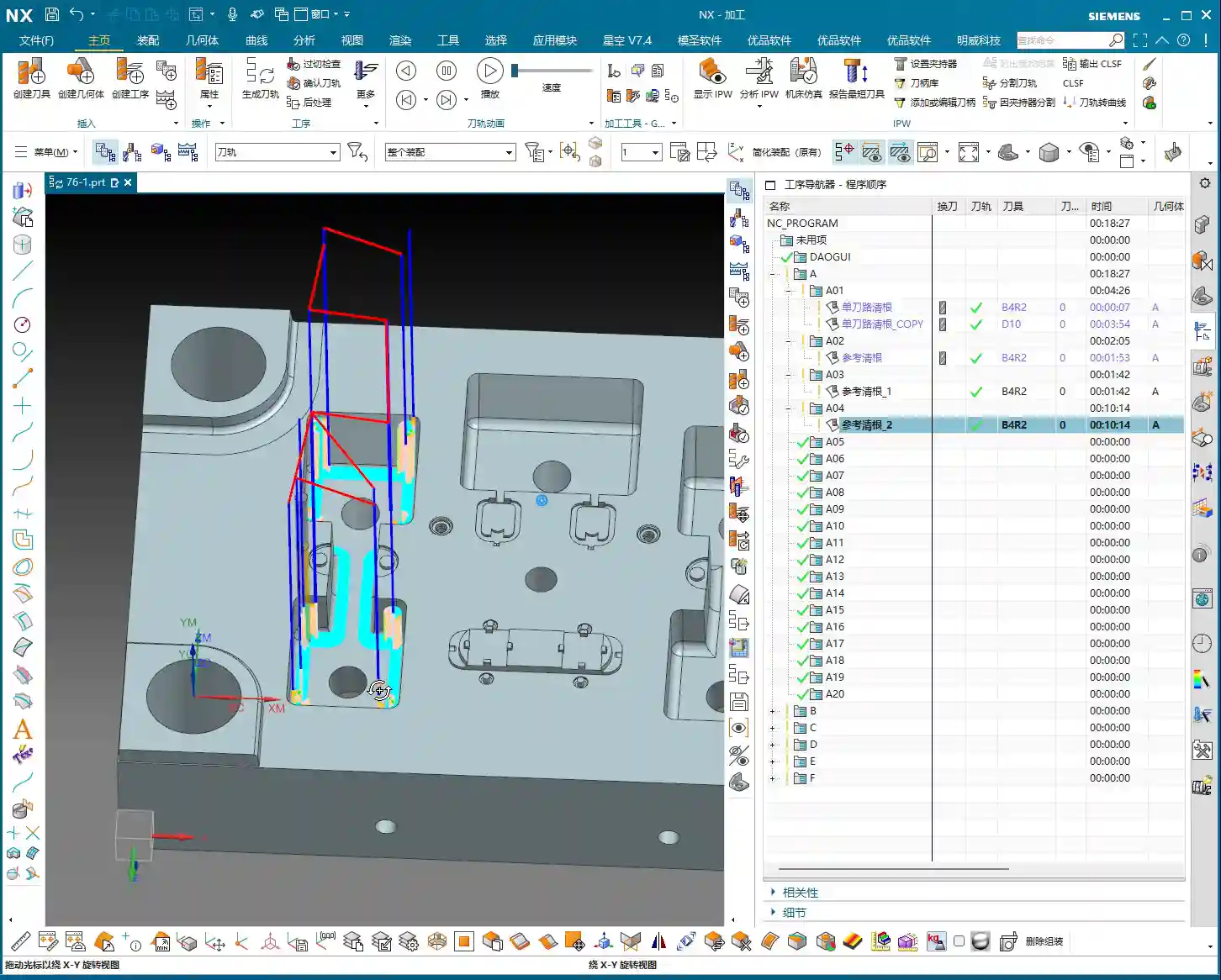
    As soon as the program ran, I immediately spotted an issue: the tool entry/exit was problematic, preventing the tool from safely entering and retracting. This is one of the most common mistakes made by beginner programmers!

    • Original Problem: The tool entry/exit path was unreasonable, prone to scratching the workpiece or making air cuts.
    • Solution:

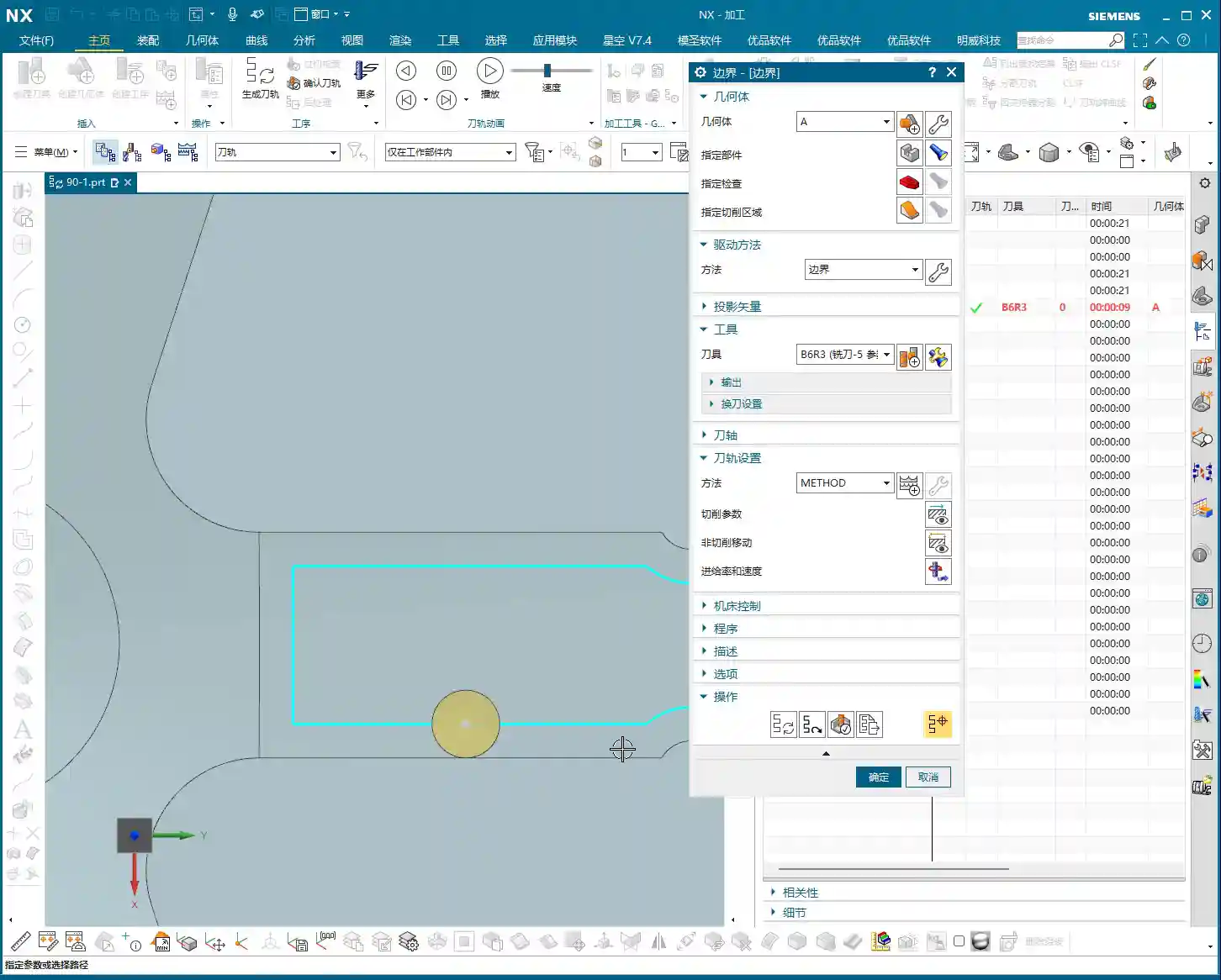
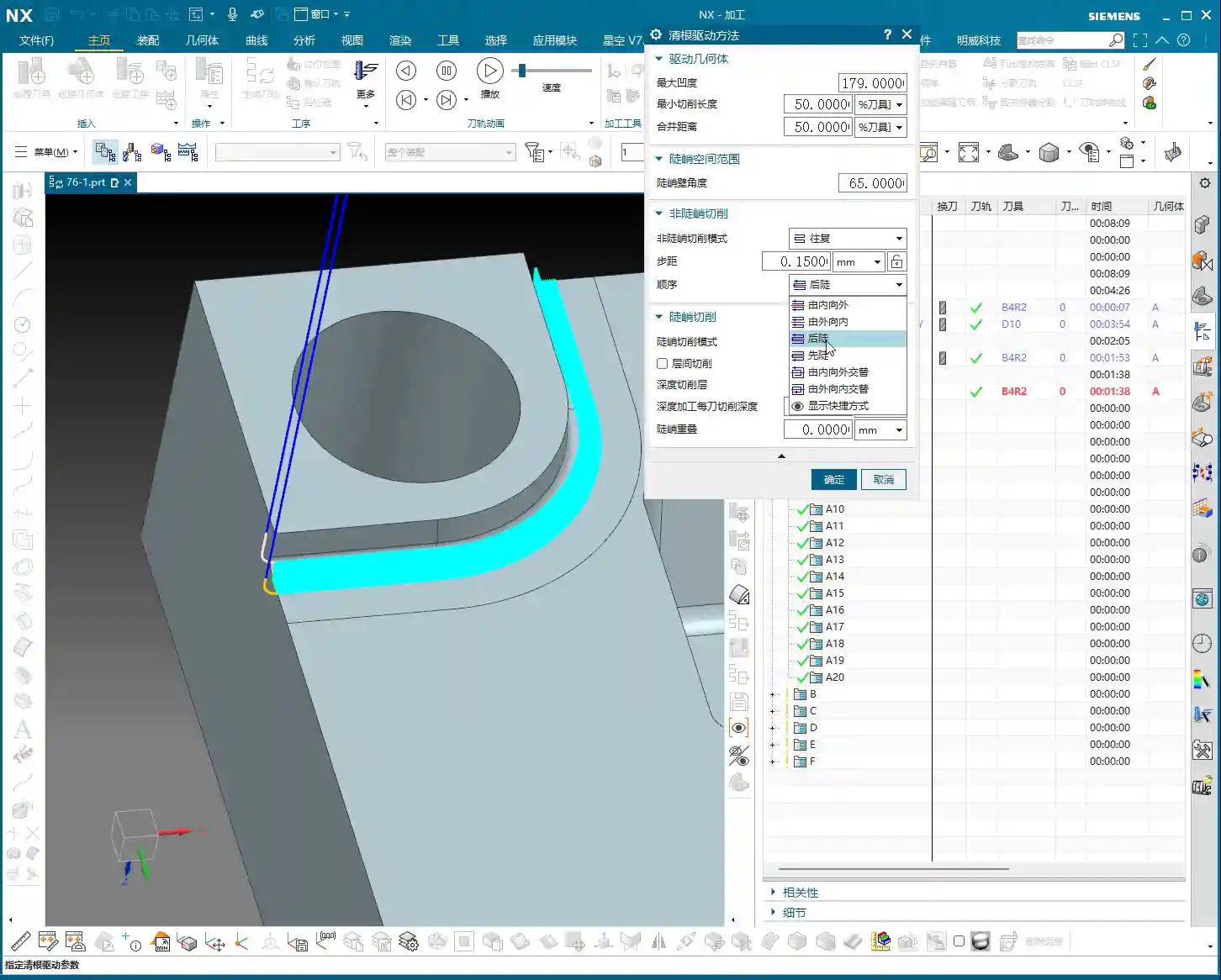
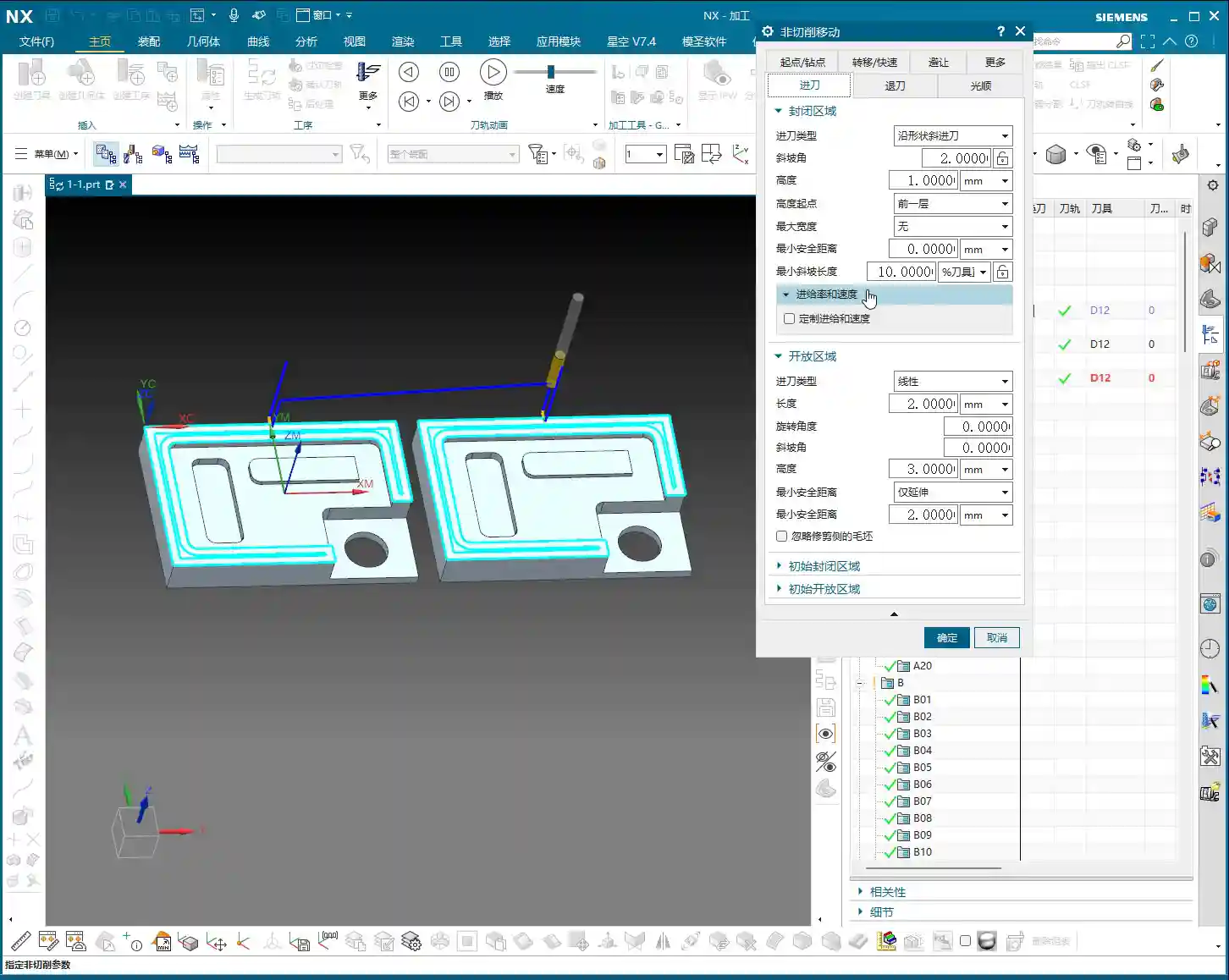
      • Change the tool entry/exit method to “Same as Open Area”, allowing the tool to enter and retract in obstacle-free regions.
      • Select “Arc Engage” for the tool entry method, with a radius of 1 millimeter. Arc engagement effectively prevents the tool from plunging directly into the material, reduces impact, protects the tool, and results in a better surface finish.

    Tool Selection and Boundary Handling

    For this corner cleanup, we’ll choose a 10mm flat end mill (Ø10mm). Its size is suitable, allowing it to reach into narrower areas while maintaining sufficient rigidity. A Ø6mm tool might be too weak.
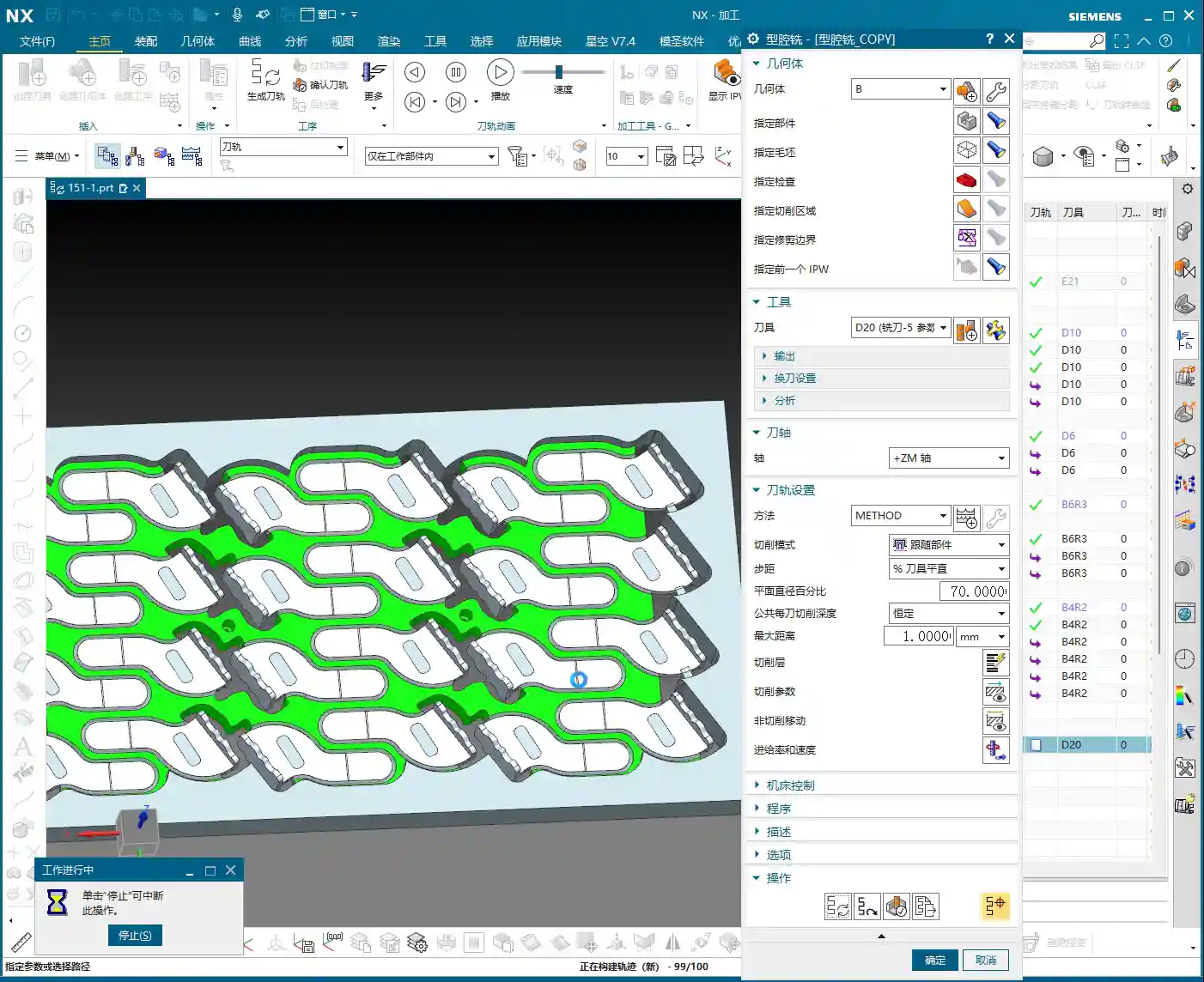
    Next, I noticed that a certain spot might not have been thoroughly cleaned due to the toolpath, which is “not ideal.” However, it’s not a major issue. For the roughing stage, as long as it doesn’t affect subsequent finishing, occasional minor imperfections can be temporarily “overlooked.” We need to learn to prioritize and not get bogged down over-focusing on minute details during roughing; that’s not a good practice.

    Second Side Machining: Efficiency and Strategy

    With the first side done, we need to quickly flip the part and machine the other side. Remember, in the workshop, flipping the part and fixturing are among the biggest time costs, so programs must be correct the first time, minimizing rework.

    Coordinate System Transformation and Program Reuse

    The quickest method is to transform the coordinate system, then copy the existing program and make minor modifications. Most parameters are universal.
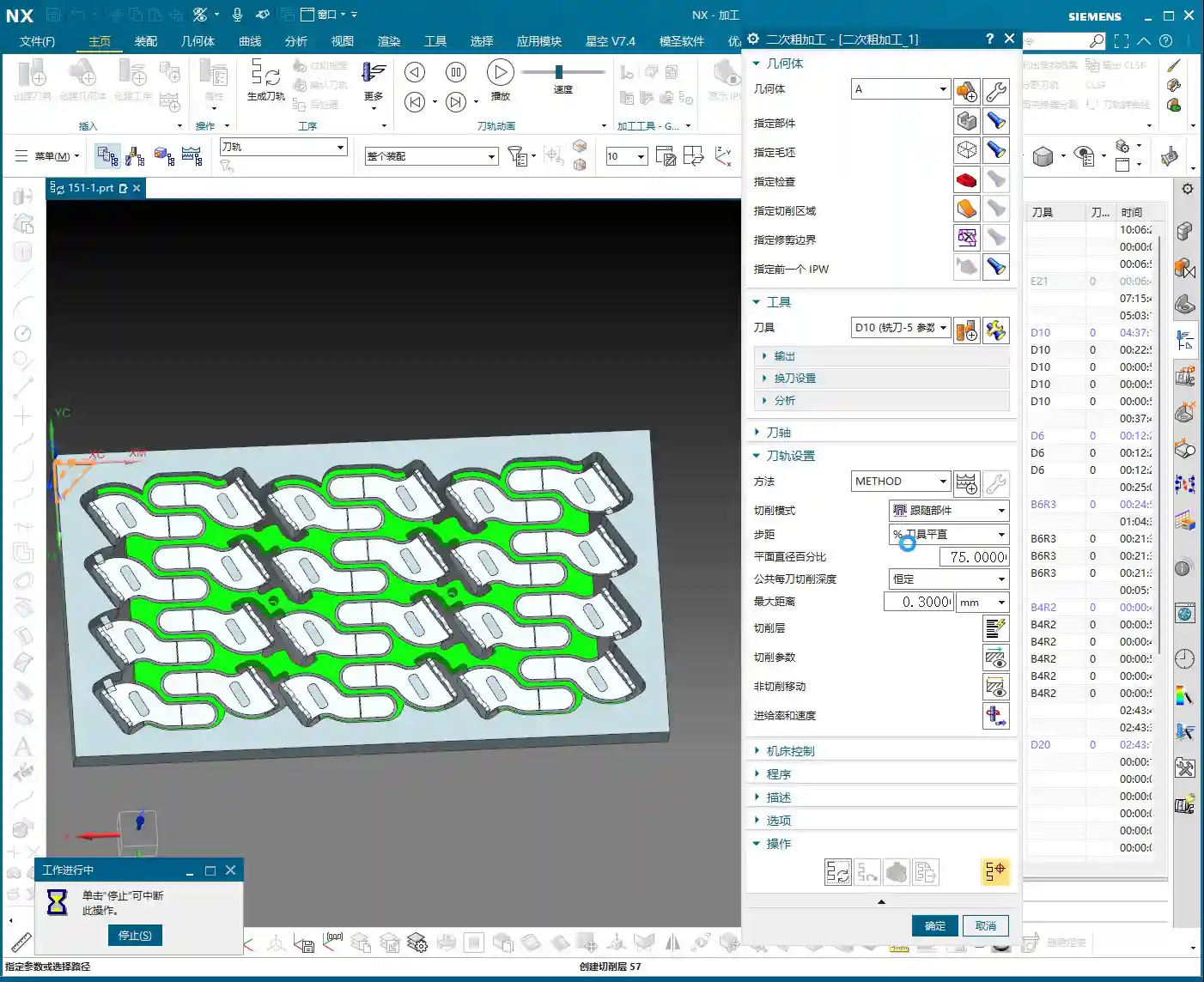
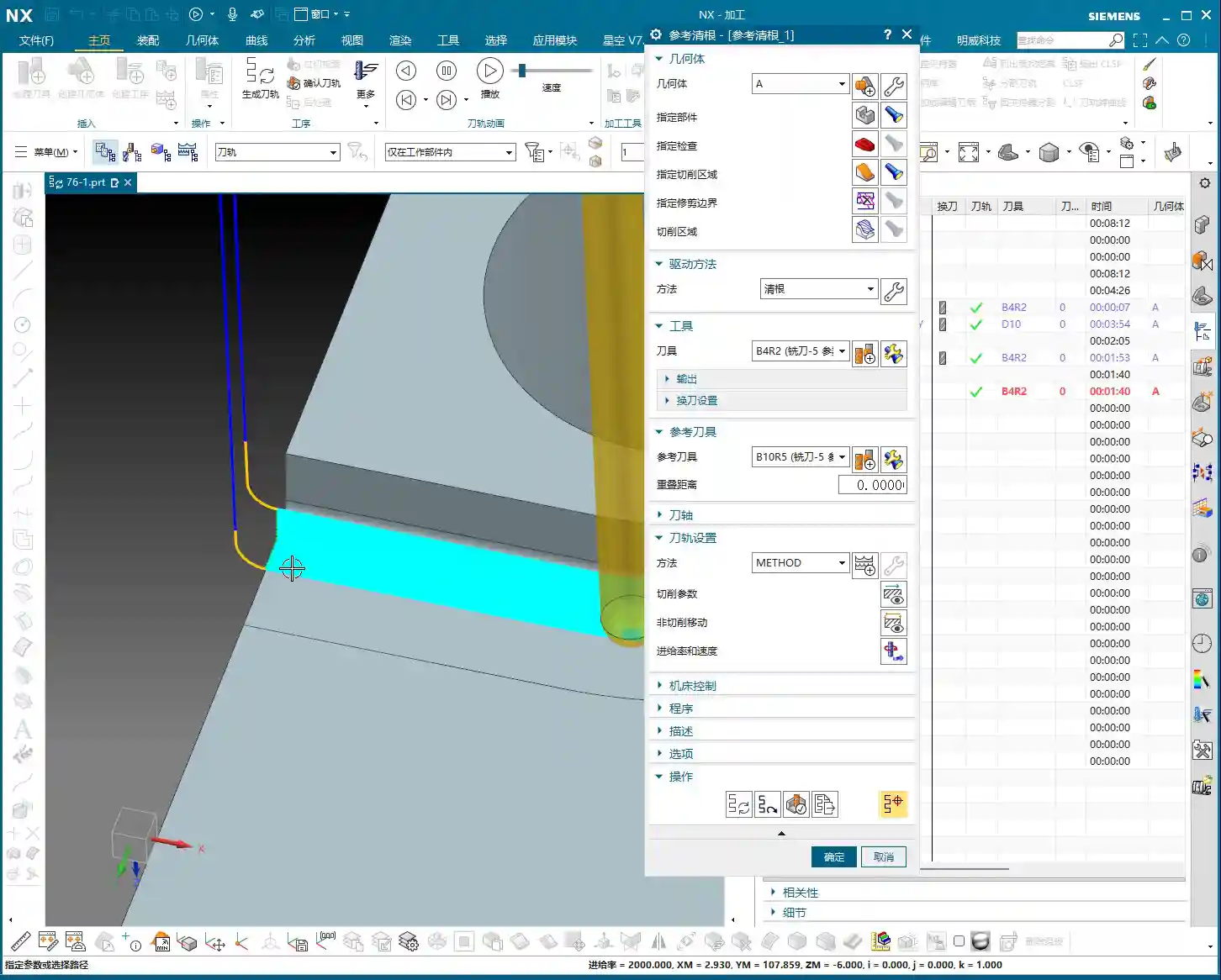
    • Blank Geometry Selection: The key is to select the blank geometry as this “B-side” after flipping. We previously machined the A-side; now we’re machining the B-side, and this absolutely cannot be mistaken.
    • Cutting Layers: For roughing, let the software automatically identify the cutting layers; it will find the last layer to mill.
    • Stock Setting: To be safe, we can leave a small amount of stock after corner cleanup, for example, 0.05 millimeters. This provides a margin for error in case of deformation or undetectable residual material during finishing. Never aim to machine to zero stock in one go; that risk is too high.

    “Surface Blocking” Technique: Handling Complex Regions

    While observing the machining of the second side, I found that some internal regions might experience redundant machining or be difficult to clean effectively. In such cases, we need to employ the “surface blocking” technique.

    • Purpose: To prevent the tool from entering areas that should not be machined, or to simplify toolpaths in complex regions.
    • Operation:

      • Select an “Offset Plane” to isolate the areas that need to be “blocked.”
      • Use the “Trim” function to cut away excess geometry, essentially defining a clear machining boundary for the tool.

    • Master Wang’s Tip: This trick is particularly useful when dealing with castings, forgings, or parts with complex internal structures. It effectively prevents “air cuts” and “heavy cuts.”

    Secondary Roughing: Larger Tools for Enhanced Efficiency

    With the initial roughing and corner cleanup complete, we now move to true “secondary roughing.” The strategy here is to use larger tools to quickly remove the bulk of the remaining stock.

    Tool Selection and Cutting Parameters

    Since this is secondary roughing, we need to “upsize” the tool to boost cutting efficiency.
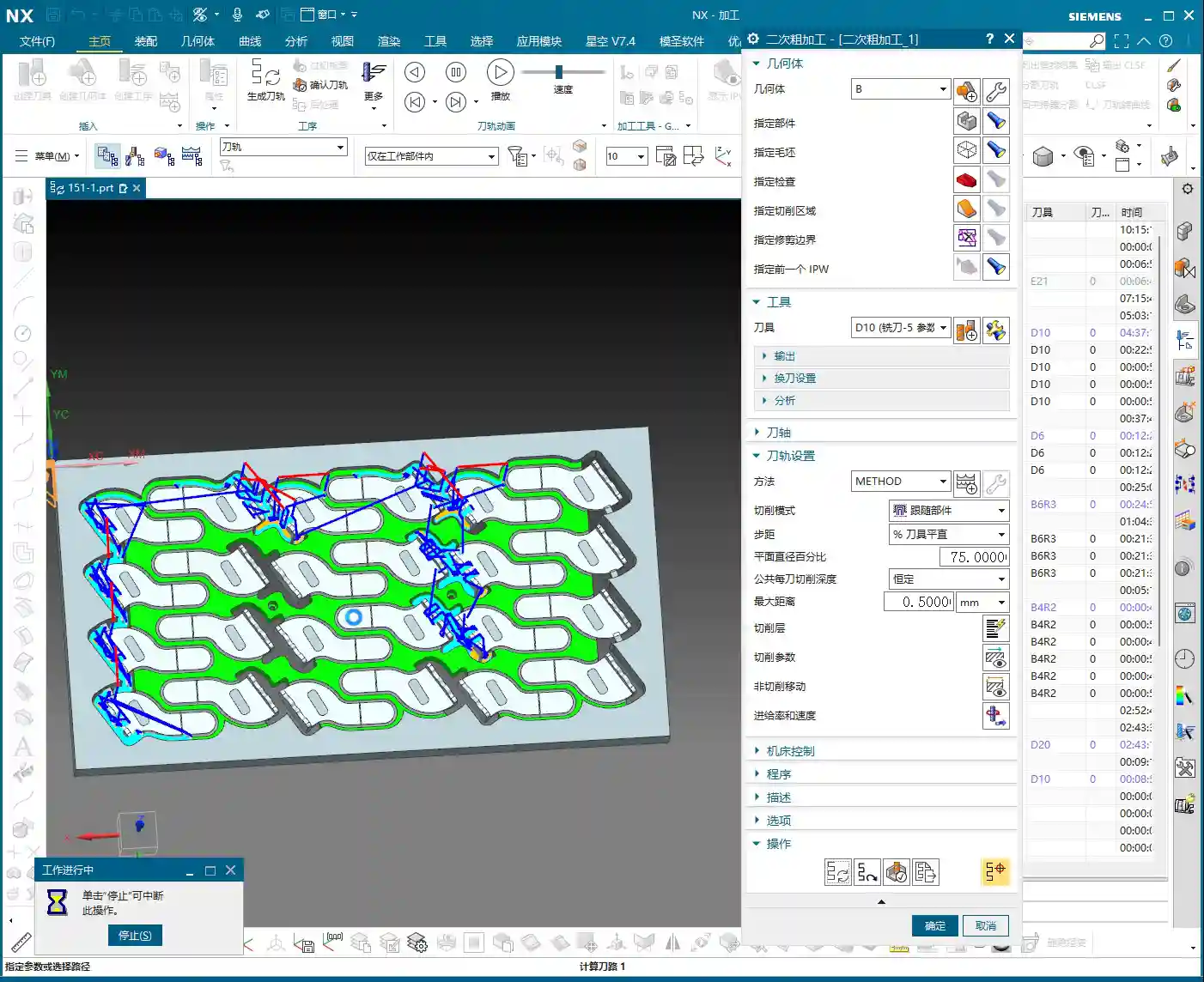
    • Tool: Go straight for a 20mm flat end mill (Ø20mm), or choose a 16mm or 18mm one depending on the specific situation. A larger tool allows for a greater volume of material removal per pass and fewer toolpaths.
    • Cutting Layers: With a larger tool, the previous fine “cutting layers” are no longer relevant; the software will determine them automatically.
    • Stock: For secondary roughing, leaving 0.3 to 0.5 millimeters of stock is appropriate, providing ample allowance for finishing passes.
    • Stepover: Based on the tool diameter and material, we’ll set it to 0.35 millimeters here. This needs to be adjusted according to actual conditions and machine rigidity.
    • Tool Entry/Exit Distance: Set this to 1 millimeter to ensure safe tool entry and retraction.

    Machining Simulation and Performance Evaluation

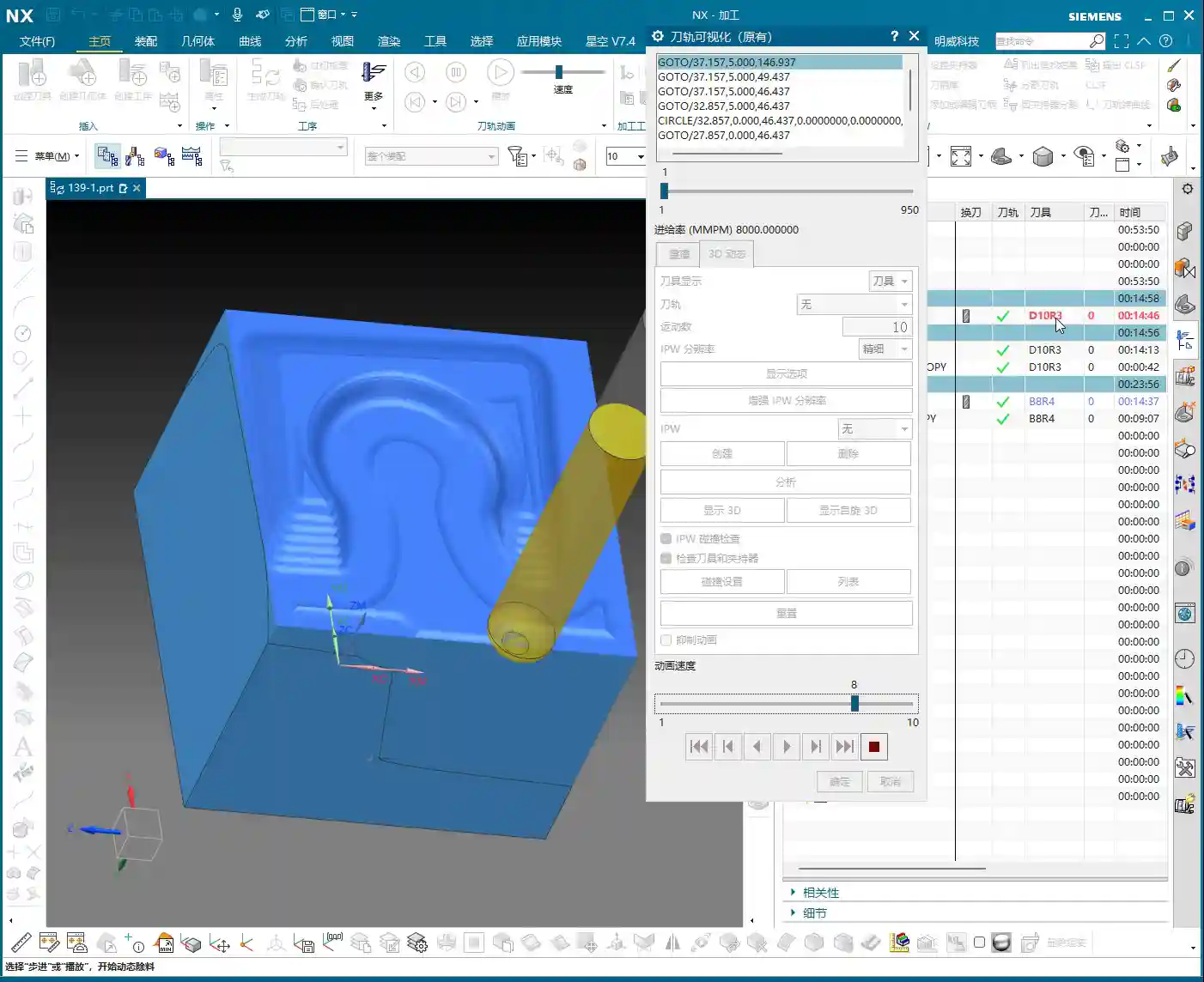
    After generating the program, you must carefully review the machining simulation. No matter how perfect the simulation, it’s never as real as watching the cutting sparks at the machine! But simulation can help us identify most problems beforehand.

    • Expected Outcome: Most areas should be cleaned up effectively by the Ø20mm tool.
    • Limitations: However, a Ø20mm tool certainly cannot reach all small corners and deep cavities. These areas must be left for subsequent finishing passes or smaller tools. During the roughing stage, don’t expect perfection everywhere; that’s unrealistic and uneconomical.

    Summary: Pitfall Avoidance Guide

    Alright, that concludes today’s lesson on secondary roughing programming. Master Wang has compiled a few practical tips to avoid common pitfalls—these aren’t things you’ll learn from textbooks:

    1. Computer Performance is a Bottleneck for Efficiency: NX program calculation, especially for complex surfaces or multi-axis simultaneous machining, is very resource-intensive. If your computer lags, it’s better to pause, optimize settings, or upgrade hardware, rather than pushing through. That’s a waste of time.
    2. Roughing Prioritizes Efficiency, Finishing Prioritizes Precision: For roughing, be bold with large tools, fast feed rates, and aggressive material removal. Don’t chase 0.01mm precision during the roughing stage; that’s counterproductive. However, always leave sufficient stock to provide adequate allowance for finishing passes.
    3. Tool Entry/Exit is the First Line of Safety: Improperly set tool entry and exit methods can, at best, affect surface quality, and at worst, lead to tool breakage or machine collisions. Always select appropriate arc or open-area entry/retraction based on workpiece geometry and tool characteristics.
    4. Pitfalls After Program Duplication: Copying programs saves time and effort, but the most common mistake is forgetting to modify critical parameters like geometry, blank, stock, and machining direction. Always double-check these after every copy. Just like today, I almost copied the geometry from the A-side to the B-side and forgot to change the machining face—that would have been a “wasted effort.”
    5. “Surface Blocking” is a Lifesaver for Complex Parts: For parts with deep cavities, complex internal structures, or regions that shouldn’t be machined, effectively utilize “surface blocking” or “area restriction” functions. This significantly optimizes toolpaths, preventing air cuts or damage to the workpiece.
    6. Multi-axis Programming is a Challenge: In the future, we’ll cover 4-axis and 5-axis simultaneous machining. These involve even greater computation and are more prone to programming errors, requiring more patience and experience. Be prepared, so you don’t get “stuck” when NX calculates the program.

    Alright, that’s it for today. Go practice more, commit these tips to memory, and we’ll pick up next time!

    [/CONTENT]

    👤 About the Author:
    The author is a veteran CNC machining professional with 15 years of industry experience, specializing in UG NX programming. This article is an original work representing personal practical insights.

    ⚠️ Copyright Notice: Unauthorized reproduction or distribution without prior communication is strictly prohibited.
  • Siemens NX Expert Master Wang’s Practical Secrets: Front-Side Secondary Programming for Graphite Irr

    📝 Key Takeaways:

    Siemens NX Expert Master Wang’s Practical Secrets: Front-Side Secondary Programming for Graphite Irregular Parts

    Opening Remarks: As per tradition, let’s get straight to the practical insights!

    Hello everyone, I’m Master Wang. Today, we’ll continue our discussion from last time. When it comes to front-side secondary programming for irregular graphite parts, it might look simple, but there are plenty of intricacies involved. Don’t just stare at the software interface; those seemingly insignificant small details in actual operation are what truly determine whether your product passes inspection and how efficient your process is.

    Step One: The Secrets of Clamping and Blank Selection

    Clamping Plate Dimensions and Clearance – “Don’t mess around, leave some room!”

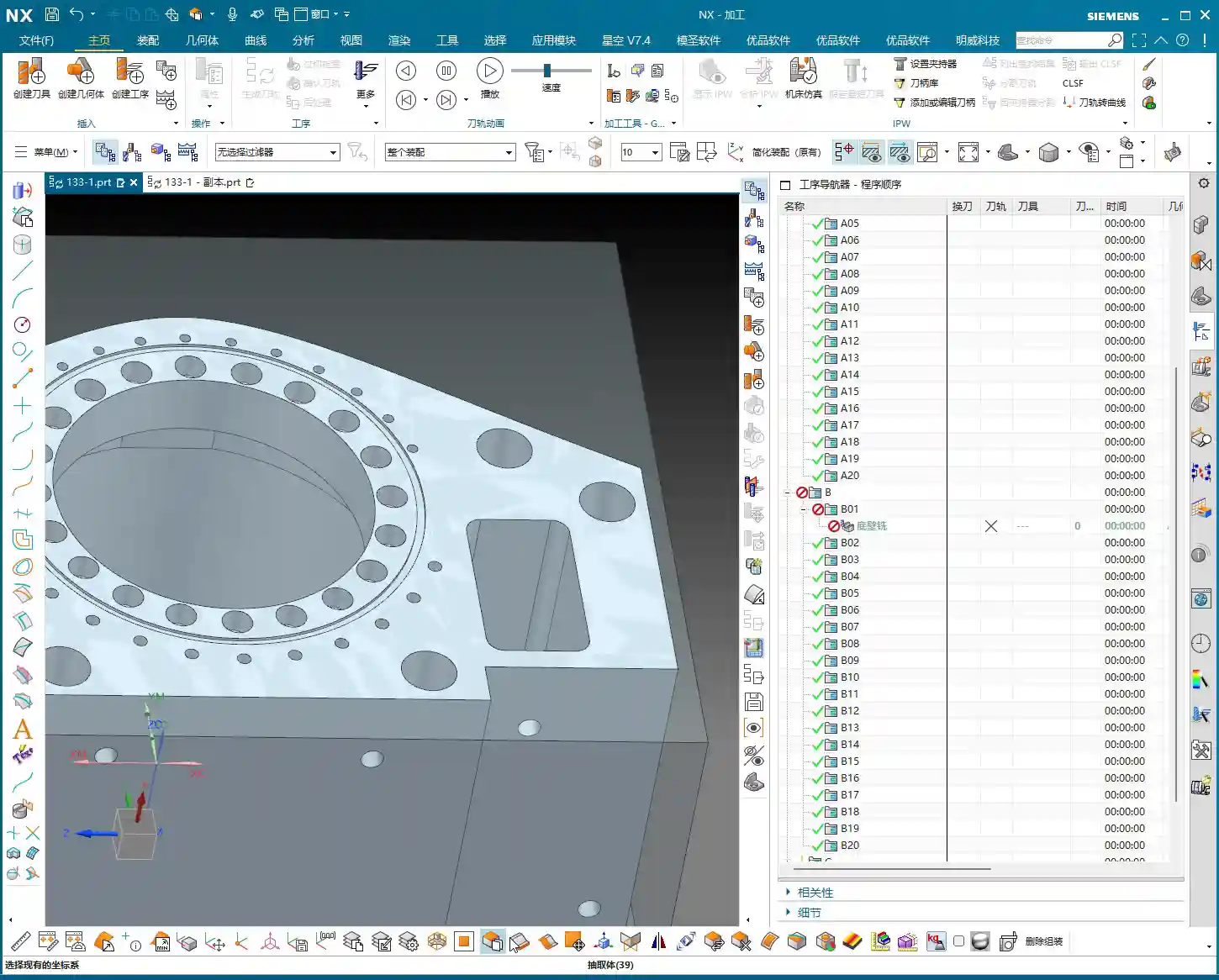
    Listen up. The clamping plate we used last time might have been a bit large, and that was fine for the previous operation. But for this secondary machining, especially for the precise work on these side surfaces, you need to pay close attention to that large clamping plate.

    • Actual Practice: The clamping plates we actually use are only so big; bigger isn’t always better. When fixturing, never let the clamping plate interfere with the machining area!
    • Master Wang’s Insight: We’re going to use a ball end mill (or a bull nose end mill) for side Contour Milling. The tool always needs space for approach and retraction, right? So, leave just a little bit of clearance between the clamping plate and the workpiece – just a little, not too much. What do we call this? Ensure sufficient safety clearance to prevent tool collisions and overcutting. Don’t just rely on simulation software showing no collisions; that’s only theoretical. The sparks generated by the tool cutting on the actual machine are the real truth!

    Precise Blank Selection – “Don’t select everything; be meticulous!”

    Entering secondary programming, blank selection can no longer be as indiscriminate as it was for Roughing. The areas that underwent roughing have already been processed; now we only need to focus on the areas that haven’t been machined or require Finishing passes.

    • NX Operation: When setting the workpiece blank, you must precisely select the portion that needs to be machined in the current operation. For areas that have already been machined, do not define them as part of the blank. For example, we only select this “0.2” stock face that needs machining.
    • Master Wang’s Insight: Why do this? It’s simple: to reduce air cutting! If your blank selection is too large, the tool will spend a lot of time moving through air, wasting time and increasing machine wear. While graphite is soft, the machining time saved is pure profit! Also, clearly define the machining boundaries, such as “only machine up to this surface,” and control the Depth of Cut to prevent over-machining.

    Step Two: The Core of Surface Modeling – Curve Projection and Face Splitting

    For irregular graphite parts, especially complex surfaces on the front side, precise Finishing passes rely heavily on surface operations in Siemens NX. This is where mistakes often happen and where a machinist’s experience is most tested.

    Refining Curve Projection – “Sometimes a face isn’t enough; you need the body!”

    We need to machine specific side surfaces of the part, but directly selecting regions might not be precise enough. The best method is to define machining boundaries through projecting curves.

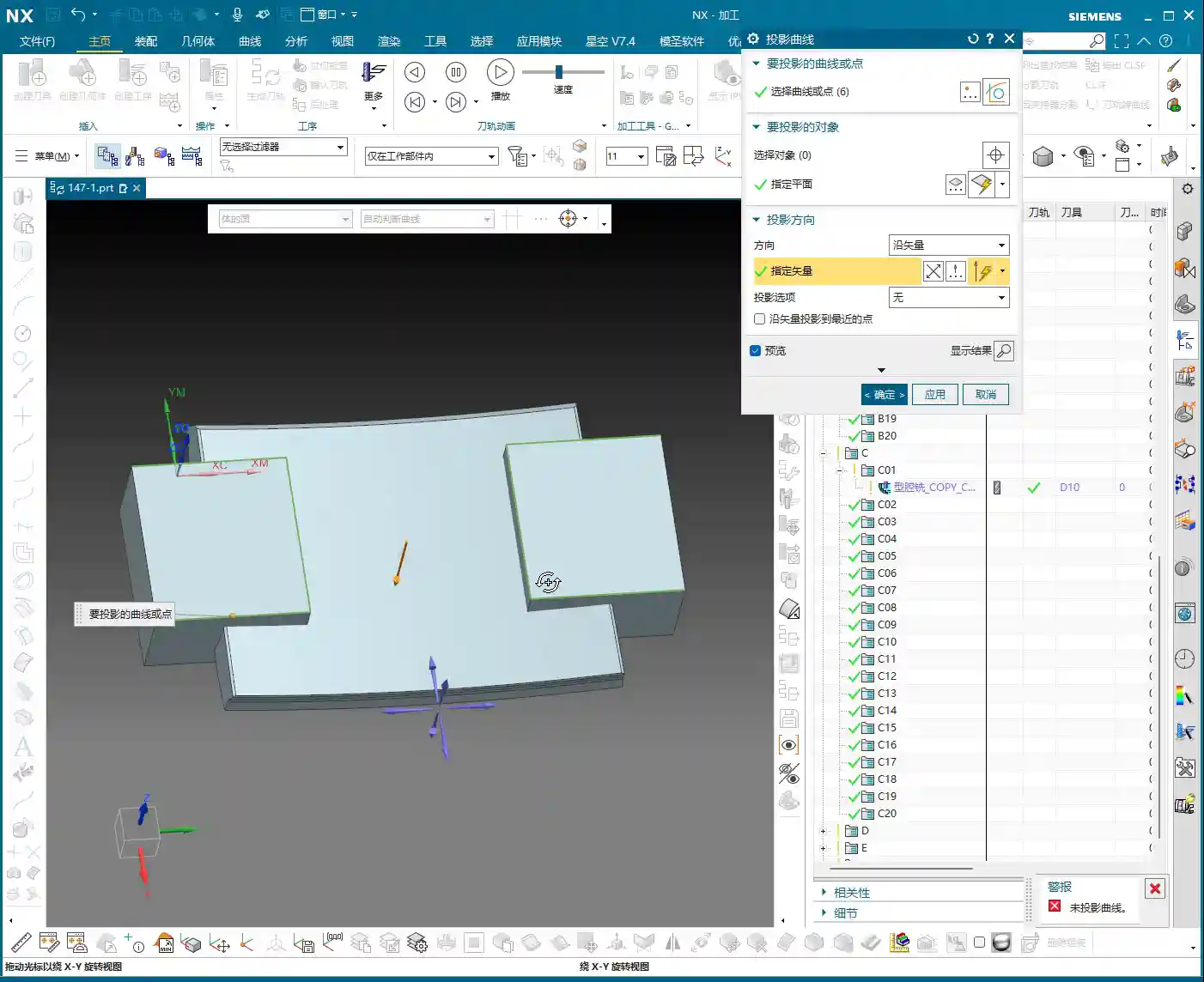
    • NX Operation: First, copy the 2D curves that will serve as boundaries (e.g., the part’s edge lines) to a new layer (e.g., layer 11) for easier modification. Then, use the ‘Project Curve’ command. Here’s a pitfall: sometimes, direct projection onto a specific ‘face’ will fail. In such cases, try selecting the entire ‘body’ as the ‘projection object’! This is a common occurrence in Siemens NX; even when you intend to project onto a face, selecting the body often works.
    • Master Wang’s Insight: If projection fails, don’t get frustrated right away; Siemens NX can be ‘temperamental’ sometimes. Try different projection objects, or check if your curve is complete and if the target face can truly be fully covered by the curve. Additionally, the projection direction is crucial; an “Up to Down” projection method should be determined based on the actual situation.

    Face Splitting and Curve Offset – “Can’t split? The curve didn’t reach the edge!”

    After projecting the curve, we’ll use it to split the surface, thereby defining the precise machining area.

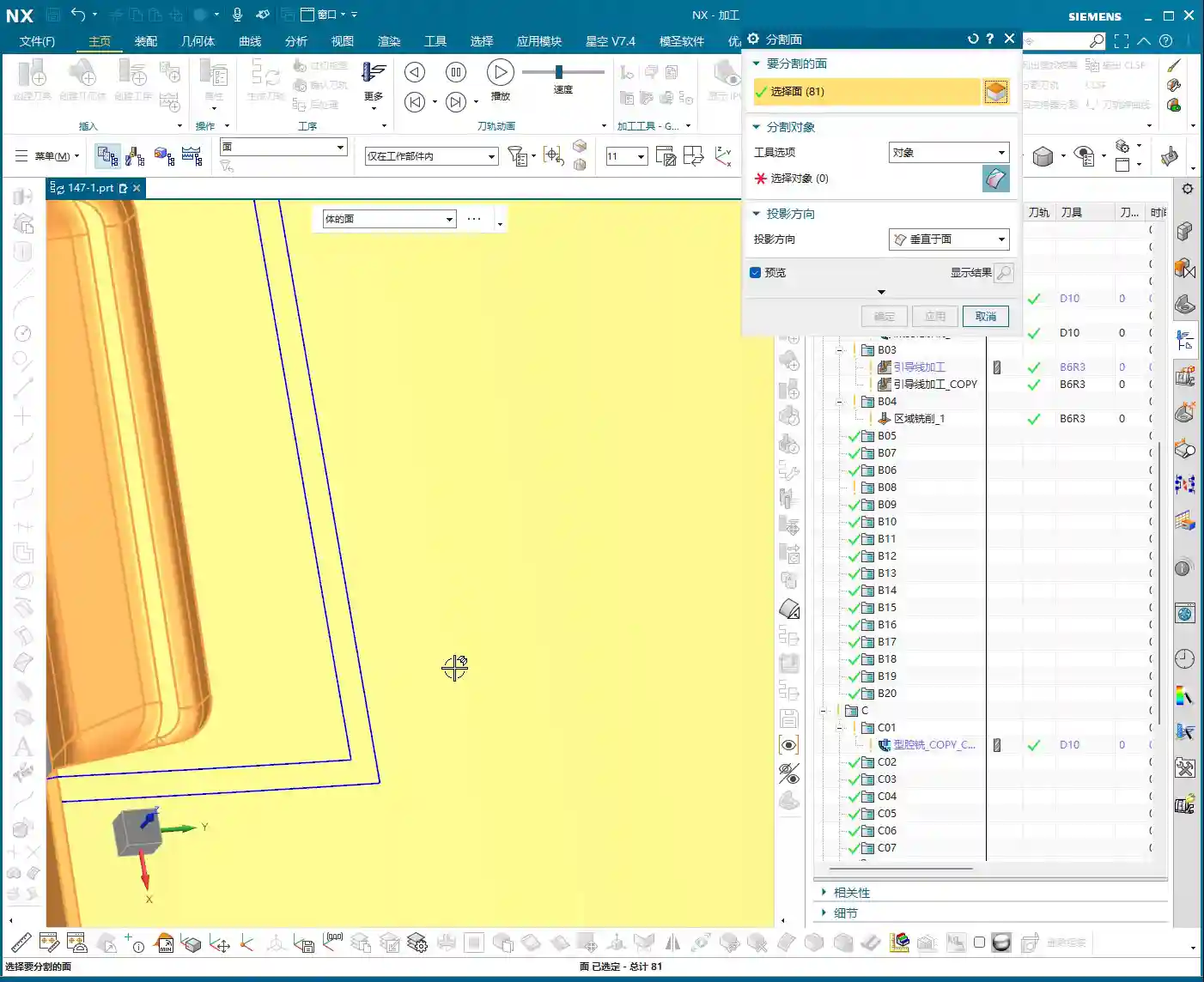
    • NX Operation: Use the ‘Split Face’ command, selecting the face to be split and the projected curve as the splitting tool. Here’s another pitfall! If your curve doesn’t fully extend to the boundary of the face, or if it doesn’t extend slightly beyond the face, it simply won’t split! In this case, you need to use the ‘Offset Curve’ command to offset the projected curve outwards, for example, set the offset amount to 3.5 mm (to ensure it encompasses the tool radius or leaves sufficient clearance), letting it ‘overshoot’ a little, then use this offset curve to split the face.
    • Master Wang’s Insight: The offset value, such as 3.5 mm, isn’t arbitrary; it’s typically determined by a combination of tool radius, machining allowance, and process requirements. Offsetting ensures that the split line fully covers the machining area, preventing burrs or unmachined regions at the boundaries. Furthermore, if similar regions exist on both the left and right sides, don’t forget to use the “Mirror Plane” function to quickly duplicate curves and boost efficiency.

    Step Three: Program Generation and Final Inspection

    Copying Programs and Rapid Generation – “Don’t start from scratch; learn to be smart!”

    Once you’ve successfully split out the machining area, programming becomes much simpler. Often, you don’t need to create a new program from scratch.

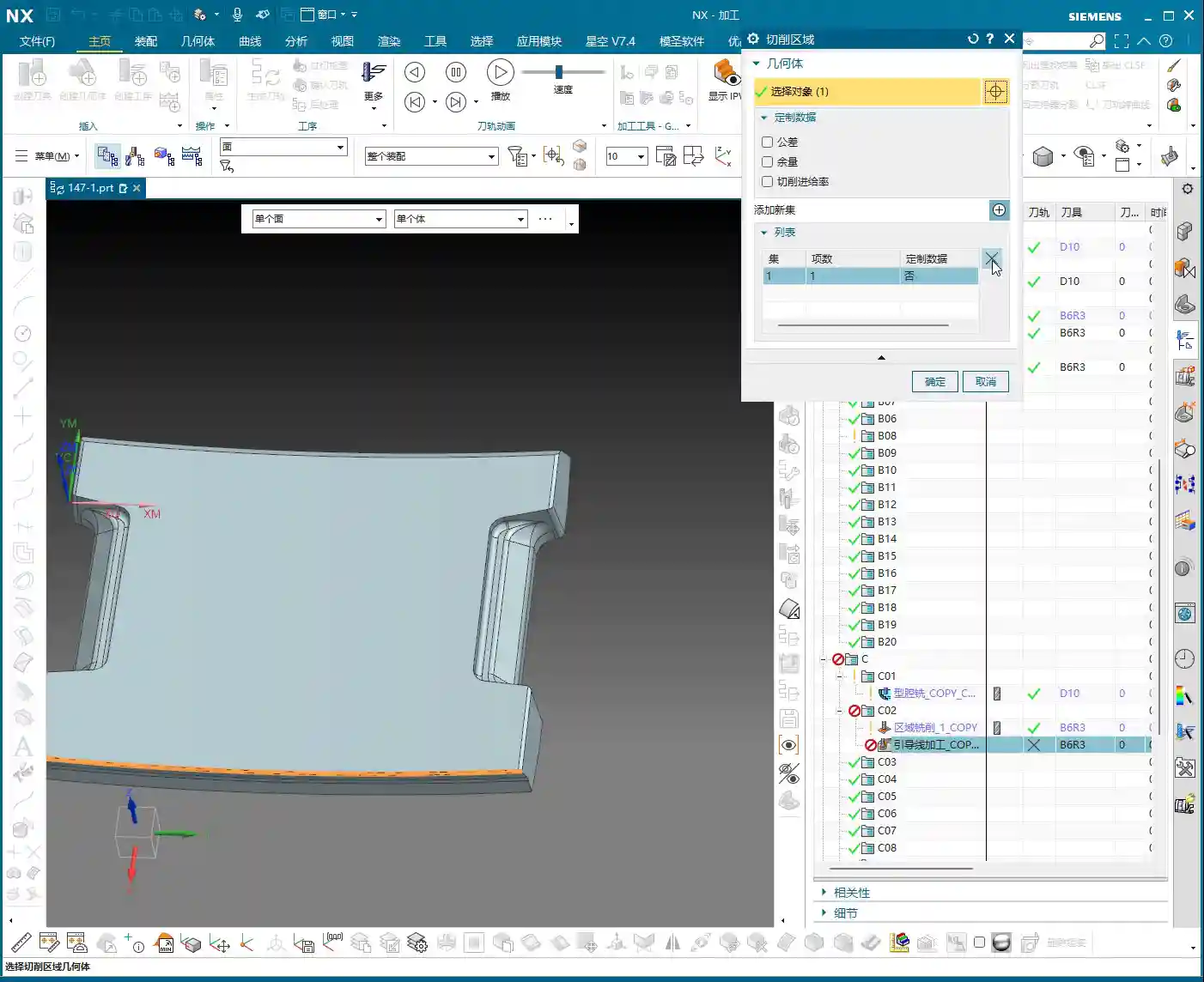
    • NX Operation: Simply copy a similar, already completed program, then modify its machining area and blank definition, selecting the face we just split as the machining surface. This way, most of the cutting parameters and tool information are inherited, and you can directly generate the toolpath.
    • Master Wang’s Insight: Efficiency! Efficiency! Efficiency! I’ll say it three times because it’s that important. As an experienced technician, you’re not expected to do everything from scratch, but rather to skillfully employ Siemens NX’s “Copy-Paste-Modify” technique. Especially when machining series parts or similar features, this method can significantly save programming time.

    Overlap Distance and Small Chamfers – “Good enough is good enough; don’t be overly fastidious!”

    After program generation, a quick inspection is essential. For some non-critical small details, you need to know when to make compromises.

    • Actual Practice: When inspecting the toolpath, if you see some “overlap distance” between toolpaths, it’s generally acceptable as long as it doesn’t affect the final accuracy and surface quality. Sometimes it can even be beneficial, preventing unmachined “tool marks.” Finally, don’t forget that some small chamfers need to be addressed; these are typically completed independently with smaller tools or resolved as part of the final Finishing pass.
    • Master Wang’s Insight: Machining adheres to the principle of “too much is as bad as too little.” Over-pursuing theoretical perfection can actually waste a lot of time and cost. For non-critical dimensions and non-essential surfaces, allowing a certain amount of “reasonable error” or “overlap” is practical reality. However, for materials like graphite, tool wear and the matching of cutting parameters are particularly crucial to ensure tool life and surface finish, preventing chipping.

    Summary: Pitfall Avoidance Guide

    1. Clamping and Workpiece:

    Clamping plates must provide ample space for tool approach and retraction, especially for small tools. Re-evaluate clamping interference risks with every operation change.

    2. Blank Definition:

    Strictly define the blank according to the requirements of the current operation to prevent air cutting and improve efficiency. For multi-stage operations, the blank size is progressively reduced.

    3. Curve Projection:

    If projection to a face fails, try projecting to the entire solid (Body). The projected curve must be complete and fully cover (or slightly extend beyond) the target area, otherwise, subsequent face splitting will result in errors.

    4. Face Splitting:

    When splitting is unsuccessful, first check if your curve extends to the face boundary. If necessary, offset the curve (e.g., outwards by 3.5mm), letting it extend slightly beyond the face, then perform the split. This is a common technique for resolving splitting failures.

    5. Programming Efficiency:

    Make good use of Siemens NX’s copy-paste function to modify parameters and machining areas, rather than starting from scratch every time. For highly repetitive or similar operations, this is the ultimate time-saver.

    6. Empirical Judgment:

    Don’t cling rigidly to theoretical perfection. Some minor toolpath overlap or machining details in non-critical areas can be handled flexibly, provided quality is maintained. However, for critical areas involving accuracy and surface quality, meticulous attention is paramount.

    Alright, that’s all for today’s practical insights. Keep observing, keep practicing, and if you have any questions, we’ll discuss them next time!

    👤 About the Author:
    The author is a veteran CNC machining professional with 15 years of industry experience, specializing in UG NX programming. This article is an original work representing personal practical insights.

    ⚠️ Copyright Notice: Unauthorized reproduction or distribution without prior communication is strictly prohibited.
  • Siemens NX Full Sequence Programming for Small Mold Parts: Master Wang’s 15 Years of Practical Exper

    📝 Key Takeaways: Master Wang shares practical insights on full sequence Siemens NX programming for small mold parts: covering everything from rest milling to finishing passes. The focus is on effectively addressing corner remnants, optimizing toolpaths with Siemens NX, and boosting machining efficiency. He emphasizes the practical application of surface selection, Depth of Cut control, and helical entry to bridge the gap between theory and real-world machining.

    I. Rest Milling: Don’t Let Small Remnants Spoil Your Finish Pass

    Listen up, apprentices. Today, let’s talk about full sequence programming for small mold parts—it’s not just about clicking a mouse. Especially after roughing and before moving to finishing, there’s a critical step: **rest material cleanup**. It might seem trivial, but it’s key. As I’ve said before, once the program runs, a dynamic simulation often reveals those tiny remnants in certain areas, particularly in **corners and deep slots**.

    1. Initial Rest Material Handling and Simulation Verification

    After the last program ran, you might think it’s good enough. But run a simulation, and see? In this area (pointing to a specific region on the model), isn’t there still a bit of **rest material**? Don’t underestimate that “little bit”; it’s a **hidden danger** for your subsequent finishing passes. So, we need to add another operation specifically to clear it out. Remember, NX dynamic simulation isn’t just for show; use it extensively, examine it closely, especially when simulating cutting sparks and material buildup – that’s where the real skill lies.

    We can copy the previous operation and then, for this specific rest material area, select only that small fillet for cleanup. For the Depth of Cut, let it go a bit **deeper** and extend the toolpath a bit further. Even if it seems “excessive,” ensuring the material is fully machined is always better than under-machining. It’s like in life, always leave a little leeway.

    2. Depth Control and Surface Selection Techniques

    A common mistake here is when the program doesn’t generate. Why? Nine times out of ten, it’s because the surfaces weren’t selected correctly or the cutting parameters are unreasonable. In NX, after you set the machining area, if the toolpath doesn’t generate, first check your selected machining surfaces and boundaries. Sometimes, missing just one small surface can cause the entire program to “strike.”

    Also, learn to control your cut layers. For example, if we want to start machining from a specific surface, NX has the “Starting Cut Level” option. Directly specify which surface to start from and move downwards, rather than from the highest point of the model. This effectively avoids air cutting and allows for more precise control over the Depth of Cut.

    I just demonstrated and noticed the toolpath was still a tad short. What do you do then? You don’t change the tool; instead, adjust the “Cut Layer” **”Extension Amount”** to extend it downwards by 0.5 mm. That’s enough. Don’t underestimate that 0.5 mm; it’s the secret weapon for ensuring no rest material is left in the corners.

    II. Machining Strategies for Corner Regions: Detailed Processing

    Next, let’s focus on those corners prone to accumulating “dirt.” Small molds are all about precision and surface quality; if the corners aren’t clean, the whole part is useless.

    1. Selecting the Correct Machining Area and Tool

    We insert a “Rest Machining” or “Area Milling” operation. Select the part, then the cutting region. In this area, I generally recommend selecting all relevant surfaces to ensure complete coverage. However, for certain special areas, like narrow slots in deep cavities, you can initially skip them and address them later with a finer tool or specialized toolpath.

    Regarding tool selection, as I said earlier, we’re using a D8 ball end mill. For finishing small molds, ball end mills are your workhorse. When choosing a tool, don’t just look at the diameter; also consider the tool’s flute length, shank diameter, and tool holder length to ensure no interference and smooth machining to the deepest points. Especially when performing collision detection in NX, that’s not something to take lightly; one collision could scrap a machine worth hundreds of thousands.

    2. The Art of Climb Milling Direction and Toolpath Strategy

    In NX, the cutting direction also matters. For instance, in this area, letting the tool run with climb milling yields better surface quality and longer tool life. Especially when machining challenging materials like titanium alloys or superalloys, climb milling effectively reduces built-up edge and enhances cutting stability. This requires adjusting the “Machining Strategy” within the “Cutting Parameters” in NX.

    Furthermore, the toolpath strategy is crucial. For mold cavities, especially those with slight tapers, Spiral Inward plunge is often more efficient than parallel passes, and the toolpath is smoother. It ensures the tool is continuously cutting, reduces air moves, and avoids sudden tool loading in corners, extending tool life. You can select “Spiral” or “Spiral Inward” path types in “Cutting Method”; try them out to see which works best.

    III. Tool Selection and Entry Methods: Optimizing Machining Efficiency

    The tool is the “tooth” of CNC machining; if you choose it incorrectly or use it poorly, even the best machine is useless.

    1. Flexible Switching Between Large and Small Tools

    Earlier, we used a D8 ball end mill for cleanup, but sometimes you’ll find an R3 tool might be too large, unable to fully clear certain areas, or simply inefficient. At this point, you need to consider a **”tool change”** strategy.

    For instance, during the roughing stage, you can boldly use a larger tool, like an R1 tool (an R1 tool is a ball end mill or bull nose end mill with a 1mm corner radius). This boosts efficiency. However, for finishing small molds, especially intricate features, you’ll need to switch to a smaller tool, or even a small carbide end mill. Remember, matching tool size with feature geometry is the prerequisite for achieving high precision.

    Of course, tool changes aren’t random. You need to consider tool change time costs and tool magazine capacity. When programming in NX, you can plan your tool sequence in advance to minimize unnecessary tool changes.

    2. Layered Machining and Safe Tool Entry

    For areas with significant depth or complex cavity shapes, “layered machining” is often the most effective approach. Cutting down layer by layer, from top to bottom, can significantly reduce tool load and prevent chipping. This can be achieved in NX by setting the “Depth of Cut” and “Depth per Cut” (Stepdown).

    Tool entry methods are also paramount. Besides the helical entry mentioned earlier, NX offers various entry methods, such as “Ramp entry” and “Plunge entry”. Choosing the right entry method effectively protects the tool, reduces impact, and extends tool life. Don’t underestimate these details; this is where you learn the “machine’s temperament” that isn’t found in textbooks.

    Finally, make extensive use of the “Clearance” function. NX’s “Non-Cutting Moves” has many options; properly setting retract height and approach/retract safety distances ensures the tool doesn’t collide with the workpiece or fixturing during non-cutting movements – this is the baseline for safe production.

    Summary: Pitfall Avoidance Guide

    • Dynamic Simulation is essential: Don’t rely solely on experience and guesswork; use NX’s simulation functions repeatedly, paying close attention to rest material and collisions.
    • Precision in Surface Selection: When selecting machining areas, even a small missed surface can lead to program errors or incomplete machining. It’s better to over-select than to under-select.
    • Cut Layers and Extension: Flexibly use “Starting Cut Level” and “Extension Amount” to precisely control the Depth of Cut, especially for corner cleanup.
    • Experiment with Toolpath Strategies: Helical entry, layered machining, and others – choose the most suitable one based on part characteristics; don’t use a one-size-fits-all approach.
    • Tool Matching Principle: Small features require small tools, deep cavities require long tools. Roughing uses large tools, finishing uses small tools. It’s not about the most expensive, but the most suitable.
    • Pay Attention to Detail Parameters: Climb milling and conventional milling each have their applicable scenarios; don’t mix them up, as it affects surface quality and tool life.

    Alright, that’s it for today’s practical takeaways. Practice more, ponder more; NX programming is a skill that comes with practice, but within that mastery, you need these real-world insights. We’ll pick up next time. If you have any questions, feel free to ask anytime.

    👤 About the Author:
    The author is a veteran CNC machining professional with 15 years of industry experience, specializing in UG NX programming. This article is an original work representing personal practical insights.

    ⚠️ Copyright Notice: Unauthorized reproduction or distribution without prior communication is strictly prohibited.

  • Master Wang’s Practice: In-depth Explanation of Multi-Process Part Roughing – Sequence 2, Avoiding C

    📝 Key Takeaways: **

    Multi-Process Roughing – Sequence 2: A Practical Guide

    Hello everyone, Master Wang here. Picking up where we left off, the first machi…

    [VIDEO_HERE]

    Hello everyone, Master Wang here. Picking up where we left off, the first machining sequence is complete. Now, we’re diving into the second roughing sequence. Listen up: this is a critical step in multi-process machining. If you don’t get the details right now, you’ll be dealing with rework during finishing!

    Sequence 2 Machining: Overview and Strategy

    For this second sequence, the primary goal is to rough out the part’s main face (typically the upward-facing machining surface), internal cavities, and top surfaces. Remember, the machining order is crucial: first, perform Face Milling to level the large flat surfaces; then, proceed with Roughing the internal cavities to remove the bulk of the material; finally, it’s common practice to consider heat treatment to stabilize the part’s properties before moving to Finishing pass. This is the most reliable process flow.

    The “Soul” of Siemens NX Coordinate Systems and Stock Setup

    The Secrets of the Work Coordinate System (WCS)

    Every time you switch sequences, or even subdivide into different machining strategies, the Work Coordinate System (WCS) must be re-evaluated and precisely positioned. This is the first critical gate for ensuring machining accuracy. For Face Milling, you can set the WCS at a corner or along an edge of the part for ease of operation.

    Master Wang’s Secret Tip: Don’t just rely on software simulation and think the WCS can be anywhere. An inaccurate WCS setup makes even the most beautiful tool path useless! Especially when you get to internal Roughing, make sure to position the WCS exactly at the “center” of the part. Otherwise, the tool will “get lost,” leading to eccentricity at best, or a tool crash and scrapped part at worst! This is a lesson many newcomers learn the hard way!

    Precisely Defining Stock: Residual Material is No Longer a Mystery

    For this sequence, we’ll directly use the stock state after the first machining sequence, which saves the hassle of re-modeling. The key is to understand how much material is currently remaining on the stock and how much allowance you plan to leave for Finishing pass.

    For example, after measurement, we find this face has a remaining height of 24.5mm (approx. 0.96 inch). I plan to leave 2mm (approx. 0.08 inch) of allowance for Finishing pass. Therefore, for Face Milling, I need to machine down to 24.5mm – 2mm = 22.5mm (approx. 0.88 inch). You can directly copy and paste this value in NX to ensure accuracy. Don’t underestimate these few tenths of a millimeter; they accumulate into precision issues!

    Practical Tip: Every time you transition between machining sequences, re-measure the actual stock dimensions instead of blindly trusting blueprint values or theoretical values from the previous program. Real-world data is what guides you to create the most optimal tool paths. In NX, you can use the “Offset” function to precisely offset a datum plane upwards or downwards by the required allowance, using it as a Depth of Cut reference.

    Face Milling Operation: The Art of Aggressive Material Removal

    Tool Selection and Parameter Configuration

    For Face Milling, we’ll go with a large tool. This time, I’ve chosen a D63 face mill with 0.8mm corner radius inserts. A “Zig” or “Zigzag” cutting pattern will be efficient and straightforward. For cutting parameters, set feed rates and spindle speeds to conventional values initially. But remember, when the machine is actually running, you must observe the cutting sparks and listen to the cutting sound, then fine-tune as needed. Textbook parameters are just a reference; real-world conditions are always changing.

    Critical Depth of Cut and Material Allowance Control

    As mentioned earlier, the target Depth of Cut (DOC) is 22.5mm. For the first pass, you can go slightly shallower, perhaps 0.5mm (approx. 0.02 inch), allowing the tool to “test” the surface, reduce impact, and protect the inserts. Subsequent passes can then use the normal DOC. Once the entire Face Milling program is complete, that shiny surface will give you peace of mind.

    Words of Experience: During Face Milling, you can leave a little extra material allowance, even 0.1-0.2mm (approx. 0.004-0.008 inch), to ensure there’s enough material for the subsequent Finishing pass and to prevent chipping. However, don’t leave too much, as it will impact Roughing efficiency. Especially for difficult-to-machine materials like titanium alloys and superalloys, the Depth of Cut on the first pass must be carefully controlled to minimize impact and extend tool life.

    Internal Roughing: The Starting Point for Precision Machining

    WCS Reset: The Lifeline for Internal Machining

    After Face Milling is complete, our stock has changed. Now we begin internal Roughing, which is a very crucial stage. Listen carefully: for internal Roughing, you MUST reset the WCS to the “center” of the part! Do not use the WCS from the Face Milling operation; that will cause tool path deviation, resulting in holes or cavities that are not round, or are incorrectly positioned. This is the most common mistake and the most overlooked area for newcomers.

    Master Wang’s Warning: If the WCS for internal Roughing remains in a corner, it could lead to eccentricity and a scrapped part at best, or a tool crash and machine damage at worst! Don’t make such amateur mistakes; we’re talking about equipment worth hundreds of thousands of dollars.

    Boundary Trimming and Auxiliary Surface Construction

    For internal Roughing, we need to use “trim boundaries” to precisely control the tool’s machining range. Some areas require material removal, while others have already been machined or don’t need cutting. This is where auxiliary surfaces come into play.

    How do you do it? It’s simple: use the “Thicken” or “Offset” commands in NX to create new auxiliary surfaces along the edges of surfaces where material allowance needs to be left or where the tool needs to avoid. These auxiliary surfaces become our “trim boundaries.” They tell the tool: “Don’t cross this line! Work only within these specified regions!” This not only prevents the tool from cutting unintended areas but also significantly reduces air cutting, greatly improving machining efficiency.

    Efficiency Boost: Judicious use of trim boundaries not only precisely controls the machining area but also drastically cuts down on air cutting time. The electricity and time saved are direct cost savings. For complex cavities, planning trim boundaries in advance ensures smoother and more effective tool paths.

    Stock Management and Program Verification

    Clean Up Redundant Stock for Clean Data

    During programming, it’s sometimes easy to accidentally copy redundant stock geometry or retain stock that was meant to be deleted from a previous operation. This superfluous data can interfere with NX’s calculations, leading to incorrect tool path generation or even errors. Therefore, regularly checking for and deleting excess stock geometry to keep your data clean and organized is a good habit.

    Programming Principle: Stock files must be singular and accurate. Excess junk data will interfere with system judgment, leading to disorganized tool paths or even incorrect program calculations. Especially when transitioning between multi-process sequences, always ensure the uniqueness and correctness of your stock definition.

    Tool Path Simulation and On-Site Verification

    Once the program is complete, tool path simulation in NX is a mandatory step. It helps you identify potential over-cuts, under-cuts, or collision risks. However, I must emphasize this: do not rely entirely on software simulation! Simulation is, after all, virtual.

    Master Wang’s Expertise: No matter how good the simulation, you still need to observe the machine’s cutting sparks and listen to the cutting sound! These are “languages” you can’t learn from textbooks; they tell you if the tool is cutting properly, if inserts are chipping. Newcomers might not understand it, but over time, you’ll be able to judge if cutting is normal, if the tool is worn, or even anticipate internal inclusions in the material, just from the spark color and sound intensity. That’s real-world experience!

    Summary: Pitfall Avoidance Guide

    • WCS positioning is paramount! Every time you switch sequences, especially for internal machining, always check and accurately place the WCS at the part’s center. This is fundamental for ensuring accuracy.
    • Stock definition must be precise! Allowance calculations cannot be sloppy; they must be determined based on actual measurements and Finishing pass requirements, directly impacting subsequent accuracy and tool life.
    • Trim boundaries are powerful tools! They are key to optimizing tool paths, avoiding air cuts, and preventing over-cutting. Make good use of auxiliary surfaces to construct precise trim boundaries.
    • Simulation verification is essential! After every program modification, especially for critical parameters, always perform NX simulation verification and combine it with judgments based on actual cutting sparks and sounds.
    • Clean data is foundational! Regularly clean up redundant stock geometry to maintain a clean programming environment and avoid unnecessary errors.

    👤 About the Author:
    The author is a veteran CNC machining professional with 15 years of industry experience, specializing in UG NX programming. This article is an original work representing personal practical insights.

    ⚠️ Copyright Notice: Unauthorized reproduction or distribution without prior communication is strictly prohibited.

  • ** Siemens NX CAM Practical: Two-Sided Machining of Long Aluminum Parts and Precision Control – An E

    📝 Key Takeaways:

    👤 About the Author:
    The author is a veteran CNC machining professional with 15 years of industry experience, specializing in UG NX programming. This article is an original work representing personal practical insights.

    ⚠️ Copyright Notice: Unauthorized reproduction or distribution without prior communication is strictly prohibited.
  • NX Fixed Contour Milling Boundary Operation: A Master Machinist’s Guide to Avoiding the Hidden Pitfa

    📝 Key Takeaways: Master Wang explains the NX Fixed Contour Milling “Boundary” operation in detail, comparing it with “Curve/Point” to reveal its unique characteristics. He emphasizes the practical application and common pitfalls of the “Material Side” and “Plane” parameters, teaching how to correctly select boundaries, optimize toolpaths, prevent machining errors, and improve efficiency and precision. These are hardcore, real-world experiences you won’t find in textbooks!

    Listen up, newcomers and old timers! I’m Master Wang. Today, let’s talk about a rather interesting operation in NX (Siemens NX): the “Boundary” operation within Fixed Contour Milling. This feature might seem similar to “Curve/Point,” but it has many intricacies. Those critical parameters, if misunderstood, can easily lead to excessive Depth of Cut (DOC), wasted time, and scrapped parts. Don’t be fooled by fancy software simulations; when the actual cutting sparks and noise start on the machine, they don’t lie!

    Alright, let’s get straight to the point. I’m going to break down the “Boundary” operation, its rationale, and practical tips for you.

    The Boundary Operation: A Powerful Tool for Surface Milling

    The “Boundary” operation, as the name implies, primarily involves milling along your specified boundary lines. It shares similarities with the “Planar Milling” we discussed previously, but the key difference is that the “Boundary” operation can directly perform Surface Milling. This offers much greater flexibility than Planar Milling when dealing with complex part edges, grooves, or Rest Milling/Corner Cleanup scenarios.

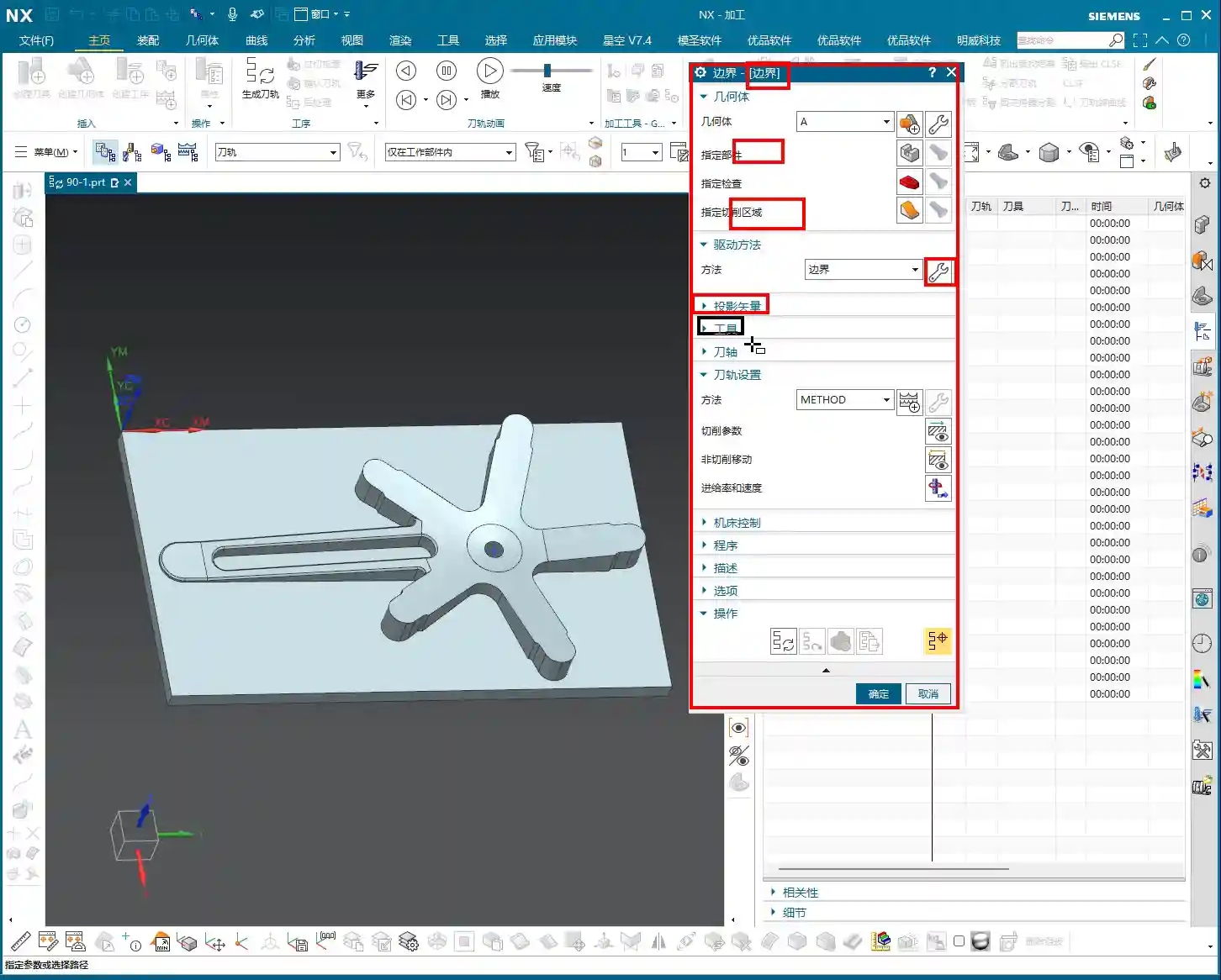
    When you open this command, you’ll notice it indeed resembles “Curve/Point” in some aspects, such as both having “Specify Part” and “Cutting Area.” However, remember that often, especially when your objective is clearly to machine along a specific boundary, you don’t necessarily need to select both “Specify Part” and “Cutting Area.” You must adapt to the actual situation; don’t overcomplicate it.

    Core Parameter Breakdown and Pitfall Avoidance

    Upon entering the “Boundary” operation’s edit interface, several areas are critical. Pay special attention, as these are where pitfalls often hide!

    1. Drive Geometry: The Art of Boundary Selection

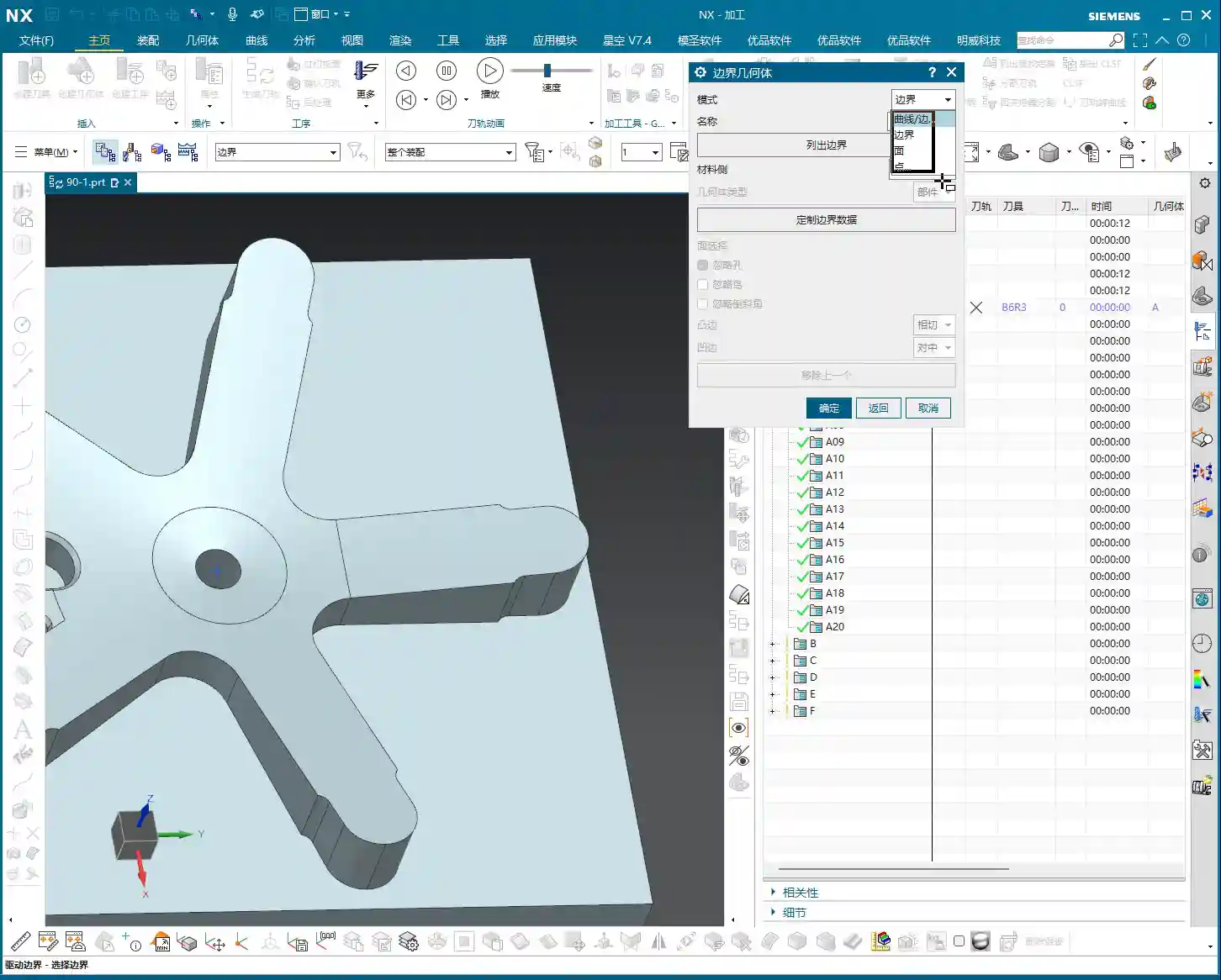
    This is the core of the “Boundary” operation. Click the “Specify Drive Geometry” option, and you’ll see a familiar interface, similar to some pre-NX 12.0 versions. Here, you have four selection methods: Curves, Edges, Faces, Points. While all are available, Master Wang advises that in practical applications, “Curves” are used most frequently and offer the greatest flexibility.

    • Step 1: Select the Mode. Remember to choose the mode first. For instance, if you want to define the boundary using curves, click the “Curves” option first. This sequence is crucial; otherwise, your subsequent operations won’t align.

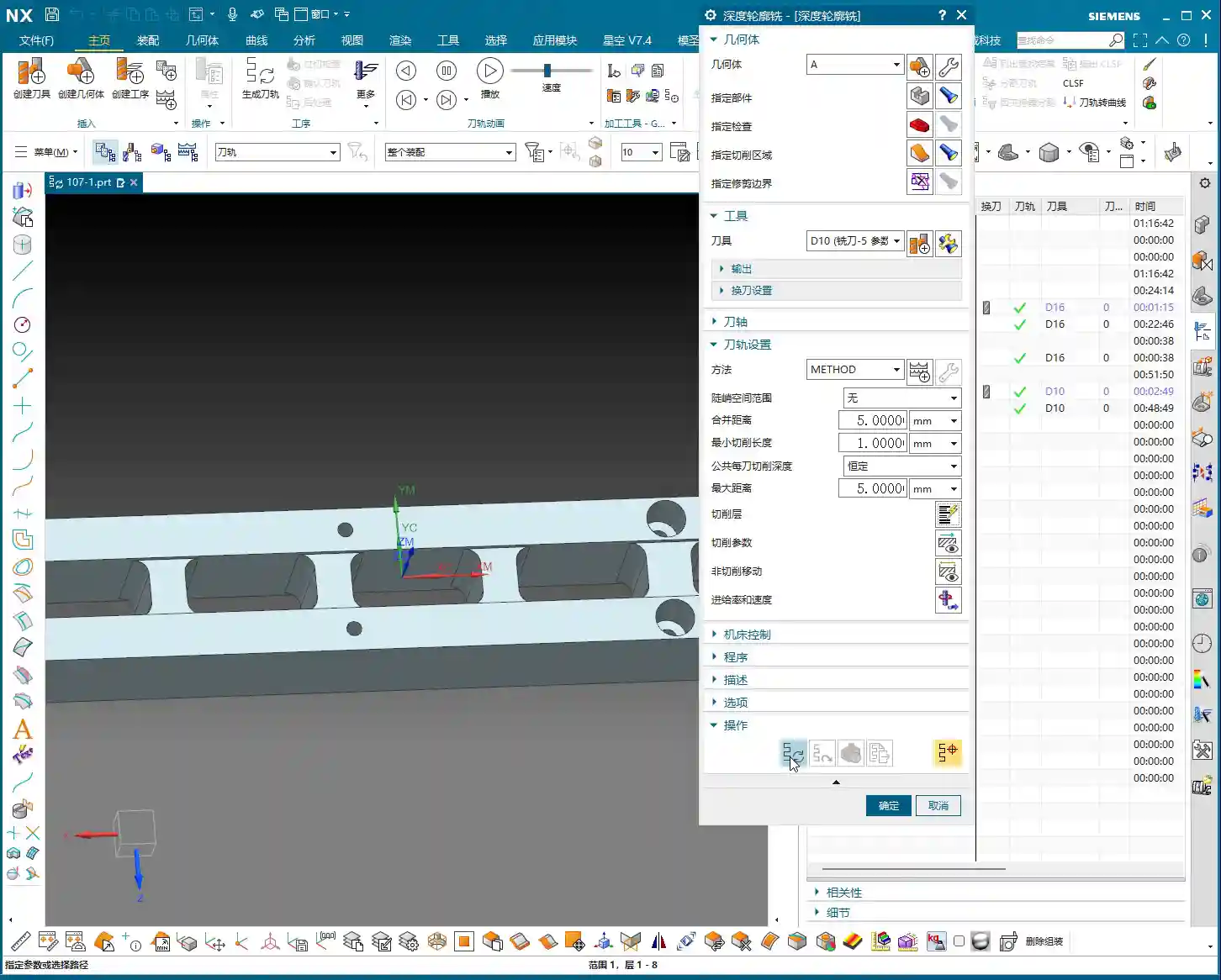
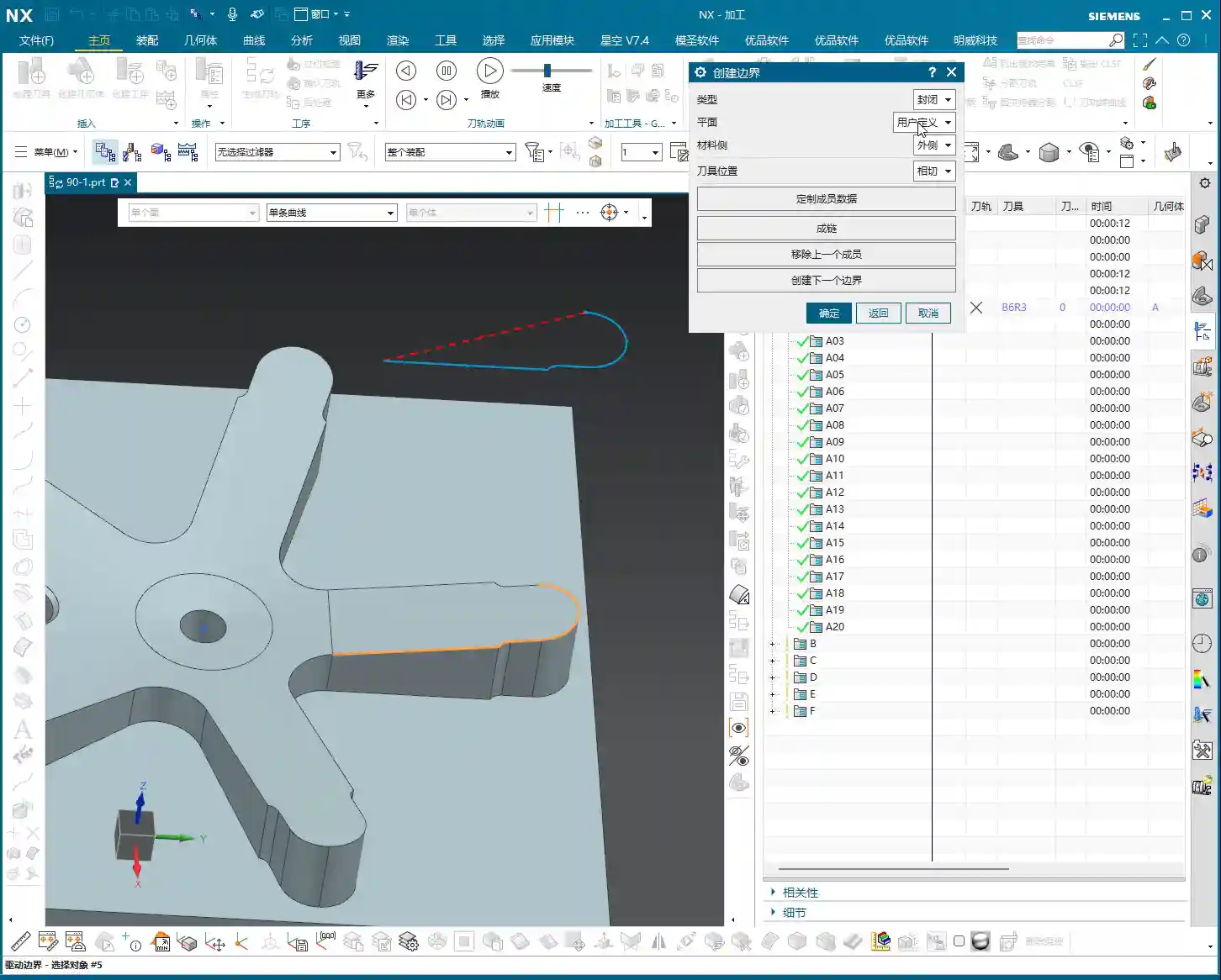
    • Step 2: Select the Curves. Next, the software will prompt you to select the curves for the drive boundary. Here’s a critical point: the “Boundary” operation in NX will only follow the selected curve with a single pass, or generate a single row of toolpaths. Therefore, do not select too many! Only choose the precise boundary line you actually need to machine. If the boundary lines are discontinuous, you’ll need to select them one by one, ensuring each line is chosen and that they form a continuous path.

    • The Projection Secret: When you select these curves, they will be projected onto the “Plane” you define later. This is crucial, as the toolpath is generated along this projected relationship. So, regardless of where your original curves are located, the final toolpath will be based on their projection onto the plane.

    2. Plane: Choose Anything, But Understand Why

    This is where many novices get confused. In the “Boundary” parameters, you need to specify a “Plane.” However, due to the nature of the “Boundary” operation, it only executes a single pass (or a single row of toolpaths), unlike Planar Milling which can machine across multiple levels. Therefore, the function of this “Plane” is simply to provide a projection reference for your boundary lines.

    Master Wang’s Secret: Listen up, this is important! You can simply select any plane—for example, the top face of the part, the bottom face, or even a randomly created reference plane. Whether it’s above or below your boundary line is actually irrelevant. This is because the toolpath is ultimately projected onto your selected drive boundary, and this plane merely defines the direction of the projection. Select a plane, click OK, and you’re done!

    3. Material Side: The Biggest Trap for Novices!

    This is paramount; you MUST understand it! The logic of the “Material Side” parameter is completely opposite to the “Inside/Outside” selection we use in Planar Milling! Many novices assume it’s the same here, and as a result, when the toolpath is generated, the tool either cuts into the part or runs off outside of it.

    • Planar Milling Logic: “Inside/Outside” typically refers to the tool’s position relative to the boundary line. If you select “Inside,” the tool path stays within the boundary; if you select “Outside,” the tool path stays outside.

    • Boundary Operation Logic: “Material Side” refers to which side of the boundary line the material is on.

      • If you want to machine the inside of the boundary line (e.g., clearing a groove), is the material on the outside of the boundary line? Yes, so you must select “Outside.”
      • Conversely, if you want to machine the outside of the boundary line, then the material is on the inside, and you must select “Inside.”

      Got it? It’s the reverse of Planar Milling! If you can’t remember this, your Fixed Contour Milling “Boundary” operation toolpaths will never be calculated correctly. Don’t wait until the machine alarms and the part is scrapped to remember what Master Wang told you today!

    4. Tool Position: Standard Operation

    This is where you select the tool’s contact point position, such as the tool tip, cutter center, etc. Just like with standard milling operations, choose a point suitable for your current tool and machining requirements.

    5. Tolerance and Offset: Ensuring Precision and Stock Allowance

    • Tolerance: The “Inner Tolerance” and “Outer Tolerance” here mean the same as the tolerance in “Curve/Point.” They determine how closely the generated toolpath approximates the original geometry. For high-precision parts, such as those in aerospace or medical devices, set the tolerance to a smaller value, for example, 0.005mm or even less. A smaller tolerance results in a denser toolpath, longer machining time, and places higher demands on machine performance and tool life. You must weigh these factors against the actual part precision requirements and machining efficiency.

    • Offset: This parameter can be understood as giving the tool an additional machining stock allowance along the boundary line. You can imagine it as an offset of the tool relative to the cutting surface during turning. For example, if you’ve selected “Outside” for the material side and then apply a positive offset, the tool will extend further outward along the boundary line. This is very useful for operations that require leaving stock for subsequent finishing passes or polishing. Remember, the offset can be positive or negative; adjust it flexibly according to your machining requirements.

    Summary: Pitfall Avoidance Guide

    Core Issues and Solutions

    1. “Plane” Selection: Don’t overthink it; just pick any plane, as it only serves as a projection reference. The toolpath follows the projection of your selected boundary lines.

    2. “Material Side” Trap: This is the biggest pitfall! Its logic is opposite to the “Inside/Outside” selection in Planar Milling. To machine the inside of the boundary line, select “Outside” (because the material is outside); to machine the outside of the boundary line, select “Inside” (because the material is inside). If you can’t remember, try it a few times, or simply sketch it out to understand.

    3. Boundary Line Selection: Ensure that the curves you select represent the exact boundary for your toolpath; don’t over-select or miss any. One boundary line typically corresponds to one toolpass (or a single row). Less is less, more is more – NX can be quite “rigid” in this regard.

    4. Toolpath Verification: Once the toolpath is generated, don’t rush to the machine! Always perform a thorough simulation and inspection to verify that the tool’s motion trajectory matches your expectations. The effects of “Material Side” and “Offset” in particular will be clearly visible in the simulation. This is your last line of defense to ensure machining safety and quality.

    Programming in NX is all about “learning by doing and adapting.” Theory is foundational, but practical experience is the ultimate truth. Get hands-on, think critically, and internalize these tips. You’ll avoid unnecessary detours and become a true machining expert. That’s all for today; next time, we’ll dive into some other hardcore techniques!

    👤 About the Author:
    The author is a veteran CNC machining professional with 15 years of industry experience, specializing in UG NX programming. This article is an original work representing personal practical insights.

    ⚠️ Copyright Notice: Unauthorized reproduction or distribution without prior communication is strictly prohibited.
  • In-Depth Analysis of Corner Cleanup in Steep Regions with Siemens NX: Master Wang’s Hands-on Guide t

    📝 Key Takeaways: Master Wang provides hands-on techniques for Corner Cleanup in steep regions using Siemens NX. This in-depth analysis covers the pros and cons and application scenarios of One-Way and Zigzag machining modes, emphasizing the importance of Depth Machining and smooth toolpaths. It will help you optimize your toolpaths, improve machining efficiency and part quality, and avoid pitfalls not found in textbooks.

    Hello everyone, Master Wang here! Today, we’re skipping the fancy theories and getting straight to the point. The job in front of us is a classic case of Corner Cleanup in steep regions – these areas are notorious for issues and truly test your skills. Listen up, because today we’re going to thoroughly discuss the ins and outs of Corner Cleanup and different machining modes.

    Default Zigzag Machining: What’s the Problem?

    First, let’s do a standard operation. Pick any tool, select the area for Corner Cleanup, and generate a program. Watch closely, I’ll select the region faces to be cleaned. Right-click, select Tangent Faces – you’re all familiar with that.

    Observing the Default Toolpath: Drawbacks of Zigzag Machining

    Now, I’ll run this with the default Zigzag machining mode. Since there are many faces, the calculation might take a bit – don’t rush it.

    See that? As soon as the toolpath is generated, the problem becomes obvious. In these steep regions, the tool cuts back and forth, leading to uneven cutting forces. Don’t just rely on the smooth software simulation; once you run it on the machine, you’ll find:

    • Prone to heavy cuts/Tool Dig-in: When the tool reverses direction, the cutting force changes instantaneously, often causing the tool to dig in sharply. At best, it leaves tool marks; at worst, it chips the insert or even scraps the part!
    • Poor Surface Quality: With back-and-forth cutting, especially on steep slopes, the tool can easily slip or, when reversing direction, leave unsightly “fish-scale patterns” or “pitting.”
    • Shorter Tool Life: Constantly enduring impacts and changes in direction accelerates tool wear, naturally shortening its lifespan and increasing your costs, doesn’t it?

    So, while Zigzag machining might be acceptable in flat areas, encountering Corner Cleanup in steep regions with it is practically asking for trouble.

    Preferred for Steep Regions: One-Way Machining

    For these steep Corner Cleanup regions, we need a different approach. In my experience, One-Way machining is the way to go!

    Advantages and Setup of One-Way Machining

    Alright, I’ll change this machining mode to One Way. We’ll set the depth to 0.2mm. Don’t forget, for Corner Cleanup, you need a small Depth of Cut (DOC) to ensure accuracy and surface finish. Then, regenerate the toolpath.

    See that? Now the tool moves in only one direction – for instance, cutting from top to bottom. After completing a pass, it retracts and rapids back to the start point to begin the next pass. While it appears to have more Air Cuts and might seem less efficient, the reality is:

    • High Machining Stability: The tool is consistently loaded in one direction, leading to a very stable machining process, less prone to chatter or chipping.
    • Excellent Surface Finish: One-Way machining prevents the tool from reversing direction during cutting, eliminating tool marks and imperfections caused by direction changes. This naturally results in a superior surface finish.
    • Extended Tool Life: Reducing the impact from direction changes leads to more even tool wear and significantly extends tool life.

    In steep regions, machining stability and surface quality are paramount. The minor loss from those Air Cuts is easily recuperated by improving yield and tool life. You need to crunch these numbers carefully!

    “Zigzag Upward”? You’re Asking for Trouble!

    Some of you might ask, what about Zigzag Upward or Zigzag Parallel to Tool Axis? I’m telling you, for steep regions, these modes should be used with extreme caution, or frankly, not at all!

    Look closely at such a toolpath: when it cuts upward, the tool is essentially climbing against the cutting direction, aggressively “biting” into the material. How terrible are those cutting forces? It’s highly prone to chatter, chipping, and can even scratch the part surface. Don’t just rely on software simulations; observe the cutting sparks and chips – they’ll tell you the real story.

    If you absolutely must use a zigzag approach, at least use the Perpendicular to Tool Axis mode, ensuring the tool always cuts down the material, which provides much better cutting forces. But even then, it’s still fundamentally zigzagging, and risks remain at corners.

    Master Wang’s Pro Tips: Combining Depth Machining and Smoothness

    Now, I’m going to teach you some practical tips you won’t find in textbooks.

    The Clever Application of Depth Machining

    Sometimes, relying solely on Corner Cleanup operations might not be flexible enough, especially when encountering both steep and deep Corner Cleanup regions. In such cases, I lean more towards using the Depth Machining function.

    Depth Machining itself is designed for steep walls. It offers better control over the tool’s cutting in the Z-axis direction, and when combined with One-Way machining mode, it can generate highly stable and efficient toolpaths. It handles depth more effectively, making the toolpaths appear more smooth and continuous, rather than just focusing on localized areas like simple Corner Cleanup.

    Ultimate Optimization: One-Way Machining + Smooth

    However, if you want to perfect steep regions within a Corner Cleanup operation, my ultimate secret is this: use One-Way machining mode, and then make sure to activate the Smooth function!

    Let me show you. When you combine One-Way machining with the Smooth function enabled, and then regenerate the toolpath, you’ll observe:

    • More Refined Toolpaths: What might have been subtle jumps or unevenness before now becomes incredibly smooth and flowing, as if hand-drawn.
    • Increased Machining Stability: The Smooth function optimizes tool engagements, retracts, and connection paths, reducing unnecessary sharp turns and impacts, leading to a much more stable cutting process.
    • Exceptional Surface Finish: Smooth toolpaths translate to more consistent cutting, and the part’s surface finish and texture will achieve a very high standard.

    That Smooth function isn’t just for show; it can be a real lifesaver in critical situations! Especially for parts with tight tolerances and demanding surface finish requirements, One-Way machining combined with Smooth is almost always my first choice. Try it, and you’ll see. This is veteran experience; you won’t necessarily find such detailed explanations in textbooks.

    Flexible Combinations, Context-Specific Application

    So, Corner Cleanup has its applications, and Depth Machining has its advantages. It’s not about one being definitively better than the other; the key is flexible combination and adapting to the situation. It’s like going to battle – you can’t rely on just one weapon.

    • Corner Cleanup operations: Typically used for final finishing, thoroughly cleaning out those small corners and root areas left after roughing and semi-finishing. It focuses on local details.
    • Depth Machining: Is more suitable for areas with strong overall form, significant depth, and steep slopes. It can be used as a finishing pass before Corner Cleanup, or independently for machining deep cavities and steep walls.

    In practical application, you might find that toolpaths achievable with Corner Cleanup might not be possible with Depth Machining, and vice-versa. Therefore, they are not mutually exclusive but rather complementary and work in synergy. Remember, no method is inherently good or bad; it’s about how well you apply it! Practice more, ponder more, and the machine will naturally obey your commands!

    Summary: Pitfall Avoidance Guide

    1. For Corner Cleanup in steep regions, use Zigzag machining with caution: Unless it’s a flat area, the Zigzag mode can easily lead to uneven tool loading, causing tool marks, chipping, or poor surface quality.
    2. Prioritize One-Way machining: For steep regions, the One Way mode ensures machining stability and surface finish quality. Even with more Air Cuts, it offers greater long-term benefits.
    3. Enable the Smooth function: When using One-Way machining mode, be sure to enable Smooth. This significantly optimizes toolpaths, enhancing surface quality and tool life. This small detail can save you a lot of trouble.
    4. Depth Machining is a powerful tool: For steep and deep regions, consider using Depth Machining. It offers distinct advantages when handling deep cavities and steep walls.
    5. Understand the purpose of different commands: Corner Cleanup is primarily for final finishing, cleaning tight corners. Depth Machining can be used for intermediate finishing or large steep walls. They are partners, not rivals.
    6. Practice makes perfect: No amount of theory compares to hands-on experience. Grab any model, click around, generate several toolpaths, compare them, and you’ll uncover the secrets.

    That concludes today’s lesson. I hope you can absorb and apply these practical experiences. Next time, we’ll discuss the intricacies of multi-toolpaths – that’s a whole new ballgame!

    👤 About the Author:
    The author is a veteran CNC machining professional with 15 years of industry experience, specializing in UG NX programming. This article is an original work representing personal practical insights.

    ⚠️ Copyright Notice: Unauthorized reproduction or distribution without prior communication is strictly prohibited.

  • Siemens NX Finishing Toolpath Optimization: Master Wang’s Practical Insights Unveiled for Steep Firs

    📝 Key Takeaways: In-Depth Analysis of Siemens NX Finishing Toolpath Strategies Hello everyone, this is Old Wang, or you can call me Master Wang. Today, we…

    Hello everyone, this is Old Wang, or you can call me Master Wang. Today, we’re cutting the fluff and getting straight to the practical insights. In Siemens NX, finishing toolpath strategies are countless, but which ones genuinely deliver results and which are just flashy but useless? Listen up! Today, I’m going to clarify the practical experience I’ve accumulated over the years, especially regarding the nuances of “Steep First,” “Shallow First,” and “Alternating” machining.

    Reciprocal Machining Mode: Efficiency First

    In NX programming, when clearing residual material or performing large-area finish cuts, we encounter “One-Way” and “Reciprocal” modes. Don’t hesitate, Reciprocal mode is the preferred choice in most cases. Why? Because it maximizes tool utilization, reduces rapid moves (idle time), and boosts efficiency.

    Why Reciprocal Mode is Commonly Used

    In NX machining operations, such as roughing for corner cleanup or large-area face milling and surface milling, if Reciprocal mode can be used, I almost always use it. The tool makes a pass, cutting material; on the return pass, it continues cutting. Unlike One-Way, where it cuts on one pass and the return is a rapid move, wasting precious time. In our line of work, every second counts. Saving one rapid move, multiplied over time, translates to profit. That’s why Reciprocal mode is used far more than One-Way for material removal and finishing. This should be self-evident.

    Steep Area Strategies: Steep First vs. Shallow First in Practice

    Next up are the “Steep First” and “Shallow First” strategies. These are settings in NX for the machining order of steep and shallow areas on a workpiece. Sounds simple, but if used incorrectly, it can severely reduce tool life, lead to tool breakage, or scrap parts. This is serious business!

    Steep First Strategy: Tackling Steep Surfaces

    The “Steep Area First” strategy, as the name implies, means prioritizing machining of areas with a significant slope (e.g., steep surfaces exceeding 30-45 degrees), and then addressing the shallower areas. In practical application, if your workpiece primarily features curved surfaces with noticeable slopes, especially those where steep faces make up a larger proportion, using the “Steep First” strategy is often more effective. It allows the tool to tackle the most challenging “hard spots” first under stable cutting conditions, reducing vibration and tool wear in subsequent operations.

    Remember, don’t just look at how nice the simulation in NX looks. Focus on the actual cutting sparks and sound from the machine. If the sparks are consistent and the sound is uniform, your toolpath is fine. If the sparks fluctuate wildly or the sound is occasionally harsh, chances are your strategy is wrong, or your parameters aren’t tuned correctly.

    Shallow First Strategy: Processing Shallow Surfaces

    The “Shallow Area First” strategy, also known as “Non-Steep Area First” or “Flat Area First,” processes the shallow areas of the workpiece first, then the steep areas. When is this strategy useful? Let me give you an example: if the workpiece is a cavity with straight, vertical walls or similar features, choosing “Shallow First” is generally better. Why? It starts machining from the bottom or shallow areas, ensuring the initial cut is stable, and then proceeds layer by layer upwards (or outwards). This is like a dynamic cutting process where material removal for each layer is quite uniform, preventing the tool from initially “plowing” into excessively thick material. This consistent chip load is especially critical for tool life when machining challenging materials like titanium alloys or high-temperature nickel-based alloys.

    Which one to use isn’t absolute; it depends on your part’s geometric features. There’s no single best strategy, only the most suitable one. This is practical experience; you won’t always find such detailed explanations in textbooks.

    Alternating Machining Strategies: The Nuances of Out-to-In vs. In-to-Out

    The “Out-to-In Alternating” and “In-to-Out Alternating” strategies in NX play a crucial role in finishing, especially during Corner Cleanup. These two strategies primarily control the tool’s machining sequence within the cutting area: whether it starts from the periphery and “peels” inwards layer by layer, or starts from the interior and “expands” outwards layer by layer.

    Out-to-In Alternating: The Corner Cleanup Ace

    The “Out-to-In Alternating” strategy – I’ll say it – is absolutely one of the most commonly used and effective strategies for our corner cleanup operations! It initiates the cut from the outermost edge of the workpiece’s machining area, then progressively cuts inward, while alternating during the process. What does this mean? It makes one cut on the outermost path, then jumps to a slightly inner position for another cut, then jumps back, and so on, moving further inward. The benefits of this machining approach are:

    1. Uniform Chip Load: The tool removes a very consistent amount of material with each cut, avoiding sudden heavy or light loads. This is exceptionally beneficial for maintaining tool stability and extending tool life.
    2. Excellent Surface Quality: Due to the smooth cutting process and uniform material removal, the resulting surface quality is particularly good, less prone to tool marks or chatter marks.
    3. Thorough Corner Cleanup: It can gradually and completely remove residual material from the corners, leaving no hard spots.

    I use this “Out-to-In Alternating” strategy for about seventy to eighty percent of my finishing passes, especially for mold corner cleanup. Its uniform toolpath distribution and consistent material removal are the gold standard in our actual production.

    In-to-Out Alternating: Use with Caution

    The “In-to-Out Alternating” strategy, on the other hand, starts cutting from the interior of the machining area and gradually expands outwards. I use this strategy relatively rarely; in fact, I’d say it’s not recommended for most finishing corner cleanup scenarios.

    Imagine if there’s residual material at the bottom of a cavity, and your initial cut starts from the innermost point and expands outwards. That first cut could very likely engage a significant amount of material, leading to an instantaneous heavy chip load. As I said in my audio earlier, “the very first cut finishes the entire corner of our part”, which indicates the tool is subjected to immense impact, potentially causing tool breakage, chatter, or even scrapping the part. Of course, this doesn’t mean it’s entirely useless. In certain special part geometries or specific process requirements, it might occasionally come in handy. But in production, we prioritize stability and reliability. So, if you’re unsure about this strategy, try to avoid it if possible, or at least run multiple simulations to check if the chip load and toolpath are reasonable. Don’t just rely on software simulations; pay attention to cutting sparks and cutting forces!

    Summary: Pitfall Avoidance Guide

    Listen up, junior engineers, everything I’ve shared today is hard-earned experience. I hope it helps you avoid common pitfalls:

    1. Prioritize Reciprocal Mode: Whenever conditions allow, use reciprocal mode for finishing and large-area machining. Saving rapid moves means saving money.
    2. Steep First and Shallow First: Be Flexible: There’s no one-size-fits-all. For workpieces with overall significant slopes, consider “Steep First.” For workpieces with vertical walls or similar straight-up-and-down features, “Shallow First” is often more stable. You need to analyze how your tool will dynamically engage the material to ensure stable cutting.
    3. “Out-to-In Alternating” is the Ace for Finishing Corner Cleanup: It’s virtually applicable to all situations requiring precise corner cleanup. It ensures uniform cutting, improving surface quality and tool life. I personally highly recommend it, and it’s my most frequently used strategy.
    4. Use “In-to-Out Alternating” with Caution: Unless you have a very clear justification and thorough verification, this strategy can easily lead to excessive chip load on the initial cut in finishing, causing problems. Newcomers should especially avoid it.
    5. Don’t Blindly Trust Software Simulations: Software is static; machines and materials are dynamic. The ultimate judgment criteria are the actual machine’s cutting sound, sparks, tool wear, and the final part accuracy and surface quality. Listen more, watch more, feel more – these “unwritten” practical tips are your real assets.

    Our profession is all about experience. Practice more, think more, and summarize your findings. Ponder these toolpath strategies carefully, and they will help you navigate NX programming with fewer headaches and produce more high-quality parts.

    👤 About the Author:
    The author is a veteran CNC machining professional with 15 years of industry experience, specializing in UG NX programming. This article is an original work representing personal practical insights.

    ⚠️ Copyright Notice: Unauthorized reproduction or distribution without prior communication is strictly prohibited.
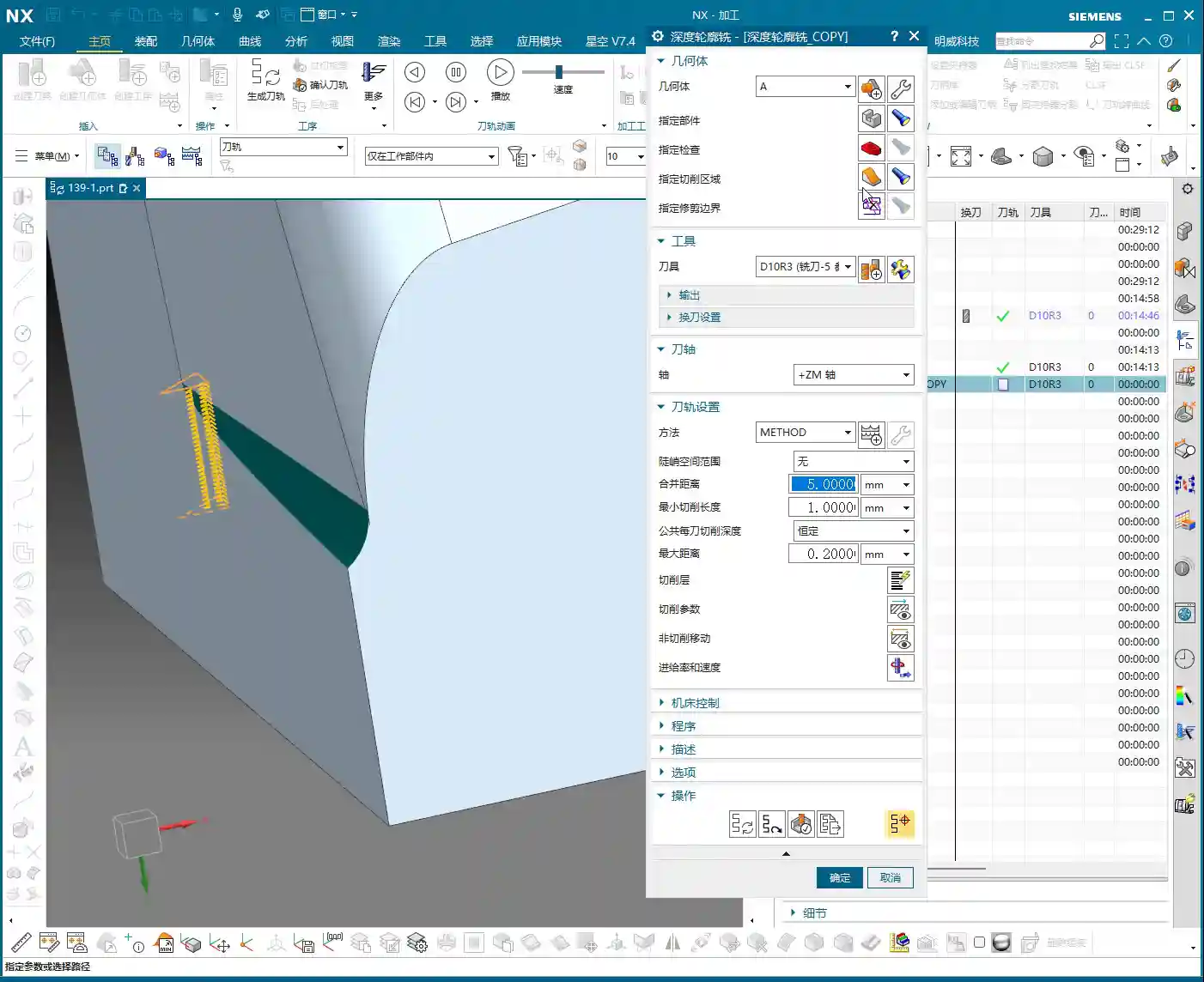
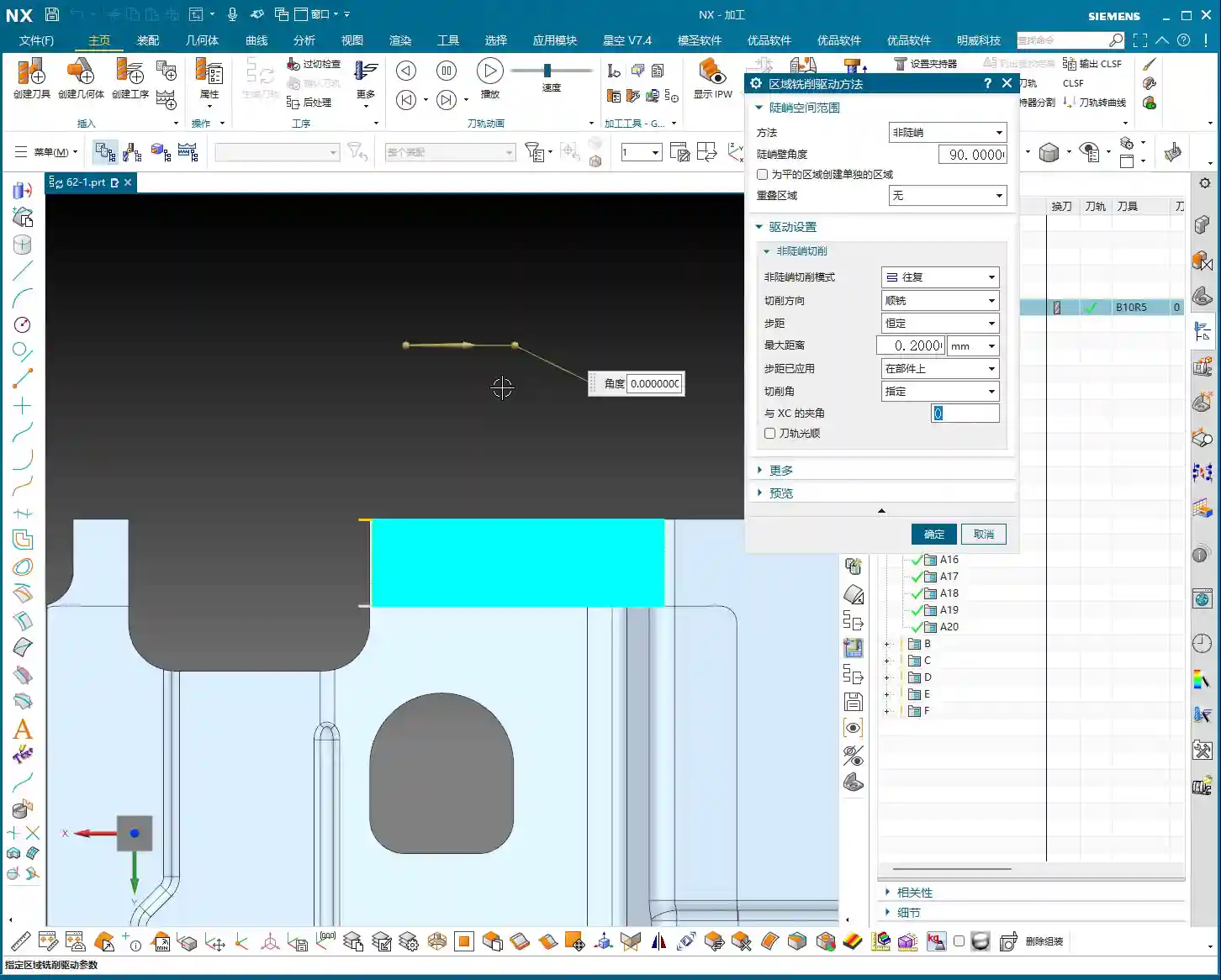
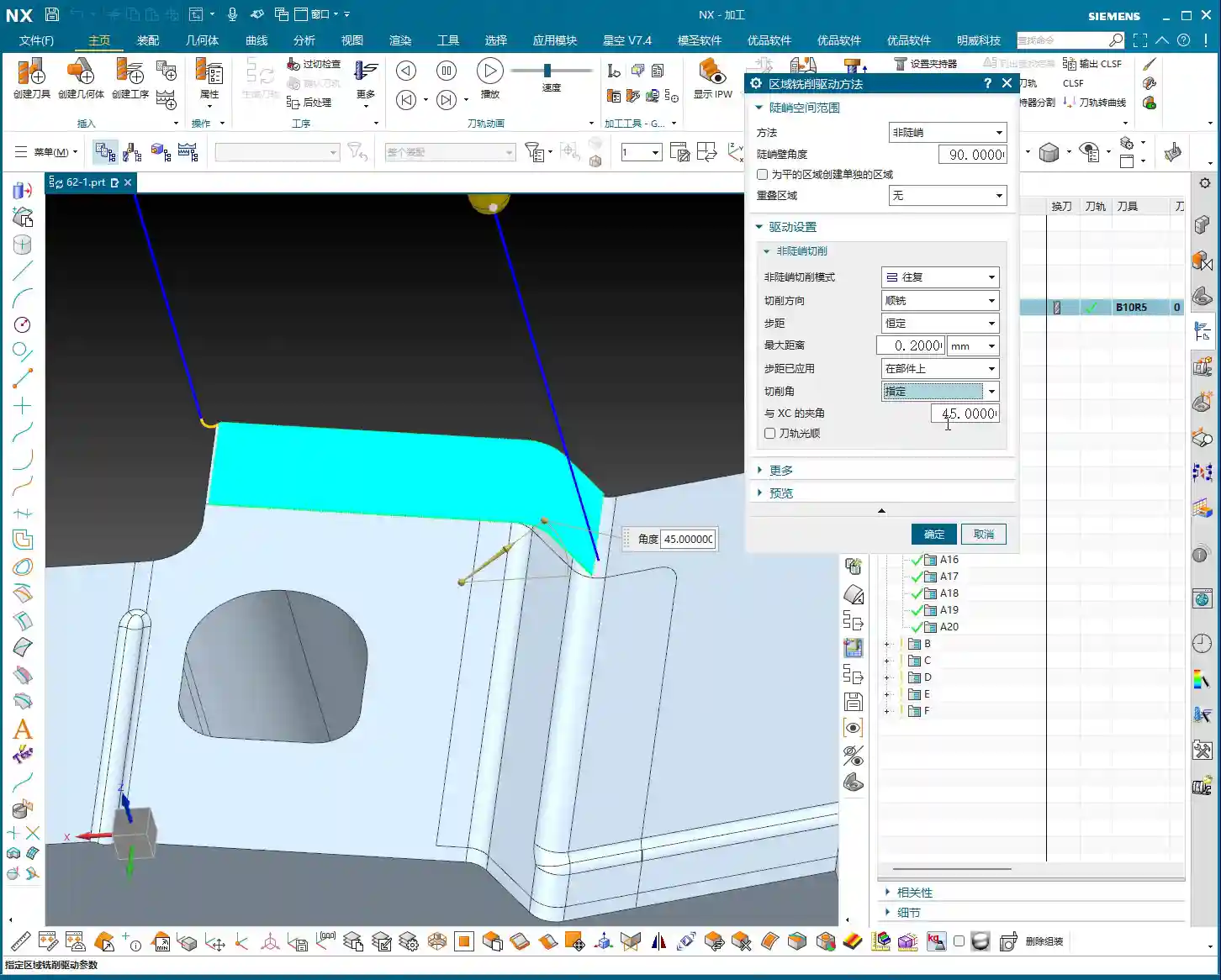
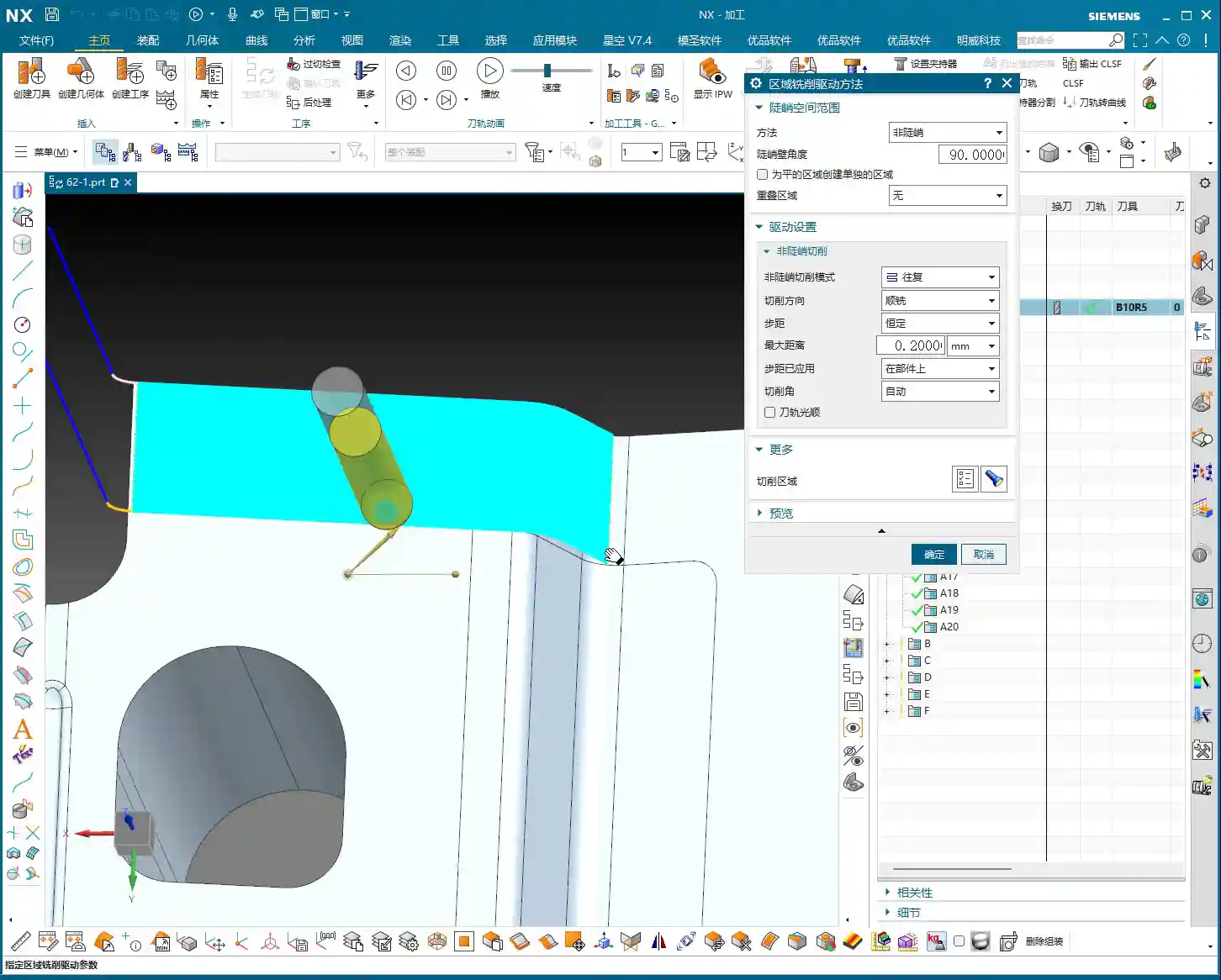
  • Siemens NX Contour Milling Angle and Entry Point: Master Wang Teaches Precise Finishing for Complex

    📝 Key Takeaways: Master Wang’s hands-on training on NX Contour Milling Angle: How to control tool trajectory in real-world applications, avoiding excessive Depth of Cut and tool chipping. We’ll also cover Entry Points, teaching you to customize plunge locations to reduce air cuts, significantly boosting machining efficiency and tool life. These are practical skills you won’t find in textbooks!

    Hello everyone, I’m Old Wang, Master Wang. In our last session, we discussed the cutting angle for face milling. This time, we’ll delve deeper into **cutting angles** in contour milling, and more critically, how to define the **entry point**. Listen up, these are practical tips you won’t find in textbooks; they determine whether your machined parts are masterpieces or scrap, and more importantly, impact your tool life and machining efficiency.

    I. Contour Milling Angle: Mastering the Tool’s “Climbing” Posture

    Remember when we first discussed multi-surface machining? I mentioned that the direction the tool travels—whether it’s “with the material” (climb milling) or “against the material” (conventional milling)—is a huge consideration. The cutting angle in contour milling is similar, operating on the same principle, just extended from flat surfaces to contoured ones.

    1. Understanding the Essence of “Cutting Angle”

    Simply put, the **cutting angle defines the direction your tool travels on a contoured surface**. It dictates whether the tool “climbs” along the surface’s slope, “cuts” across it, or “nips” at it diagonally. Don’t underestimate this direction; it directly impacts cutting forces, surface finish, chip evacuation, and even whether your workpiece deforms.

    2. Automatic vs. Manual Assignment: Which is Better?

    In Siemens NX, the default setting is usually **Automatic**, where the software determines the direction based on its algorithms. But listen up, the software’s “Automatic” setting isn’t always the “best” choice for your shop floor. Especially when machining complex surfaces, special materials (such as titanium alloys, high-temperature nickel-based alloys), or parts requiring extremely high surface finish, you need to manually specify the direction.

    • 0 Degrees (Default): The tool typically moves along a primary axis (e.g., X or Y axis). On some gentle or regular surfaces, it might follow the longest edge. This method is often viable.

    • 90 Degrees: This rotates the tool direction by 90 degrees. If you were originally moving along the X-axis, you now move along the Y-axis. This is particularly effective when dealing with **steep regions**. For instance, if you encounter a slope and try to traverse it (0 or 180 degrees), excessive cutting forces might lead to vibration, and even cause the tool to “dig in” (Depth of Cut issues), ruining the surface finish. In such cases, adjusting the angle to 90 degrees allows the tool to “climb” along the slope, resulting in more stable cutting, smoother chip evacuation, and significantly better results.

    • 180 Degrees: The direction is opposite to 0 degrees, essentially moving along the opposite axis. This option can help achieve better climb or conventional milling effects in certain specific geometries.

    • 45 Degrees: Moving diagonally. On transitional surfaces that are neither entirely gentle nor entirely steep, 45 degrees can sometimes find a balance, allowing for more even tool loading and reducing machining marks. Especially when the surface has variations in multiple directions, trying 45 degrees is a good option.

    Master Wang’s Insight: Don’t just rely on software simulations; observe the cutting sparks, listen to the cutting sound, and feel the machined surface. If the sparks are excessive, the sound is harsh, or the surface is rough, chances are the cutting angle isn’t right. We’re aiming for smooth cutting, even sparks, and a stable, quiet sound. For different materials, like aluminum, you can be a bit more aggressive. But when machining tough materials like titanium alloys and high-temperature nickel-based alloys, the cutting angle requires meticulous calculation. If the angle is wrong, your tool life will be directly halved—you’re essentially burning money!

    3. “Longest Edge” and “Specify Feature”

    Besides directly specifying angles, Siemens NX also offers options like “Longest Edge” and “Specify Feature.”

    • Longest Edge: The system automatically identifies the longest edge in the current machining area and guides the tool along that direction. This can be convenient for regular, elongated contoured surfaces, but unexpected paths may occur on complex surfaces.

    • Specify Feature: This option is even more flexible, allowing you to directly select an edge or curve that you want the tool to follow. This is particularly useful in 5-axis machining, enabling precise control over tool axis and toolpath, preventing collisions.

    Practical Tip: For a specific part, if one direction has a relatively gentle and long slope, prioritize “climbing” along that direction to achieve better surface quality and machining efficiency. However, if you encounter locally steep areas, undercuts, or sudden changes in shape, you’ll need to flexibly adjust the cutting angle, and may even need to use multi-segment cutting, with different angles for each segment.

    II. Specifying the Entry Point: The Tool’s “Admission Ticket”

    The entry point is where your tool first makes contact with the workpiece. Don’t think this is unimportant; a well-chosen entry point can significantly reduce air cutting time, protect the tool, and prevent unsightly “entry marks” on critical surfaces.

    1. Why Customize the Entry Point?

    Automatic Entry: The software selects an entry point it deems “safe” based on its algorithms. However, this “safe” often means conservative, which can lead to:

    • Excessive Air Cuts: The tool approaches the workpiece from a distant position, wasting time.
    • High Impact: The tool plunges vertically into solid material, especially at corners, which can cause significant cutting impact, even leading to tool chipping. This is fatal, especially for hard materials and brittle tools.
    • Entry Marks: Leaving initial cutting marks on the part surface, affecting surface finish.

    Customized Entry Point: Listen up, when us veteran machinists train apprentices, it’s all about “precision.” Customizing the entry point allows you to precisely place the tool’s “admission ticket” at the most suitable location. This way:

    • Reduced Air Cuts: The tool can enter directly from the workpiece edge or an already machined area, significantly saving idle travel.
    • Avoid Impact: We can choose to plunge the tool at the workpiece’s **open edges, chamfers, or areas with thinner material**, allowing the tool to gradually engage the material, reducing impact. For example, using “Ramping” or “Helical Entry” strategies for a gentle external entry is much smoother than a vertical plunge.
    • Protect Tool: Reducing impact forces naturally extends tool life and saves costs.
    • Improve Surface Quality: Avoid unsightly entry marks on critical machined surfaces, ensuring high quality for the final product.

    2. Operation Path in Siemens NX

    In Siemens NX, navigate to your toolpath operation’s parameter settings. Typically, under the “Cutting Region” category, you’ll find an “Start Point” option. Click it, and you’ll see “Automatic” and “Custom (or Specify)” options. Select “Custom,” and then you can choose your desired entry point in the graphics area, such as a corner of the workpiece or any point on an edge.

    Master Wang’s Advice: When selecting an entry point, generally prioritize:

    • Away from critical feature surfaces: Avoid leaving entry marks on critical dimensioned or aesthetic surfaces.
    • Areas with thinner material or easy entry: For example, the gate edge of a casting, the raw edge of a forging, or an already milled step surface.
    • Sufficient clearance: Ensure the tool has enough space to clear fixtures or other obstructions before engaging the material.
    • Avoid blind or sharp corners: Stress concentrates in these areas, and direct tool entry can easily lead to tool chipping.

    Cost and Efficiency: In CNC machining, the ultimate goal is to reduce costs and improve efficiency. Every air cut, every prematurely scrapped tool, is a cost. Learning to flexibly apply cutting angles and entry points is a critical step from being a regular operator to an advanced technician. Especially when machining high-value, high-precision parts, these details determine success or failure.

    Summary: Pitfall Avoidance Guide

    1. Cutting Angle is Not a Panacea: There’s no one-size-fits-all cutting angle. You must adjust flexibly based on different workpiece geometries, material characteristics, and machining requirements. Don’t stick to a single angle; experiment and observe more.
    2. Blindly Trusting “Automatic” is a Taboo: Siemens NX’s automatic functions are for convenience, but they are not always the optimal solution. Especially in finishing passes and high-difficulty machining, you must manually optimize the cutting angle and entry point.
    3. Entry Point Isn’t Always Closer-is-Better: While reducing air cuts is important, the entry point must also have sufficient safety clearance to avoid interference with fixtures or other obstacles.
    4. Consider Tool Characteristics: Different tools (e.g., ball end mills, flat end mills, bull nose end mills) have varying sensitivities to cutting angles and entry points. Carbide tools are more susceptible to impact, while high-speed steel tools are relatively impact-resistant but have shorter lifespans.
    5. Practice Makes Perfect: All theoretical knowledge must ultimately be verified through machine shop practice. Observe machine operating status, tool wear, record data, and build your own experience database. This is the true hard skill that will establish your credibility on the shop floor.
    6. Promote Your “Secrets”: Once you’ve accumulated this practical experience, organize it into standardized machining solutions. This itself is a valuable asset for your company. When promoting your services externally, highlight advantages such as “providing optimized 5-axis toolpaths for complex surfaces” and “effectively controlling tool wear for high-hardness materials” to effectively attract clients who demand high precision and efficiency.

    👤 About the Author:
    The author is a veteran CNC machining professional with 15 years of industry experience, specializing in UG NX programming. This article is an original work representing personal practical insights.

    ⚠️ Copyright Notice: Unauthorized reproduction or distribution without prior communication is strictly prohibited.
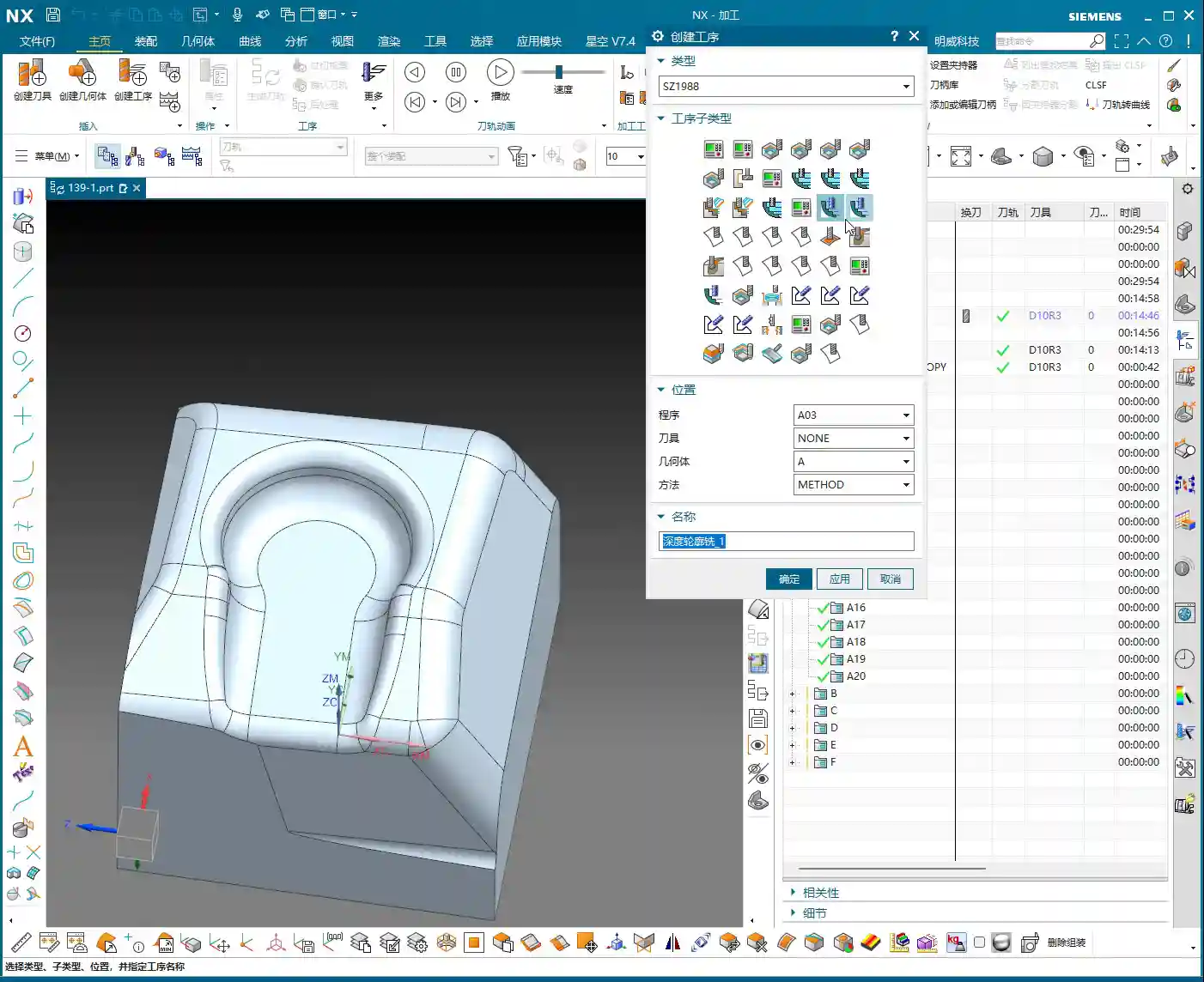
  • In-depth Analysis of Non-Cutting Moves in Siemens NX: Master Wang Teaches You How to Optimize Tool P

    📝 Key Takeaways: Master Wang provides an in-depth explanation of “Rapid Transfer” and “Entry Point” within Siemens NX’s non-cutting moves. He emphasizes how to precisely set safety heights, differentiate between within-region and between-region transfers, and flexibly specify entry points to avoid collisions, significantly reduce air cutting time, and boost machining efficiency, helping junior engineers avoid common pitfalls in practical operations.

    Master Wang’s Lecture: Do You Really Understand Non-Cutting Moves?

    Hello everyone, I’m Master Wang. Today, we’re going to continue discussing those practical tips and tricks in Siemens NX programming that you “won’t find in textbooks.” Where did we leave off last time? Oh, things like smoothing, collision checking, and tool compensation.

    Listen up, for most of our 3-axis work, you can largely set aside or just use the system defaults for parameters like Smooth/Blend Corner, Collision Check, Tool Compensation, and B-spline. These have minimal impact on conventional 3-axis machining and are primarily used in complex 4-axis or 5-axis scenarios, or for specific finishing passes.

    • Blend Corner: This feature primarily smooths tool path corners, preventing sharp turns that can affect tool life and surface quality. However, for standard pocketing and face milling, the default smoothness is usually sufficient. If you’re tackling complex surface finishing where extreme surface quality is paramount, that’s when we’d fine-tune it in specific finishing passes. But that’s a topic for another day.
    • Collision Check: In theory, it’s a good feature, helping you spot issues during software simulation. But on the shop floor, I put more emphasis on your familiarity with the workpiece, fixturing, and cutting tools, as well as your judgment of the machine’s travel limits. A skilled machinist should already have a clear idea before programming: where potential collisions might occur and where it’s safe. This is about proactive prevention, not waiting for software errors to find remedies.
    • Tool Compensation: G41 and G42 are fundamental CNC concepts. In Siemens NX, it primarily manages how tool radius and length compensation are applied. When programming, we typically model according to the workpiece’s actual dimensions, and tool paths are generated based on the tool’s centerline. Compensation is usually handled at the machine control, which is what we call Tool Offsetting or Touching off and measuring tools. The tool compensation parameters in Siemens NX primarily provide an instruction to the post-processor, telling it to output a program with G41/G42. In practice, it’s more about ensuring the post-processor correctly outputs these compensation commands rather than frequently modifying the compensation values within the Siemens NX interface.
    • B-spline Parameters: This relates to the mathematical representation of tool path trajectories. Simply put, it affects the smoothness and calculation precision of the tool path. But for conventional 3-axis machining, Siemens NX’s internal optimization is excellent, so you generally don’t need to worry about this, especially during roughing and semi-finishing stages. Only in very rare cases, such as specific finishing passes requiring extremely high path continuity, would you need to adjust it.

    So, we’ll skip these less frequently used parameters for now and focus on what’s truly important. Today, what we really need to talk about is the main event within “Non-Cutting Moves”: Rapid Transfer and Entry Point. How well these two parameters are set directly impacts your machine’s machining efficiency, and most importantly—whether you’ll have a tool crash or scratch the workpiece!

    Rapid Transfer: The Art of Safety Height

    Listen up, “Rapid Transfer” refers to how the tool quickly moves from one location to another when it’s not cutting. The most critical aspect here is setting the safety height. Set it too low, and you risk a collision; set it too high, and you’ll have long air cutting times, wasting valuable machining time!

    Safety Plane: Default and Customization

    In Siemens NX, it typically provides a default value that follows your initial setup. For example, when you create a new CAM setup and define geometry, don’t you usually set a Safety Plane, typically at Z100mm? The “Inherited” option within “Rapid Transfer” ensures the tool lifts to this height before moving. It’s the safest approach, but also the most conservative.

    • Inherited Mode: Most of the time, I recommend beginners stick with this. It refers to your initially set Safe Plane, for instance, Z100mm, and the tool will lift to this safety height for every non-cutting move. The advantage is safety—it’s less likely to crash. The drawback is that if the workpiece isn’t tall, or if machining regions are close, lifting this high every time will significantly increase Air Cutting Time, effectively wasting the machine’s valuable machining efficiency.
    • Plane Mode: You can choose this mode when you have an intimate understanding of the workpiece, fixturing, and tool paths. For example, if we’re machining a plate that’s only 20mm thick, lifting to 100mm every time is a huge waste. In such cases, you can lower the safety plane to 10mm or 20mm. But remember, this modification applies only to the current operation and won’t change global settings. After making changes, always meticulously check the tool path, especially ensuring the tool’s lift-off path doesn’t interfere with the fixturing or hit any protrusions on the workpiece. Don’t just rely on software simulation; pay attention to the cutting sparks and the machine’s actual operation! Safety first, efficiency second, but high efficiency is always pursued on the premise of ensuring safety.

    Between Regions and Within Region: Meticulous Calculation

    This is where many beginners get confused. Siemens NX further subdivides “Non-Cutting Moves” into “Within Region” and “Between Regions.”

    • Within Region: Imagine you’re milling a large flat surface, and the tool moves between a series of small slots, all within the same larger machining region. In this scenario, the tool only needs to lift to a very small safety height, just enough to clear already machined areas or the workpiece itself. We typically set this height quite low, for example, 2mm or 5mm, ensuring it doesn’t scratch the machined surface while reaching the next cutting point as quickly as possible. This is often used for localized tool lifts in Smooth tool paths or Cavity Milling operations.
    • Between Regions: This is where it gets interesting. This refers to the tool needing to transfer from one independent machining region (e.g., a pocket) to another entirely unrelated region (e.g., another pocket, or a side wall). In this case, the tool needs to lift high enough to clear all potential obstacles, such as fixturing, unprocessed raw material edges, or other features on the workpiece. In the video, I demonstrated changing this value from the default 100 to 50 or even lower, and you can see the blue transfer path becoming noticeably shorter—that’s how you save time! But the precondition is that you must ensure this 50mm height genuinely clears all obstacles. My experience tells me that initially, you can set it higher to guarantee safety. Once you’re proficient and fully understand the relative positions of the workpiece, tool, and fixturing, then you can gradually reduce it.

    So, you see, this “Rapid Transfer” is an art of balance. If the safety height is set correctly, your tool can avoid crashes and move swiftly, skyrocketing your machining efficiency. Conversely, you’re either sluggishly air cutting, or you accidentally hear a “bang,” ruining the workpiece, breaking the tool, and potentially damaging the machine. All that is money down the drain!

    Entry Point: Precise Positioning, Reduced Wear

    Next up is “Entry Point & Transition Point,” which is also quite important. How and where the tool enters the material directly affects tool life and machining quality.

    Engage Distance: Make the Tool Entry Smoother

    The “Engage Distance” option, simply put, gives the tool a buffer before it truly starts cutting. For instance, when milling a side wall, if the tool plunges directly from the edge, the impact force will be considerable, often leading to chipping. In such cases, you can set an “Engage Distance”, allowing the tool to start its entry a small distance away from the side wall, then slowly feed into the cutting position. This makes the tool entry much smoother and “gentler.”

    The video mentions the case of “finishing a side wall,” where this distance becomes especially critical. For example, when we perform a finishing pass on a part’s side wall, requiring extremely high surface quality. If the tool plunges directly in, the cutting chatter will leave marks, affecting the surface finish. Setting an engage distance of, say, 3mm to 5mm allows for a smooth transition before cutting begins, which can significantly improve surface quality and extend tool life. This is all based on practical experience!

    Specify Point: Manual Intervention, Total Control

    By default, Siemens NX intelligently selects the entry point for you. However, many times we need to intervene manually because the software doesn’t know the height of your fixturing, which part of the workpiece is raw stock, or where pre-machined holes are located. The “Specify Point” function gives you precisely this control.
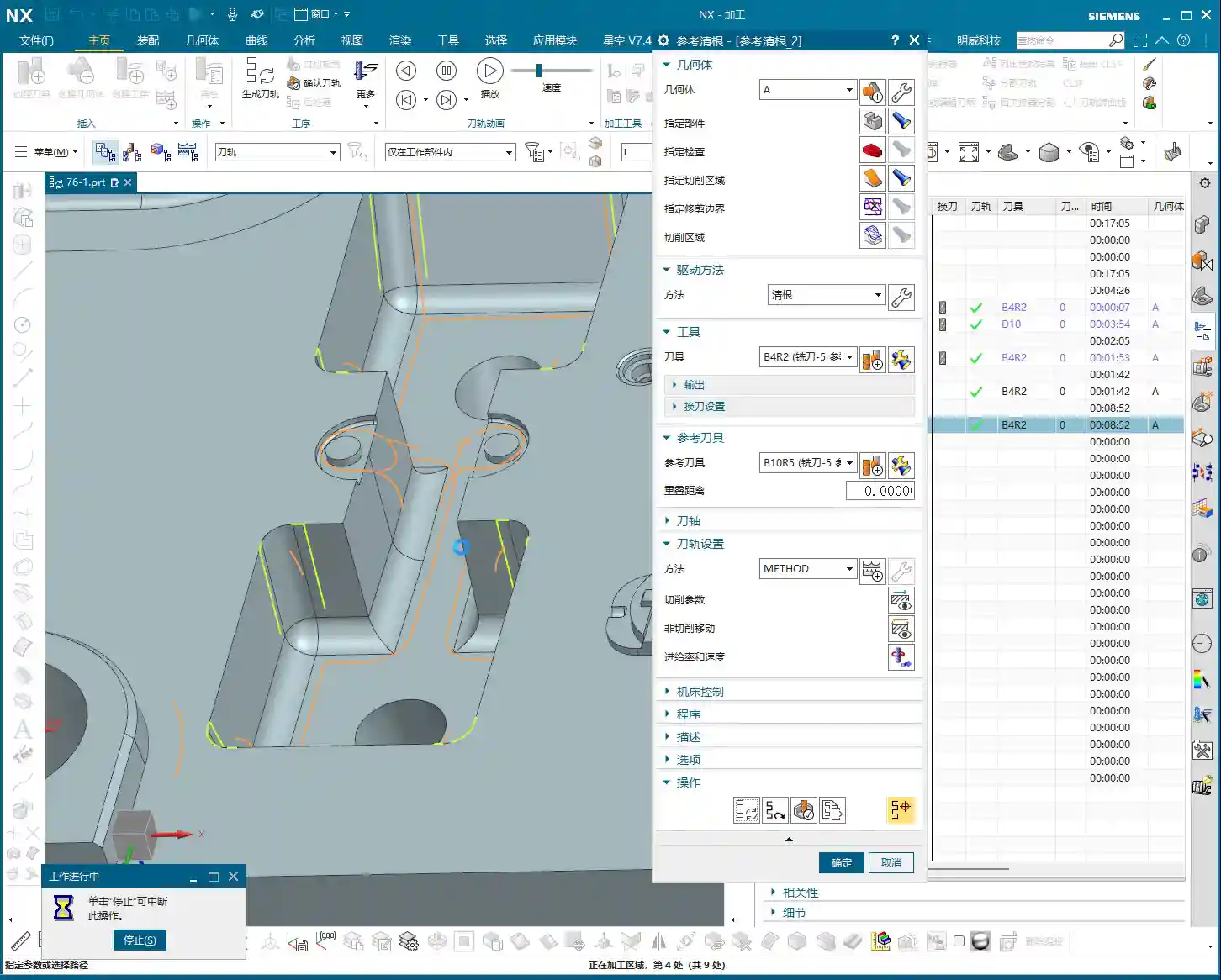
    • Avoid Obstacles: The most common use is to avoid fixturing or special features on the workpiece. For example, if you’re machining a part where the side is clamped by fixturing, or there’s an already finished surface nearby, you definitely wouldn’t want the tool to enter there. In such situations, you can manually select a safe and appropriate position as the entry point.
    • Optimize Cutting: Sometimes, entering the material from a specific angle or position is most favorable for tool force distribution, reducing tool wear and improving cutting stability. For instance, if cutting forces are mainly concentrated at the tool tip, tool life will be shorter. Entering from a relatively spacious area or where the material allowance is uniform can better distribute the cutting forces.
    • Multiple Entry Points: The video also mentions that you can specify multiple entry points in Siemens NX. For example, when machining a part with multiple internal pockets, each pocket requires an independent entry. You can then specify different entry points for different regions, ensuring each area starts cutting safely and efficiently. Remember, when selecting, the point you click will be highlighted, ensuring you’ve chosen the correct location.

    This isn’t something you can just click randomly. Choosing the wrong spot could lead to tool damage at best, or a collision with fixturing, even destroying the workpiece at worst. So, when specifying entry points, you must consider the raw material condition, fixturing location, and tool characteristics comprehensively. This is practical experience; it’s not something software simulation can fully replace.

    Summary: Pitfall Avoidance Guide

    Alright, that’s all for today’s valuable insights. Remember Master Wang’s advice:

    1. Rapid Transfer: Its core is the safety height. Beginners should first use “Inherited” to ensure no tool crashes. Once proficient, based on the actual workpiece and fixturing, boldly experiment with “Plane” mode to lower the transfer height “Between Regions” and reduce air cutting time. However, you must double-check repeatedly, especially by validating it extensively with simulation software, and then, once on the machine, slow down the feed rate and carefully observe the tool’s trajectory.
    2. Entry Point: “Engage Distance” is to ensure smoother tool entry, protect the tool, and enhance surface quality, especially for finishing passes. “Specify Point” is for avoiding obstacles, optimizing cutting, and extending tool life. When selecting points, you need to be precise and quick, have a clear understanding, and make judgments based on practical conditions.
    3. Non-Cutting Moves: It’s not just about moving the tool from one spot to another; it’s a comprehensive consideration of safety, efficiency, tool life, and surface quality. Simulate extensively in the software, observe keenly on the machine, and accumulate practical experience—only then can you truly become an excellent programming master.

    Don’t just stare at the computer screen watching tool path simulations; those are virtual. A true expert can correlate the virtual tool path with actual cutting sparks, chip formation, and machine chatter to judge whether the tool path is reasonable. This kind of expertise is gained by hands-on experience on the shop floor. Ponder over this well; it’s more valuable than reading ten books!

    Next time, I’ll chat with you all about something else.

    👤 About the Author:
    The author is a veteran CNC machining professional with 15 years of industry experience, specializing in UG NX programming. This article is an original work representing personal practical insights.

    ⚠️ Copyright Notice: Unauthorized reproduction or distribution without prior communication is strictly prohibited.