Tag: Siemens NX

  • Siemens NX Planar Milling in Practice: Master Wang’s In-Depth Analysis of Depth of Cut & Machining S

    πŸ“ Key Takeaways:

    Deep Dive into Planar Milling Core Parameters

    Hello everyone, I’m Master Wang. Today, we’re diving back into the world of Planar Milling…

    Hello everyone, I’m Master Wang. Today, we’re diving back into the world of Planar Milling in Siemens NX, specifically focusing on the main interface and Depth of Cut settings. These are critical parameters that directly impact machining quality and efficiency.

    Siemens NX Planar Milling Fundamentals: Boundary Selection and Machining Depth

    Listen up. For planar milling, the first step is Boundary Selection. You can’t mess this up. Whatever you select, that’s what it will machine. Don’t get distracted by the fancy software interface; the core logic is that simple.

    Key Point: Closed Boundaries and Specify Bottom

    When you’re doing planar milling, remember this ironclad rule: you must select a closed boundary. What does “closed” mean? It means all sides are sealed off, like a complete frame, a solid shape. If you select an open line segment, the software won’t recognize it, and you won’t be able to machine anything. This isn’t a joke; it’s practical experience. Don’t make rookie mistakes here.

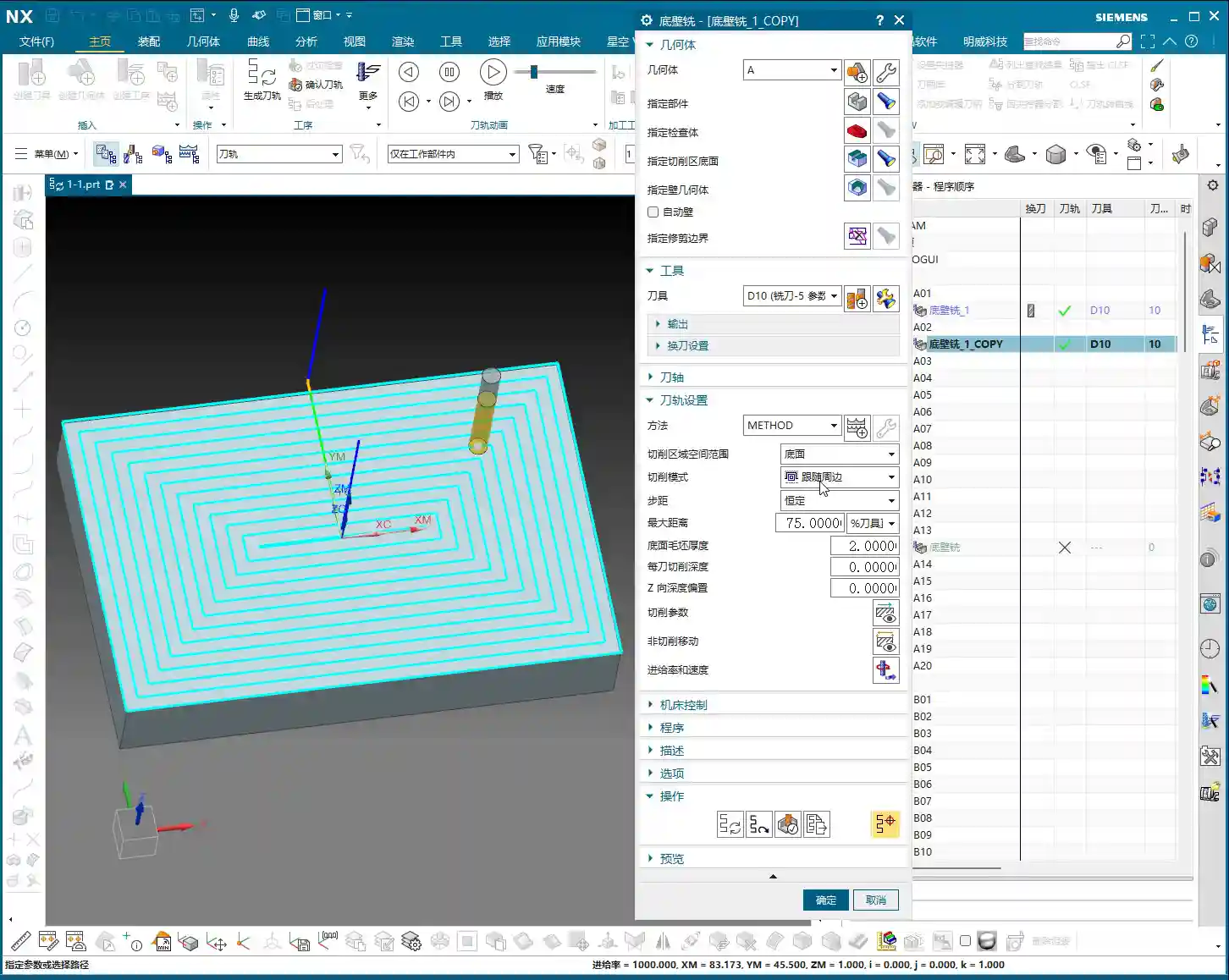
    Now, let’s talk about the Specify Bottom parameter. This is a critical setting, as it determines the depth your tool will mill to. For example, if you specify a bottom face, the tool will typically machine down to that surface. However, in real-world operations, you can’t be dogmatic about it.
    Depth Control: Depth of Cut and Stock Adjustment

    Let me ask you, if a part needs to be milled through, do you just specify the bottom face as the very bottom of the part? Young engineers often do this. But the reality is, machines have tolerances, and tools wear down. What looks “just right” in simulation software often ends up being “just short” on the actual workpiece.

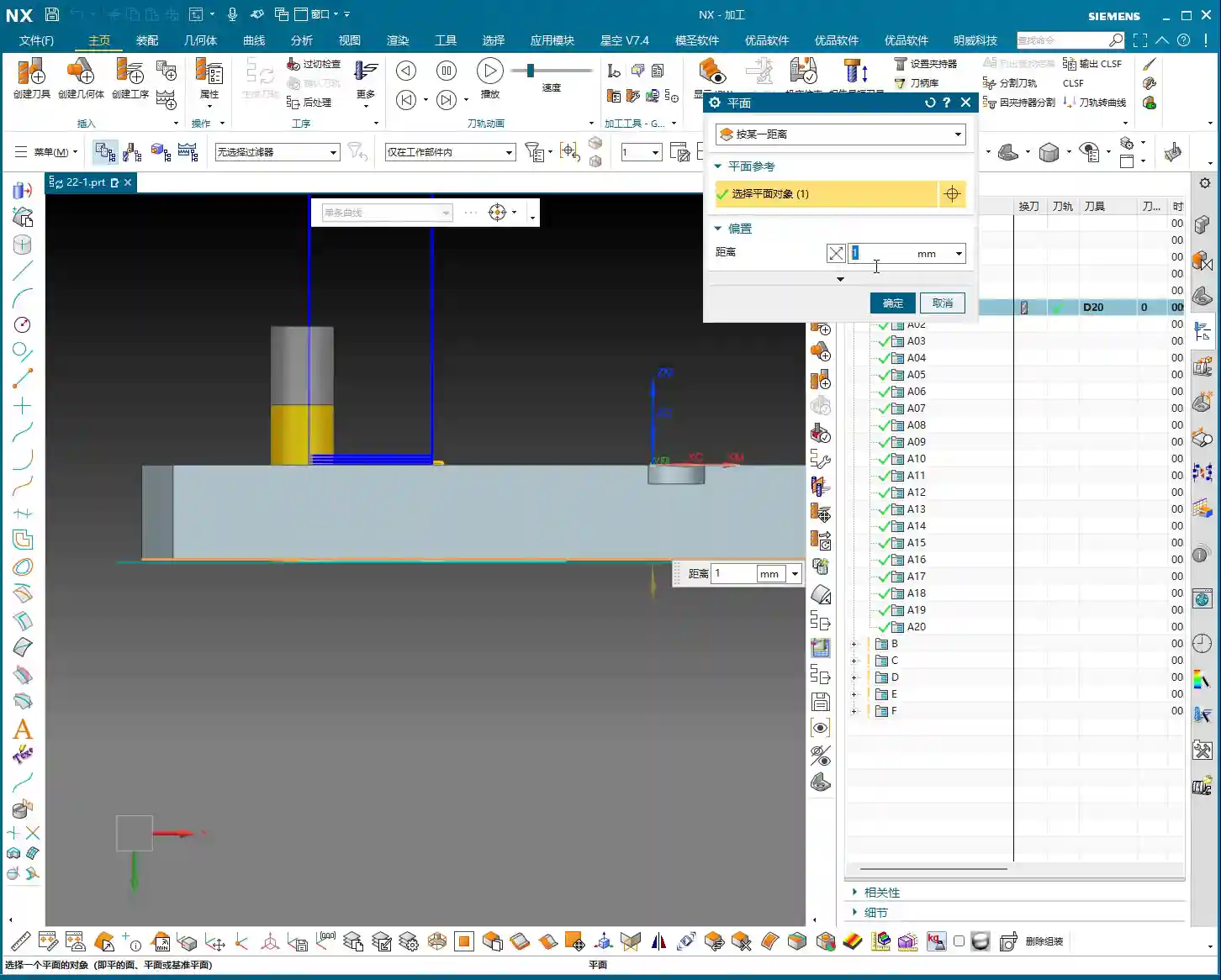
    So, here’s a trick I’ll teach you: If the part needs to be milled through (perforated), you typically need to add an offset of 1 to 2 millimeters (approx. 0.04 to 0.08 inch) downwards from the specified bottom face. For instance, if the bottom face is at Z0, you’d input “-1” or “-2”. This ensures a 100% through-cut and avoids rework.

    Conversely, if there’s a fixture or features you don’t want to touch beneath the bottom face, then you cannot over-mill downwards. In such cases, you can add an upward offset (a positive value) to the specified bottom face, such as “0.2” or “-0.2” (depending on your NX version, the sign might be reversed, but the goal is to raise the toolpath). This creates a safety margin, preventing tool collisions or machining unintended areas. Want to see the actual toolpath position? Right-click the toolpath, select “Face Analysis,” and you’ll see the toolpath’s distance relative to the face. This face analysis stuff has been covered in your modeling classes; review it regularly, don’t wait until you’re in a bind.

    Toolpath and Cut Pattern: Practical Choices for Siemens NX Planar Milling

    Tool selection? Nothing much to say here. Just pick one based on your workpiece material and requirements. Use whatever’s in your tool library; if there’s no suitable one, grind a custom tool yourself.
    Tool and Tool Axis: Default Selection for 3-Axis Machining

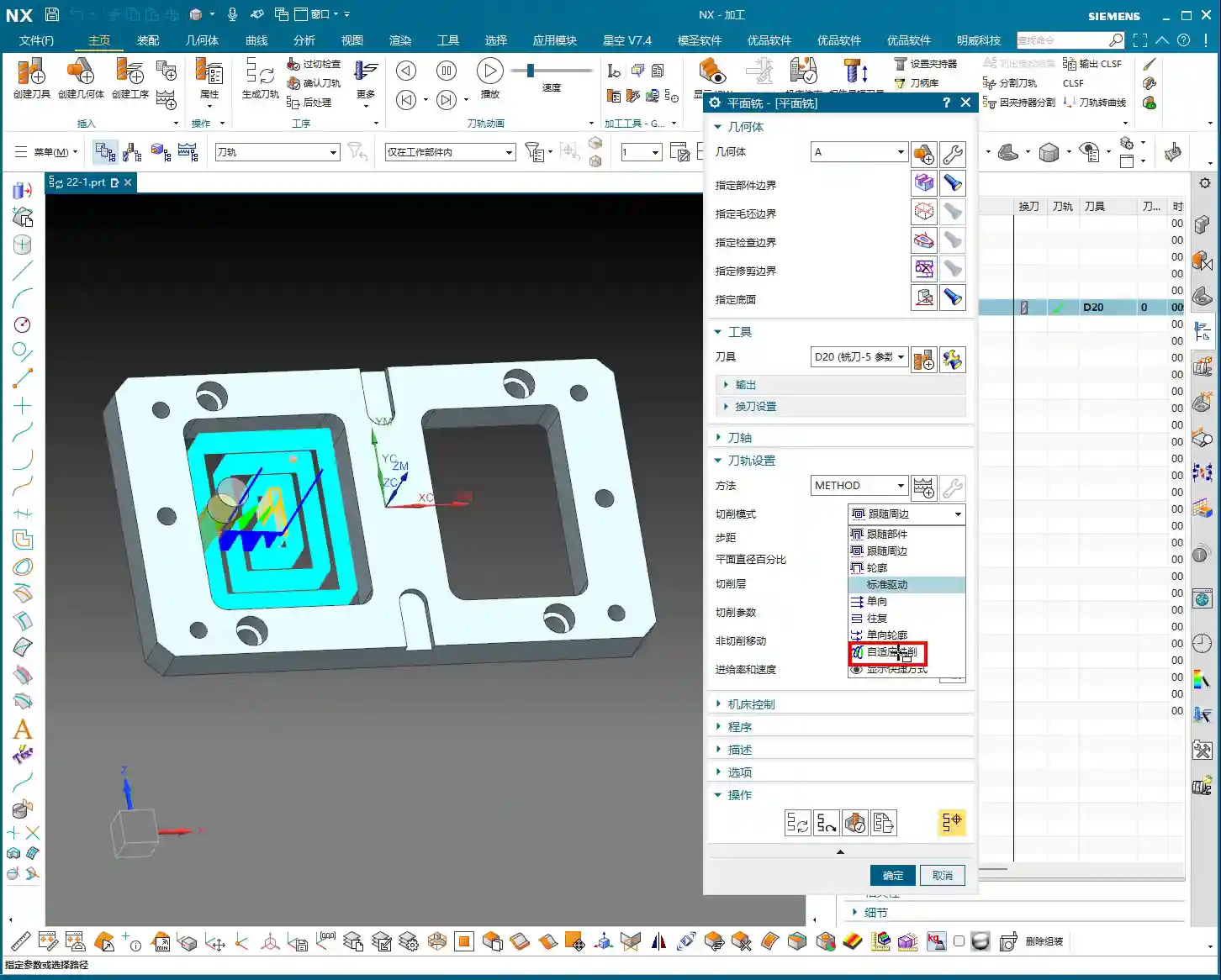
    Regarding the Tool Axis, for standard 3-axis machining, the default is always the Z-Axis. Don’t blindly change it unless you’re doing 5-axis work. Parameters like “Method” are the same; I’ve covered them many times before. For most situations, keep them at their default settings and don’t worry about them.

    Cut Pattern: The “Roughing” Philosophy of Planar Milling

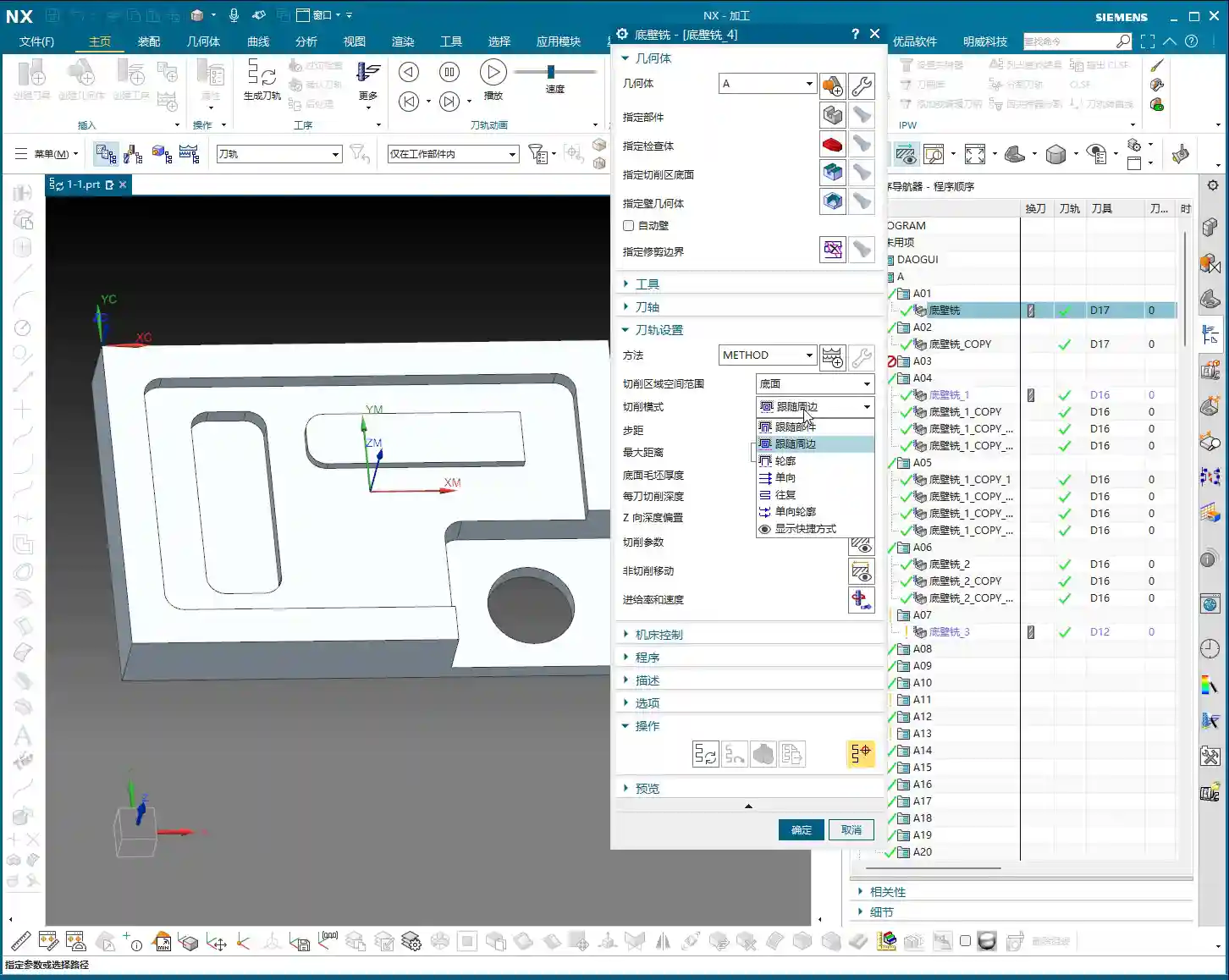
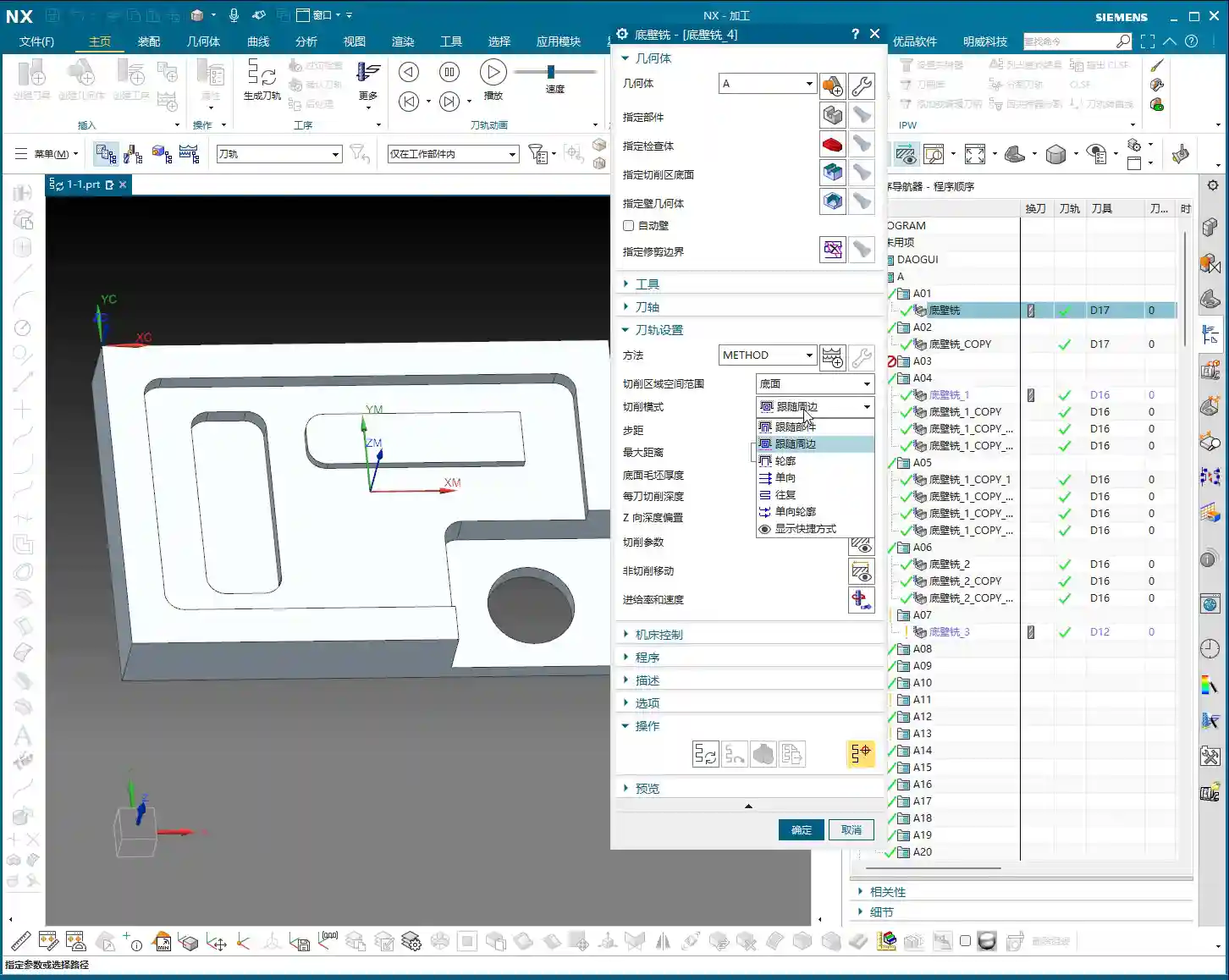
    Now, for the Cut Pattern – this is the core strategy for planar milling. While Siemens NX offers a ton of patterns like “Support Type Machining” or “Standard Drive,” honestly, for planar milling, we primarily use just a few:

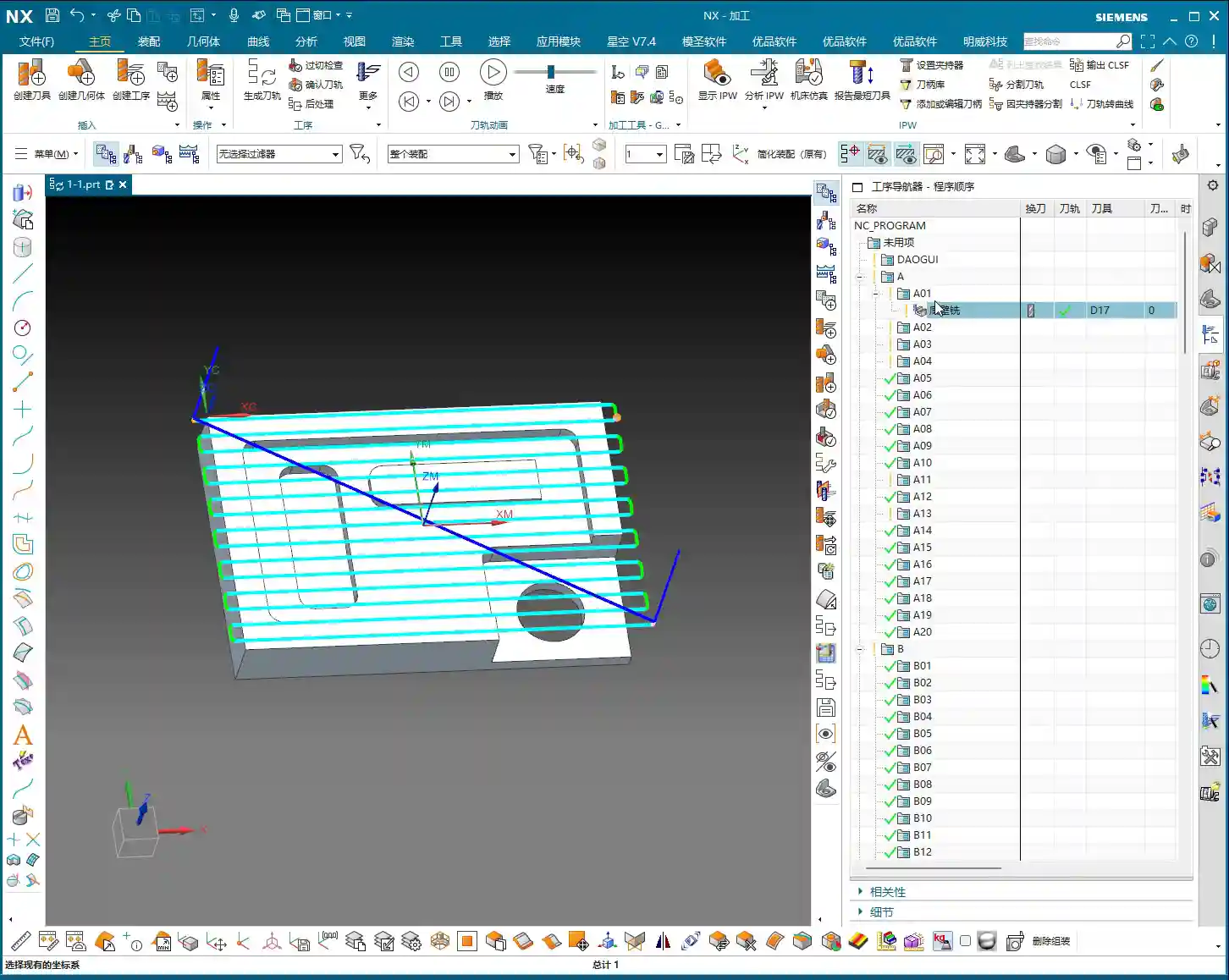
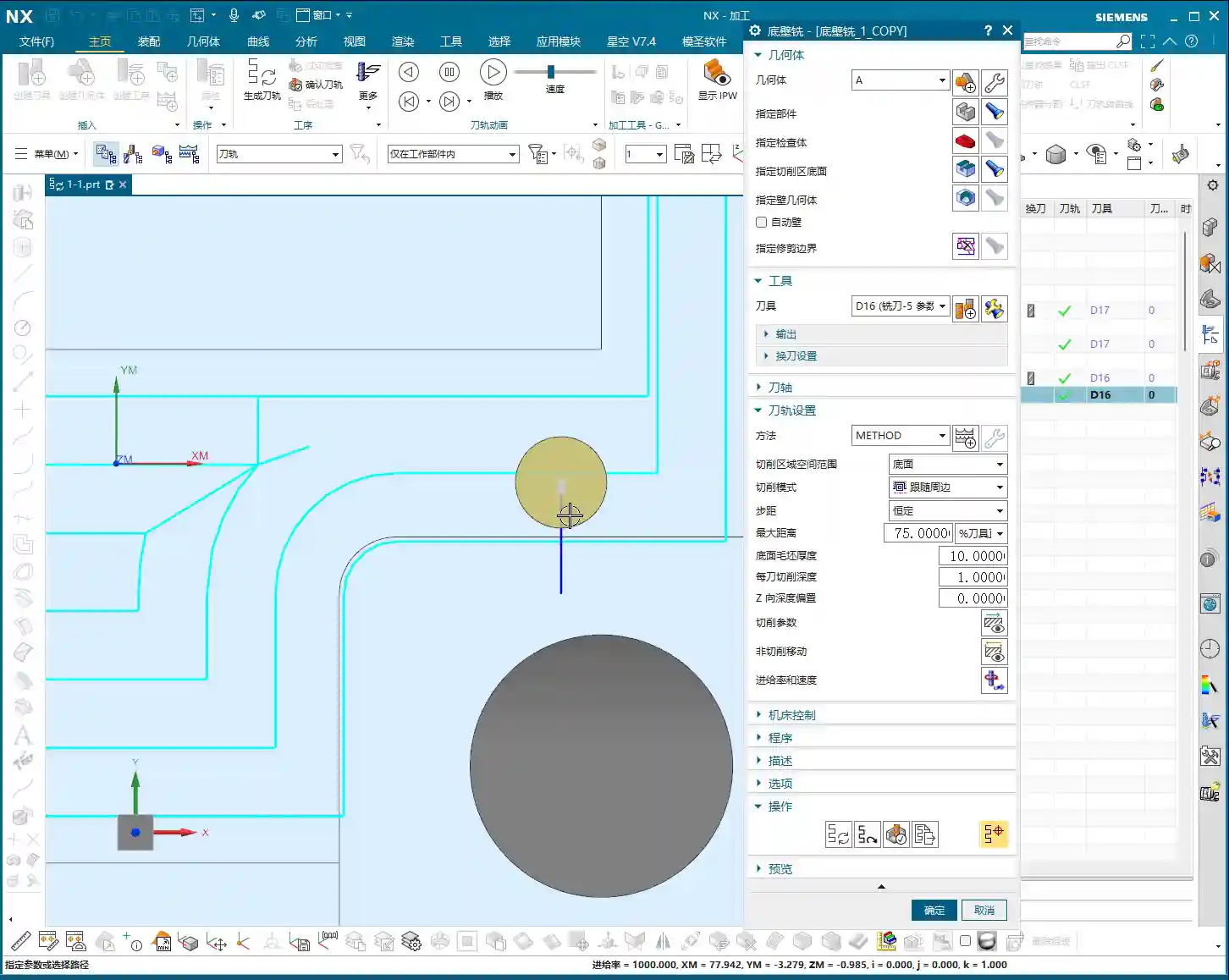
    • Follow Periphery: The toolpath follows the part’s outer shape, spiraling inwards or outwards layer by layer. The visual effect and machining trajectory are quite clean, which is why I highly recommend it.
    • Follow Part: Similar to Follow Periphery, but sometimes the path can differ slightly. Actual machining results are also good.
    • Zigzag: The tool cuts back and forth in straight lines. Suitable for fast roughing of large flat surfaces, highly efficient, but prone to leaving tool marks at corners.
    • One-Way: Cuts only in one direction, lifting the tool on the return pass. This ensures even tool loading but involves more retracts, leading to relatively lower efficiency.
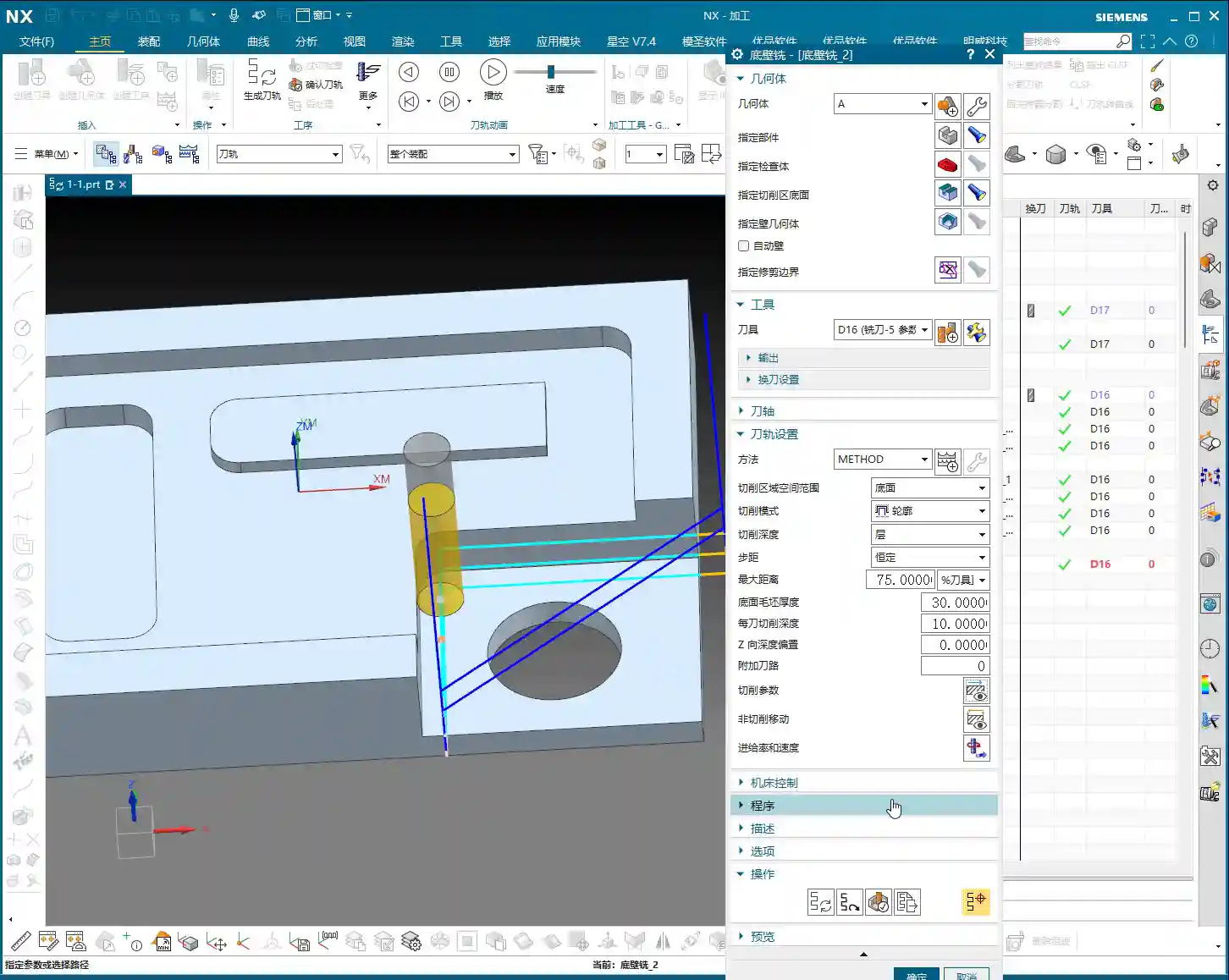
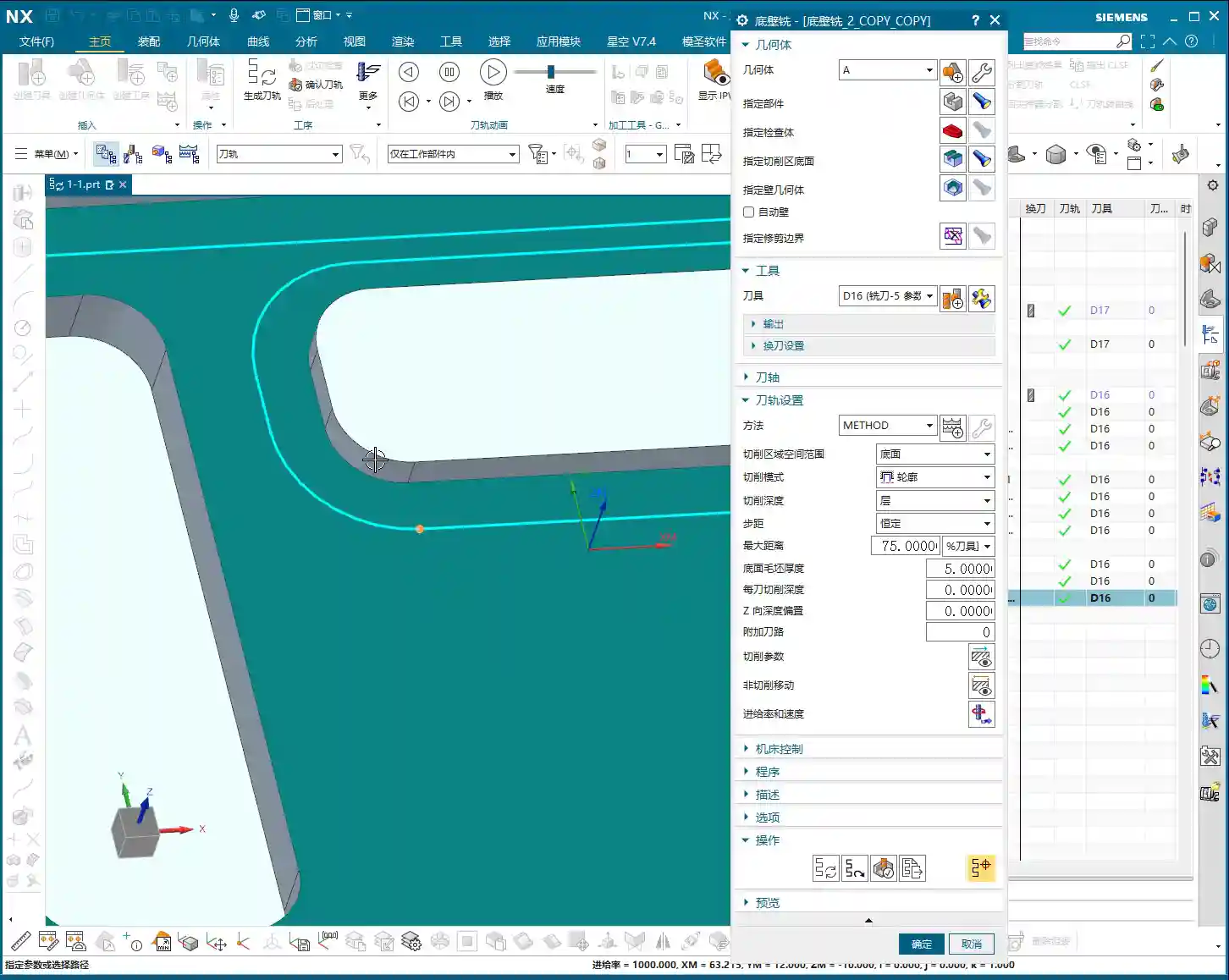
    • Profile: Pay special attention to this one. Profile mode only machines boundary lines, meaning the sidewalls, and does not machine the planar area itself. If you select “Profile” in a planar milling operation and find that the flat surface isn’t machined, don’t come asking me why – it’s because you haven’t understood the purpose of different modes.

    Master Wang tells you straight: in Siemens NX planar milling operations, we treat it as a “Roughing” tool. This means its primary purpose is to quickly remove large amounts of material. For this, Follow Periphery and Follow Part are the most reliable and commonly used options. If you want to “finish” the sidewalls (i.e., a finishing pass on the sidewalls), then don’t use the “Profile” mode within planar milling. Soon, we’ll learn about dedicated Planar Profile Milling, which is the professional way to finish sidewalls.

    Stepover: Balancing Efficiency in Lateral Cutting

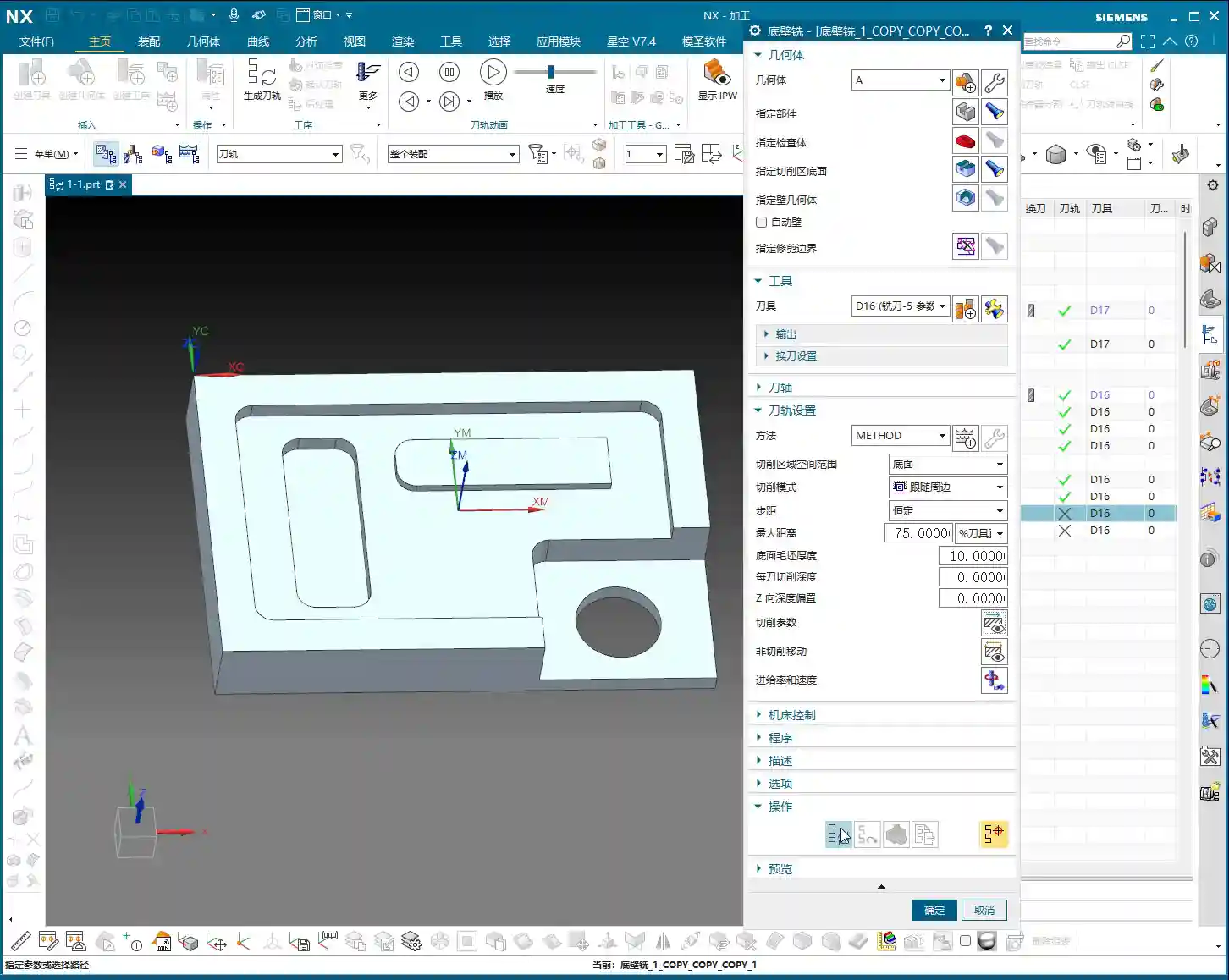
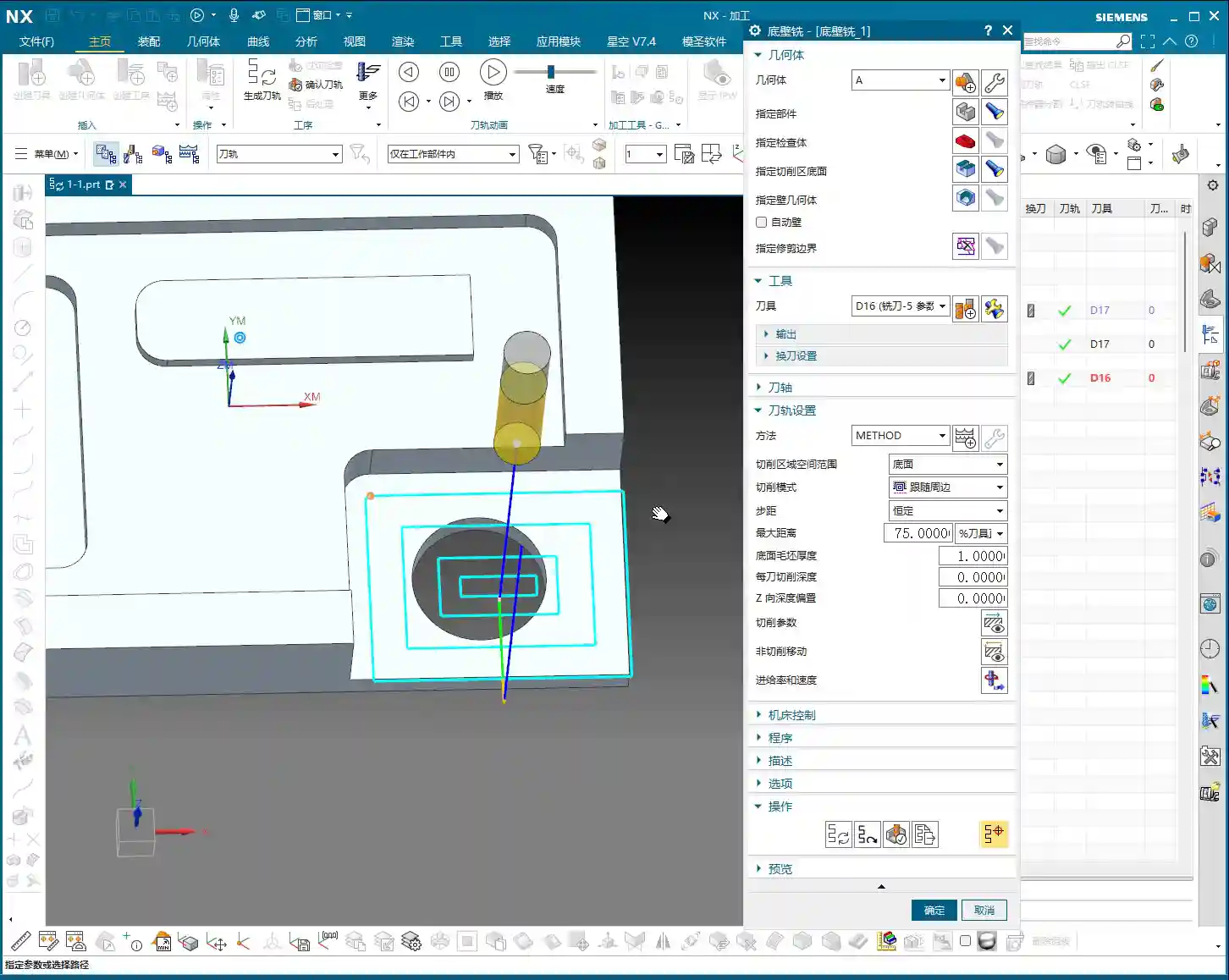
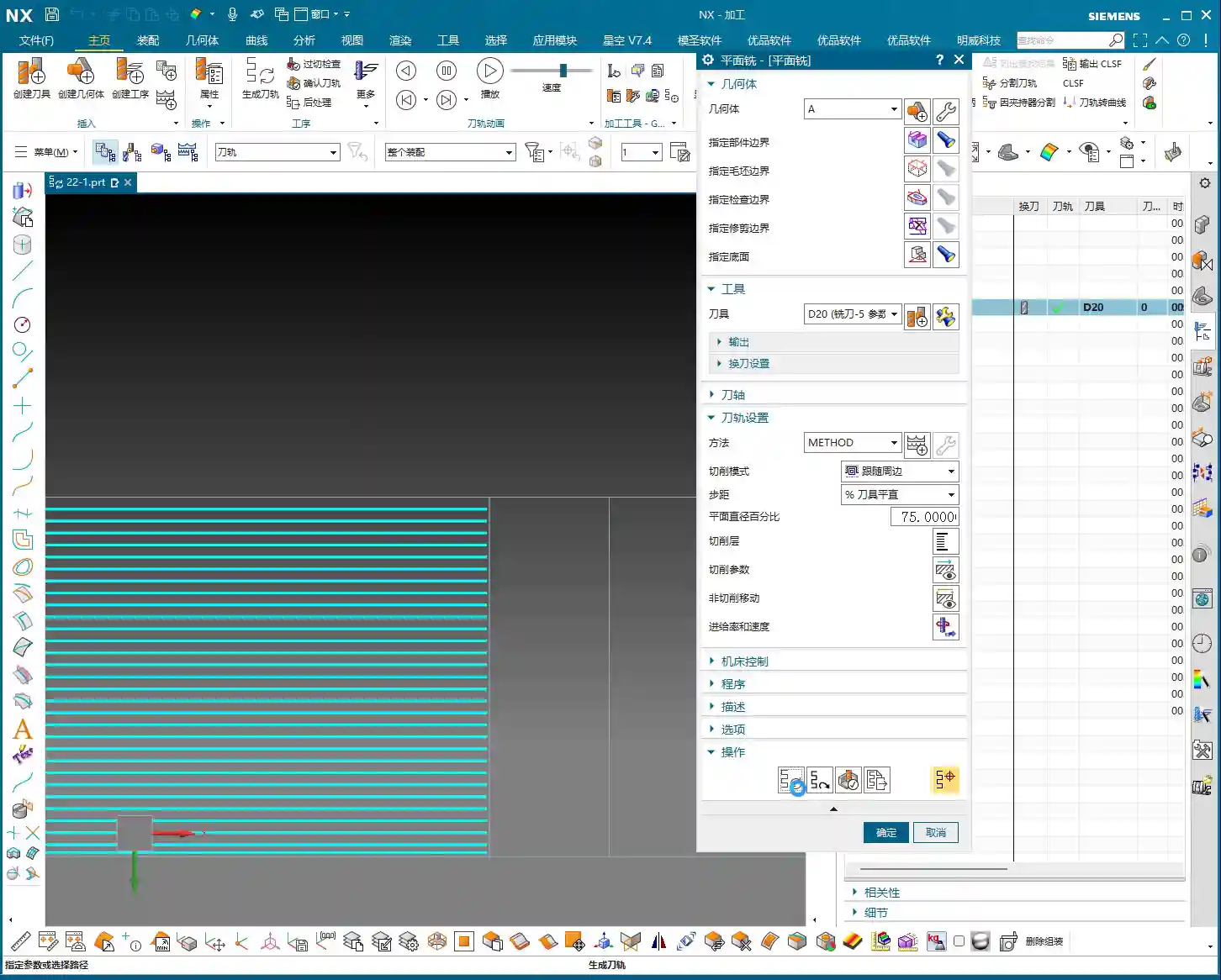
    The Stepover parameter refers to the distance between the tool’s centerlines during each lateral movement. Siemens NX defaults to 75% of the tool diameter, which is a reasonable value for most situations. Too large, and you risk leaving steps; too small, and you’re just wasting time. You can adjust this flexibly based on the workpiece’s precision requirements, material hardness, and tool strength. However, there’s no absolute percentage for this; you’ll need to rely on experience and test cuts to find the optimal value.
    Core Parameters: Depth of Cut and Strategy

    Depth per Cut: The Trade-off Between Speed and Precision

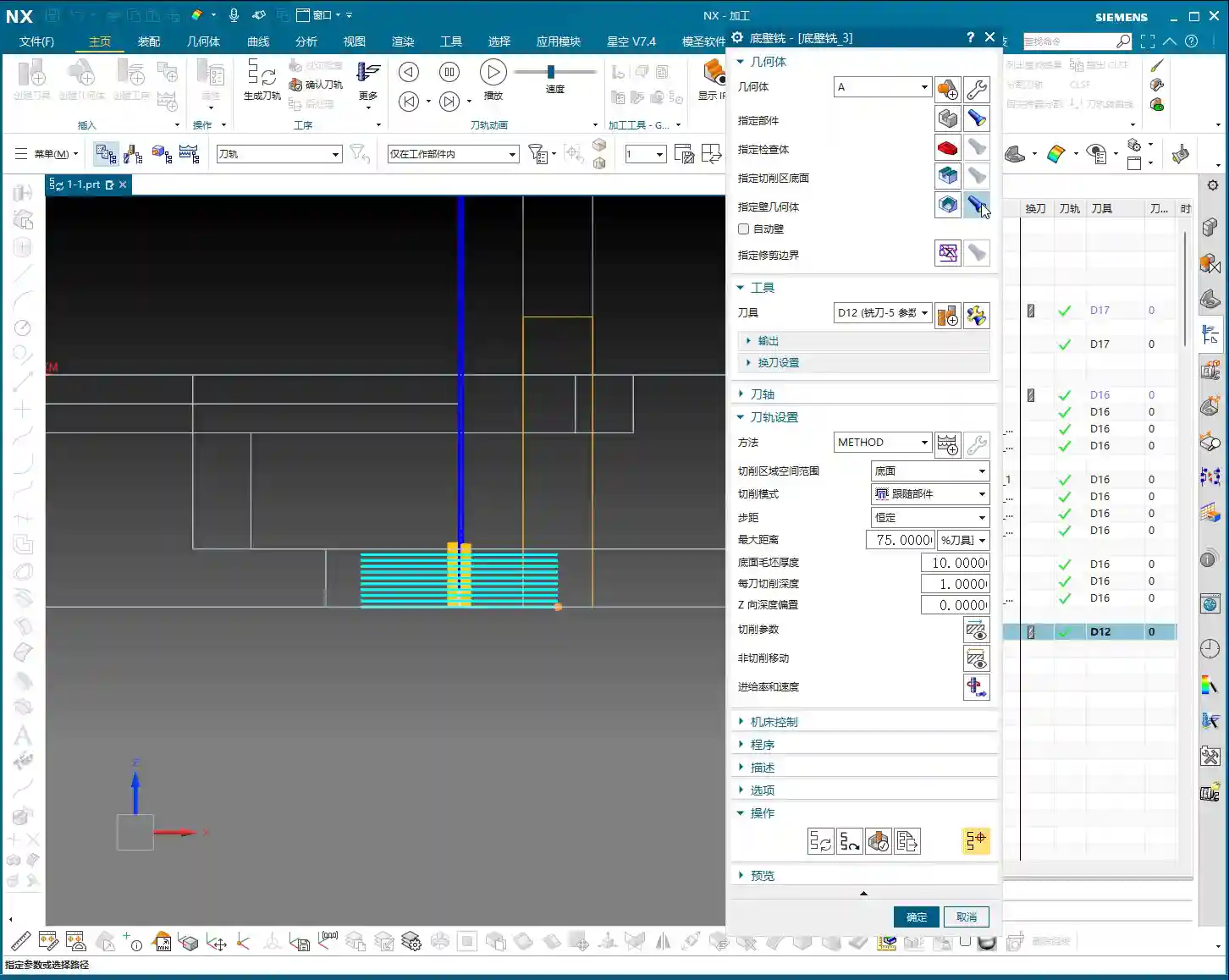
    Finally, let’s talk about the Depth of Cut (DOC), specifically the Depth per cut. This value determines how much material you remove with each pass. Siemens NX might default to 1 millimeter (approx. 0.04 inch), but this entirely depends on your actual machining requirements and material. For instance, if you change it to 0.1 millimeter (approx. 0.004 inch), the toolpath will be very dense, increasing the number of cuts and improving surface finish, but the machining time will skyrocket. If you change it to 10 millimeters (approx. 0.4 inch), then naturally, each pass will take 10 mm, which is highly efficient, but it places much higher demands on machine rigidity and tool strength.

    This parameter is essentially the same as “Depth per cut” we covered in “Deep Bottom Base (DBB)” operations; the core concept is Depth of Cut (DOC). How much should you set it to? That depends on material properties, machine power, and tool material and strength. For aluminum, you can take deeper cuts. But for materials like titanium alloys or high-temperature nickel-based alloys, dare to take a deep cut? At best, you’ll break the tool; at worst, you’ll scrap the workpiece and have nowhere to vent your frustration. So, in such cases, you must reduce this value.

    To change it, go to the Depth of Cut parameters, find “Common”, and directly input your desired depth.

    In-Depth Analysis: “Finish Bottom” and “Constant” Modes

    Within the Depth of Cut settings, there are two modes you need to understand clearly:
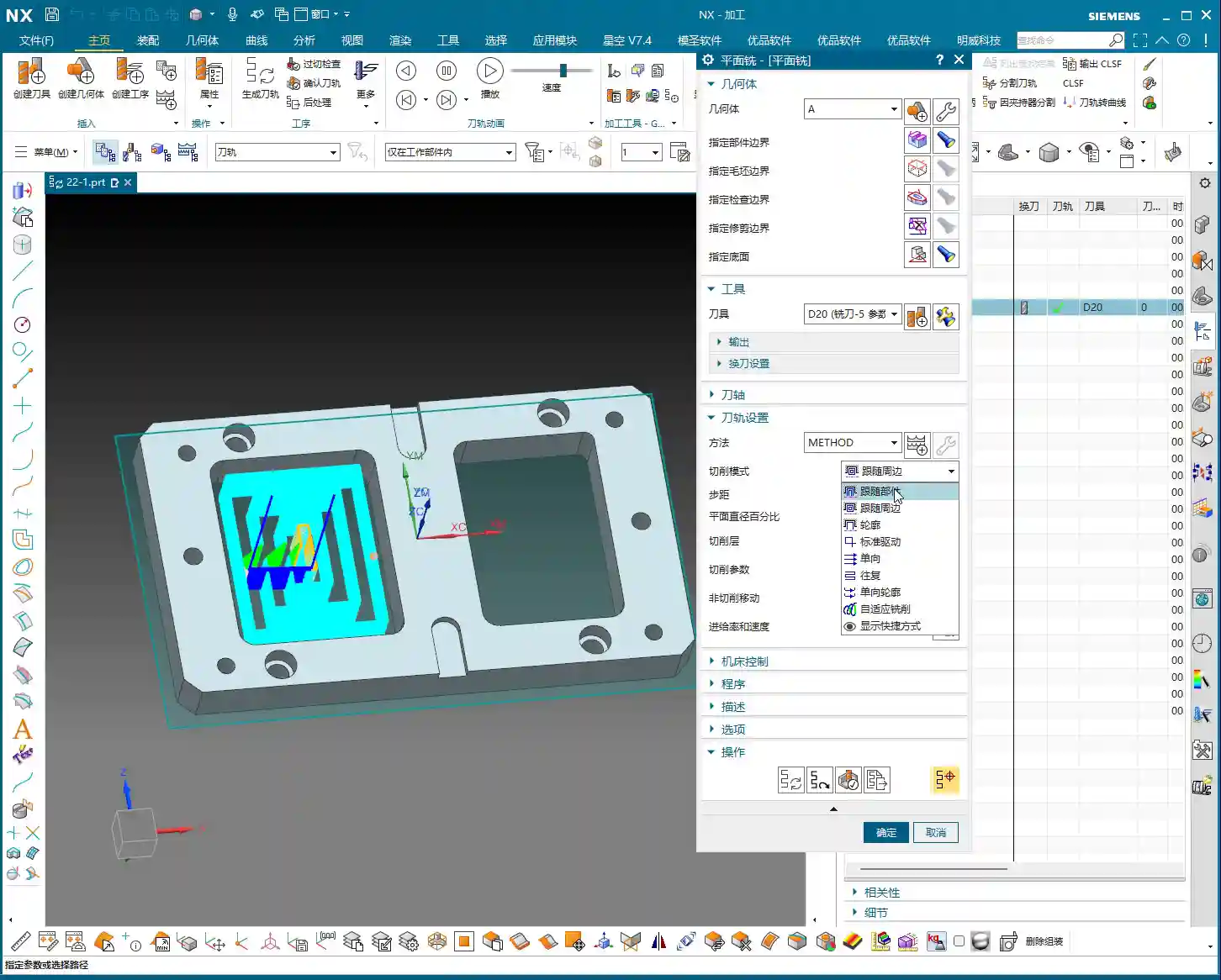
    • Finish Bottom: This mode means “one cut to the bottom”. In other words, regardless of your set Depth per cut, it will make a single pass directly down to your specified bottom face. This is typically used for the final finishing pass or when high bottom surface precision is required with minimal stock remaining.
    • Constant: As the name implies, this mode proceeds layer by layer, following your set Depth per cut until it reaches the specified bottom face. This is the most common roughing mode, as it allows control over each layer’s material removal, ensuring machining stability and tool life.

    Simple enough, right? “Finish Bottom” is a clean single pass to the final depth, while “Constant” is a methodical, layered approach to cutting. Combining these two modes will cover most of your planar milling needs. Don’t overthink it; often, the simpler things are the most practical.

    Summary: Pitfall Guide

    That concludes our discussion on the planar milling main page and Depth of Cut settings for today. Remember these core points:

    • A closed boundary is the lifeline for planar milling; select it incorrectly, and you won’t be able to machine.
    • Specify Bottom must be used flexibly; apply an offset when needed. Especially for through-cuts, add an extra 1-2 millimeters (approx. 0.04-0.08 inch), and if there’s a fixture below, raise the toolpath.
    • Planar milling is primarily for roughing; the preferred cut patterns are “Follow Periphery” or “Follow Part”. For finishing sidewalls, use Planar Profile Milling.
    • Stepover and Depth per cut must be adjusted based on material and machine performance. There’s no absolute value, only the most suitable one. For hard or brittle materials, it’s better to take shallower, more passes to save both the tool and the part.
    • “Finish Bottom” is a single pass to the final depth, while “Constant” is a layered approach; choose according to your needs.

    As for feed rates, spindle speeds, rapid moves, and all that – I’ve lectured on those countless times before. Click into them yourself, and if you don’t understand, just experiment a few more times. With Siemens NX, you’ll only truly master it through practice, exploration, and comparing toolpaths generated by different parameter settings. Don’t just stick to theory; you need to observe the cutting sparks and listen to the cutting sound – that’s where the real skill lies!

    Next class, we’ll compare the cutting parameters across different machining operations to see which ones are common and which are unique, to deepen your understanding. There are no shortcuts here; it’s all about hands-on practice and critical thinking!

    πŸ‘€ About the Author:
    The author is a veteran CNC machining professional with 15 years of industry experience, specializing in UG NX programming. This article is an original work representing personal practical insights.

    ⚠️ Copyright Notice: Unauthorized reproduction or distribution without prior communication is strictly prohibited.
  • Master Wang’s Expert Guide to NX Floor-Wall Milling: Roughing Through-Holes with No Bottom Face by U

    πŸ“ Key Takeaways:

    NX Floor-Wall Milling: Practical Roughing of Through-Holes with “No Bottom Face”

    Hello everyone, I’m Master Wang. Today, we’re going…

    Hello everyone, I’m Master Wang. Today, we’re going to discuss the NX Floor-Wall Milling function, especially how to cleverly handle through-holes that have “no bottom face.” This is practical experience you won’t find in textbooks, so pay close attentionβ€”there’s a lesson in every detail!

    Preparation is Key: Program Post-processing

    For us in manufacturing, once a program is created, the first step is to generate the NC code. Don’t underestimate post-processing; there are many intricacies involved.

    Efficiency Secret: Batch Post-processing

    In Siemens NX, you can select a single operation and directly click the A04 Post-process button. However, if you have many operations, post-processing them one by one is too slow. Listen up: you can select all operations (or select the folder containing them), then directly click “Batch Post-process” in the post-processing menu. This generates NC code for all operations at once, saving time and effortβ€”it’s a neat trick for boosting efficiency. As for the file format, whether it’s NC or MDF (e.g., for Siemens controllers), that depends on your machine and company standards; just make sure to select the correct one.

    Traditional Solution for “No Bottom Face” Through-Holes: Modeling to Create a Virtual Face

    Alright, back to today’s main topic. Floor-Wall Milling, as the name suggests, requires a bottom face. However, in real-world machining, you often encounter through-holes that are just smooth cavitiesβ€”where’s the bottom face for you to select?

    Creating a Bounded Plane: A Virtual Bottom Face

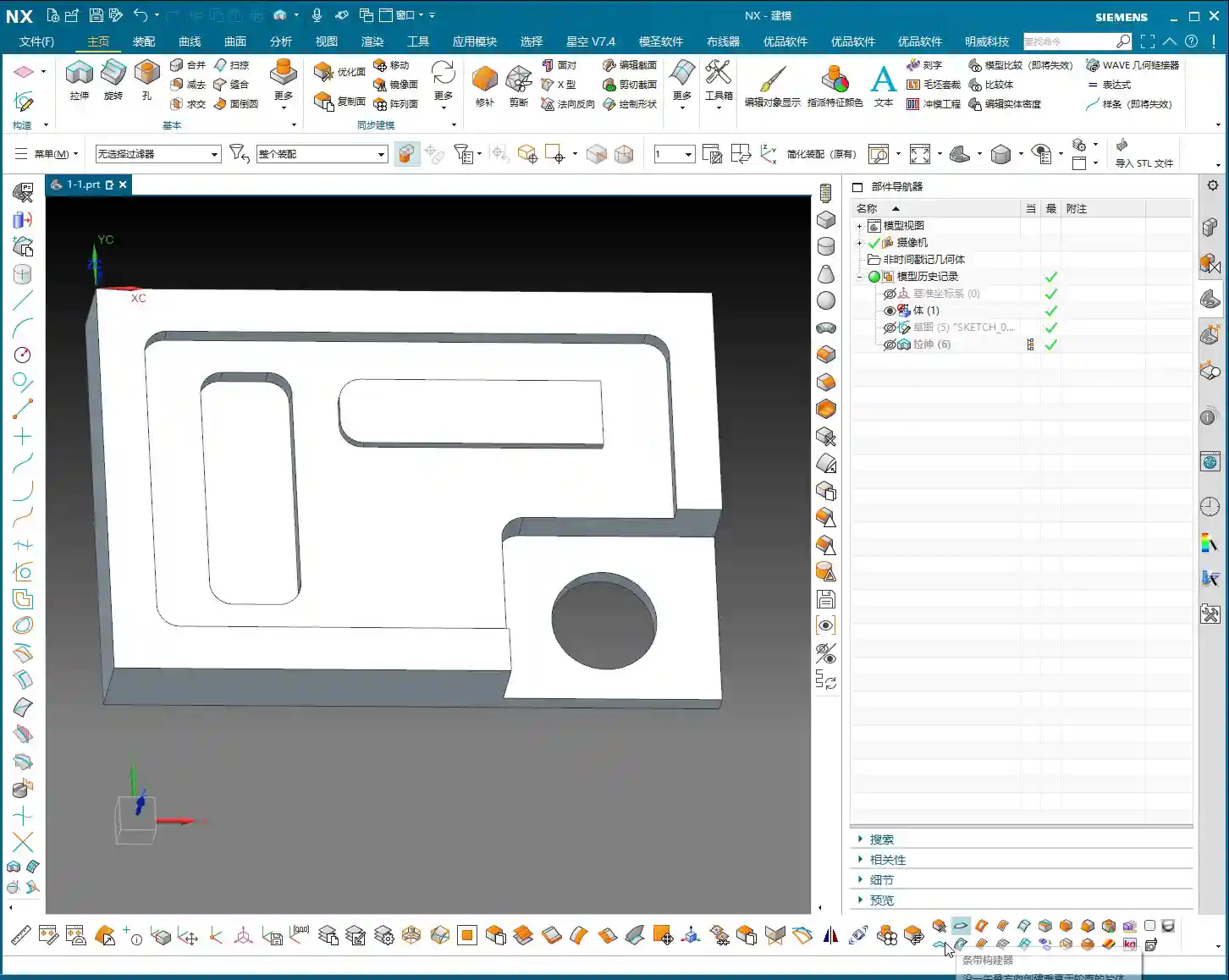
    The most straightforward method is to “trick” the software by creating a bottom face for it. In the Modeling module, find the “Bounded Plane” function. By selecting the edge curves of the through-hole, you can generate a temporary sheet body, which we’ll use as our “bottom face.” Once this temporary bottom face is created, your machining operation will have a reference.

    Floor-Wall Milling Operation Settings: Pay Attention to the Filter

    After creating this virtual bottom face, we can proceed to create a Floor-Wall Milling operation as usual. When selecting the machining area, pay attention to one detail: the filter for “Specify Part” might default to “Sheet Body.” If you’re selecting a solid body, it won’t be recognized. In this case, you need to change it to “No Selection”, then select your entire part for machining. Don’t forget this detail, or the software will throw an error.

    Then, for specifying the bottom face of the cut area, select the Bounded Plane we just created. For the remaining parameters, such as the Depth of Cut (DOC), when roughing, I generally prefer to set it a bit larger (e.g., 1 mm). This increases machining efficiency; don’t just think about tool life, but also overall cost and lead time.

    The “Red Face” Warning for Geometry Changes: Don’t Mess with References

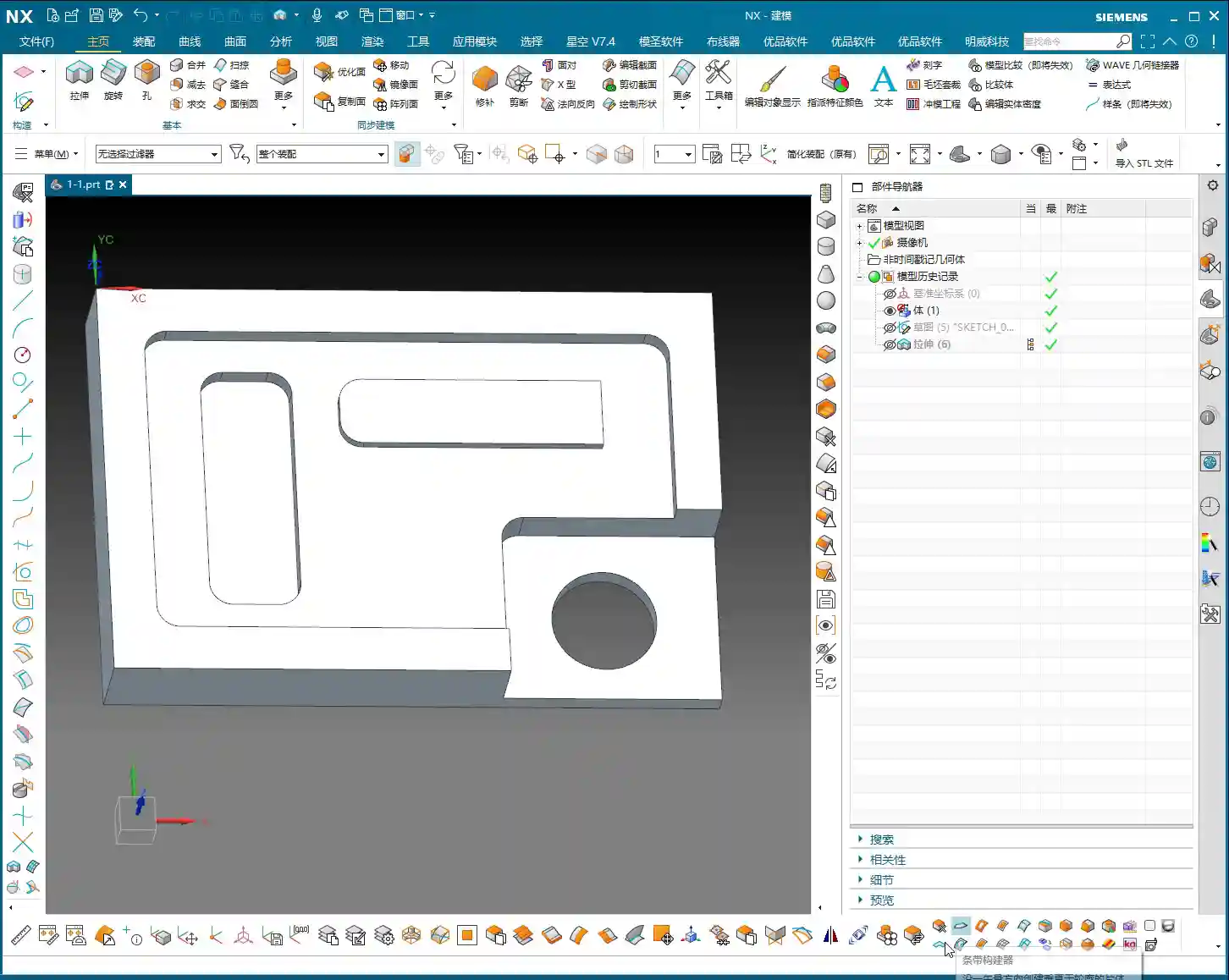
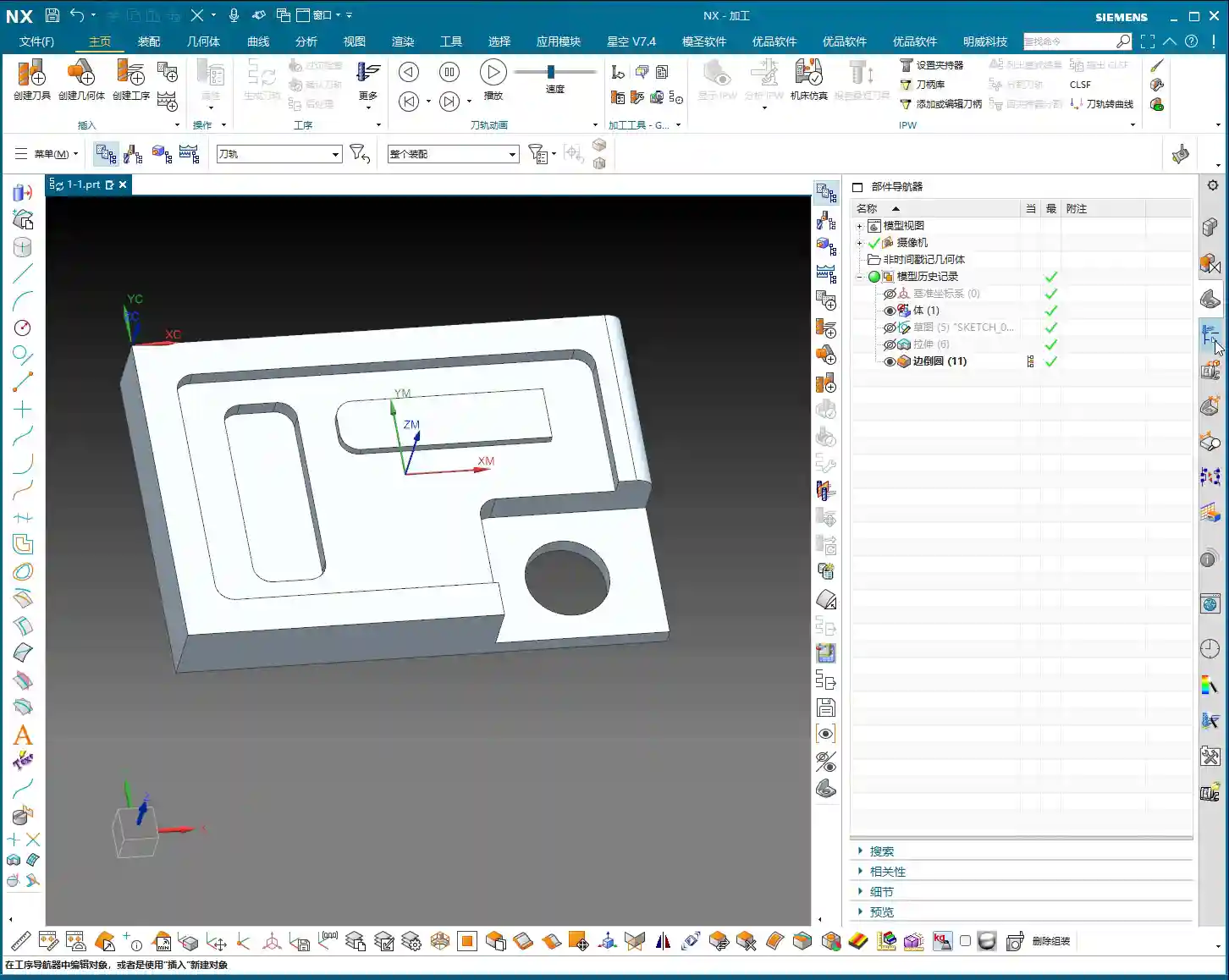
    Listen up: In NX, if your operation suddenly turns red, it usually means your original geometry or referenced objects have been modified or deleted. For instance, if you add a fillet to the part in Modeling, or delete a sheet body referenced by the operation, the machining operation will immediately show a “red face.”

    A “red face” means the operation is invalid and requires re-specifying the geometry or re-generating the toolpath. Therefore, once a machining operation is created, try not to modify or delete the original modeling geometry, especially any areas referenced by the operation. If you absolutely must make changes, be prepared to update the operation accordingly.

    When a Bottom Face Truly Doesn’t Exist: Roughing by Specifying “Walls”

    So, what if I don’t want to create a Bounded Plane in Modeling, or I simply want to rough directly using “walls”? Of course, there’s a way! However, personally, Master Wang doesn’t use this method very often.

    Master Wang’s Practical Choice: Planar Milling is More Efficient

    When I do machining, I prioritize efficiency and stability. For roughing such through-holes, if there’s truly no bottom face to reference, I generally opt for “Planar Milling”. It provides more direct toolpaths for planar contours and through-holes, and its parameter settings align better with my workflow. I typically use Floor-Wall Milling for situations where there’s a bottom face and side walls need finishing. However, since we’re discussing it today, I’ll explain clearly how to select these “walls.”

    Practical Demonstration of “Specify Wall”: Appears Similar, but There’s a Difference

    When creating a Floor-Wall Milling operation, if you cannot specify a bottom face, you can select “Specify Wall” instead. At this point, you’ll need to select the inner wall faces of the through-hole. Then, generate the toolpath, and you’ll notice it looks identical to the toolpath generated when specifying a bottom face. It also cuts layer by layer according to the defined Depth of Cut (DOC) (e.g., 1 mm per pass for a total depth of 10 mm).

    Pitfall: Stock Allowance Setting Trap

    However, there’s a crucial pitfall here, pay close attention! When you choose “Specify Wall” for machining, the default “Part Stock” is ineffective! Any stock allowance you set there will not be recognized by the operation. Where is the actually effective stock allowance? It’s hidden under the “Walls” option, specifically in “Wall Stock”!

    If you use “Specify Wall” for roughing and want to leave stock on the side walls, you must set it in “Wall Stock.” This differs from our usual habit of setting a unified stock allowance in “Part Stock.” Many users stumble here, resulting in the operation finishing the side walls with no stock leftβ€”milling straight to the final dimension! That’s why I don’t use this method often; it’s too prone to errors, requiring constant vigilance.

    The “Z-Depth Offset” Secret for Depth Control

    Additionally, among the cutting parameters for Floor-Wall Milling, there’s a parameter called “Z-Depth Offset.” This parameter is particularly useful in certain specific situations.

    Its purpose is to allow the tool to cut a bit more or a bit less in the Z-direction. For example, if you want to machine a hole completely through, but the model’s Z-depth is exact, you can input a positive value here, such as “1”, and the tool will cut an extra 1 mm deeper, ensuring the hole breaks through completely. Conversely, inputting a negative value will result in less material being cut. This function is simple and practical, helping you solve many minor depth control issues.

    Summary of Floor-Wall Milling Functions and Cross-Operation Parameter Reuse

    Overall, the Floor-Wall Milling operation is very powerful and capable of many tasks:

    • Surface Finishing: Performing a finishing pass on plane surfaces.
    • Roughing: Typically by selecting a bottom face and using a “Level Periphery” cutting pattern for rough machining.
    • Bottom Face Finishing: Performing a finishing pass on the bottom plane.
    • Side Wall Finishing: Performing a finishing pass on side walls, with the option to leave individual stock allowances.

    While “Specify Wall” for roughing is an option, considering stability and error prevention, Master Wang personally rarely uses it for roughing. I more highly recommend creating a Bounded Plane in Modeling, or directly switching to a “Planar Milling” operation to handle through-holes without a bottom face.

    After discussing Floor-Wall Milling for so long, you’ll find that many parameters in NX machining operations are interconnected. For instance, “Cutting Pattern,” “Stepover,” “Cutting Parameters,” and “Non-Cutting Moves,” among others. Their names, functions, and locations are largely similar. Therefore, by mastering one operation, you can quickly get the hang of many othersβ€”this is the principle of “understanding one, understanding all.” In future discussions about other operations, I won’t dwell on these repetitive parameters; you can apply what you’ve learned and understand them by analogy.

    Summary: Pitfall Avoidance Guide

    • Batch Post-processing: When you have many operations, make good use of the batch function to generate all NC code at once, boosting efficiency.
    • Specify Part Filter: When selecting a part for machining, if it’s not recognized, check if the filter is set to “No Selection.”
    • Protecting Original Geometry: Once machining operations are created, try not to modify or delete the original modeling geometry referenced by the operations, otherwise, the operations will turn “red” and become invalid.
    • “Specify Wall” Stock Allowance Trap: When using Floor-Wall Milling and selecting “Walls” for machining, remember that “Part Stock” is ineffective! All side wall stock allowance must be set in “Wall Stock.” This is the most common place for errors, so be extremely careful.
    • Preferred Method for Through-Holes: For roughing through-holes without a bottom face, Master Wang personally recommends creating a “Bounded Plane” in Modeling as a virtual bottom face, or directly using a “Planar Milling” operation, to ensure stability and efficiency.
    • Z-Depth Offset: When fine-tuning machining depth, make judicious use of the “Z-Depth Offset” parameter, especially when machining through-holes.

    Alright, that concludes today’s practical experience sharing. In NX programming, attention to detail determines success or failure. These “textbook-untaught” tips require practice and thoughtful application to truly become your own hard-earned skills! See you next time!

    “`

    πŸ‘€ About the Author:
    The author is a veteran CNC machining professional with 15 years of industry experience, specializing in UG NX programming. This article is an original work representing personal practical insights.

    ⚠️ Copyright Notice: Unauthorized reproduction or distribution without prior communication is strictly prohibited.
  • Siemens NX CNC Programming in Practice: Master Wang Guides You Step-by-Step Through Finishing Pass f

    πŸ“ Key Takeaways: Master Wang provides an in-depth practical guide to Siemens NX Finishing Pass for bottom faces and sidewalls. He emphasizes setting stock allowance to zero for bottom face finishing and teaches how to resolve issues with high Z-approach in enclosed areas. For sidewall finishing, the “Contour” cutting pattern is key, with detailed instructions on optimizing lead-in/lead-out moves for smooth arc engagement, and practical settings for extension and overlap distances. Finally, he shares how to inspect machining quality by observing cutting “footprints” to ensure high-precision requirements are met.

    Hello everyone, I’m Master Wang. Last time, we discussed roughing operations. Now that the roughing programs are done and the parts are almost ready, today we’ll continue by explaining how to bring these rough parts to a precise finish, especially the finishing pass for bottom faces and sidewalls. This is where your true skill is tested; even a small mistake can lead to big problems. So listen up!

    Finishing Pass for Bottom Faces: One Pass, Zero Stock

    For bottom face finishing, our goal is a flat, smooth, and dimensionally accurate surface. Don’t expect to achieve perfection in one go; you need to start by tweaking your existing roughing programs.

    Quick Optimization by Copying Roughing Programs

    The easiest way is to simply copy your previously created roughing program. Once copied, we’ll modify the parameters.

    • Step One: Zero out bottom face stock allowance. During roughing, you definitely left stock on the bottom face, say 0.2mm. For the finishing pass, you must change “Part Stock” or “Bottom Stock” directly to 0. This ensures the tool cuts precisely to your defined bottom face, making it a single, accurate pass with no remaining stock.
    • Step Two: Sidewall stock allowance. If you plan to finish the bottom face and sidewalls separately, when finishing the bottom face, you can leave a slightly larger sidewall stock allowance, for example, 0.3mm. This prevents the tool from grazing the sidewalls during the bottom face finishing pass, avoiding secondary tool marks. If the pocket is shallow, you can finish both the bottom and sidewalls together, setting all allowances to 0. But for now, we’ll discuss them separately, so follow my lead.

    Solving High Z-Approach in Enclosed Areas

    This is a common mistake newcomers make, and it’s not always thoroughly explained in textbooks. You might notice that in some enclosed cavities, the tool starts its entry from a high position, plunging vertically, sometimes even dropping from over ten millimeters – it sounds painful and can easily chip the tool!

    • Root Cause: This happens because the “Part Stock” (sometimes called “Safety Height” or “Initial Cut Depth”) you set during roughing was too large. For example, if you set it to 10mm for roughing, the finishing pass will default to starting its cut from that same high position.
    • Master Wang’s Tip: Listen up. In your finishing program, locate the parameter that controls the tool’s starting Z-height for engagement. This is typically “Part Stock” or a similar setting like “Safe Entry Height”. Reduce it significantly, for example, to 1mm. This way, the tool will approach the workpiece surface much closer before engaging, which is safer, more efficient, and eliminates unnecessary air cutting time.
    • Exception for Open Areas: If it’s an open area where the tool enters from outside the part, this issue of high Z-approach is irrelevant, as the tool won’t be plunging from above in the same way.

    Finishing Pass for Sidewalls: Contour Cutting is Key

    With the bottom face taken care of, let’s move on to the sidewalls. Finishing sidewalls requires much more finesse than bottom faces, especially regarding smoothness and tool mark control.

    New Program: Finishing Sidewalls from Scratch

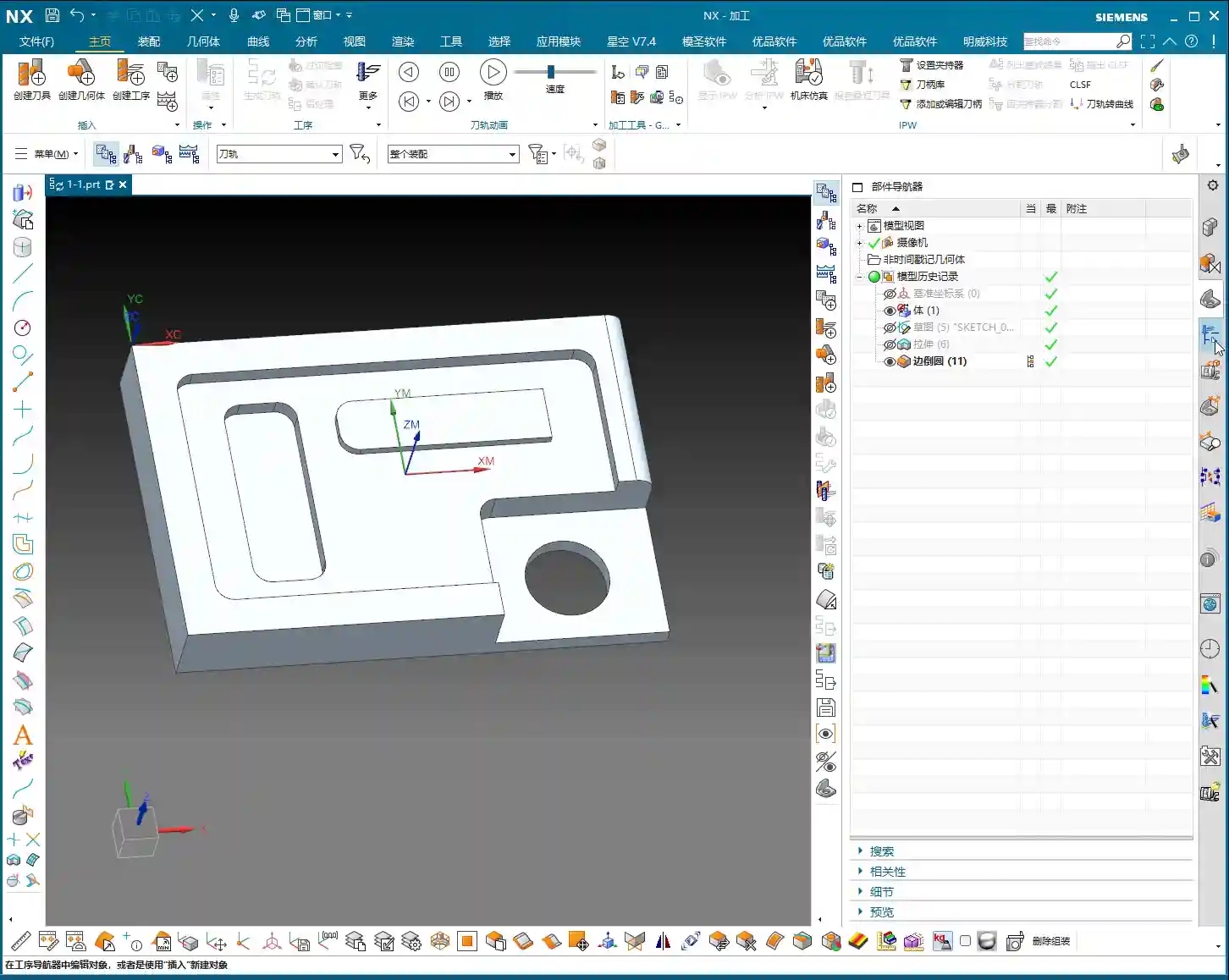
    While I, Master Wang, typically copy and modify programs, to ensure you fully understand, we’ll create a new sidewall finishing program from scratch. Select the “Planar Mill” operation type, and continue using our D16 end mill.

    • Select Machining Face: For instance, if we’re finishing this sidewall, select the bottom face it originates from – essentially, the “root” of the sidewall.
    • Problem Alert: If you generate the tool path directly, you’ll notice it’s still finishing the bottom face! Why? Because “Planar Mill” defaults to machining bottom faces.

    Core Setting: Switch Cutting Pattern to “Contour”

    Listen up, this is the most critical step for finishing sidewalls!

    • Key Operation: In your program parameters, find the “Cutting Pattern” option. Decisively switch it to “Contour” from the default “Follow Part,” “Zigzag,” or other options.
    • Explanation of Function: Once you switch to “Contour” mode, Siemens NX will intelligently identify all sidewalls perpendicular to your selected bottom face and machine along their profiles.
    • Zero Stock Allowance: Similarly, for sidewall finishing, set all stock allowances (including bottom and sidewall stock) to 0. We want that crisp, clean finish!

    Optimizing Lead-in/Lead-out: Ditch Angled Plunge, Embrace Smooth Arc Engagement

    Even after setting the “Contour” mode, you might find the tool engaging at an angle. While it can still cut, this isn’t very efficient and tends to leave marks at the entry point, affecting surface finish.

    • Step One: Address the “angled plunge” phenomenon.

      • The Pain Point: The tool plunges into the material at an angle instead of vertically descending to the cutting plane and then linearly engaging. This is especially noticeable in enclosed areas.
      • Master Wang’s Tip: Go to the “Non-Cutting Moves” settings. There’s a parameter related to the entry method, often called “First Point of Yellow Line” (or “Engage Method”). Typically, it defaults to calculating for “Enclosed Areas.” You need to change it to “Same as Open Area”. This way, the tool will first descend to the cutting plane and then linearly engage, which is much safer.

    • Step Two: Ensure smoother engagement and eliminate tool marks.

      • The Pain Point: Even after fixing the angled plunge, a straight-line entry after vertical descent can still cause impact, leading to subtle tool marks.
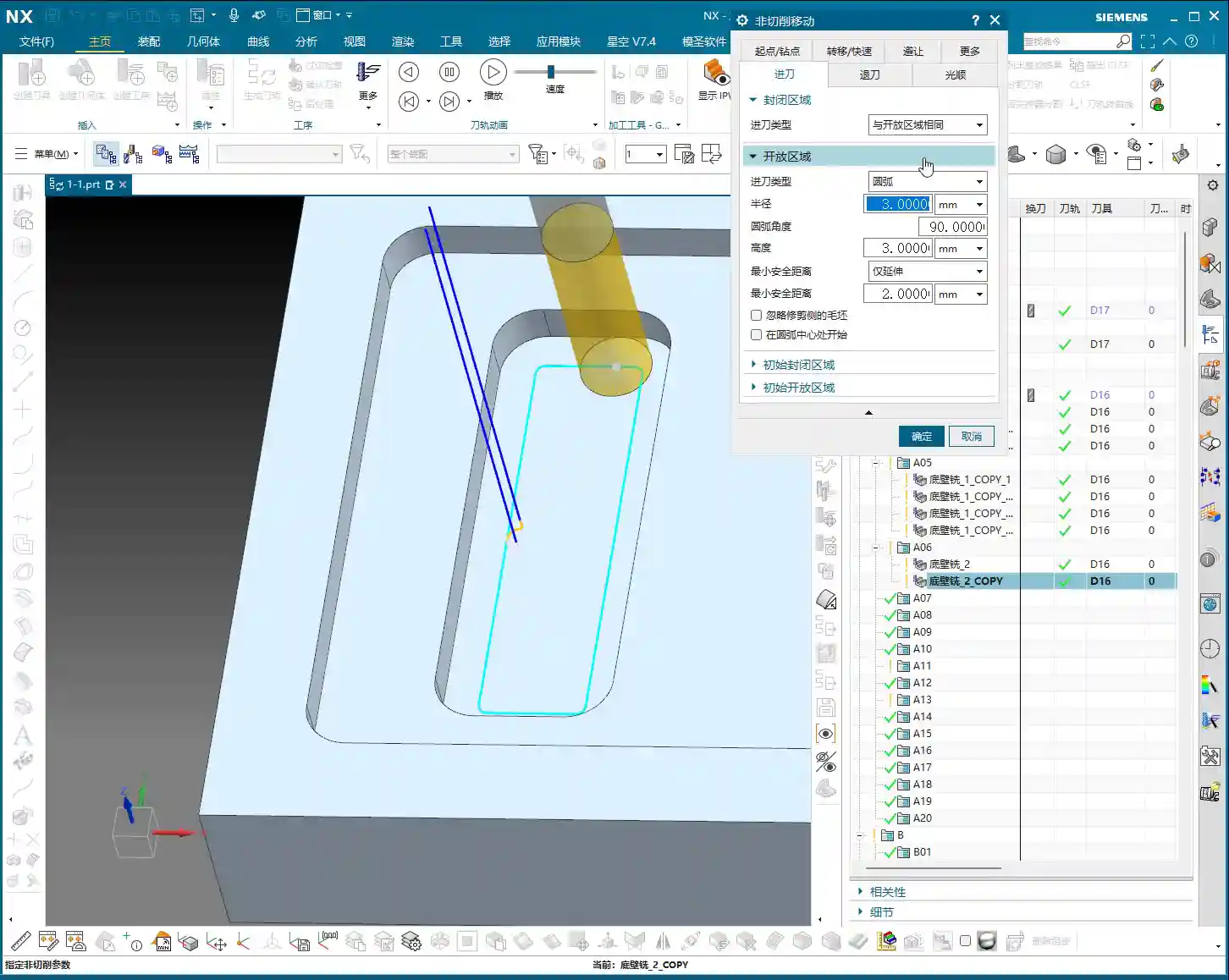
      • Master Wang’s Tip: In the “Engage Type” setting, change “Linear” to “Arc”. Then set an appropriate arc radius, for example, 3mm. This allows the tool to smoothly engage the workpiece along an arc trajectory, minimizing impact and naturally improving surface finish.
      • Arc Extension (“Arc End Extension”): When using arc engagement, there’s also an “Arc End Extension” parameter. You can think of this as the extended length of the arc during lead-in or lead-out. For example, if you set it to 10mm, the tool will travel an additional 10mm along the arc before entering or after exiting the cut. What’s its purpose? It ensures the tool fully enters the cut or completely exits the material, preventing tool marks or incomplete machining in critical areas. There’s no fixed value; just observe the machining effect and adjust as you see fit.
      • Overlap Distance: The “Overlap Distance” is also very useful. For example, if you set it to 5mm, the tool path will extend by 5mm at connections or where the path loops back on itself, creating an overlap region. This effectively eliminates tiny unmachined areas and ensures overall machining consistency. Of course, not overlapping is also fine; it depends on your actual working conditions and precision requirements.

    Master Teaches You: Finishing Complex Part Sidewalls in One Go

    You might be thinking, if a part has many sidewalls, do I have to select them one by one? That would be exhausting! Master Wang tells you, there’s no need for such hassle.

    One Trick for Many Uses: The Ingenious Application of Planar Mill with Contour Cutting

    Our previously created sidewall finishing program already has the “Contour” cutting pattern and optimized lead-in/lead-out methods set up. Now, if you need to finish a sidewall with a more complex structure, such as one with grooves or multiple edges, how do you do it?

    • Quick Copy: Simply copy your previously optimized sidewall finishing program.
    • Select New Bottom Face: Then, you just need to select the bottom face corresponding to the new sidewall. For example, for the sidewalls of a square boss, you’d select the top face of that boss as the machining bottom face.
    • Intelligent Recognition: A miracle happens! Because you selected the “Contour” cutting pattern, Siemens NX will automatically identify all sidewalls around this bottom face and generate tool paths for finishing them. One bottom face, and all surrounding sidewalls are taken care of – saving time and effort!

    Acceptance Criteria: How to Determine if a Part is “Finished Correctly”

    No matter how well your program is written, the final result depends on the machining effect. How do you determine if the bottom faces and sidewalls are truly “finished correctly”?

    Visual Verification: Look at the Simulation, But More Importantly, the Cutting “Footprints”

    Don’t just stare at the software simulation; that’s just theory. Us old masters have our own trick: observing the tool path simulation’s “footprints.”

    • For Bottom Faces: In the Siemens NX tool path simulation, slow down the simulation speed and carefully observe the marks left by the tool as it passes over the bottom face. If you see a layer of uniform, subtle “overlap footprints” on the bottom surface, it indicates that the tool has thoroughly machined the bottom face. The more uniform these “footprints,” the better the surface finish.
    • For Sidewalls: Using the same method, drag the tool path and look for those tiny tool marks or overlapping trajectories. If these marks are clear and continuous, it means the sidewall finishing pass has also covered the entire area. If you find any areas without “footprints,” or if the “footprints” are not continuous, you’ll need to go back and check your parameters – perhaps the stock wasn’t removed completely, or the tool path didn’t fully cover the area.

    That concludes our lesson for today. Next time, we’ll discuss how to handle hole machining. Remember, practice makes perfect; keep practicing and keep thinking!

    Summary: Pitfall Avoidance Guide

    1. Zero stock allowance is an ironclad rule: For finishing any surface, the corresponding machining stock allowance must be set to 0, or all your efforts will be in vain.
    2. Exercise caution with Z-approach in enclosed areas: Don’t let the tool plunge directly from a high position. Be sure to adjust “Part Stock” or “Safe Entry Height” to around 1mm to reduce impact.
    3. For sidewall finishing, “Contour” cutting pattern is mandatory: This is the core of Siemens NX’s “Planar Mill” for finishing sidewalls; get this wrong, and you won’t be finishing the sidewalls.
    4. Optimize lead-in/lead-out; smoothness is paramount: Set “First Point of Yellow Line” to “Same as Open Area,” select “Arc” for the engage type, and reasonably set the arc radius and extension to eliminate tool marks and ensure surface quality.
    5. Set overlap distance appropriately: Especially in critical, high-requirement sidewall areas, proper overlap can prevent missed cuts and improve overall surface finish.
    6. Learn to “read the footprints”: Don’t just rely on the simulation; learn to judge if the actual machining is complete by observing the subtle marks in the simulation. This is a true skill taught by experienced masters!

    “`

    πŸ‘€ About the Author:
    The author is a veteran CNC machining professional with 15 years of industry experience, specializing in UG NX programming. This article is an original work representing personal practical insights.

    ⚠️ Copyright Notice: Unauthorized reproduction or distribution without prior communication is strictly prohibited.
  • Siemens NX 1980 Floor-Wall Milling: Practical Roughing and Finishing Strategies

    πŸ“ Key Takeaways: Master Wang reveals the core techniques of Siemens NX 1980 floor-wall milling. Learn practical parameter settings and anti-pitfall tips for roughing and finishing, boosting your machining efficiency.

    Hello everyone, I’m Master Wang!

    In this lesson, I’ll walk you through the ins and outs of floor-wall milling. We’ll cover what this feature can actually do in practical machining, where it’s used, and how to properly set those intricate parameters.

    I. Floor-Wall Milling Basic Operations and Face Milling Roughing

    Listen up! First step, let’s select the floor-wall milling operation.

    1.1 Selecting Floor-Wall Milling and Specifying the Cutting Face

    Once we’ve selected floor-wall milling, we’ll choose the part to be machined. By now, I believe you all understand this from previous lessons. The key here is to specify the bottom surface of the cutting area. For example, let’s select this face, then click OK.

    1.2 Face Milling Strategy and Toolpath Optimization

    Now, our first step is to perform face milling. Pick a suitable tool, a 16mm or 17mm one, whatever you have on hand. For face milling, we usually use a zig-zag cutting pattern; that’s standard practice.

    After generating the program, what? The toolpath ran outside the workpiece? Don’t fret, this is because our spatial range wasn’t set correctly. In the “Extend bottom face to” parameter, change “5” to “Contour“. After changing it, regenerate the program, and see, isn’t the toolpath much more orderly now, staying within the workpiece?

    1.3 Toolpath Smoothing: Adding Corner Radius

    To make the toolpath smoother and cutting more stable, we need to add something. Open the cutting parameters and find the corner radius setting. Give it a percentage, for example, 10% of the tool diameter, and then regenerate. See how the toolpath instantly became smoother? This is a little trick to reduce chatter/tool deflection and ensure surface quality.

    II. Floor-Wall Milling Finishing Strategy

    2.1 Copying Finishing Program and Adjusting Parameters

    After roughing, there’s definitely still some material allowance on the workpiece surface. To get it smooth, we need to run a finishing pass. The easiest way is to copy the roughing program we just created and then paste it.

    For instance, if we used tool A01 for roughing, for finishing, we’ll switch to tool A02, ensuring clear division of labor. Double-click to open this new program.

    2.2 Single-Pass Finishing Settings

    Finishing typically involves a single pass. So, set the “Depth of Cut (DOC) per pass” parameter directly to 0. That’s right, 0. This way, it will only take one pass. At the same time, in the cutting parameters, set the bottom face allowance also to 0. Keep other parameters unchanged, and just generate the program. This will ensure the toolpath precisely follows the bottom surface, guaranteeing dimensional accuracy.

    III. Setting and Optimizing Roughing Areas

    3.1 Roughing Specific Areas: Raw Material Thickness and Depth of Cut

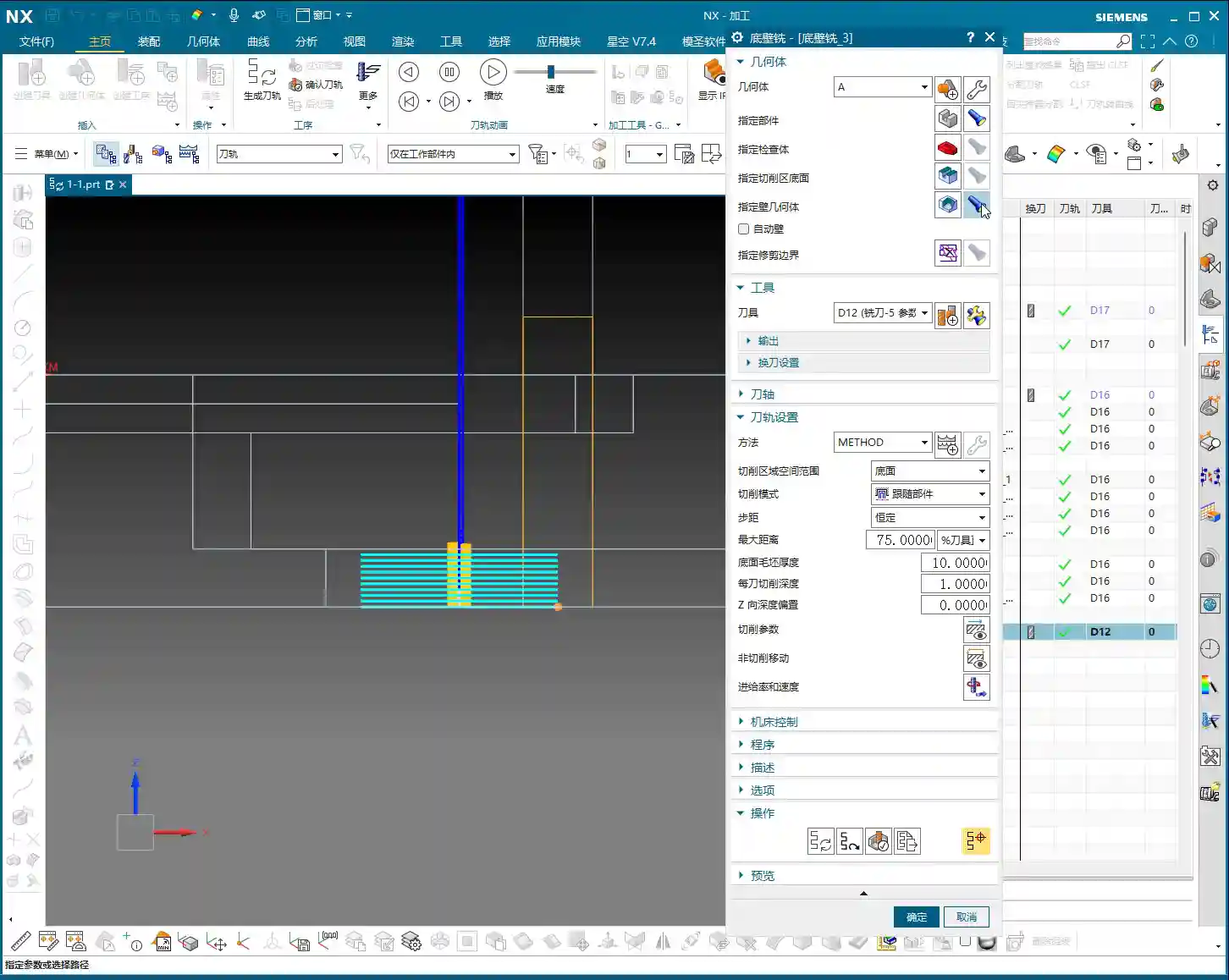
    Besides face milling, we might also need to rough specific areas. For example, this region. First, specify the part and the cutting region, still selecting this bottom face.

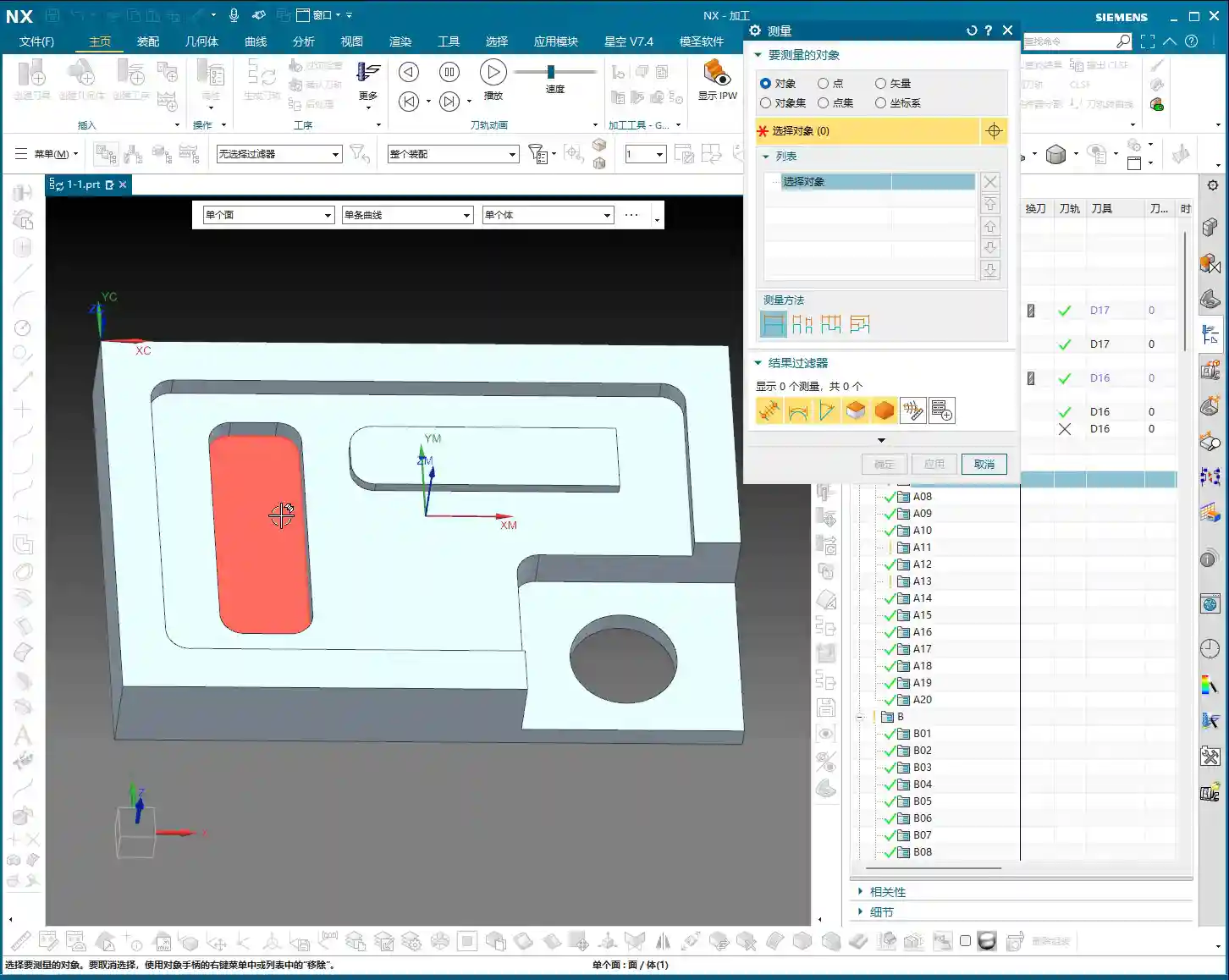
    By default, floor-wall milling leaves material allowance on both the side walls and the bottom face. However, if we need to rough an area with height, a single pass definitely won’t cut it. We need to measure the raw material height. Use the measurement tool to click an edge; for instance, this is 10mm.

    So, in the program, we’ll directly input 10mm for the raw material thickness, and then set the Depth of Cut (DOC) for each pass, for example, 1mm. Don’t touch any other parameters; just generate it directly. This will ensure all excess material is removed.

    3.2 Adjusting Cutting Patterns: In-Region vs. Follow Periphery

    Why does the tool lift so high in the middle and retract? This is actually related to the “in-region” cutting pattern. By default, it’s processed “in-region,” meaning the tool lifts to clear already machined areas. If we change it to “Follow Periphery,” the tool will follow the boundary, which might be more suitable for certain situations.

    Remember, the choice of cutting pattern should always be based on the actual workpiece geometry and machining requirements. There’s no one-size-fits-all solution, only the one best suited for your current task.

    IV. Simulation Verification and Troubleshooting

    4.1 3D Dynamic Simulation: Real Cutting Process

    Don’t just rely on software simulation; look at the cutting sparks! In Siemens NX, merely looking at the toolpath is just the first step. To truly verify if the program is correct, you need to use 3D dynamic simulation. Select the entire program folder, then click “Verify Toolpath“, and then click “3D Dynamic” to play. Before playing, remember to slow down the speed, otherwise, it’ll flash by and you won’t see anything clearly.

    4.2 Identifying Issues: Unmachined Areas

    Once the simulation runs, problems become apparent. See, some areas are milled, but others still have material allowance and haven’t been machined properly. This is like a blind spot; it looks fine on the surface, but there are actual unmachined areas. In such cases, we need further optimization.

    V. Addressing Unmachined Areas: Tool Shape Root Parameter

    5.1 Leveraging the “Tool Shape Root” Parameter

    Don’t panic when you encounter unmachined areas. As we discussed before, if some areas are unreachable by the tool, adjustments are needed. In the cutting parameters, find the “B – Tool Shape Root” option. Check its box and regenerate. Now look, has the toolpath entered those previously unmachined areas? This is a trick to extend the machining range by utilizing the tool’s geometric characteristics.

    5.2 Adjusting Inward/Outward Machining Direction

    Sometimes, the direction of the toolpath is also crucial. For example, if you don’t like machining from outside to inside. You can change it in the parameters to “from inside to outside” or “from outside to inside.” These adjustments are all for achieving more stable cutting and smoother chip evacuation. How to choose specifically depends on the workpiece characteristics and your experience.

    Summary: Pitfall Avoidance Guide

    • Allowance Settings: Floor-wall milling defaults to leaving material allowance on both side walls and the bottom face. For roughing, remember to adjust as needed. For finishing, the allowance must be set to 0.
    • Toolpath Extension: If the toolpath extends outside the workpiece during initial generation, check and adjust the spatial range parameter for “Extend bottom face to,” usually changing it to “Contour” will resolve this.
    • Surface Quality: To improve surface finish and reduce chatter/tool deflection, don’t forget to add an appropriate corner radius in the cutting parameters.
    • Raw Material Inspection: Before roughing specific areas, it is crucial to measure the raw material thickness accurately, input it, and set the Depth of Cut (DOC) per pass based on actual conditions.
    • Simulation Verification: After generating the program, always perform a 3D dynamic simulation. Just looking at the toolpath isn’t reliable; simulation helps uncover potential unmachined areas or collision issues.
    • Addressing Unmachined Areas: If unmachined areas are found, try adjusting the “B – Tool Shape Root” parameter to utilize tool characteristics and compensate for machining deficiencies.
    • Cutting Direction: The machining direction (inward/outward) affects cutting forces and chip evacuation. Choose flexibly based on the workpiece and tool to achieve optimal machining results.

  • UG NX 1980 Tool Axis and Cutting Method Explained

    πŸ“ Key Takeaways: Master Wang gives you an in-depth look at the core functions of ‘Tool Axis’ and ‘Cutting Method’ in UG NX 1980. From basic concepts to practical applications, learn how to precisely set the tool axis direction, master different cutting methods, avoid common filter pitfalls, and ensure efficient, stable machining paths.

    Hello everyone, I’m Master Wang. Today, let’s continue discussing core operations in UG NX, especially the two key points: Tool Axis and Cutting Method.

    Program and Blank Preparation

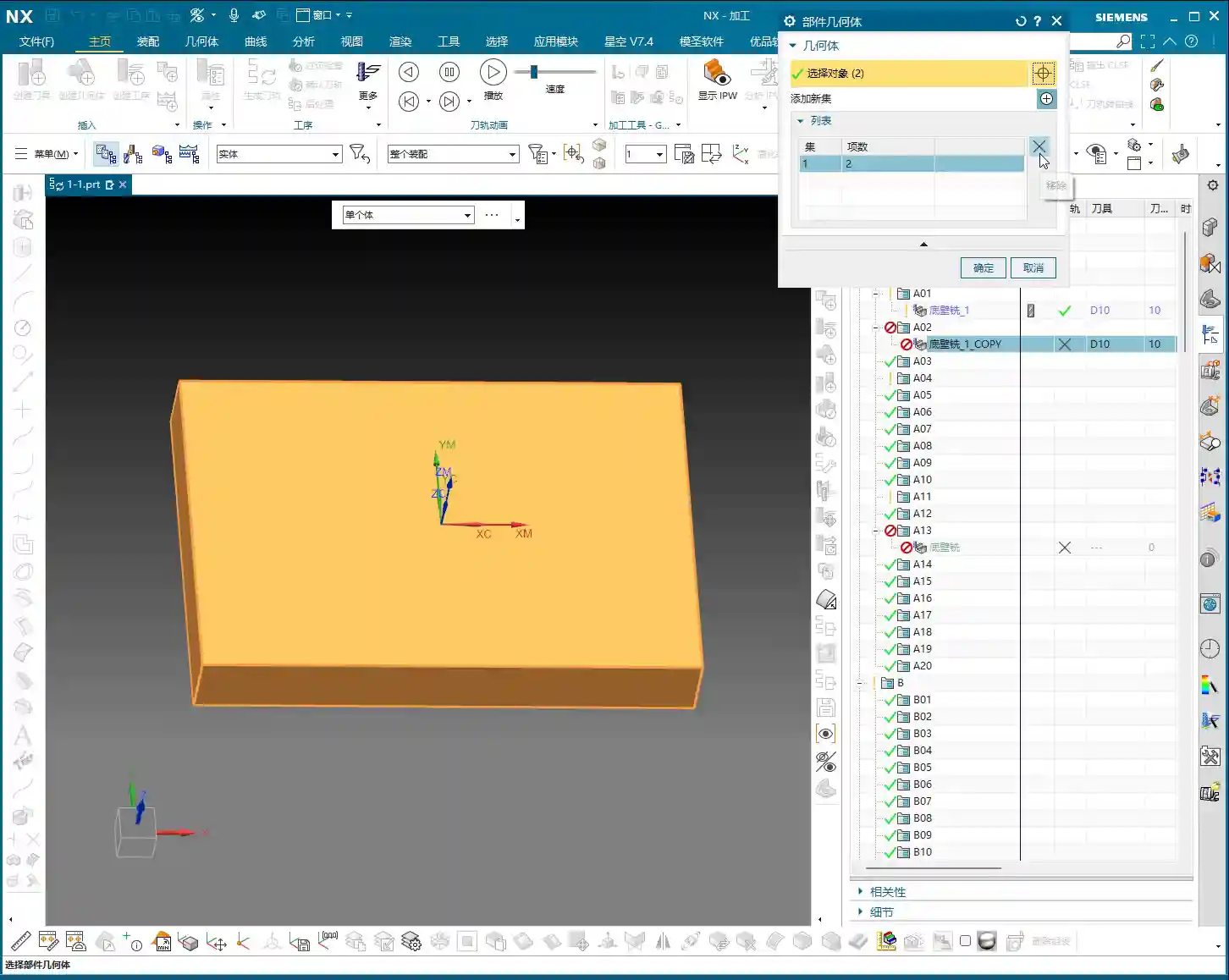
    We’ve already covered tools, so today we’ll dive right into hands-on practice. First, we need a part to machine. Listen up, this is our actual component. The initial blank (raw material), I enclosed it directly with a block.

    Select this block, select all, set its position to zero, confirm. When we first cut the blank, it was exactly this size, with the part inside, right?

    First Operation: Face Milling

    For the first step, we need to face mill this surface, which means flattening the top surface. Let’s see how DPM (Direct Path Manufacturing) performs this face milling.

    Double-click to open the program. We can copy a program we’ve made before. For example, copy it into A02, right-click ‘Paste Inside’, and it’s there.

    Blank Selection and Transparency

    Double-click to open. If it prompts you to specify a component, just close it. Specifying only the blank is fine, or you can box-select both. Let’s just select this face of the blank, confirm.

    Some might not understand why the blank appears semi-transparent. That’s because after it’s created, its transparency isn’t very high. To adjust transparency, press Ctrl + J, or click ‘Edit Object Display’ nearby. Drag the slider, and you’ll see the solid blank.

    To better observe the face milling effect, we can hide the part first. Click ‘Hide’, then ‘Invert Display’, and the part will be hidden.

    Double-click to open again. When specifying the component, we’ll select the top face of this newly created block blank, confirm. Once the blank and tool are selected, the program should appear, right?

    Toolpath Display and Filter Application

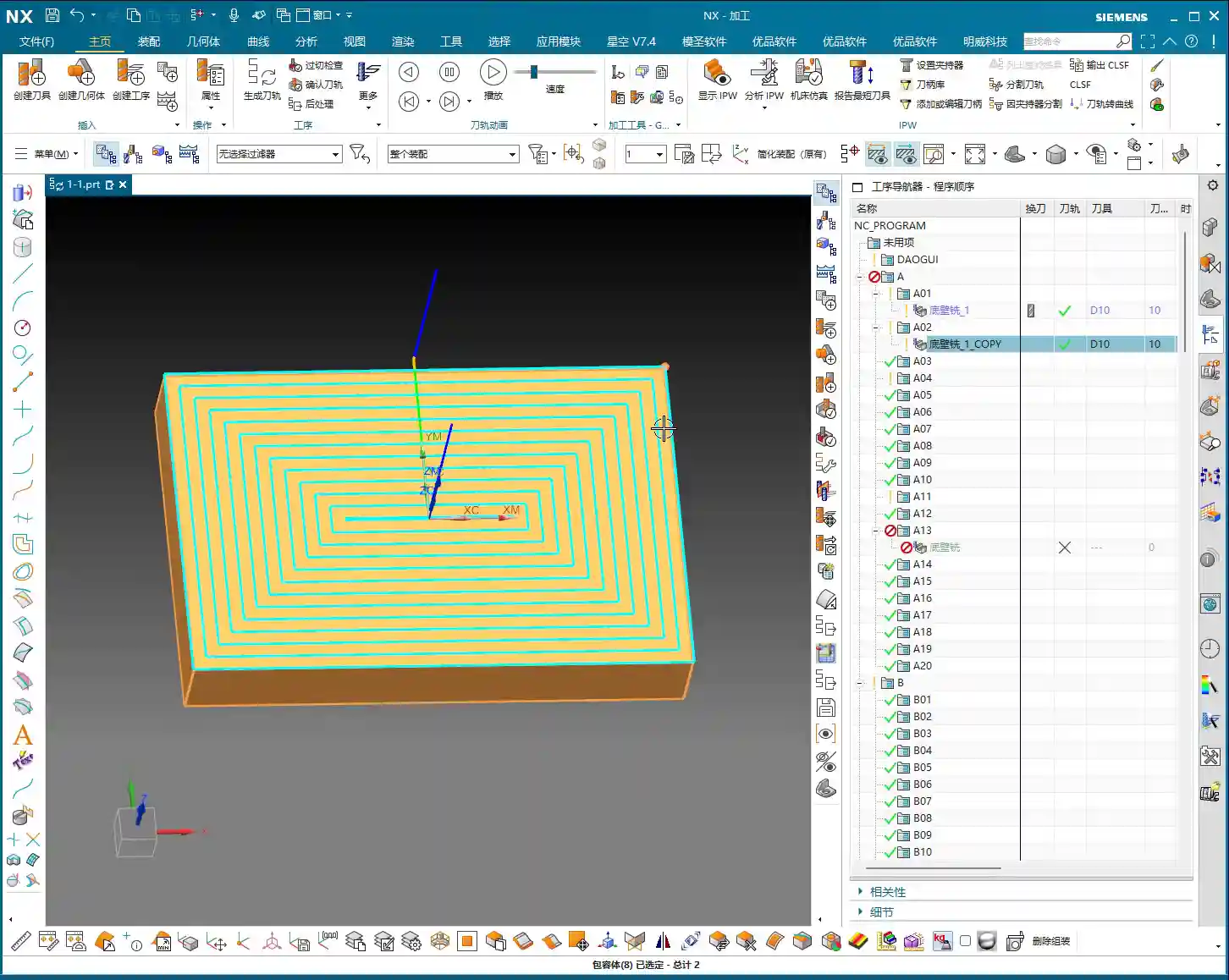
    Pause the program. Now you can click anywhere on the toolpath, and it will jump to that position. Why can you click anywhere? Because our filter is set to ‘Toolpath’.

    If you’re on the current page and click the program, it will be displayed; if you click other folders, then this toolpath will be hidden. So, click the toolpath you want to see, or click upwards, any will select it.

    But pay attention: if your filter is set to another type, like ‘Drafting Filter’, you won’t be able to click on the toolpath. Only when the filter is ‘Toolpath’ or ‘No Selection Filter’ will you be able to click on it.

    Three Highlighted Key Points

    Also, these three areas, everyone must pay attention: they must be highlighted. If the middle one isn’t highlighted, you won’t be able to click the toolpath; if the two at the back aren’t highlighted, your rapid move lines or the entire toolpath will disappear, and you won’t see them at all. Usually, all three are highlighted, which ensures you can view and operate the toolpath normally.

    Tool Axis Explained

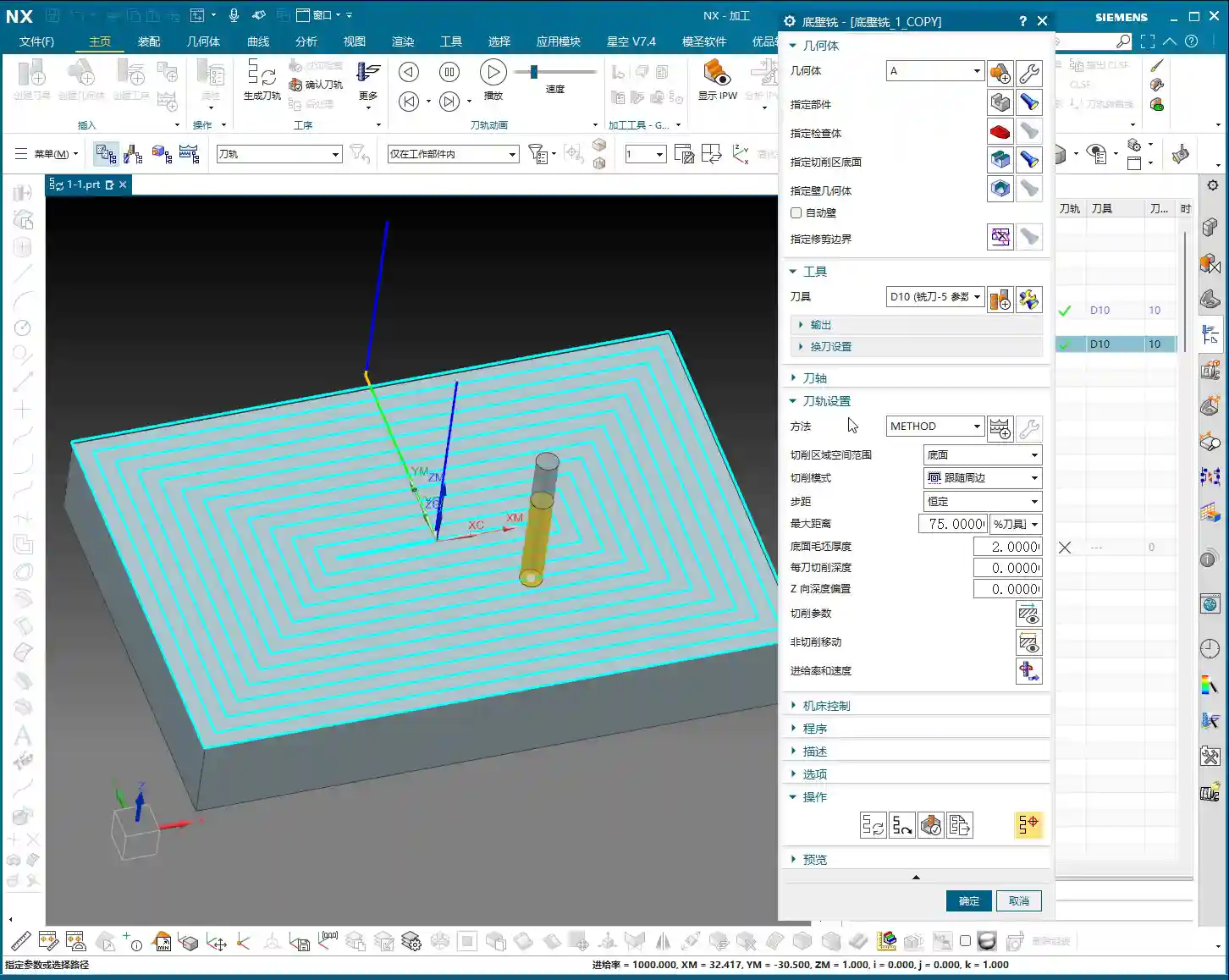
    Let’s double-click to open and look at the ‘Tool Axis’ below.

    Default Tool Axis: Perpendicular to First Face

    Currently, the tool axis here is ‘Axis perpendicular to first face’. Why? Because for operations like Floor Wall Milling, its default tool axis is perpendicular to the first face. Usually, we don’t need to change it.

    Common Tool Axis: +ZM Axis

    Generally, during normal machining, it’s mostly the +ZM Axis. Except for Floor Wall Milling, most other commands, ninety-nine percent, use the +ZM axis.

    The meaning of this is that our tool axis is upwards, meaning the Z-axis is upwards, machining from top to bottom. This is how +ZM axis machining works.

    When learning 3-axis machining, it’s basically all about the +ZM axis. Almost all programs are like this. However, for special cases like Floor Wall Milling, setting it perpendicular to the first face is also acceptable.

    When to Modify Tool Axis

    Everyone should now understand the meaning of the tool axis. We mainly need to change it when learning 4-axis or 5-axis simultaneous machining. For 3-axis machining, we generally don’t need to adjust it much.

    Cut Region Space Range: Bottom Face

    Let’s look further down at ‘Cut Region Space Range’ and ‘Bottom Face’.

    Looking at this diagram, there’s ‘Bottom Face’ and ‘B’. I personally think this ‘B’ method is used quite rarely. Because when we later learn 3D machining, we can directly machine sloped surfaces like this. This ‘B’ is specifically for machining sloped surfaces.

    Floor Wall Milling is typically for 2D machining. While it can occasionally machine 3D (sloped surfaces), I don’t think the results are particularly good. So, I don’t really recommend using this function. Everyone just needs to know that such a function exists.

    Typically, we will choose Bottom Face. This way, it directly machines up to this edge, and sloped areas are not machined.

    Cutting Method Explained

    Moving on, let’s look at our ‘Cutting Method’. Currently, the default is ‘Follow Perimeter’.

    What does ‘Cutting Method’ mean? Simply put, it’s the way the toolpath moves. Let’s change it to ‘Follow Part’ and see if there’s any change. For our simple face milling, there’s actually no change.

    However, if we change it to Contour, then there will definitely be a change. ‘Contour’ mode only machines contours. Since we are currently face milling, it’s not applicable, and it will give an error: ‘This component cannot perform face cutting on a planar surface’. So, face milling definitely cannot use ‘Contour’ mode.

    One-Way Cutting

    Let’s try One-Way. One-way is definitely possible. See? It engages the tool from this side, moves to that side, then lifts the tool and returns, then engages the tool from that side and moves back. This is a one-way machining method: move across, lift tool and return, move across again, lift tool and return again.

    Zig-Zag Cutting

    Since you understand one-way, Zig-Zag is even easier to grasp. It just moves across, then directly down, then across again, then down again. That is: move across, go down, return, then move across again, go down, return. It just keeps milling like that.

    This, then, is our ‘Cutting Method’.

    Summary: Pitfall Guide

    Everyone must pay attention to the filter settings, especially when you’re first practicing; not being able to click toolpaths is often because the filter isn’t selected correctly. Furthermore, the tool axis usually doesn’t need to be changed in 3-axis machining, mainly focus on the +ZM axis. The choice of cutting method depends on the type of machining; for example, face milling usually selects ‘One-Way’ or ‘Zig-Zag’, while ‘Contour’ mode is not suitable for planar cutting. Understanding these will greatly improve your programming efficiency and machining stability.

    Alright, we’ll finish this lesson here. We’ll continue in the next lesson. Thank you all for watching, goodbye!

  • Siemens NX 1980: Practical Guide to Creating and Managing Program Folders

    πŸ“ Key Takeaways: Master Wang guides you through the creation and management of program folders in Siemens NX 1980, helping you avoid naming conflicts and efficiently organize your machining programs with practical, hands-on techniques. No pure theory, just hard-core workshop knowledge!

    Hello everyone, I’m Master Wang. Today, we’re going to talk about a seemingly small but crucial function in Siemens NX – Creating Program Folders.

    Programs and Coordinate Systems: The Core Foundation

    Listen up! In NX, the most important things we need to focus on are “Creating Programs” and “Coordinate Systems.” Other things, like the fourth machining method we touched on in previous lessons, might be used less by beginners, and we’ll delve into them later. But Programs and Coordinate Systems are the bedrock of CNC programming. You must understand them thoroughly!

    I won’t break down every single parameter for you; that would be exhausting, and many aren’t practically used. We’ll just focus on the key points, the most essential and useful information.

    Why Do Default ABCDE… Folders Appear?

    You might notice that whenever you create a new program, a bunch of folders like A, B, C, D, E, F pop up. Why is that?

    Templates are at Play

    These are linked to our templates. I mentioned in the first lesson that when we directly insert from modeling into manufacturing, at this position in the Program and Tool Manager, NX automatically generates these default program folders based on the template. So, if you find they’re missing or fewer than expected, it’s likely because I deleted them during a teaching demonstration, not a system error.

    How to Create New Program Folders

    If you want to create more program folders, or if the system doesn’t have what you need, it’s simple:

    1. Click the “Create Program” button.
    2. In the dialog box that appears, you can enter the folder name (e.g., “B”).
    3. Remember! The Program Location must always be set to NC. This is a golden rule; remember it! Always select NC. It represents the highest level of operation, and all programs should be housed under NC, not nested within other lettered folders. If placed under A, then A becomes its parent, and if A is deleted, everything below it is gone too.
    4. Click “OK” to complete the creation.

    Naming Rules and File Duplication

    When creating program folders, there’s a common pitfall: duplicate naming.

    Why Does “-1” Automatically Get Added?

    When you try to create a program folder with the same name as an existing one (e.g., if “F” already exists and you create another “F”), NX will automatically append a -1 suffix to the newly created folder, making it “F-1,” or even “F01-1.”

    This is a mechanism within the software to prevent file conflicts and maintain uniqueness. It handles it automatically for you, but you need to understand why these suffixes appear.

    How to Avoid the “-1” Suffix

    If you don’t want to see these messy “-1” suffixes, make sure the name you’re using for your new folder is unique before creation. If there’s an existing folder with the same name and you don’t need its contents, just delete it first.

    Organizing and Managing Program Folders

    The organization of program folders is also very important, directly impacting your programming efficiency and project clarity.

    Free Drag-and-Drop and Hierarchy

    In NX, you can hold down the left mouse button on a program folder and drag it around freely to adjust its order or hierarchy. But be careful here:

    • If you drag a folder into the “interior” of another folder, it will become a sub-folder. For example, if you drag A inside B, A becomes a subordinate of B. If B is deleted, A will also be gone.
    • To keep a folder at the top level, you need to drag it to the same level as the NC main heading, not inside another lettered folder. When dragging, pay close attention to the blue highlight that appears; it indicates where the file will be placed. Make sure it stops below NC, not to the right or inside another folder.

    Be Flexible, Not Rigid

    For most regular programming tasks, one top-level program folder (like an “A”) is sufficient to hold all operations, keeping things clean and manageable. Of course, if your project is complex, a tiered management system is better, but don’t over-complicate it just for the sake of it – that’ll just create more headaches.

    Remember, whether you have those extra folders or not doesn’t affect your final machining results. The key is how flexibly you use and manage them.

    Looking Ahead: Creating Operations

    Now that we’ve got program folders sorted, in the next lesson, we’ll truly begin discussing Creating Operations. This is the core of programming; every programming task requires creating operations. We usually don’t just click the “Create Operation” button directly. Instead, we right-click and choose “Insert Operation.” Next time, I’ll start with the DB template and, following my teaching sequence, explain all the contents within the templates clearly.

    There are many tutorials out there, but as long as you follow Master Wang’s approach, I guarantee you’ll be able to get hands-on work done after learning!

    Summary: Pitfall Guide

    • Program Location must be NC: When creating program folders, their location should always be below NC to ensure correct hierarchy.
    • Understand the Auto “-1” Mechanism: If you see names automatically suffixed with -1, it’s because a file with the same name already exists. Either delete the old one or accept the system’s automatic numbering.
    • Drag-and-Drop Organization Requires Caution: When dragging folders, be sure to clearly observe the blue highlight indicating the cursor’s position. Avoid accidentally nesting folders inside other program folders, which can lead to hierarchical confusion.
    • Be Aware of Template Differences: If your NX interface differs from mine, and you find a different number of default folders, it’s because you’re using a different template. My tutorial is based on my template; understanding this is sufficient, no need to overthink it.
    • Practice More, Think More: Don’t be afraid to delete files or change settings. Be bold and try things out. With programming, the more you tinker, the more you understand.

    That’s it for this lesson. Thank you for watching, and see you next time!