Blog

  • NX Fixed Contour Milling Boundary Operation: A Master Machinist’s Guide to Avoiding the Hidden Pitfa

    📝 Key Takeaways: Master Wang explains the NX Fixed Contour Milling “Boundary” operation in detail, comparing it with “Curve/Point” to reveal its unique characteristics. He emphasizes the practical application and common pitfalls of the “Material Side” and “Plane” parameters, teaching how to correctly select boundaries, optimize toolpaths, prevent machining errors, and improve efficiency and precision. These are hardcore, real-world experiences you won’t find in textbooks!

    Listen up, newcomers and old timers! I’m Master Wang. Today, let’s talk about a rather interesting operation in NX (Siemens NX): the “Boundary” operation within Fixed Contour Milling. This feature might seem similar to “Curve/Point,” but it has many intricacies. Those critical parameters, if misunderstood, can easily lead to excessive Depth of Cut (DOC), wasted time, and scrapped parts. Don’t be fooled by fancy software simulations; when the actual cutting sparks and noise start on the machine, they don’t lie!

    Alright, let’s get straight to the point. I’m going to break down the “Boundary” operation, its rationale, and practical tips for you.

    The Boundary Operation: A Powerful Tool for Surface Milling

    The “Boundary” operation, as the name implies, primarily involves milling along your specified boundary lines. It shares similarities with the “Planar Milling” we discussed previously, but the key difference is that the “Boundary” operation can directly perform Surface Milling. This offers much greater flexibility than Planar Milling when dealing with complex part edges, grooves, or Rest Milling/Corner Cleanup scenarios.

    When you open this command, you’ll notice it indeed resembles “Curve/Point” in some aspects, such as both having “Specify Part” and “Cutting Area.” However, remember that often, especially when your objective is clearly to machine along a specific boundary, you don’t necessarily need to select both “Specify Part” and “Cutting Area.” You must adapt to the actual situation; don’t overcomplicate it.

    Core Parameter Breakdown and Pitfall Avoidance

    Upon entering the “Boundary” operation’s edit interface, several areas are critical. Pay special attention, as these are where pitfalls often hide!
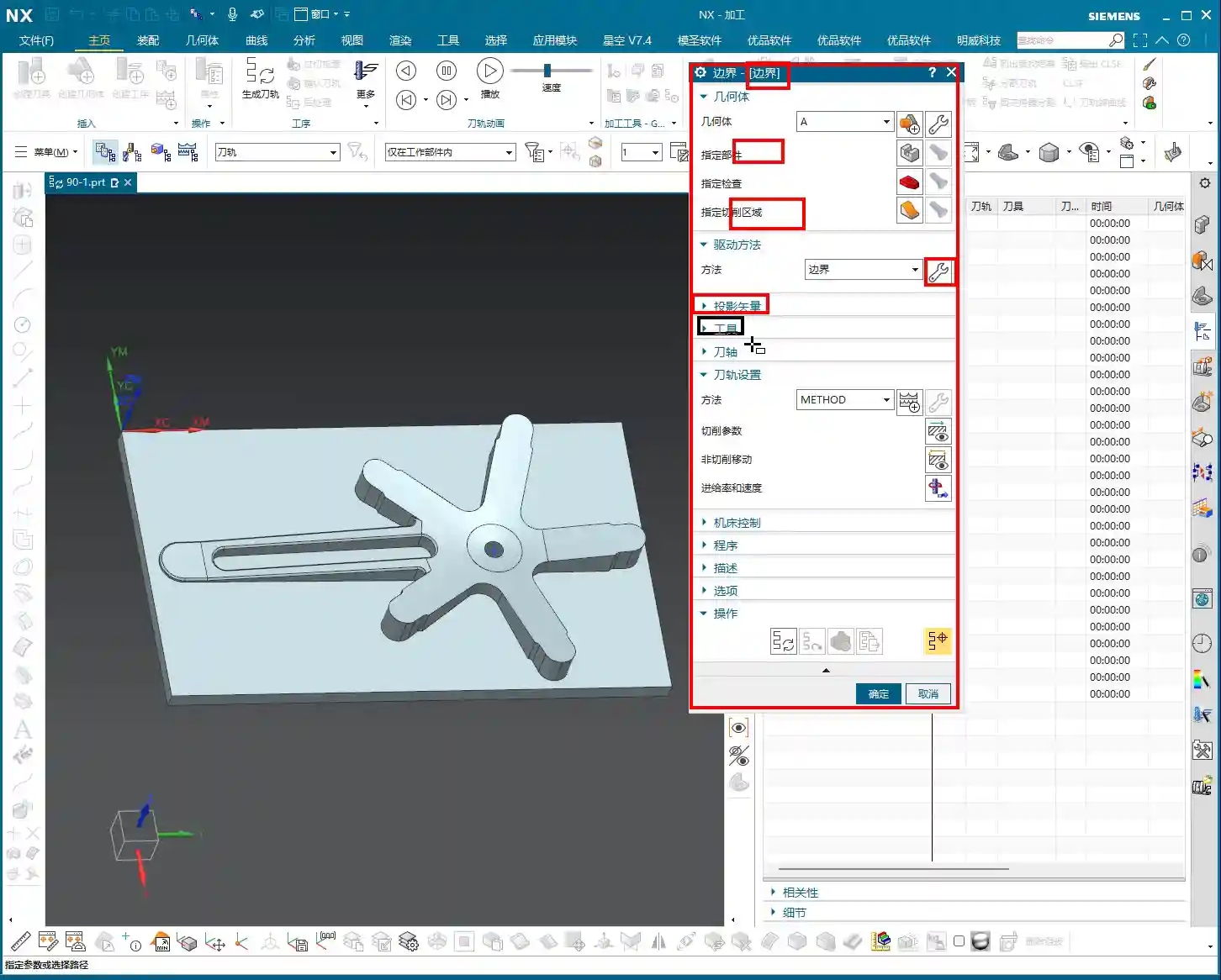
    1. Drive Geometry: The Art of Boundary Selection

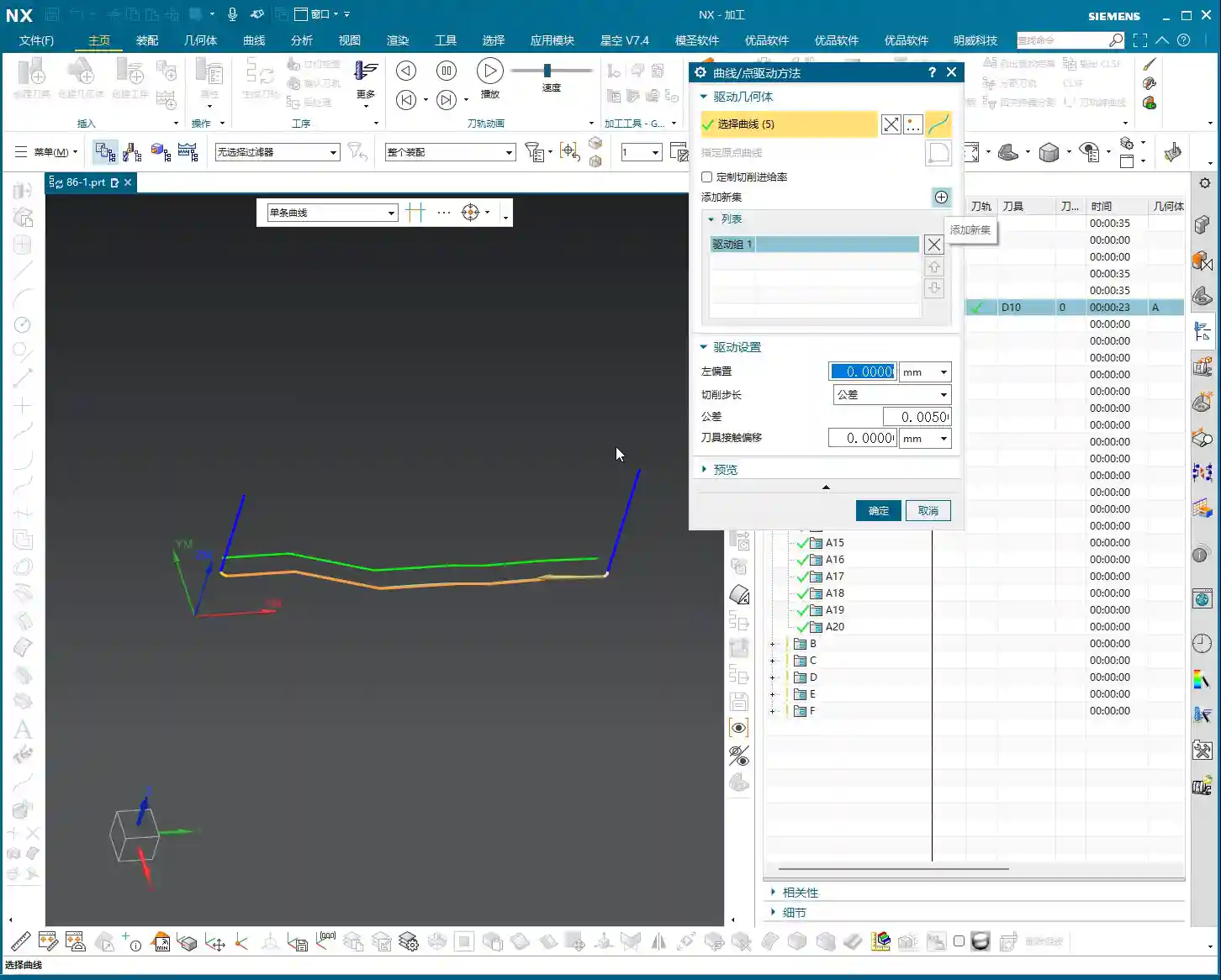
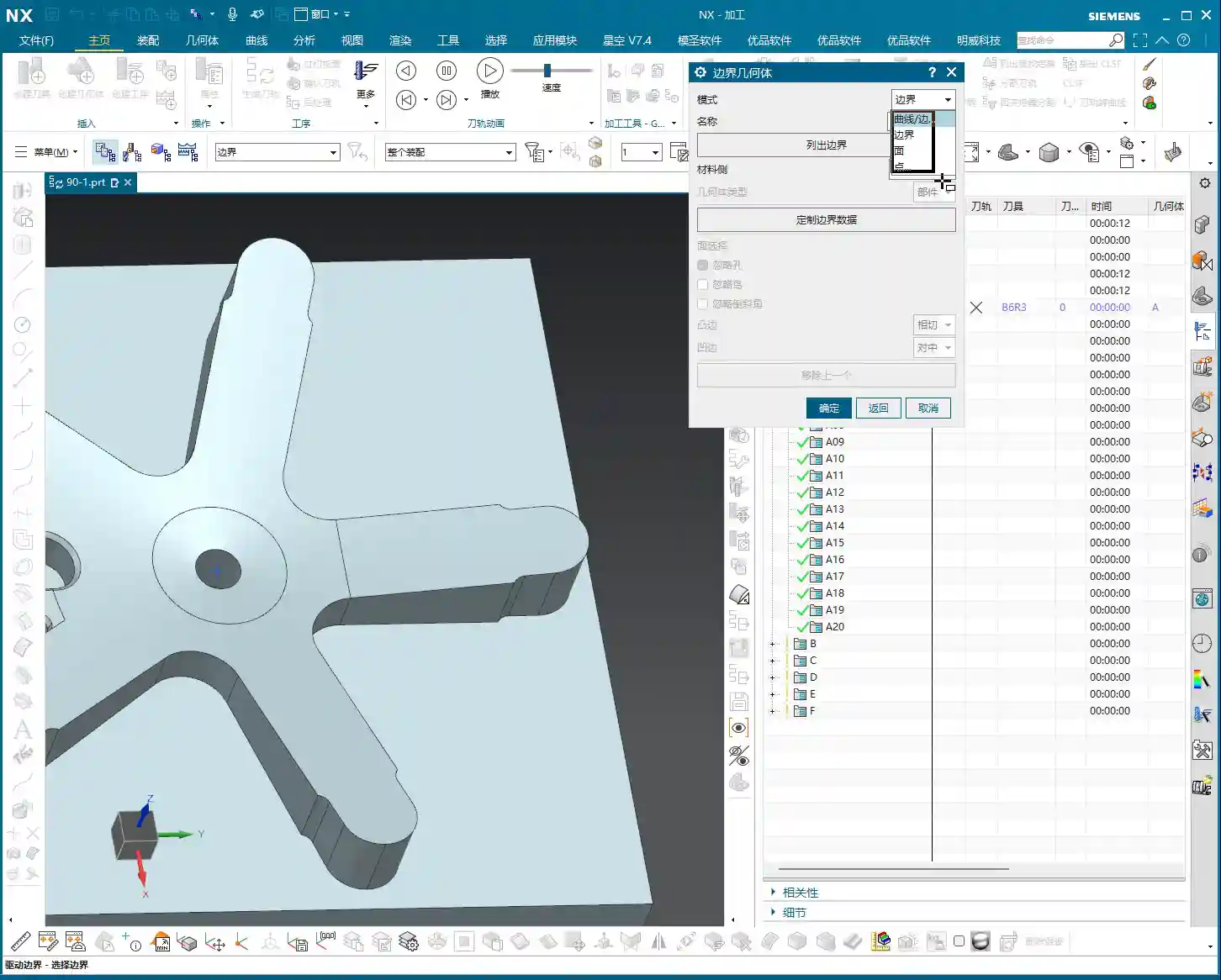
    This is the core of the “Boundary” operation. Click the “Specify Drive Geometry” option, and you’ll see a familiar interface, similar to some pre-NX 12.0 versions. Here, you have four selection methods: Curves, Edges, Faces, Points. While all are available, Master Wang advises that in practical applications, “Curves” are used most frequently and offer the greatest flexibility.

    • Step 1: Select the Mode. Remember to choose the mode first. For instance, if you want to define the boundary using curves, click the “Curves” option first. This sequence is crucial; otherwise, your subsequent operations won’t align.

    • Step 2: Select the Curves. Next, the software will prompt you to select the curves for the drive boundary. Here’s a critical point: the “Boundary” operation in NX will only follow the selected curve with a single pass, or generate a single row of toolpaths. Therefore, do not select too many! Only choose the precise boundary line you actually need to machine. If the boundary lines are discontinuous, you’ll need to select them one by one, ensuring each line is chosen and that they form a continuous path.

    • The Projection Secret: When you select these curves, they will be projected onto the “Plane” you define later. This is crucial, as the toolpath is generated along this projected relationship. So, regardless of where your original curves are located, the final toolpath will be based on their projection onto the plane.

    2. Plane: Choose Anything, But Understand Why

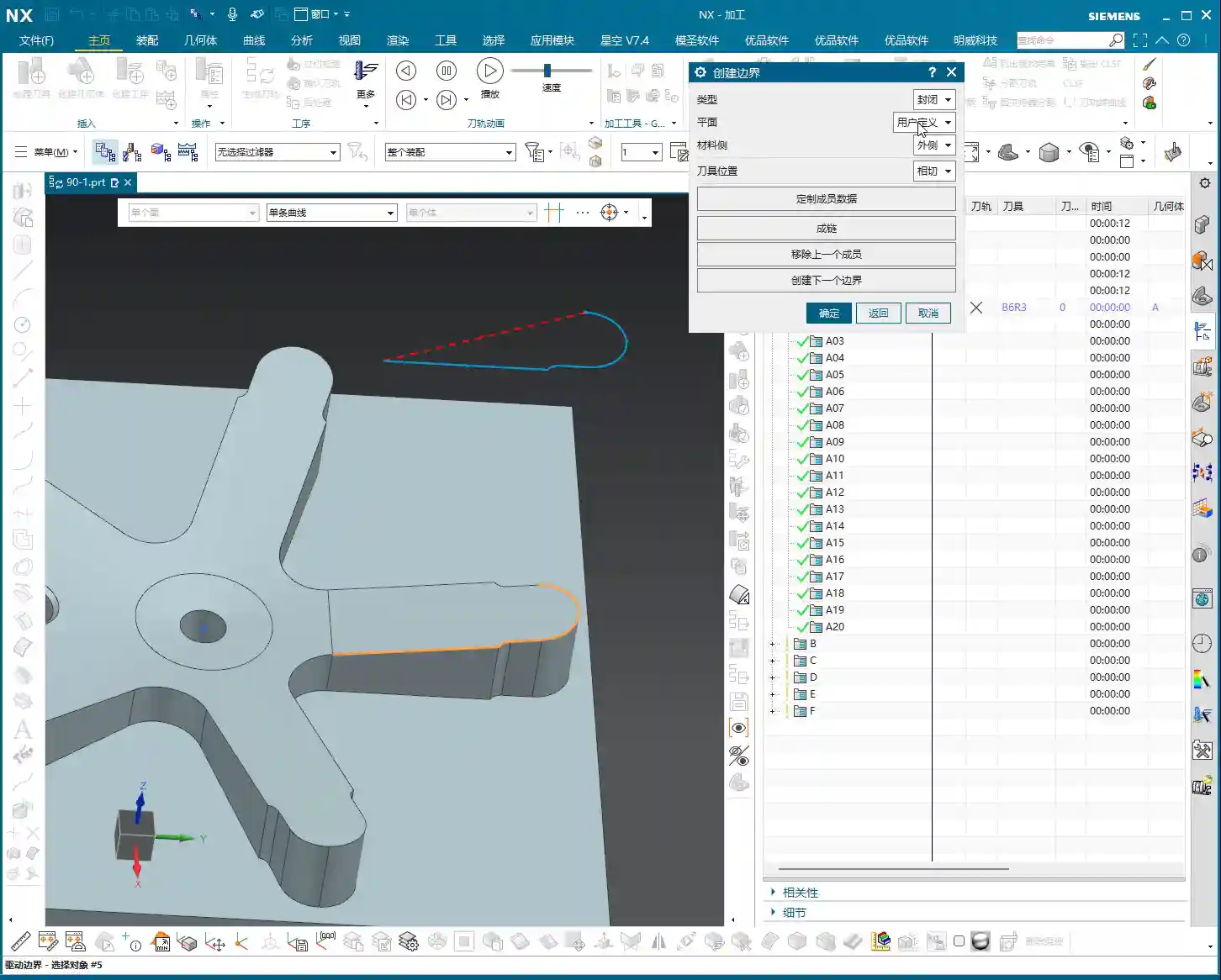
    This is where many novices get confused. In the “Boundary” parameters, you need to specify a “Plane.” However, due to the nature of the “Boundary” operation, it only executes a single pass (or a single row of toolpaths), unlike Planar Milling which can machine across multiple levels. Therefore, the function of this “Plane” is simply to provide a projection reference for your boundary lines.
    Master Wang’s Secret: Listen up, this is important! You can simply select any plane—for example, the top face of the part, the bottom face, or even a randomly created reference plane. Whether it’s above or below your boundary line is actually irrelevant. This is because the toolpath is ultimately projected onto your selected drive boundary, and this plane merely defines the direction of the projection. Select a plane, click OK, and you’re done!

    3. Material Side: The Biggest Trap for Novices!

    This is paramount; you MUST understand it! The logic of the “Material Side” parameter is completely opposite to the “Inside/Outside” selection we use in Planar Milling! Many novices assume it’s the same here, and as a result, when the toolpath is generated, the tool either cuts into the part or runs off outside of it.

    • Planar Milling Logic: “Inside/Outside” typically refers to the tool’s position relative to the boundary line. If you select “Inside,” the tool path stays within the boundary; if you select “Outside,” the tool path stays outside.

    • Boundary Operation Logic: “Material Side” refers to which side of the boundary line the material is on.

      • If you want to machine the inside of the boundary line (e.g., clearing a groove), is the material on the outside of the boundary line? Yes, so you must select “Outside.”
      • Conversely, if you want to machine the outside of the boundary line, then the material is on the inside, and you must select “Inside.”

      Got it? It’s the reverse of Planar Milling! If you can’t remember this, your Fixed Contour Milling “Boundary” operation toolpaths will never be calculated correctly. Don’t wait until the machine alarms and the part is scrapped to remember what Master Wang told you today!

    4. Tool Position: Standard Operation

    This is where you select the tool’s contact point position, such as the tool tip, cutter center, etc. Just like with standard milling operations, choose a point suitable for your current tool and machining requirements.
    5. Tolerance and Offset: Ensuring Precision and Stock Allowance

    • Tolerance: The “Inner Tolerance” and “Outer Tolerance” here mean the same as the tolerance in “Curve/Point.” They determine how closely the generated toolpath approximates the original geometry. For high-precision parts, such as those in aerospace or medical devices, set the tolerance to a smaller value, for example, 0.005mm or even less. A smaller tolerance results in a denser toolpath, longer machining time, and places higher demands on machine performance and tool life. You must weigh these factors against the actual part precision requirements and machining efficiency.

    • Offset: This parameter can be understood as giving the tool an additional machining stock allowance along the boundary line. You can imagine it as an offset of the tool relative to the cutting surface during turning. For example, if you’ve selected “Outside” for the material side and then apply a positive offset, the tool will extend further outward along the boundary line. This is very useful for operations that require leaving stock for subsequent finishing passes or polishing. Remember, the offset can be positive or negative; adjust it flexibly according to your machining requirements.

    Summary: Pitfall Avoidance Guide

    Core Issues and Solutions

    1. “Plane” Selection: Don’t overthink it; just pick any plane, as it only serves as a projection reference. The toolpath follows the projection of your selected boundary lines.

    2. “Material Side” Trap: This is the biggest pitfall! Its logic is opposite to the “Inside/Outside” selection in Planar Milling. To machine the inside of the boundary line, select “Outside” (because the material is outside); to machine the outside of the boundary line, select “Inside” (because the material is inside). If you can’t remember, try it a few times, or simply sketch it out to understand.

    3. Boundary Line Selection: Ensure that the curves you select represent the exact boundary for your toolpath; don’t over-select or miss any. One boundary line typically corresponds to one toolpass (or a single row). Less is less, more is more – NX can be quite “rigid” in this regard.
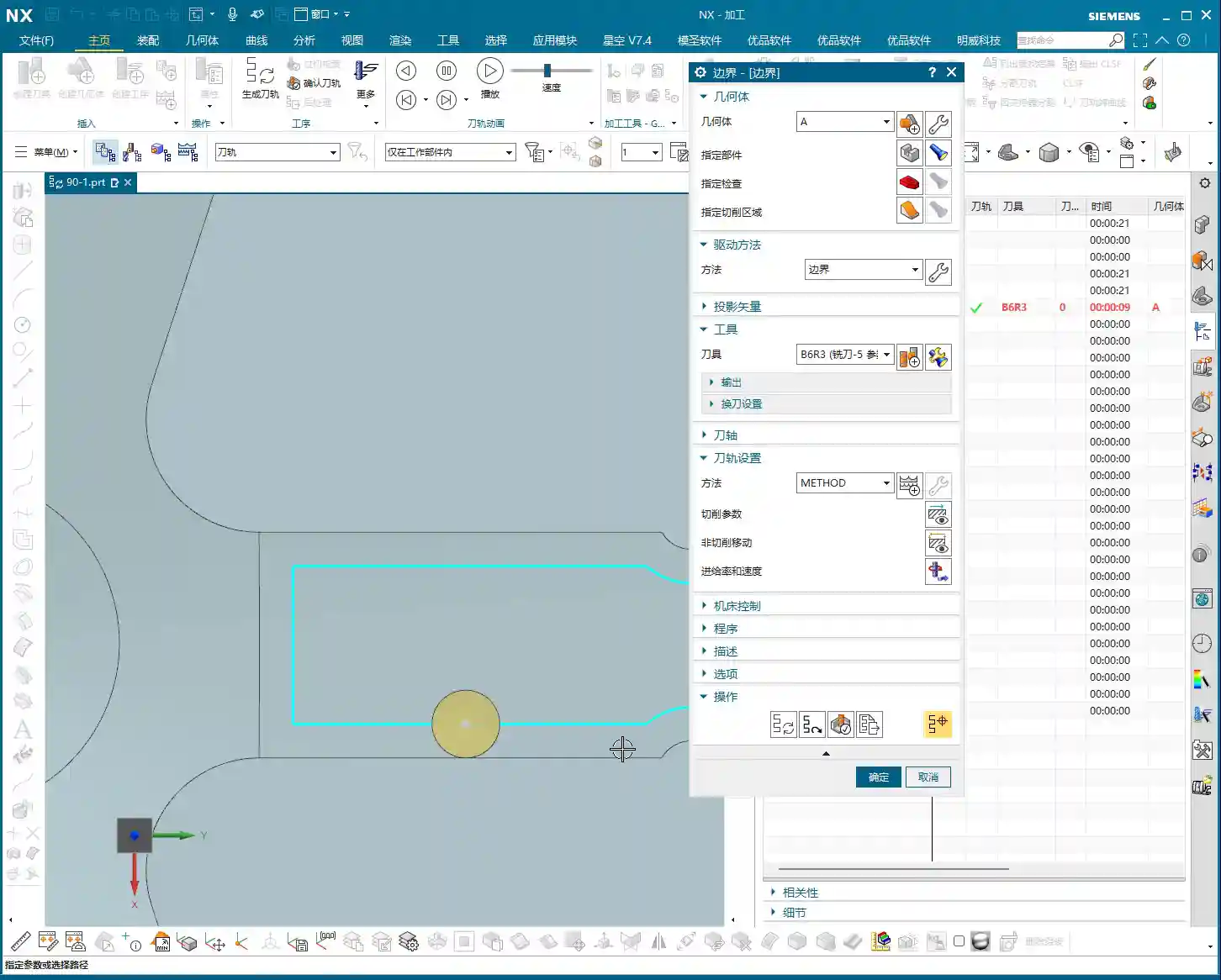
    4. Toolpath Verification: Once the toolpath is generated, don’t rush to the machine! Always perform a thorough simulation and inspection to verify that the tool’s motion trajectory matches your expectations. The effects of “Material Side” and “Offset” in particular will be clearly visible in the simulation. This is your last line of defense to ensure machining safety and quality.

    Programming in NX is all about “learning by doing and adapting.” Theory is foundational, but practical experience is the ultimate truth. Get hands-on, think critically, and internalize these tips. You’ll avoid unnecessary detours and become a true machining expert. That’s all for today; next time, we’ll dive into some other hardcore techniques!

    👤 About the Author:
    The author is a veteran CNC machining professional with 15 years of industry experience, specializing in UG NX programming. This article is an original work representing personal practical insights.

    ⚠️ Copyright Notice: Unauthorized reproduction or distribution without prior communication is strictly prohibited.
  • NX Point-on-Curve Engraving: Master Wang’s Practical Guide to Mastering 3D Surface Engraving, Breaki

    📝 Key Takeaways: Master Wang will take you through a practical breakdown of the “Point-on-Curve Engraving/Line Engraving” function within NX Fixed Contour Milling to overcome planar machining limitations and easily achieve precise 3D engraving on complex surfaces. Master tool selection, negative stock depth control, and multi-pass strategies to uncover practical tips not found in textbooks, and help you become a CNC programming master!

    Master Wang Speaks: Practical Applications of Point-on-Curve Engraving

    Listen up, youngsters. Today, I, Master Wang, will properly explain the “Point-on-Curve Engraving” and “Line Engraving” functions within NX Fixed Contour Milling. Don’t underestimate this feature; it’s a powerful tool for engraving text and lines on complex surfaces, far superior to those 2D engraving methods that only “scratch the surface” on flat planes!

    Simply put, “Point-on-Curve Engraving” is the “upgraded 3D version” of the “Profile Engraving” we learned before. Standard profile engraving is limited to flat surfaces, but “Point-on-Curve Engraving”? It allows you to engrave text and lines on curved surfaces, inclined surfaces, or any lines on 3D geometries – now that’s real skill! Don’t just stare at the perfectly flat machining surfaces in the software; how many actual parts have that many flat areas for you to work with? Whether you’re engraving a company logo, product model, or alignment lines, this method delivers high efficiency and excellent results.

    Operation Core: Select Face, Select Curve, 3D Engraving Made Easy

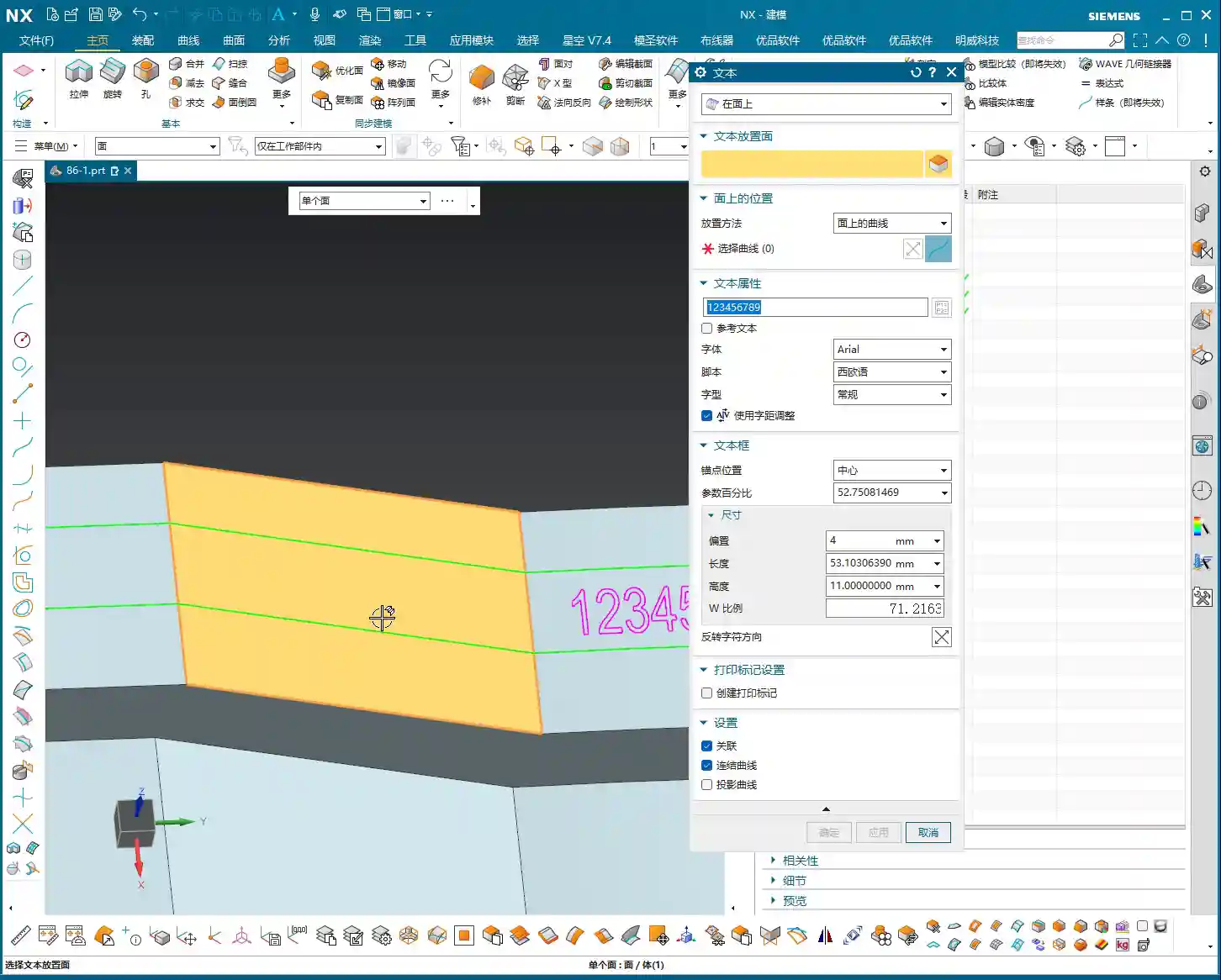
    Using this function is actually quite simple, with two core steps: First select the face, then select the curve.

    • Step One: Select the Machining Face. Tell the software which area you want to engrave on. Even if the face is curved or inclined, NX can handle it for you.
    • Step Two: Select the Curve to Engrave. This curve can be one you’ve drawn on a surface, or a line from another plane; NX will help you project it onto your selected face for machining. Wrong direction? Just click ‘Reverse’ – no need to overcomplicate things.

    Master Wang’s Tip: Remember, select the face first, then the curve; this is the operational logic in NX. Don’t try to do everything at once; take it one step at a time to stay steady. It’s the same principle as machining parts – you can’t mess up the sequence! Once you’ve selected the face and then the curve, even if that curve isn’t originally on the face, the software will “press” it onto the surface and engrave it for you. Now *that’s* practical application you won’t learn from textbooks.

    Tooling and Parameters: The Art of “Micro-Management” in Practice

    Selecting the Right Engraving Tool

    Tools for engraving text and lines are typically quite small, often what we in the shop call “needle-point tools,” such as conical engraving tools with a diameter of 0.3mm to 0.5mm (approx. 0.012-0.020 inch). When selecting a tool, base your choice on the required engraving depth and width. The finer the tool, the more delicate the engraving, but its rigidity also decreases, so you need to pay close attention to the cutting parameters. Ensure your feed rate and spindle speed are well-matched. This area is prone to excessive tool loading or breakage, so don’t be stingy with the time; breaking a tool will cost you far more in the long run.

    The Secret of “Negative Stock”: The Mystery of Depth Control

    When using this function, you might encounter a “negative stock” warning. Don’t panic! It’s a little trick we leave when setting up templates.

    Listen up: this “negative stock” means we instruct the tool to descend slightly deeper than the theoretical path to achieve the actual engraving depth. For example, a -0.1mm (approx. -0.004 inch) stock allowance set in the template means the tool will cut 0.1mm deeper than the surface. This way, you truly “engrave” rather than just scratching the surface. This is crucial for ensuring the depth and clarity of the engraving. In practice, this parameter needs to be flexibly adjusted based on the material, tool, and desired final effect. Don’t just rely on software simulations; observe the cutting sparks, listen to the cutting sound. Actual tool wear and machine accuracy will both affect the depth. When necessary, manually adjust the compensation; that ±0.005mm (approx. ±0.0002 inch) precision isn’t something software alone can guarantee.

    Multiple Passes: Layered Progression for Fine Engraving

    If deeper engraving is required or the material is particularly hard, you’ll need to use “multiple passes”. This is similar to roughing: divide the machining into layers, with a smaller **Depth of Cut (DOC)** each time, which both protects the tool and ensures machining quality.

    For example, to engrave to a depth of 0.3mm (approx. 0.012 inch), set 3 passes, so each pass will have a **Depth of Cut (DOC)** of 0.1mm (approx. 0.004 inch). This ensures even tool load and smoother chip evacuation. Especially when machining challenging materials like titanium alloys or high-temperature nickel-based superalloys, multiple passes are absolutely essential. Remember, **finishing passes** are never a one-shot deal; you must proceed cautiously and steadily to produce quality parts, extend tool life, and save costs.

    Deeper Understanding: Projection Vector and Multi-Axis Correlation

    Here’s a quick note: this function also involves the concept of the “Projection Vector”. While we don’t often directly manipulate it in 3-axis machining, it’s a technology closely related to multi-axis machining, especially **4-axis and 5-axis programming**.

    Its purpose is to define the direction from which the tool “sees” your curve, and then “projects” that curve onto the machining face. If you want to delve deeper into this, you can refer to the section on “Fixed Axis Surface Drive Application and Projection Vector Explanation” in my previous “4-Axis and 5-Axis Programming” course, typically found in the second or third lesson. Learning more never hurts; more skills mean more opportunities! While it’s used less frequently in 3-axis, understanding it will give you a clearer insight into how toolpaths are generated on complex surfaces, which helps you optimize toolpaths, reduce air cuts, and improve efficiency.

    Summary: Pitfall Avoidance Guide

    Pitfall Avoidance Guide

    • Pitfall One: Selecting only the curve, not the face. The software will get confused! NX needs a clear “stage” to perform on, so always specify the machining face first. This is fundamental logic.
    • Pitfall Two: Ignoring “negative stock.” Think engraving is just scratching the surface? That’s “tracing a line,” not “engraving!” Understand and properly set negative stock to ensure engraving depth. Different materials and hardness levels may require fine adjustments to the negative stock.
    • Pitfall Three: Trying to cut everything in one go. For deep engraving or hard materials, don’t expect to finish in a single pass. Utilize multiple passes to protect your tools and improve surface quality. Don’t try to save a minute or two only to break a tool; the cost of repairing parts and replacing tools will be much greater.
    • Pitfall Four: Approaching a 3D function with only 2D thinking. This “Point-on-Curve Engraving” feature was born for complex 3D surfaces. Treat it as an enhanced version of planar profile milling; once you shift your mindset, a whole new world opens up! This function is a critical step in boosting your ability to machine complex parts.

    Alright, that’s all for today. Within NX’s Fixed Contour Milling, whether it’s Point-on-Curve, Boundary, Flowline, or Surface Drive, their core principles are interconnected. Observe more, practice more, think more, and you too can become a highly capable expert in the shop! Don’t just bury your head in programming; get down to the shop floor and observe the actual cutting conditions – *that’s* where true skill is forged!

    👤 About the Author:
    The author is a veteran CNC machining professional with 15 years of industry experience, specializing in UG NX programming. This article is an original work representing personal practical insights.

    ⚠️ Copyright Notice: Unauthorized reproduction or distribution without prior communication is strictly prohibited.

  • Siemens NX Fixed Contour Milling with Curve Point and Multi-pass Machining in Practice: Master Wang

    📝 Key Takeaways: Master Wang provides a hands-on guide to applying Fixed Contour Milling with Curve Point in Siemens NX. From single-pass curve-following machining to multi-pass sidewall milling, he details stock control for sidewalls and bottom surfaces. He also reveals how to use “Transform Object” for toolpath patterning, efficiently tackling complex surfaces. This practical experience and pitfall avoidance guide will help you optimize your NX programming, boost machining efficiency and precision, moving beyond theoretical knowledge to address real-world production challenges.

    Hello everyone, this is Master Wang. Today, we’re cutting straight to the chase – no fluff, just practical insights. In Siemens NX, there’s a “Fixed Contour Milling” operation, especially its “Curve Point” function. Many people think it’s simple, but those who truly master it can unlock its full potential, significantly boosting machining efficiency and precision. We’ll also cover “Multi-pass Toolpaths” and “Transform Object” together to clarify everything, ensuring you can immediately apply these techniques and avoid common missteps.

    Curve Point Machining: The Maestro of Lines and Surfaces

    Listen up. The “Curve Point” operation in Siemens NX, in a nutshell, means this: you select a curve or line, and the tool follows it to machine a surface. Whether that line is drawn, extracted from a model edge, or even an intersection curve between two faces, it will faithfully follow it. The biggest difference from other machining methods is that it doesn’t require you to select an entire region or boundary; it only recognizes the specific “line” you designate.

    What is “Curve Point”? Simply put, it’s “Curve-Following Machining”

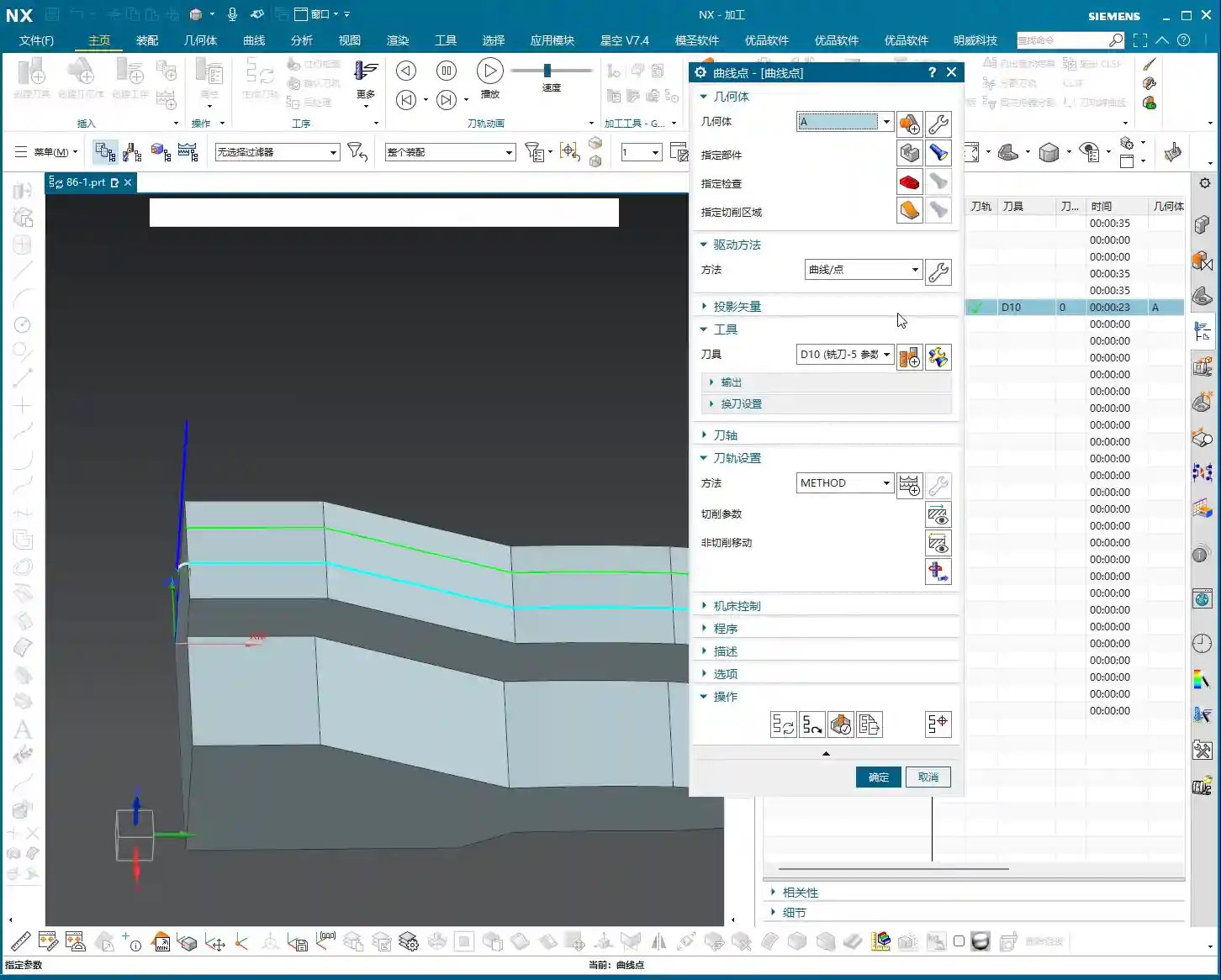
    First, you need to select the part to be machined – that’s fundamental. Then, here’s the crucial part: you select the “curve” or “line” you want the tool to follow. Siemens NX will automatically calculate the toolpath, making the tool’s centerline or tool tip move along your chosen line while maintaining contact with the surface.

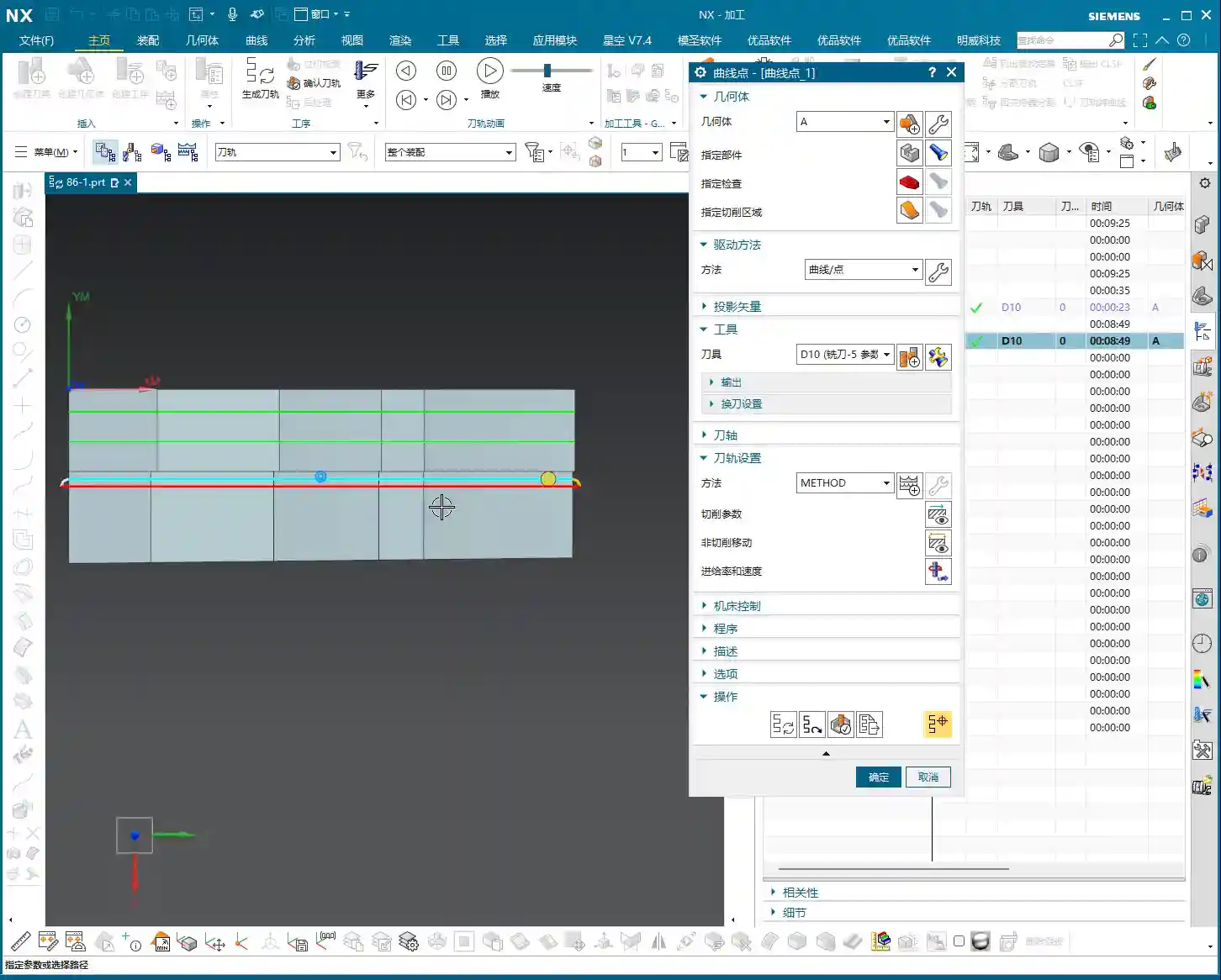
    I’ll just pick a random part here and select an edge. See? The toolpath faithfully follows that edge. This is what we call “Guiding by Line, Machining the Surface.”

    Stock Control: Sidewalls and Bottom Surfaces – Don’t Mix Them Up!

    This is where problems often arise; many people get confused here. When we’re machining, especially during finishing passes, stock control is critical. In “Curve Point,” the method for setting sidewall stock and bottom surface stock is different.

    • Sidewall Stock (Offset): When the tool follows your selected line, you can make it offset outward or inward. For example, if I set an offset of 5 mm, the tool center will be 5 mm away from your chosen line. This offset value is the stock you’re leaving on the sidewall. Remember, this offset is specifically applied to your selected “line.”
    • Bottom Surface Stock (Part Stock): If you want to leave stock on the entire bottom surface, you need to set it in the “Component” options. For example, I’ll set 0.1 mm (approx. 0.004 inch) of stock here. This means when the tool machines to its lowest point, it will leave 0.1 mm above the bottom surface. This is the overall stock for your selected “component.”

    The stock in these two areas is controlled independently, so absolutely do not confuse them! One manages the side, the other manages the bottom. In practice, you’ll adjust them flexibly based on the workpiece and machining stage.

    Single-Pass Toolpaths: A Powerful Tool for Specific Boundaries

    Many times, we need to run a single pass along a specific edge to clean it up or create a chamfer. Using “Curve Point” for this is incredibly convenient! You just need to select that edge, and a single toolpath is generated directly.

    Think about it: if you used “Depth Contour Milling” or “Corner Cleanup” operations, you’d have to select boundaries, regions, and sometimes even define the bottom surface – what a hassle! “Curve Point” is simple and direct: just select the line, and a single pass gets the job done. Especially for models with small sudden protrusions, or edges that need a specific cleanup pass, this function is highly efficient.

    Don’t underestimate this simple single pass; in actual production, it can save you significant time and improve local machining precision. Sometimes, simple is best.

    Multi-pass Strategy: A Winning Move for Complex Sidewalls

    A single pass is rarely enough. Often, we need to machine a sidewall or an inclined surface in multiple layers, with multiple passes. This is where “Curve Point” combined with “Multi-pass Toolpaths” becomes incredibly powerful. Especially for those complex, oddly shaped sidewalls that depth contour milling can’t handle, this combination can easily conquer them.

    Activating Multi-pass Toolpaths: From “Solo” to “Group Attack”

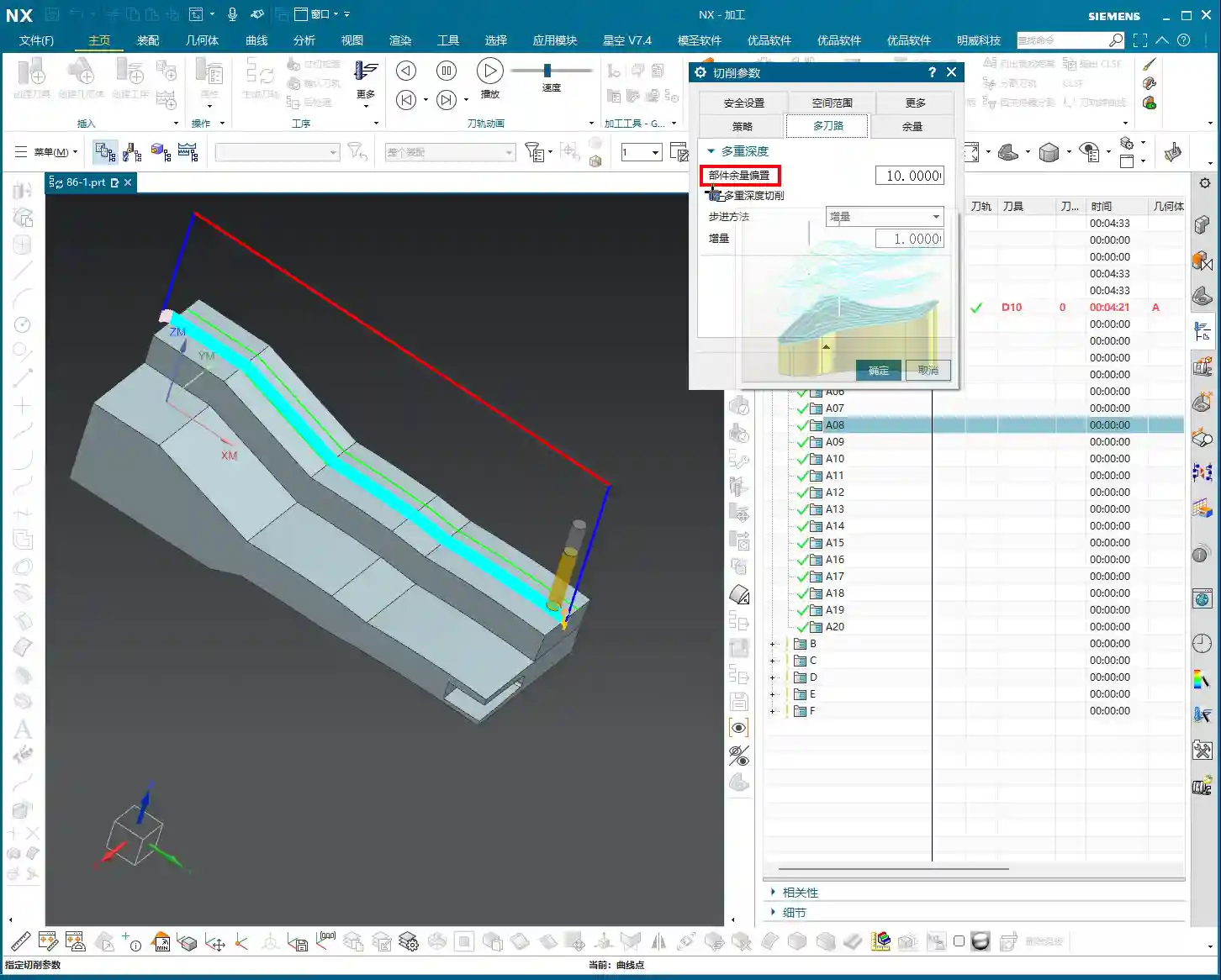
    In the parameter settings for “Fixed Contour Milling,” find and enable the “Multi-pass Toolpaths” option. Once activated, you can tell Siemens NX how many passes you want the tool to extend from your selected line in a specific direction, and what the stepover for each pass should be.

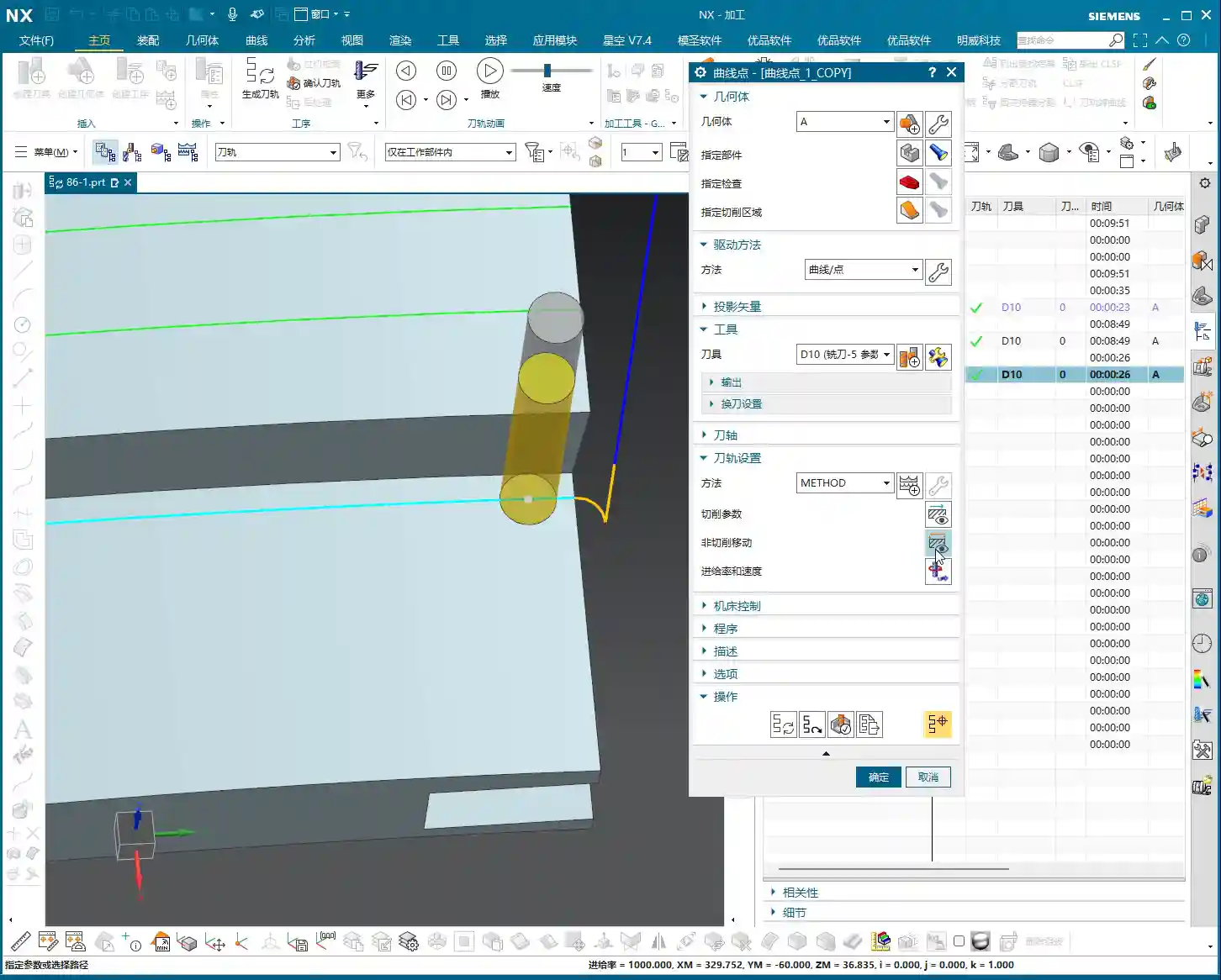
    For instance, I’ve selected a line at the bottom of a sidewall and activated multi-pass toolpaths. I want it to move upwards and machine the entire sidewall. At this point, I can set the “Number of Passes” and “Stepover”.

    Parameter Setting: The Art of Depth and Stepover

    Let’s say this sidewall is 10 mm high. I want to machine it in 10 passes, with a Depth of Cut of 1 mm per pass. Then I can set:

    • “Stepover” (or Depth of Cut/Stepdown in this context): I’ll set it to 1 mm (approx. 0.04 inch).
    • “Number of Passes”: I’ll set it to 10 passes.

    Siemens NX will then automatically offset the tool, pass by pass, along your selected line in the specified direction until all 10 passes are complete. This way, the entire 10 mm (approx. 0.4 inch) high sidewall can be machined in layers. This method is particularly effective for sidewalls with complex angles or freeform surface geometries. If you compare this with “Depth Contour Milling,” you’ll find that it often struggles to fully adapt to such irregular shapes. However, “Curve Point” combined with multi-pass toolpaths overcomes this issue because it follows your selected line, and that line can be any shape you desire.

    Of course, tool retracts are unavoidable; the tool can only complete one pass in a single direction, then retract, and re-engage at the starting point of the next layer. This is both a characteristic and a manifestation of its flexibility. Don’t just rely on software simulations; observing the cutting sparks and chips in real life will show you that this method also ensures a more uniform tool load, extending tool life.

    Transform Object: The Efficiency Secret for Batch Toolpath Duplication

    The “Transform Object” function treats your toolpath like a “part” itself, allowing you to perform operations such as translation, rotation, mirroring, patterning (array), and more. When you need to repeatedly machine many similar features, or when different tools are required to machine the same area, it can significantly boost your programming efficiency. This function is an absolute game-changer, especially in mold making or aerospace component machining.

    Exploring the Concept: Toolpath “Movement and Patterning”

    You can think of “Transform Object” as a toolpath “patterning” or “copying” function. For example, if you’ve already generated a perfect single “Curve Point” toolpath, but you need to duplicate it several times to machine a wider flat or sidewall surface, that’s when “Transform Object” comes into play.

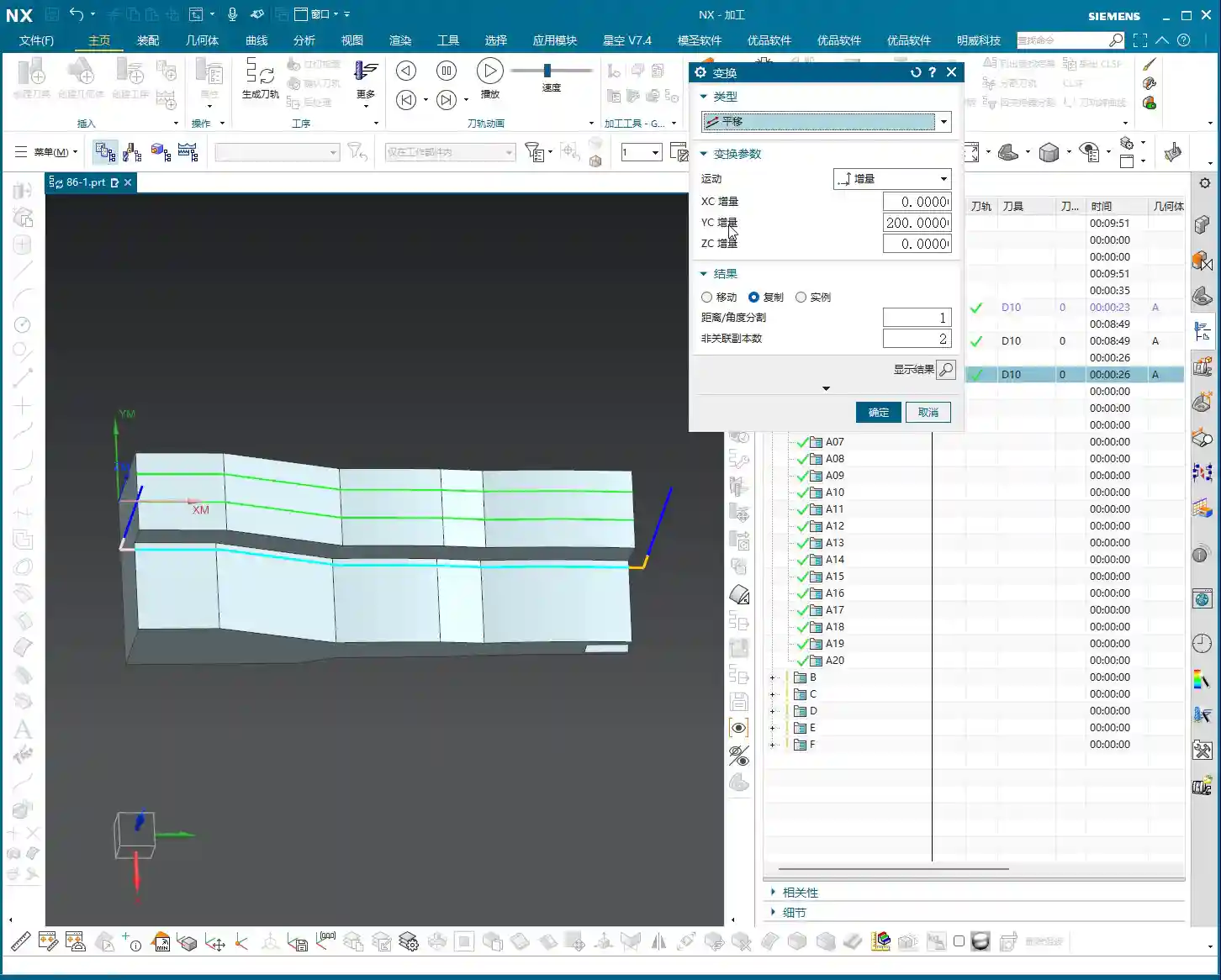
    Within “Transform Object,” you can select various transformation types, such as “Translate,” “Rotate,” and so on. For what we just discussed—offsetting multiple toolpaths along a sidewall—”Translate” is typically used.

    Translation Parameters: Y-axis Negative Offset Example

    Suppose you already have a toolpath, and you want to translate it in the negative Y-axis direction, offsetting 8 mm (approx. 0.31 inch) each time, for 6 occurrences. You would set it up like this:

    • Transformation Type: Select “Translate.”
    • Direction: Select “Y-Axis.”
    • Distance: Enter -8 (the negative sign indicates the negative Y-axis direction).
    • Number: Enter 6.

    Then confirm. Siemens NX will automatically generate 6 new toolpaths based on your existing one, each offset by 8 mm (approx. 0.31 inch) in the negative Y-axis direction. This way, you effortlessly obtain 7 parallel toolpaths (the original + 6 copied toolpaths), which can cover a wider machining area.

    This method, combined with the flexible path generation of “Curve Point,” can double your efficiency when dealing with specialized surfaces (such as a wide inclined surface that isn’t a regular flat plane). You first use “Curve Point” to run a pass along an edge, then use “Transform Object” to duplicate that pass, covering the entire area. This is significantly faster than manually selecting lines and programming each pass individually!

    Practical Application: Flexible Combination of Roughing and Semi-Finishing

    In actual machining, you can even use “Transform Object” to combine roughing and semi-finishing. For example, you can perform a roughing pass with a large tool (D16), then use “Transform Object” to duplicate this toolpath. Afterward, modify the tool parameters to switch to a smaller tool (D10) for a semi-finishing pass. This approach results in a very clear process flow and extremely high programming efficiency.

    Don’t underestimate these small tricks; on a production line where time is money, they can save you significant setup and programming time. These are the practical insights you won’t find in textbooks.

    Summary: Pitfall Avoidance Guide

    • Don’t Confuse Stock Settings: Remember, the sidewall offset in “Curve Point” is applied to the “line,” while the bottom stock is for the “component.” Set these independently. Don’t set sidewall stock within the component settings; that will lead to major issues, from scrapped parts to tool crashes!
    • Optimize Retracts and Air Cuts: While “Curve Point” combined with “Multi-pass Toolpaths” is flexible, it can sometimes generate unnecessary tool retracts and air cuts. You need to adjust the lead-in/lead-out methods based on the actual situation, for example, switching to “linear” lead-in/lead-out can significantly reduce superfluous motion. Don’t just rely on software simulations; observe the toolpath trajectory closely for optimization opportunities.
    • Tool Selection Must Be Precise: For this “curve-following” machining method, tool selection is also critical. Especially when machining narrow areas, the tool radius must match the part’s fillets; otherwise, you risk incomplete cleanup or tool gouging. Grinding custom tools is also an art; when necessary, doing it yourself can be highly beneficial.
    • Don’t Forget Material Properties: For different materials (aluminum, titanium, superalloys), cutting parameters, feed rates, and spindle speeds must all be adjusted. Don’t use a one-size-fits-all approach; that’s a recipe for disaster! Especially with titanium alloys and high-temperature nickel-based alloys, incorrect cutting parameters will lead to immediate tool failure.
    • Fixturing is Fundamental: No matter how good your toolpath is, without stable clamping, it’s all for naught. Learn to design appropriate fixturing solutions and prevent heat treatment deformation; this is the first step to ensuring precision.
    • Be Aware of Machine Error: Achieving ±0.005 mm (approx. ±0.0002 inch) precision isn’t solely about programming; you need to understand your machine’s inherent accuracy errors. Only by adjusting process compensation can you absorb these tiny deviations and bring the part’s precision back into spec.

    Alright, that concludes today’s session. These are insights I’ve gained over many years, through hard work on the shop floor – not just theoretical stuff from textbooks. The more you ponder and practice, the more skilled you’ll become. Next time you encounter any tricky problems, we’ll talk!

    👤 About the Author:
    The author is a veteran CNC machining professional with 15 years of industry experience, specializing in UG NX programming. This article is an original work representing personal practical insights.

    ⚠️ Copyright Notice: Unauthorized reproduction or distribution without prior communication is strictly prohibited.

  • Siemens NX Fixed Contour Milling: Why Do Toolpath Offset and Multiple Passes Fail for Curve Machinin

    📝 Key Takeaways: ** Master Wang reveals the real-world pain points of NX Fixed Contour Milling! He emphasizes that for curve machining, the “Specify Part” function is crucial for offset and multiple passes, otherwise overcutting or program errors are highly likely. The article details curve selection, direction control, and the critical 0.005mm tolerance setting, helping you avoid textbook traps and improve machining efficiency and precision. Master Wang guides you to understand the essence of NX toolpath optimization from a shop floor perspective. **

    Chapter One: Do You Really Understand “Specify Part”?

    Hey everyone, Master Wang here. Today, let’s continue talking about Siemens NX operations. Last time, we touched on “Specify Part” in Fixed Contour Milling. Some of you might think it’s nothing special, just selecting a part. Listen up, this is a critical pitfall that textbooks won’t necessarily explain thoroughly!

    The “Flexibility” and Traps of Specifying Parts

    Generally, in NX, many machining operations require you to explicitly specify the part to be machined. However, in “Fixed Contour Milling,” especially when dealing with drive methods like Boundary Flow Curves, Surface Area, Specify Cut Area, and today’s “Curve Point,” you might notice a strange phenomenon: sometimes, the program will run even if you don’t select “Specify Part”!

    Why is that? Because it allows you to select within the “Drive Method.” But this doesn’t mean you can just skip it whenever you want. Many engineers stumble here, thinking it’s fine not to select it, only to get stuck later when using Offset or Multiple Passes, with the program either overcutting or throwing an error. So, while it gives you this “flexibility,” you need to know when to use it and when it’s a critical error point! It’s like driving: you can coast in neutral, but would you dare to do that all the way down a steep hill? You’d certainly engage a gear and use the brakes – safety first!

    Chapter Two: The Art of Curve Selection and Toolpath Direction

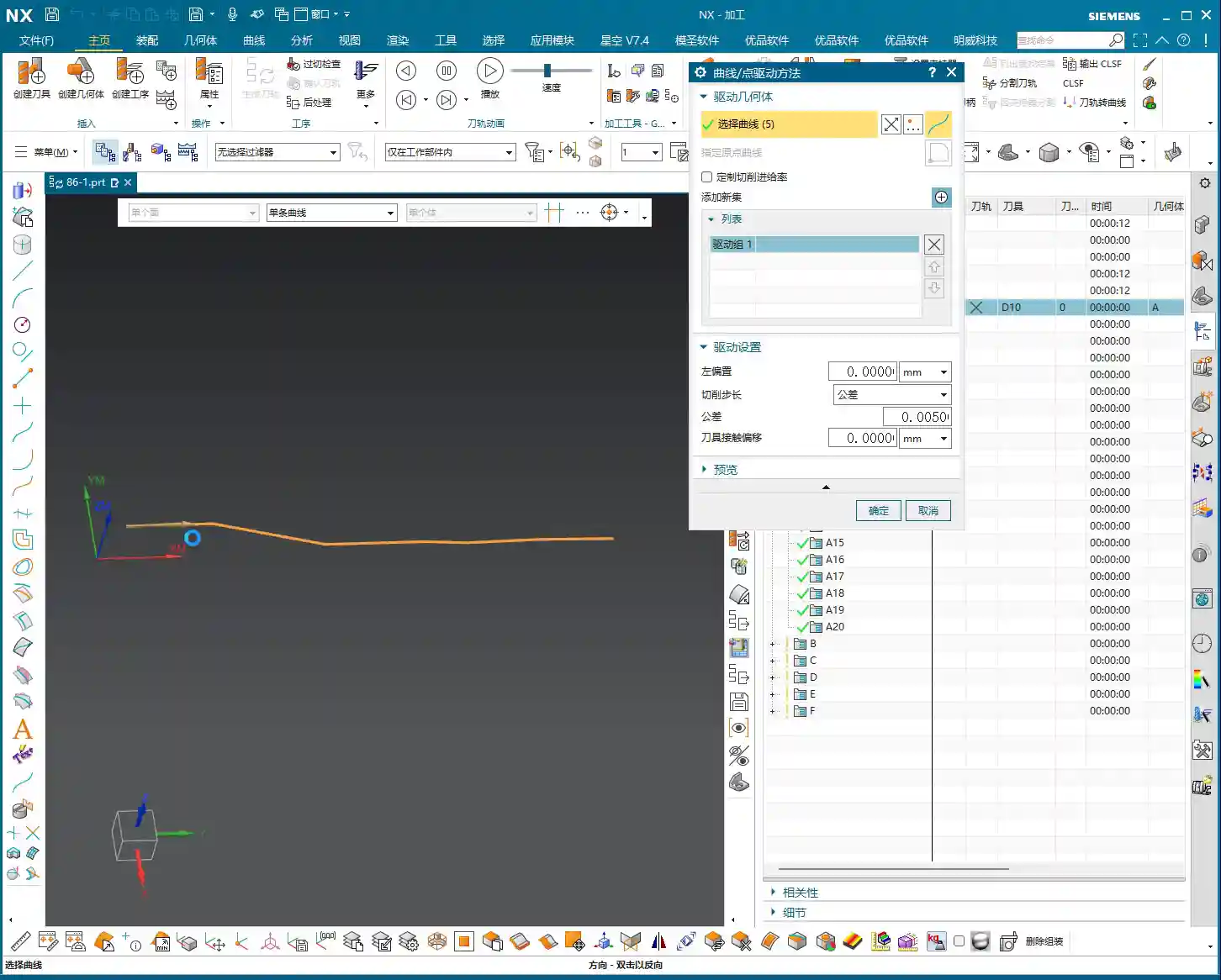
    Let’s start with the most basic: curve selection. In Fixed Contour Milling, if you don’t specify a part, then you must diligently select your machining curves within the “Edit” options.

    Curve Selection Techniques and Machining Direction

    Once you select a curve, you’ll see a green arrow. This isn’t just for show; it dictates your cutting direction. Double-click this arrow, and the direction will reverse. This is crucial in actual machining, as it determines climb milling or conventional milling, which impacts cutting forces, chip evacuation, and surface finish! Don’t just rely on software simulations. How the sparks fly, whether there’s chatter or chip welding during cutting – that’s the real feedback. Your eyes and ears are far more reliable than software animations!

    The program will follow the trajectory of your selected curve. If the curve is 3D, it will follow 3D; if it’s 2D (planar), it will follow 2D. Simply put, it can generate toolpaths for both 3D and 2D, completely following the lines you’ve selected. As long as the lines are chosen correctly and the direction is clear, program generation takes mere minutes. Efficiency lies in these small details.

    “Add Feed”: The Connector for Multi-Curve Machining

    When we need to machine multiple discontinuous curves, NX provides an “Add Feed” function. Click this, and it will automatically connect these curves for you, allowing the tool to transition smoothly from one curve to another, avoiding unnecessary rapid retracts and air moves. But remember, even with this feature, you still need to plan your cutting order carefully to minimize idle travel – that’s what truly makes it efficient! Good programming saves money; every unnecessary rapid retract wastes valuable time.

    Chapter Three: The Core Secret – Why Are Offset and Multiple Passes Dependent on Specifying a Part?

    This is the absolute core of what we’re discussing today! As we just explained, sometimes a toolpath can be generated without selecting “Specify Part.” But this situation comes with a major caveat!

    The Root Cause of Offset Failure: No “Reference Boundary”

    Now, try to apply an Offset to your toolpath, say, by 10 mm. You’ll find that the program might directly throw an error, or even if it generates a toolpath, a simulation will reveal that the tool has moved into the part, resulting in a direct overcut! Why does this happen?

    Because you haven’t specified the part, the software doesn’t know where your “part boundary” is! When you try to perform an offset, it doesn’t know whether to offset “inward” or “outward,” nor does it know if the offset will collide with the part. It’s like a person who has lost their reference point, blindly offsetting, and the result is the tool tip directly plunging into the part’s interior. This is extremely dangerous; putting it on the machine will scrap the material! Don’t just look at the tool center path being outside; the tool tip could have already penetrated the part.

    Multiple Passes (Multi-Layer Cutting) Also Rely on the Part

    By the same logic, if you want to use the “Multiple Passes” function for multi-layer cutting, you must also specify the part. Without a part as a reference, the software cannot determine the safe boundary for each cutting layer, which will also lead to overcutting or the inability to generate correct toolpaths. This is like trying to navigate stairs in a dark room; without light, you have no idea if there’s a step underfoot, and you’re bound to fall!

    To summarize: When you need to use functions like “Offset” or “Multiple Passes,” you absolutely must diligently “Specify Part”! Otherwise, the tool will be unable to correctly determine safe areas and cutting boundaries, inevitably leading to serious machining accidents. Generally, selecting just the surface you intend to machine as the part is sufficient; there’s no need to select the entire component. Efficiency is important, but safety is paramount.

    Tolerance and Cutting Compensation: The Cornerstone of Precision

    In the “Cutting Parameters” settings, we typically choose “Tolerance” rather than “Number of Passes.” This tolerance controls your toolpath precision. I usually recommend setting it to 0.005 mm (which is 5 microns). Don’t underestimate these few microns; they directly impact your part’s surface finish and dimensional accuracy. Especially for high-precision molds or aerospace components, this is absolutely critical! A smaller tolerance results in a more detailed toolpath, but also a larger program size and longer machining time, so you must weigh this against actual requirements. The tolerance settings for common aluminum parts and titanium alloys will certainly differ; it depends on the specific material you’re machining and the required precision.

    As for “Tool Contact Offset” and similar settings, we’ll delve into those later when we discuss more complex Surface Milling, as there are many more nuances there.

    Summary: Pitfall Avoidance Guide

    • Master the “Specify Part” function: In Fixed Contour Milling’s Curve Point drive method, if you’re just making a simple pass along a curve, you *can* omit specifying the part. However, if you want to use functions like Offset, Multiple Passes, or Part Stock, you absolutely *must* specify the part! Otherwise, the tool will overcut, the program will error out, or even result in a machine crash. This is an unbendable rule!
    • Curve direction is critical: Double-clicking the curve arrow reverses the direction, which affects your climb milling/conventional milling strategy. This has a significant impact on machining quality and tool life, so always check it carefully. If the direction is wrong, the machined surface will look terrible, or the tool might even break.
    • Tolerance settings must be precise: It’s recommended to change the “Cutting Parameters” to “Tolerance,” typically set to 0.005mm. This is fundamental for ensuring machining accuracy, but also consider machining efficiency. A tolerance that’s too loose will compromise accuracy; one that’s too tight will lead to excessively long machining times. You need to find a balance.
    • Remember offset direction: Keep in mind, when the arrow points towards the inside of the part, a left offset corresponds to a positive value (e.g., 10mm), and a right offset corresponds to a negative value (e.g., -10mm). Getting this detail wrong will reverse the offset direction and could lead to a direct tool collision. Don’t be careless.
    • Practical experience trumps theory: Don’t just stare at the blue toolpaths in the software. Pay close attention to the sparks, sounds, and vibrations during actual cutting – that’s the machine “talking” to you. These “un-textbook” experiences are the stepping stones to truly becoming a master machinist! Get hands-on, think critically, and you’ll integrate knowledge effectively.

    👤 About the Author:
    The author is a veteran CNC machining professional with 15 years of industry experience, specializing in UG NX programming. This article is an original work representing personal practical insights.

    ⚠️ Copyright Notice: Unauthorized reproduction or distribution without prior communication is strictly prohibited.
  • Siemens NX Fixed Contour Milling: Mastering Curve Point Operations for Complex Surfaces and Enhanced

    📝 Key Takeaways: Master Wang provides an in-depth explanation of Siemens NX Fixed Contour Milling’s “Curve Point” operation, emphasizing its core characteristic of “machining surfaces based on curves” as key to unlocking 3D and complex surface machining. He highlights the command’s critical importance for 4-axis/5-axis simultaneous programming, enabling refined toolpath control to meet high-precision machining demands. From a practical perspective, Master Wang guides users through an initial exploration of the Siemens NX interface and shares four “pitfall avoidance tips,” stressing the significance of real-world observation, material analysis, and fixturing design.

    Master Wang Kicks Off: The Vanguard of the Fixed Contour Milling Family

    Hello everyone, I’m Master Wang. Today, we’re going to discuss a highly crucial operation in Siemens NX CAM programming: Fixed Contour Milling’s “Curve Point” method. This is by no means a simple command; it’s the gateway to our Fixed Contour Milling series, which will later cover Boundary, Streamline, Surface Area, and ultimately, Multi-axis Simultaneous Machining.

    Listen up, from “Curve Point” onwards, these commands—especially for complex surface machining—are truly tough nuts to crack. But if you follow me and fully grasp these concepts, your work will no longer be confined to simple 2D and 3D surface tasks. Instead, you’ll genuinely master complex parts, elevating product accuracy and efficiency by several notches.

    “Curve Point”: Master Wang’s Own Definition – Machining Surfaces Based on Curves

    To summarize the “Curve Point” command in my own words, it comes down to one principle: Machining Surfaces Based on Curves. What does this mean? Unlike the planar contour milling we discussed before, which is limited to flat surfaces, or other commands with strict requirements for the machining object, from “Curve Point” onwards, all commands within Fixed Contour Milling can utilize any curve—whether 2D or 3D—as a basis to machine various surfaces, including both 2D and 3D geometries.

    This characteristic is extremely important because it grants us immense flexibility. Stop clinging to old notions that a certain command is limited to a single function. You need to learn to adapt and apply it flexibly, understanding its core logic. At its core, Siemens NX CAM programming is about precisely articulating the machine tool’s motion trajectory through software commands. The geometric information of the curves is our “steering wheel” for controlling the toolpath.

    Why is “Curve Point” So Special? A Deep Dive into Its Application Value

    You might find that “Curve Point” sounds a bit complex, or even somewhat different from previous commands. Indeed, it demands a deeper understanding of surface analysis and toolpath control. But its uniqueness lies precisely in its powerful application value:

    • Breaking 2D/3D Boundaries: As mentioned earlier, it can machine any surface based on curves. This provides a more unified and efficient solution when dealing with parts that feature both planar and complex sculptured surfaces.
    • Laying the Foundation for 4-Axis/5-Axis Machining: Listen up, this is the crucial part! In 5-axis simultaneous programming, commands like “Curve Point,” “Boundary,” “Streamline,” and “Surface Drive” are used exceptionally frequently. If your goal is high-precision machining of complex parts, for industries such as aerospace or medical devices, these commands are your fundamental skills. They enable you to precisely control the tool’s orientation and trajectory on more intricate geometries, achieving superior cutting results.
    • Refined Toolpath Control: With “Curve Point,” you can more flexibly specify the tool contact point, tool axis direction, and other parameters, which is critical for avoiding interference, optimizing cutting conditions, and improving surface finish. Especially for jobs demanding ±0.005mm level precision, even a slight fine-tuning of the toolpath design can determine success or failure.

    Hands-on: An Initial Exploration of the “Curve Point” Operation in Siemens NX

    Let’s get straight to it and see how this “Curve Point” operation works in Siemens NX. Remember, learning CAM programming isn’t just about theory; you need to get hands-on, observe the sparks during machining, and listen to the sound of the cutting tool!

    1. Preparation:

      • First, ensure you’ve already created the Machine Coordinate System (MCS) and Workpiece, including the Part, Blank, and Check geometry. This is standard procedure, nothing new here.
      • Prepare the “curve” you intend to use to drive the toolpath. This can be a sketch curve, a model edge, or even a spline curve you’ve created yourself. For example, I’ll “extract” an edge from the model to serve as our machining curve. Remember, the curve here can be straight or curved; the key is your machining requirement.

    2. Inserting the “Curve Point” Operation:

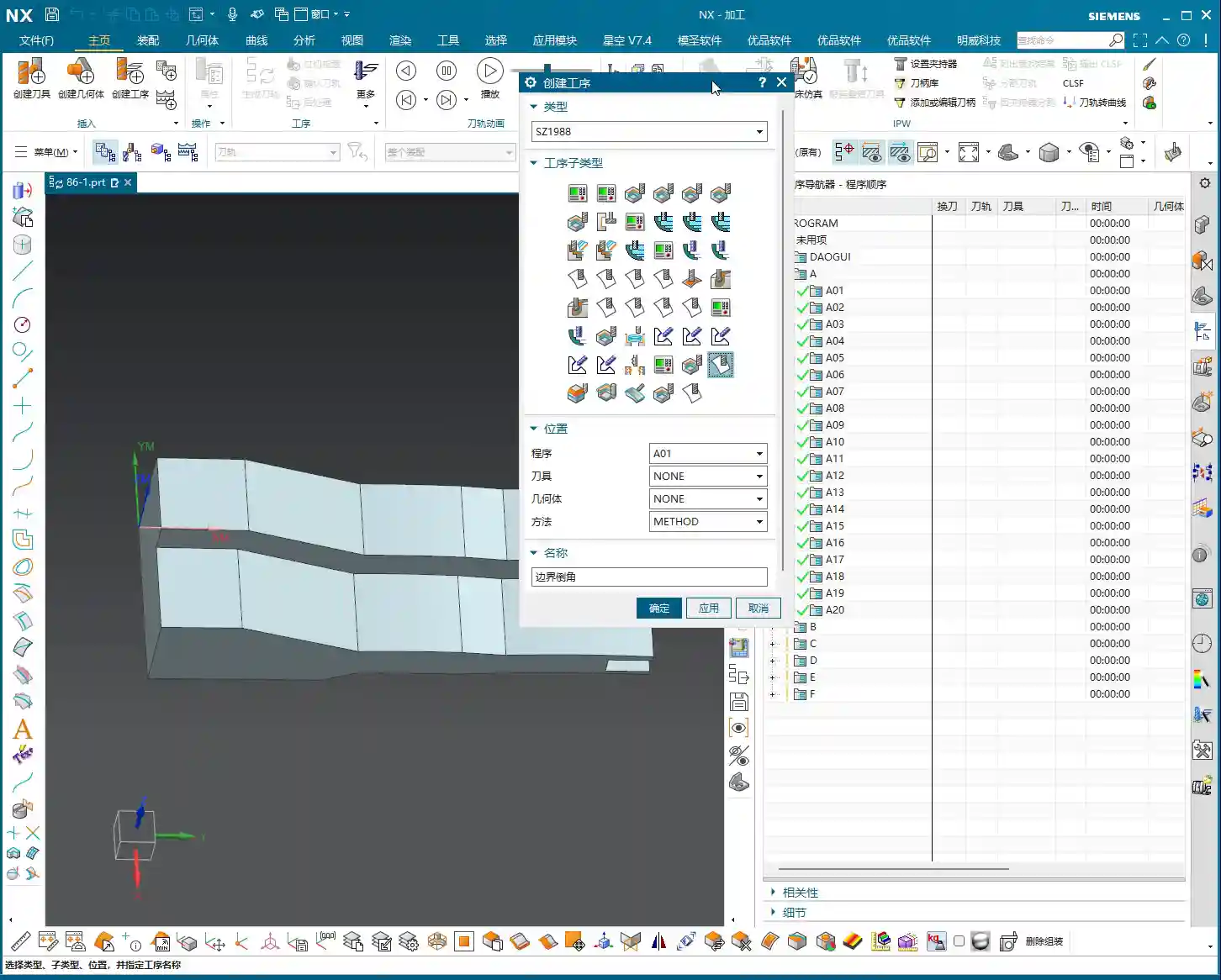
      • In the Operation Navigator, right-click and select “Insert” -> “Operation.”
      • In the dialog box that appears, select “Mill” for Type, “Multi-axis” for Method, then find the “Curve Point” command we’re learning today.
      • Select the Workpiece and Tool (for now, the default Tool A will suffice), then click “OK.”

    3. Initial Look at the Operation Parameters Interface:

      • Upon entering the “Curve Point” operation parameters interface, you’ll see many familiar options, such as Cut Part, Cut Area, Geometry, Tool, Tool Axis, and so on. Most of these are similar to operations we’ve covered previously, so don’t be concerned.
      • The core here is how to select the “Curve Point” and subsequently define the Tool Contact Point and Tool Axis Vector based on this curve. We won’t delve into these details just yet, but keep in mind that these parameters determine your toolpath morphology and cutting performance.

    4. A Little Tip for Surface Analysis: In actual practice, when you get a new part, don’t rush into programming. Use Siemens NX’s analysis tools to check whether its surfaces are planar or freeform, and how their curvature changes. This helps you select the appropriate machining strategy and tool. For example, in the model I just demonstrated, some surfaces look flat, but upon analysis, they are actually micro-surfaces. Don’t underestimate these details; they directly impact your toolpath design and ultimate precision!

    Summary: Pitfall Avoidance Guide

    After all these years in the field, I’ve seen many junior engineers stumble in these areas. Master Wang offers you some warnings:

    • Pitfall #1: Disregarding Fundamentals, Rushing for Quick Results. Commands like “Curve Point” are fundamental to Fixed Contour Milling, especially critical for multi-axis machining. Don’t treat earlier 2D and 3D tasks superficially just because they seem simple. A shaky foundation will cause everything to crumble; you’ll hit roadblocks everywhere as you progress. Even the lessons I covered previously, including those before lesson 86, must be mastered!
    • Pitfall #2: Relying Solely on Software Simulation, Neglecting Actual Machining. The toolpath might look flawless in the software simulation, but once it hits the machine, you encounter issues like excessive tool engagement, tool chipping, or even a machine collision. Why? Because software simulations represent ideal conditions; they can’t accurately simulate the actual machine’s rigidity, tool wear, or material stresses. After programming, you absolutely must go to the workshop to observe the cutting sparks, listen to the tool sound, and monitor chip evacuation. That’s where real-world experience comes from!
    • Pitfall #3: Neglecting Material Properties, Blindly Machining. Different materials (aluminum, titanium alloys, high-temperature nickel-based alloys) require vastly different cutting parameters, tool selection, and cooling methods. For instance, titanium alloys exhibit significant deformation after heat treatment and generate high cutting forces, demanding meticulous care during machining. Don’t expect one set of parameters to work for everything; that’s what an amateur would do.
    • Pitfall #4: Overlooking Fixturing, Compromising Accuracy. When machining complex parts, a poorly designed fixturing setup will render even the best toolpath useless. Carefully consider cutting force direction, deformation, and chip evacuation space, fabricating custom fixtures when necessary. Oftentimes, accuracy issues aren’t the fault of the tool or the machine; it’s simply a matter of improper fixturing.

    The Fixed Contour Milling command series in Siemens NX is the key to achieving high-precision, high-efficiency machining. Starting with “Curve Point,” subsequent lessons will become progressively more in-depth and engaging. Let’s work together to truly master these “hardcore techniques” that you won’t find in textbooks!

    [EXCERPT]
    Master Wang provides an in-depth explanation of Siemens NX Fixed Contour Milling’s “Curve Point” operation, emphasizing its core characteristic of “machining surfaces based on curves” as key to unlocking 3D and complex surface machining. He highlights the command’s critical importance for 4-axis/5-axis simultaneous programming, enabling refined toolpath control to meet high-precision machining demands. From a practical perspective, Master Wang guides users through an initial exploration of the Siemens NX interface and shares four “pitfall avoidance tips,” stressing the significance of real-world observation, material analysis, and fixturing design.

    👤 About the Author:
    The author is a veteran CNC machining professional with 15 years of industry experience, specializing in UG NX programming. This article is an original work representing personal practical insights.

    ⚠️ Copyright Notice: Unauthorized reproduction or distribution without prior communication is strictly prohibited.

  • Siemens NX Corner Cleanup Combat Manual: Master Wang Unveils Toolpath Options & Parameter Optimizati

    📝 Key Takeaways: Master Wang shares practical NX Corner Cleanup techniques. From selecting a reference tool for corner cleanup to various cutting modes (Zigzag, Follow Part Outline, Zigzag-Up, Steep/Non-Steep), he thoroughly explains the characteristics and applicable scenarios for each toolpath. He specifically emphasizes combining “Alternate from Outside-In” with the “Smoothness” function to ensure excellent surface finish at part corner radii. Learn to identify yellow toolpath regions to avoid misjudgments and truly master the strategies not found in textbooks.

    The Core of Corner Cleanup — Understanding Reference Tool Corner Cleanup

    What is Reference Tool Corner Cleanup?

    Master Wang: Folks, it’s Master Wang here. Today, let’s talk about “Corner Cleanup” in NX. Don’t underestimate it; many quality issues in the workshop stem from these hard-to-reach corner radii. Our commonly used “Reference Tool Corner Cleanup,” as the name suggests, uses a “reference tool” larger than the current tool to identify areas that the previous tool couldn’t reach, and then a smaller tool is used for cleanup. This is a critical, core function in our NX programming, and you must master it thoroughly!

    Part Selection and Initial Setup

    Master Wang: Listen up! Step one in the operation is to first insert the “Operation,” then select “Reference Tool Corner Cleanup.” This is common knowledge, I’ve explained it countless times before. But there are two points you need to pay attention to:

    1. **Blank Definition**: Before starting any job, you **MUST define the blank clearly**. Otherwise, once the toolpath is calculated, you’ll either have an overcut or air cutting. Don’t make rookie mistakes!
    2. **Machining Area Selection**: When you encounter a part like ours, which has “sheet bodies,” don’t be foolish and select everything directly. You need to switch to “Only Select Faces” and then use “Box Selection” mode. This ensures you select the correct area, neither missing nor over-selecting. If you select too much, the program might calculate a bunch of yellow lines. Don’t panic, it’s not a program error, I’ll explain what’s happening later.
    3. **Tool Selection**: Which tool to choose? Youngster, for corner cleanup, just pick a common end mill that can reach into the corner radius. Here, the **specific tool model isn’t the main point; the key lies in the toolpath strategy and parameter settings**. That’s what determines the quality of your part!

    In-Depth Analysis of Corner Cleanup Strategies

    “Zigzag” Milling: The Foundation for Reliable Stock Removal

    Master Wang: The program we initially run often defaults to “Zigzag” milling. Simply put, this mode makes the tool move back and forth within the machining area, like plowing a field. It’s stable and removes material, but there’s a problem: the **”tool marks” can be quite noticeable**, especially on contoured surfaces. For parts requiring a high surface finish, you’ll need to look at other strategies. This is generally the entry-level method for corner cleanup; it gets the material out, but to achieve a smooth finish, you need to dig deeper.

    “Steep Up” Strategy: The Bottom-Up Finishing Approach

    Master Wang: “Steep Up” is the opposite of “Steep Down.” “Steep Down” cuts from top to bottom, using the tool’s bottom edge; “Steep Up,” on the other hand, **cuts from bottom to top, layer by layer upwards**. With this machining method, the tool first reaches the bottom, then lifts and cuts upwards from the bottom. This results in stable cutting forces and good chip evacuation. Let me tell you a trick: for areas with **small fillet radii** at the bottom, or where high surface finish is required on side walls, “Steep Up” can effectively reduce tool marks. This is because the final pass will lift from the bottom, allowing the tool to exit more smoothly, naturally leading to a better surface finish.

    “Follow Part Outline”: Flexible Approach for Sidewall Corner Cleanup

    Master Wang: Now, let’s talk about “Follow Part Outline.” As the name implies, this mode means the **tool’s side cutting edge follows the boundary, primarily addressing corner cleanup in sidewall regions**. With this method, the toolpath precisely conforms to the part’s boundaries, making it particularly effective for narrow, complex corner radii. For instance, if you need to clean up deep grooves or irregular slots, this method can thoroughly clean out dead spots. However, it also has a drawback: if the entire area is machined with this mode, efficiency might not be as high as “Zigzag.” So, you have to tailor your approach and not apply it indiscriminately.

    “Zigzag-Up”: An Efficient Strategy for Smooth Surface Corner Cleanup

    Master Wang: “Zigzag-Up” is a commonly used and highly effective strategy for processing contoured surfaces during corner cleanup. It combines the efficiency of “Zigzag” with the smoothness of “Up” cutting. Especially when combined with the **”Alternate from Outside-In”** cutting strategy, the results are even better! It starts from the periphery of the machining area and cuts inwards in a spiral, finally converging to the center, much like a snail shell. This approach **allows the cutting force to gradually decrease from outside to inside, which helps maintain tool life and machining stability**. Especially during finishing passes, it can produce perfectly round, smooth corner radii. For our contoured part today, this method is particularly suitable!

    Key Parameters and Practical Tips

    The ‘Wrench’ Icon in Fixed Axis Contour Milling Parameters

    Master Wang: In NX, everything related to “Fixed Axis Contour Milling” has critical settings under that “wrench icon.” Our corner cleanup also falls into this category. You need to thoroughly understand the parameters inside, such as “Non-Steep Cutting” and “Steep Cutting” – these two are real gems.

    • **Non-Steep Cutting**: Generally corresponds to **gentle areas with a slope less than a certain angle (e.g., 30 degrees or 45 degrees, which can be customized)**. The toolpath here is usually Zigzag or Follow Boundary.
    • **Steep Cutting**: Corresponds to **steep areas where the slope is greater than this angle**. Toolpaths in these areas are often Z-level milling or cut from bottom-up.

    The cutting methods and parameter settings for these two regions directly impact machining efficiency and surface quality. For our case today, which involves many contoured surfaces, the “Non-Steep Cutting” method will be used frequently. Remember, without special requirements, often you can just set it to **”Same as Non-Steep.”** This saves effort and ensures the same machining effect as in non-steep regions.

    “Smoothness” and “Stepover”: Secrets to Improving Surface Quality

    Master Wang: When it comes to surface finish, there are two parameters you absolutely must keep an eye on: **”Smoothness”** and **”Stepover.”**

    1. **Smoothness**: Especially when using “Zigzag-Up” for corner cleanup, if the toolpath doesn’t look “rounded” enough, with somewhat “sharp corners,” chances are your “Smoothness” isn’t activated. Go immediately to “Non-Cutting Moves” and check the “Smoothness” box! Activating this function makes the tool’s engage/retract moves and connection paths much smoother, naturally resulting in a shiny part surface. This is **critical for the final “aesthetic quality” of contoured corner radii**!
    2. **Stepover**: This controls the tool’s radial engagement. Generally, if you reduce the stepover, the surface becomes smoother. But on the flip side, machining time increases, and so does cost. So, it’s a balance point. However, in “Smoothness” mode, to make the toolpath connections look better, sometimes we can increase the “Maximum Stepover,” for example, to **2000% or even 5000%**. This gives the software greater freedom to optimize the path, making it look as if it were milled in a single pass – absolutely beautiful. This is a trade secret you won’t find in textbooks; it allows your program to ensure smoothness while maintaining a certain level of efficiency!

    Summary: Pitfall Avoidance Guide

    Master Wang: Alright, that’s all for today’s corner cleanup essentials. Remember my words, these are hard-earned lessons from the shop floor.

    1. **Always Define the Blank**: Don’t treat this as a minor detail. If the blank isn’t defined correctly, all subsequent toolpaths are useless, leading to overcuts and ruined parts, or air cutting that wastes time. This is fundamental, yet often overlooked.
    2. **The Truth About Yellow Toolpath Regions**: When NX calculates toolpaths, it sometimes displays **yellow toolpath regions**. Remember, this is not a program error, but rather NX telling you that this is the tool’s **”machining range” or “intersection area,”** typically used to mark the maximum range that the current tool can cut. You simply need to **”regenerate” the toolpath**, and these yellow regions will disappear, turning into normal blue toolpaths. Don’t hit cancel as soon as you see yellow lines – that’s a misjudgment and a waste of time!
    3. **Matching Strategies to Part Geometry**: Corner cleanup strategies are diverse; there’s no single “best” one, only the most suitable. For parts with many contoured surfaces and high precision requirements, consider “Zigzag-Up” combined with “Alternate from Outside-In”; for deep cavities and bottom corner radii, use “Steep Up”; for narrow sidewalls, use “Follow Part Outline.” You must flexibly choose based on the part’s shape, material characteristics, and precision requirements.
    4. **Balancing Smoothness and Efficiency**: Blindly pursuing smoothness by setting the stepover to the minimum will only extend your machining time indefinitely and increase costs. Learn to combine the “Smoothness” function with reasonable adjustments to “Maximum Stepover.” This way, you can improve efficiency while ensuring quality – that’s the wisdom of an experienced professional!
    5. **Don’t Just Rely on Software Simulation, Watch the Cutting Action!**: The best program still has to run on the machine. Cutting sparks, chip formation, and tool wear – these are the most authentic feedbacks from the shop floor. No matter how beautiful the software simulation, it cannot replace your keen eye and years of accumulated experience!

    Think these things over carefully and master them, and you’ll be well on your way to becoming a true master machinist!

    👤 About the Author:
    The author is a veteran CNC machining professional with 15 years of industry experience, specializing in UG NX programming. This article is an original work representing personal practical insights.

    ⚠️ Copyright Notice: Unauthorized reproduction or distribution without prior communication is strictly prohibited.
  • Multi-Pass Corner Cleanup in Siemens NX: In-Depth Analysis of Precise Stock Control and Efficiency S

    📝 Key Takeaways: Master Wang explains Multi-Pass Corner Cleanup in Siemens NX, emphasizing its interface similarity to Single-Pass and Reference Tool Corner Cleanup, but highlighting the core feature of “Number of Passes per Side” for precise stock control. He points out the necessity of manually calculating remaining stock, integrating material properties, optimizing toolpaths to achieve ±0.005mm precision, stressing the importance of observing cutting sparks and chips during actual operations, and advocating mastering Reference Tool Corner Cleanup to apply knowledge across different methods.

    Alright, guys, today Master Wang is going to show you this often-overlooked feature in Siemens NX: Multi-Pass Corner Cleanup. Don’t let its similar interface to the Single-Pass and Reference Tool Corner Cleanup operations we’ve discussed fool you; there’s a lot more to it. Especially when you’re working on parts with extremely high demands for precision and surface finish, or when tackling tough, hard materials, Multi-Pass Corner Cleanup becomes your ultimate weapon for boosting efficiency, controlling stock, and ensuring accuracy!

    Listen up: in this machining game, you can’t just rely on fancy software simulations. What truly matters are the cutting sparks and chips flying off the machine. Every parameter setting must revolve around actual machining results, tool life, and cost efficiency.

    Core Logic and Characteristics of Multi-Pass Corner Cleanup

    Similarities and Differences with Single-Pass and Reference Tool Corner Cleanup

    First, let’s get this straight: from an operational interface perspective, Multi-Pass Corner Cleanup is indeed very similar to Single-Pass and Reference Tool Corner Cleanup. You still select the part, choose the blank, define the cutting region, and select the tool – these basic steps are all the same. However, its key difference lies in its ability to provide you with more precise stock control, especially when you need to gradually clean up the remaining stock at the bottom of cavities and grooves with multiple passes and small Stepover.

    It’s in the ‘Edit’ option within ‘Method’ where you’ll find some distinct differences. This is where the essence of Multi-Pass Corner Cleanup lies.

    Key Parameters: “Stepover” and “Number of Passes per Side”

    Here, we need to focus on two parameters: one is the standard “Stepover”, and the other is the ‘Multi-Pass Corner Cleanup’-specific “Number of Passes per Side”.

    Everyone is familiar with “Stepover”; it’s the lateral distance the tool feeds for each pass. If you set it to 0.5mm, the tool cuts one pass, then shifts 0.5mm laterally for the next. Nothing new there.

    The crucial part is this “Number of Passes per Side”. For example, if your default toolpath makes a pass in the middle – let’s temporarily “not count” that middle pass. Then, if you set “Number of Passes per Side” to 5, it will generate an additional 5 passes on each side of the central toolpath, forming a total of 11 passes (5+1+5). If you change it to 10, it will offset 10 passes on each side, for a total of 21 passes.

    What’s the point of this? Think about it: when machining deep cavities, narrow grooves, or high-hardness materials, you can’t expect one tool to hog it all out in a single pass. That’ll lead to chipped tools, Chatter, and quickly wear out your cutters. By adjusting “Number of Passes per Side” and “Stepover”, we can use small Depth of Cut (DOC) and small Stepover to gradually remove the remaining stock at the root, layer by layer, in controlled increments. It’s like peeling an onion, layer by layer. This not only protects your tools but also ensures machining stability and accuracy.

    Listen up, this is where real-world experience comes into play. How do you determine this “Number of Passes per Side”? You have to estimate or measure the remaining stock on your workpiece yourself. For instance, if you’ve done your Roughing with a larger tool and there’s still 1.5mm of stock left at the bottom of the groove, and your current Corner Cleanup tool has a maximum safe Stepover of 0.2mm. Then 1.5mm / 0.2mm = 7.5. You’ll need to set “Number of Passes per Side” to at least 8, or even 9 or 10, to ensure the stock is completely removed and there’s enough overlap to guarantee surface quality. This calculation isn’t something you’ll learn from a textbook; it’s accumulated through experience and understanding of material properties.

    Cutting Patterns and Toolpath Optimization

    Available Cutting Patterns

    Multi-Pass Corner Cleanup offers fewer cutting patterns, mainly Zig, Zigzag, and Mixed. These are the same as what we’ve covered in other machining operations, so Master Wang won’t go into excessive detail. Generally, for efficiency, we often use Zigzag. However, for Finishing passes or when uniform tool load is critical, Zig might be more suitable, even if it results in more unproductive rapid moves.

    • Zig: The tool always cuts in one direction, with the return path being an idle move. Advantage: stable cutting, less prone to chatter marks. Disadvantage: more unproductive moves, lower efficiency.
    • Zigzag: The tool cuts in both directions. Advantage: high efficiency, fewer unproductive moves. Disadvantage: requires higher tool strength and machine rigidity, and may produce slight marks during reverse cutting.
    • Mixed: Combines the characteristics of Zig and Zigzag, typically used to optimize cutting in specific areas.

    Inward/Outward Direction and Cutting Sequence

    Within “Cutting Patterns”, you also have “Outside-In”, “Inside-Out”, and “Lead First” and “Trail First”. These control where the tool starts and where it moves.

    • Outside-In: Gradually cuts from the workpiece exterior towards the interior, which aids chip evacuation and reduces secondary cutting. This is suitable for complex cavities or softer materials.
    • Inside-Out: Cuts from the workpiece interior towards the exterior, suitable for structures with central holes or bosses. This helps prevent chips from being trapped internally during the initial stages of machining.
    • Lead First and Trail First: These two methods, combined with Alternate, control the tool’s entry and exit sequence along the path. They are widely used, especially during Corner Cleanup, where tool and workpiece interference must be considered.

    Most of the time, to ensure even tool load and smooth chip evacuation, combinations like Outside-In Alternate and Lead First/Trail First are commonly used. The specific choice depends on your workpiece geometry, material properties, and the required surface finish. For instance, when machining difficult-to-cut materials like titanium alloys, stable cutting conditions are critical to prevent built-up edge; in such cases, the selection of cutting pattern becomes even more meticulous.

    Practical Application and Precision Control

    Material Properties and Toolpath Strategies

    Different materials require vastly different machining strategies.

    • Standard Aluminum: Excellent machinability, allowing for increased feed rates and Depth of Cut (DOC). However, be mindful of burrs during Corner Cleanup.
    • Stainless Steel, Titanium Alloys: For these difficult-to-machine materials, Corner Cleanup requires extreme caution. Tools wear quickly and work hardening is common. Here, Multi-Pass Corner Cleanup’s small Stepover, multi-layer cutting approach becomes especially critical. Combine this with appropriate coolant and tool coatings to ensure tool life and machining quality.
    • High-Temperature Nickel-Based Alloys: These are truly the “tough nuts to crack” in machining. For Corner Cleanup, you must employ a strategy of constant cutting force and stable Depth of Cut (DOC). Multi-Pass Corner Cleanup helps you precisely control the Depth of Cut (DOC) for each pass, preventing overload and Chatter, which is also beneficial for preventing heat treatment deformation.

    Achieving ±0.005mm Level Precision Control

    If your job demands precision of ±0.005mm or even tighter, then “Multi-Pass Corner Cleanup” combined with your precise calculation of remaining stock becomes absolutely critical. You must know exactly how much stock each pass leaves and how much the next pass needs to remove. This isn’t just about setting software parameters; it’s a comprehensive consideration of machine performance, tool runout, and fixture rigidity.

    Master Wang’s got a practical tip for you: before machining critical dimensions, first use a dial indicator to measure the actual remaining stock. Then, based on your final Finishing pass tool’s cutting capability, work backward to determine your “Stepover” and “Number of Passes per Side”. If your machine has accuracy errors, like 0.01mm of backlash, you might even need to apply a negative compensation in Siemens NX using the “Part Stock” or “Check Geometry”‘s “Compensation” function to “eat up” that error. That’s the real error slayer!

    Toolpath Optimization from an NX Expert’s Perspective

    As an NX expert, I’m telling you, optimizing toolpaths isn’t just about minimizing unproductive moves or finding shortcuts. For Multi-Pass Corner Cleanup, it’s even more crucial to consider tool entry/exit methods, linking moves, and the number of retracts.

    • Avoid abrupt engagements and retracts: Especially in small-area machining like Corner Cleanup, sudden tool acceleration or deceleration can easily cause Chatter or degrade surface quality. Always use arc transitions.
    • Minimize retracts: More retracts mean lower efficiency, and each time the tool retracts and re-engages, it can leave marks on the surface. If you can avoid retracting, do it; if you can reduce them, do that.
    • Consider tool wear: For materials like titanium alloys, tool wear is constant. By wisely allocating “Number of Passes per Side” and “Stepover”, you can extend the effective machining time of a single tool and reduce tool change frequency.

    Summary: Pitfall Avoidance Guide

    Alright, after all that, the core idea behind Multi-Pass Corner Cleanup is to give you more precise control over the Depth of Cut (DOC) for each pass, instead of letting the software blindly guess for you. So, remember these “pitfall avoidance guidelines”:

    1. Don’t blindly trust default parameters: Especially for “Number of Passes per Side” and “Stepover”, you absolutely must manually calculate and adjust them based on the actual remaining stock, material, tool, and precision requirements of the workpiece. If you set them without knowing what you’re doing, the part will either lack precision or you’ll scrap your tool.
    2. Thoroughly understand material properties: The Depth of Cut (DOC) for soft materials is completely different from hard materials. If you don’t understand material characteristics, even the best toolpath strategy is useless.
    3. Pay attention to cutting sparks and chips: Software simulations are static; machine operations are dynamic. During cutting, observe the spark color, chip shape, and sound. Excessive sparks, blue chips, or abnormal noises all indicate issues with your parameters; stop and adjust.
    4. Prioritize mastering “Reference Tool Corner Cleanup”: Why? Because “Reference Tool Corner Cleanup” has the most comprehensive parameters; it’s the “big brother” of these three Corner Cleanup operations (Single-Pass, Multi-Pass, Reference Tool). If you master the big brother, many of its logics and parameter settings are universal and applicable to Multi-Pass and Single-Pass, which have fewer, simpler parameters. Master the big brother, and the younger siblings will be easy to handle.
    5. Practice more, think more, summarize more: No one is born a master craftsman; everyone gets there through continuous practice and hands-on experience. After every machining job, you must summarize your lessons learned. That’s how you truly turn these tricks into your own expertise!

    That’s all for today. Go on and think this through on your own. Remember, in machining, there are no shortcuts. Only by being grounded and knowing your stuff can you become a true expert! See you next time!

    👤 About the Author:
    The author is a veteran CNC machining professional with 15 years of industry experience, specializing in UG NX programming. This article is an original work representing personal practical insights.

    ⚠️ Copyright Notice: Unauthorized reproduction or distribution without prior communication is strictly prohibited.
  • Siemens NX Corner Cleanup Region Masterclass: Master Wang Teaches You Precise Toolpath Control, How

    📝 Key Takeaways: Master Wang guides you step-by-step through practical techniques for Corner Cleanup Regions in Siemens NX. Learn to create, split, merge, and delete regions, with an in-depth analysis of how to leverage these functions to optimize toolpaths, reduce air cuts, and prevent chatter. Master practical machine operation and efficiency-boosting secrets not found in textbooks!

    Listen up, everyone, this is Master Wang. Today, we’re going to talk about an incredibly useful function in Siemens NX: the Corner Cleanup Region. Textbooks might only gloss over this, but in actual machining, mastering it is key to clean work and high efficiency. Don’t just rely on software simulations; often, the cutting sparks and machine chatter are your real teachers.

    Corner Cleanup Regions: More than just a boundary—A “scalpel” for finishing

    What is a Corner Cleanup Region?

    Simply put, a Corner Cleanup Region allows you to specify a reference tool, and the software automatically identifies areas that this reference tool cannot machine. Small radii, narrow slots, and deep pockets—areas a large tool can’t access—require a smaller tool for cleanup. This is Corner Cleanup, and a Corner Cleanup Region refers to these areas that need to be machined by a smaller tool. The software will highlight these areas with yellow arrows or a colored region, indicating, “My large tool didn’t fully clean this spot; a follow-up pass is needed.”

    When we talked about specifying part features, tangent faces and selected faces were foundational. Corner Cleanup Regions are similar; you first need to define your machining scope, for example, by right-clicking and selecting “Tangent Faces” to quickly select surfaces, or by direct selection. There’s not much new here; it’s similar to the selection methods we discussed for Area Milling, all aimed at defining your stock and part boundaries.

    Process Parameter Settings (using a reference tool as an example)

    For this demonstration, we’ll still use that 4mm flat end mill as the cleanup tool. But where’s the key? It’s in the parameter settings! Especially the Stepover. For example, I’ll increase the Stepover for zig-zag depth milling a bit from the default, setting it to 0.5mm. Sometimes, to make the effect more apparent, I’ll deliberately set it to 1mm or even 2mm. The Stepover setting directly impacts your machining efficiency and surface finish; you must be aware of this. Set it too small, machining time increases, and tool wear accelerates; set it too large, machining quality might not meet specifications, and it could even lead to Chatter.

    Creating and Managing Corner Cleanup Region Lists

    Why Create a Region List?

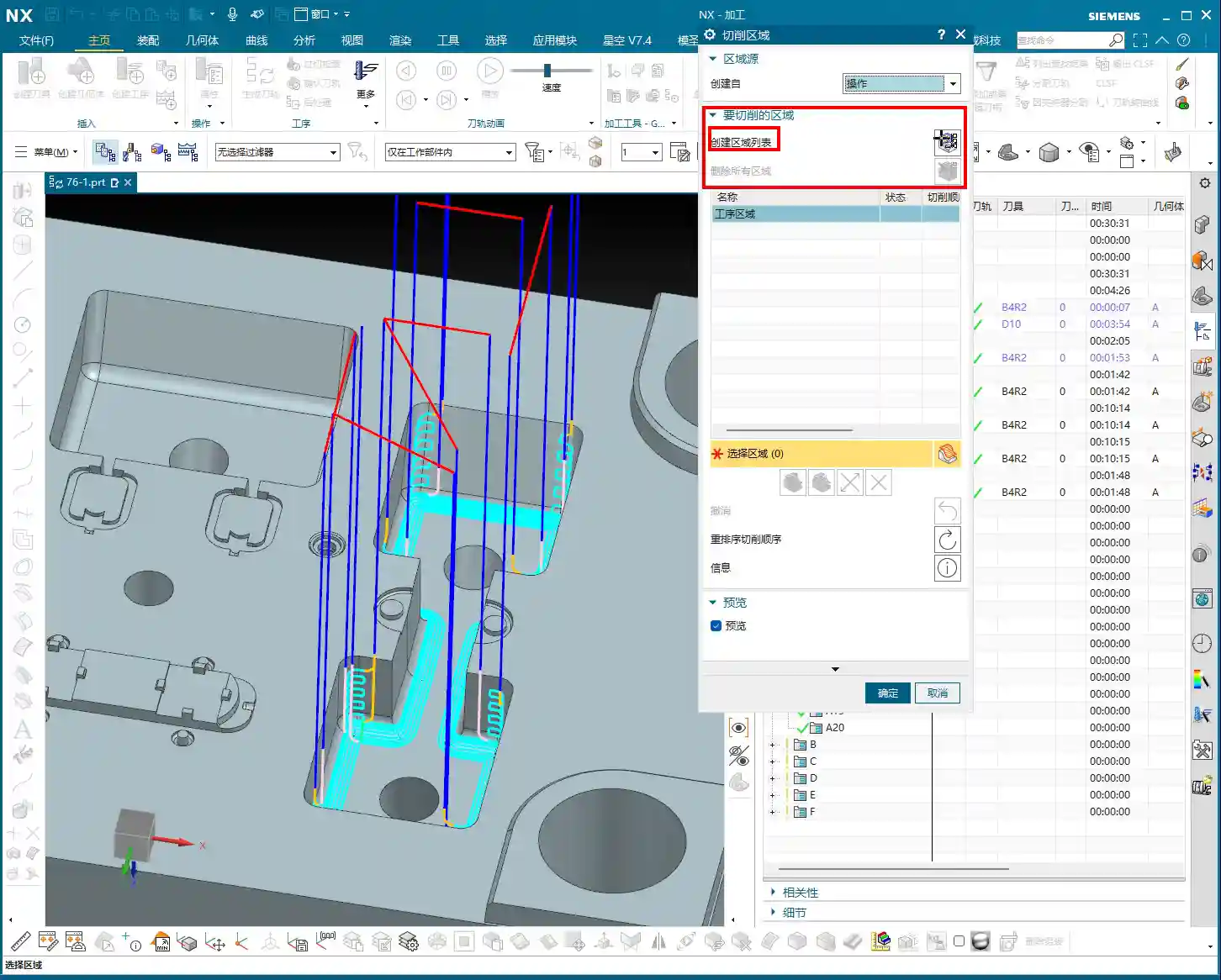
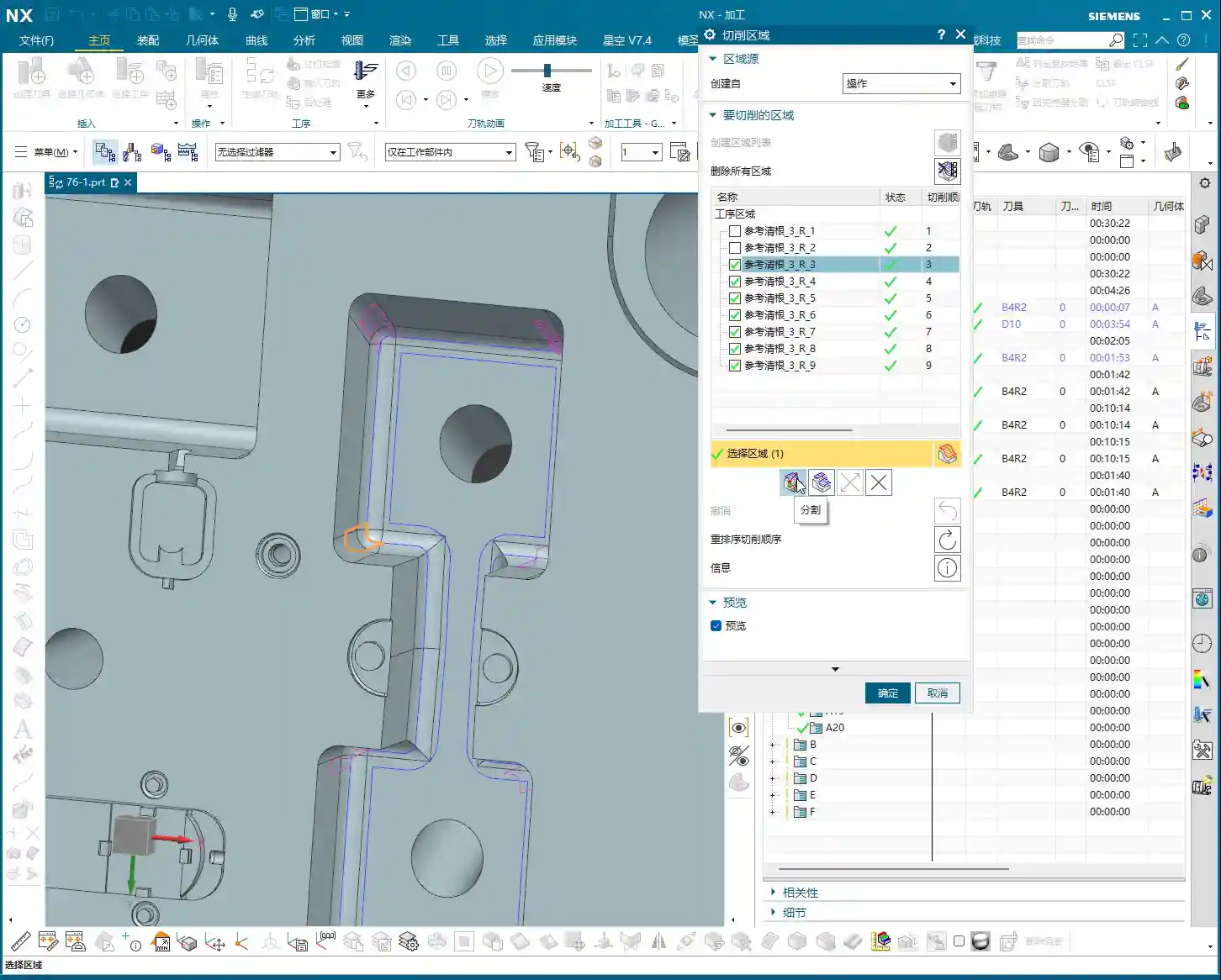
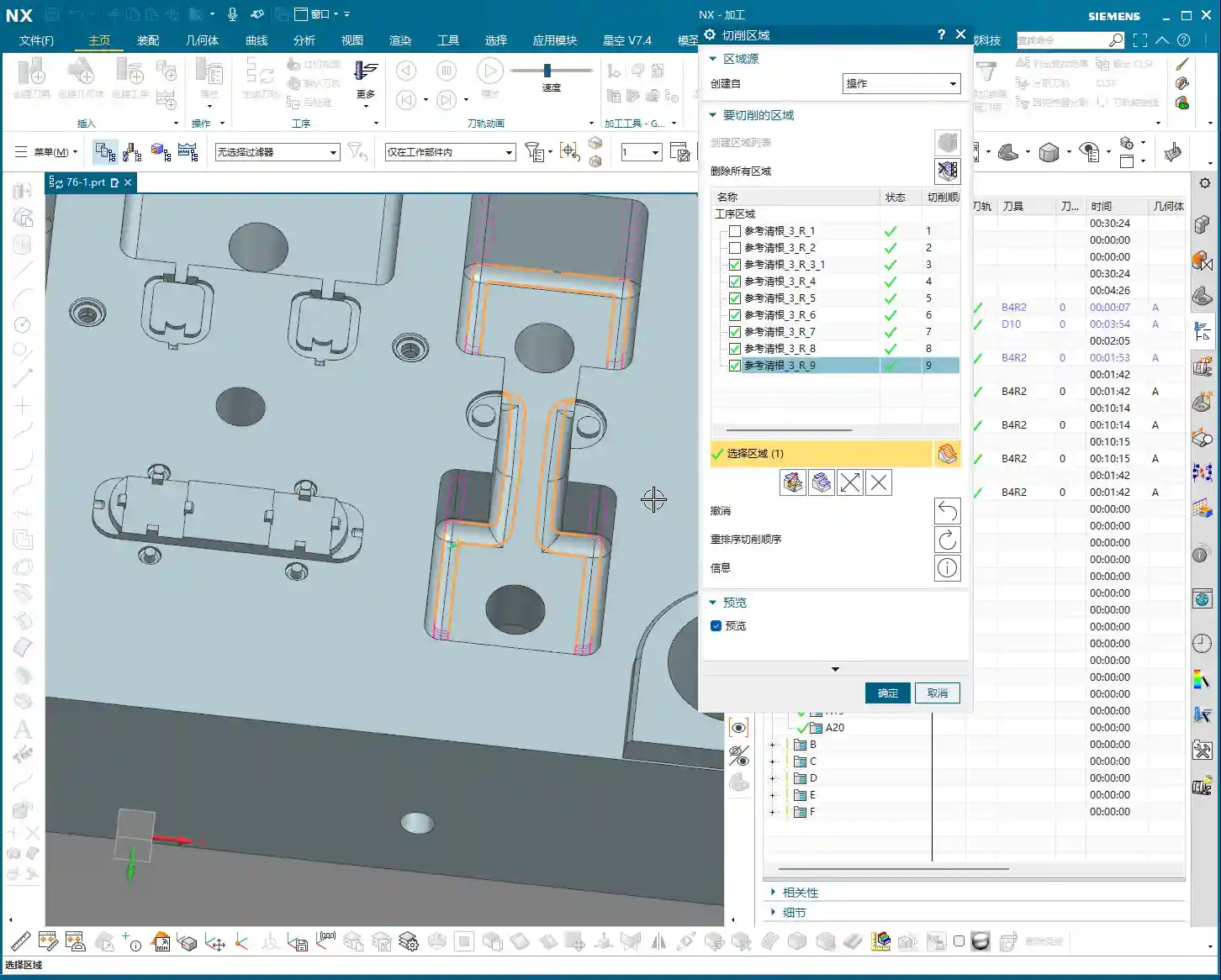
    After you first generate a toolpath, the software may automatically analyze and identify numerous areas requiring Corner Cleanup, indicated by small yellow arrows or highlighted regions. But to manage these regions precisely, you need to click on “Create Region List”. This step is crucial; it will clearly list all areas needing Corner Cleanup and automatically perform an initial segmentation based on their geometric features. In our example this time, it automatically divided into 9 smaller regions. With this list, you can perform targeted operations.

    This process might take a moment, especially with complex parts. Don’t rush; let the software calculate. It’s like helping you “put an elephant in the fridge”; every step is for subsequent precise control.

    Region Visibility: The Art of Checking and Unchecking

    After creating the region list, you’ll see a series of checkboxes. By default, all regions are checked, meaning the software will generate toolpaths for all of them. However, often we only need to machine specific regions or want to temporarily ignore one. In such cases, unchecking (or unselecting) becomes your most frequently used function.

    For instance, if I only want to clean up the bottom flat face or a specific corner. I can uncheck all other irrelevant regions. When you regenerate the toolpath, the software will only create toolpaths for the checked regions, treating the unchecked ones as if they don’t exist. This is the most direct and effective method for localized machining control. Imagine if a part has a dozen Corner Cleanup Regions; by machining only one at a time using this check-box function, think of how much time you’ll save!

    Split, Merge, and Delete: The Lifecycle of Regions

    Deleting Regions: The Irreversible “Hard Stop”

    In the Corner Cleanup Region list, if you select a region and click the “Delete” button, that region will be permanently removed. It’s not like unchecking, which only temporarily hides it; it’s genuinely gone. So, make sure you look carefully before operating; don’t accidentally delete a critical region with a twitch of the hand.

    Master Wang’s Tip: Don’t expect to recover a deleted region directly like an undo action. If you accidentally delete the wrong one, the only “recovery method” is to first click “Delete All Regions” and then click “Create Region List” again. This way, the software will re-identify and generate all Corner Cleanup Regions, returning to the initial default state. It’s like a “one-click reset” for your Corner Cleanup Regions. So, don’t delete haphazardly; if you must delete, clear them all and rebuild, otherwise, it’s easy to get confused.

    Splitting Regions: Precision Operations for Breaking Down into Smaller Parts

    Sometimes, a Corner Cleanup Region automatically identified by the software might be very large or have a complex shape, making it difficult to process with a single toolpath strategy within that region. Or perhaps you want a tool retract movement during machining of this region, rather than a continuous pass. This is when the “Split” function comes in handy.

    Select the region you want to split and click “Split”. You can choose to divide it by “Two Points defining a Line” or by “Plane”. Typically, “Plane” is more commonly used; you can drag a plane to define the split line. For example, if we split a region into two halves, the toolpath will change from one large region to two independent smaller regions. The benefit of this is that you can apply different machining parameters to these two smaller regions, or enforce a tool retract between them to avoid potential Chatter risks. For instance, in some deep slots, a mid-pass tool retract for chip evacuation can be very beneficial. But don’t forget, a tool retract is also an air cut and a time cost, so splitting should be done judiciously!

    Merging Regions: An Optimization Method for Consolidating Smaller Parts

    Where there is splitting, there is merging. If you feel that two previously split regions, or two adjacent regions automatically generated by the software, don’t require a tool retract between them and can be machined in one continuous pass. Or if you find that there are too many tool retracts after splitting, affecting efficiency, then you can “Merge” them back together.

    Merging is simple: First select at least two regions you want to merge (e.g., the two parts you just split), then click “Merge”. The software will then treat them as a single entity again. After merging, the toolpath will be more continuous, reducing unnecessary tool retracts and thus improving machining efficiency. It’s like pouring water from two small buckets back into one large bucket, eliminating an extra transfer step.

    Reverse and Reorder: Fine-tuning Toolpath Details

    Reverse: Changing Cutting Direction

    The “Reverse” function is only meaningful for unidirectional machining toolpaths (e.g., one-way milling). Its purpose is to reverse your toolpath’s cutting direction; for example, if it was climb milling, clicking it will switch to conventional milling. But you need to note that in our current zig-zag machining, the tool already moves back and forth, encompassing both climb and conventional milling, so clicking “Reverse” will have no effect whatsoever. Don’t waste your effort here. To use it effectively, you first need to understand whether your current toolpath strategy is unidirectional or zig-zag.

    Reorder: Adjusting Machining Sequence

    “Reorder”, as the name suggests, adjusts the machining sequence of these Corner Cleanup Regions. When you have multiple Corner Cleanup Regions, their machining order affects the tool’s travel path. Sometimes, the software’s default order might not be optimal, leading to frequent tool retracts and air cuts. By manually or automatically reordering, you can guide the tool along a more logical path, reducing air cut time and thus improving overall efficiency.

    Summary: Pitfall Avoidance Guide

    • Core Principle: The essence of Corner Cleanup Regions is precise control, not splitting for the sake of splitting, or merging for the sake of merging. Everything should aim for actual cutting performance and machining efficiency. Your final product must be high-quality, scrap rates low, and costs reduced.
    • Accidental Deletion: Remember the “delete all and recreate” recovery method, but try to avoid accidental deletion; verify before operating. This isn’t a game; one wrong step could ruin the workpiece or even cause a tool crash.
    • Excessive Retracts: Splitting regions will increase tool retracts in the toolpath. If there are too many unnecessary retracts, consider merging them back. Time is money, and air cuts are burning cash.
    • Misuse of Reverse: Always remember the distinction between unidirectional and zig-zag machining; don’t fuss with “Reverse” on zig-zag toolpaths. Random clicking without understanding the principle is asking for trouble.
    • On-Machine Verification: No matter how good the software simulation looks, the final judgment comes from the machine. During machining, observe the cutting sparks, listen to the cutting sound, and feel the workpiece temperature—these are the real skills you won’t learn from textbooks!
    • SEO Tip: When sharing this kind of technical content, keywords should cover “NX Corner Cleanup Region”, “Toolpath Optimization”, “Machining Programming”, “CNC Tips”, combined with pain points like “improve efficiency” and “reduce scrap” to help more aspiring newcomers find us. As engineers, we also need to understand a bit about promotion to spread genuine expertise!

    👤 About the Author:
    The author is a veteran CNC machining professional with 15 years of industry experience, specializing in UG NX programming. This article is an original work representing personal practical insights.

    ⚠️ Copyright Notice: Unauthorized reproduction or distribution without prior communication is strictly prohibited.

  • In-Depth Analysis of Corner Cleanup in Steep Regions with Siemens NX: Master Wang’s Hands-on Guide t

    📝 Key Takeaways: Master Wang provides hands-on techniques for Corner Cleanup in steep regions using Siemens NX. This in-depth analysis covers the pros and cons and application scenarios of One-Way and Zigzag machining modes, emphasizing the importance of Depth Machining and smooth toolpaths. It will help you optimize your toolpaths, improve machining efficiency and part quality, and avoid pitfalls not found in textbooks.

    Hello everyone, Master Wang here! Today, we’re skipping the fancy theories and getting straight to the point. The job in front of us is a classic case of Corner Cleanup in steep regions – these areas are notorious for issues and truly test your skills. Listen up, because today we’re going to thoroughly discuss the ins and outs of Corner Cleanup and different machining modes.

    Default Zigzag Machining: What’s the Problem?

    First, let’s do a standard operation. Pick any tool, select the area for Corner Cleanup, and generate a program. Watch closely, I’ll select the region faces to be cleaned. Right-click, select Tangent Faces – you’re all familiar with that.

    Observing the Default Toolpath: Drawbacks of Zigzag Machining

    Now, I’ll run this with the default Zigzag machining mode. Since there are many faces, the calculation might take a bit – don’t rush it.

    See that? As soon as the toolpath is generated, the problem becomes obvious. In these steep regions, the tool cuts back and forth, leading to uneven cutting forces. Don’t just rely on the smooth software simulation; once you run it on the machine, you’ll find:

    • Prone to heavy cuts/Tool Dig-in: When the tool reverses direction, the cutting force changes instantaneously, often causing the tool to dig in sharply. At best, it leaves tool marks; at worst, it chips the insert or even scraps the part!
    • Poor Surface Quality: With back-and-forth cutting, especially on steep slopes, the tool can easily slip or, when reversing direction, leave unsightly “fish-scale patterns” or “pitting.”
    • Shorter Tool Life: Constantly enduring impacts and changes in direction accelerates tool wear, naturally shortening its lifespan and increasing your costs, doesn’t it?

    So, while Zigzag machining might be acceptable in flat areas, encountering Corner Cleanup in steep regions with it is practically asking for trouble.

    Preferred for Steep Regions: One-Way Machining

    For these steep Corner Cleanup regions, we need a different approach. In my experience, One-Way machining is the way to go!

    Advantages and Setup of One-Way Machining

    Alright, I’ll change this machining mode to One Way. We’ll set the depth to 0.2mm. Don’t forget, for Corner Cleanup, you need a small Depth of Cut (DOC) to ensure accuracy and surface finish. Then, regenerate the toolpath.

    See that? Now the tool moves in only one direction – for instance, cutting from top to bottom. After completing a pass, it retracts and rapids back to the start point to begin the next pass. While it appears to have more Air Cuts and might seem less efficient, the reality is:

    • High Machining Stability: The tool is consistently loaded in one direction, leading to a very stable machining process, less prone to chatter or chipping.
    • Excellent Surface Finish: One-Way machining prevents the tool from reversing direction during cutting, eliminating tool marks and imperfections caused by direction changes. This naturally results in a superior surface finish.
    • Extended Tool Life: Reducing the impact from direction changes leads to more even tool wear and significantly extends tool life.

    In steep regions, machining stability and surface quality are paramount. The minor loss from those Air Cuts is easily recuperated by improving yield and tool life. You need to crunch these numbers carefully!

    “Zigzag Upward”? You’re Asking for Trouble!

    Some of you might ask, what about Zigzag Upward or Zigzag Parallel to Tool Axis? I’m telling you, for steep regions, these modes should be used with extreme caution, or frankly, not at all!

    Look closely at such a toolpath: when it cuts upward, the tool is essentially climbing against the cutting direction, aggressively “biting” into the material. How terrible are those cutting forces? It’s highly prone to chatter, chipping, and can even scratch the part surface. Don’t just rely on software simulations; observe the cutting sparks and chips – they’ll tell you the real story.

    If you absolutely must use a zigzag approach, at least use the Perpendicular to Tool Axis mode, ensuring the tool always cuts down the material, which provides much better cutting forces. But even then, it’s still fundamentally zigzagging, and risks remain at corners.

    Master Wang’s Pro Tips: Combining Depth Machining and Smoothness

    Now, I’m going to teach you some practical tips you won’t find in textbooks.

    The Clever Application of Depth Machining

    Sometimes, relying solely on Corner Cleanup operations might not be flexible enough, especially when encountering both steep and deep Corner Cleanup regions. In such cases, I lean more towards using the Depth Machining function.

    Depth Machining itself is designed for steep walls. It offers better control over the tool’s cutting in the Z-axis direction, and when combined with One-Way machining mode, it can generate highly stable and efficient toolpaths. It handles depth more effectively, making the toolpaths appear more smooth and continuous, rather than just focusing on localized areas like simple Corner Cleanup.

    Ultimate Optimization: One-Way Machining + Smooth

    However, if you want to perfect steep regions within a Corner Cleanup operation, my ultimate secret is this: use One-Way machining mode, and then make sure to activate the Smooth function!

    Let me show you. When you combine One-Way machining with the Smooth function enabled, and then regenerate the toolpath, you’ll observe:

    • More Refined Toolpaths: What might have been subtle jumps or unevenness before now becomes incredibly smooth and flowing, as if hand-drawn.
    • Increased Machining Stability: The Smooth function optimizes tool engagements, retracts, and connection paths, reducing unnecessary sharp turns and impacts, leading to a much more stable cutting process.
    • Exceptional Surface Finish: Smooth toolpaths translate to more consistent cutting, and the part’s surface finish and texture will achieve a very high standard.

    That Smooth function isn’t just for show; it can be a real lifesaver in critical situations! Especially for parts with tight tolerances and demanding surface finish requirements, One-Way machining combined with Smooth is almost always my first choice. Try it, and you’ll see. This is veteran experience; you won’t necessarily find such detailed explanations in textbooks.

    Flexible Combinations, Context-Specific Application

    So, Corner Cleanup has its applications, and Depth Machining has its advantages. It’s not about one being definitively better than the other; the key is flexible combination and adapting to the situation. It’s like going to battle – you can’t rely on just one weapon.

    • Corner Cleanup operations: Typically used for final finishing, thoroughly cleaning out those small corners and root areas left after roughing and semi-finishing. It focuses on local details.
    • Depth Machining: Is more suitable for areas with strong overall form, significant depth, and steep slopes. It can be used as a finishing pass before Corner Cleanup, or independently for machining deep cavities and steep walls.

    In practical application, you might find that toolpaths achievable with Corner Cleanup might not be possible with Depth Machining, and vice-versa. Therefore, they are not mutually exclusive but rather complementary and work in synergy. Remember, no method is inherently good or bad; it’s about how well you apply it! Practice more, ponder more, and the machine will naturally obey your commands!

    Summary: Pitfall Avoidance Guide

    1. For Corner Cleanup in steep regions, use Zigzag machining with caution: Unless it’s a flat area, the Zigzag mode can easily lead to uneven tool loading, causing tool marks, chipping, or poor surface quality.
    2. Prioritize One-Way machining: For steep regions, the One Way mode ensures machining stability and surface finish quality. Even with more Air Cuts, it offers greater long-term benefits.
    3. Enable the Smooth function: When using One-Way machining mode, be sure to enable Smooth. This significantly optimizes toolpaths, enhancing surface quality and tool life. This small detail can save you a lot of trouble.
    4. Depth Machining is a powerful tool: For steep and deep regions, consider using Depth Machining. It offers distinct advantages when handling deep cavities and steep walls.
    5. Understand the purpose of different commands: Corner Cleanup is primarily for final finishing, cleaning tight corners. Depth Machining can be used for intermediate finishing or large steep walls. They are partners, not rivals.
    6. Practice makes perfect: No amount of theory compares to hands-on experience. Grab any model, click around, generate several toolpaths, compare them, and you’ll uncover the secrets.

    That concludes today’s lesson. I hope you can absorb and apply these practical experiences. Next time, we’ll discuss the intricacies of multi-toolpaths – that’s a whole new ballgame!

    👤 About the Author:
    The author is a veteran CNC machining professional with 15 years of industry experience, specializing in UG NX programming. This article is an original work representing personal practical insights.

    ⚠️ Copyright Notice: Unauthorized reproduction or distribution without prior communication is strictly prohibited.
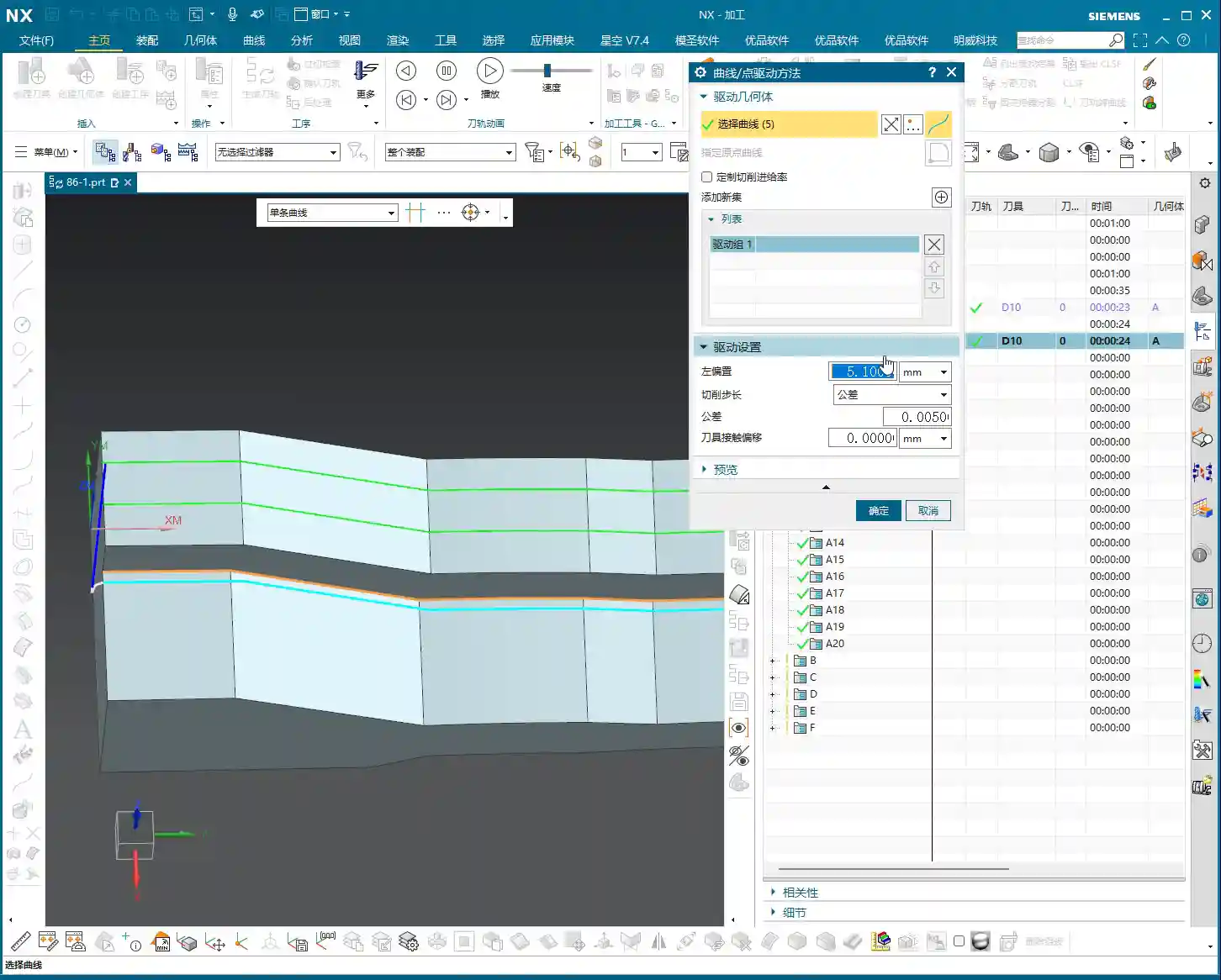
  • Siemens NX Corner Cleanup (Rest Milling): Master Wang’s 15 Years of Experience – Avoid Pitfalls, Dou

    📝 Key Takeaways: Master Wang provides practical guidance on Siemens NX Corner Cleanup (Rest Milling) modes. He highlights “Zig-zag Up + Outside-in Alternating + Smooth” as the most practical and efficient combination, capable of reducing air cuts and protecting tools. He thoroughly explains the advantages, disadvantages, and application scenarios for One-way/Zig-zag Horizontal, Depth Machining, and Follow Periphery modes. Furthermore, Master Wang discusses the strategic choice between “Plunge Milling” and “Area Milling” operations and concludes with a pitfall avoidance guide, emphasizing real-world experience and cost-efficiency.

    Hello everyone, I’m Master Wang. Today, let’s talk about choosing the right Corner Cleanup (Rest Milling) modes in Siemens NX. Don’t underestimate these modes; pick the right one, and your efficiency will skyrocket, and tool life will be extended. Choose incorrectly, and you’ll either have excessive air cuts, premature tool wear, or even scrap the part entirely! Listen up, because this is practical experience I’ve gathered over 15 years, getting my hands dirty on the shop floor – you won’t find this in any textbook.
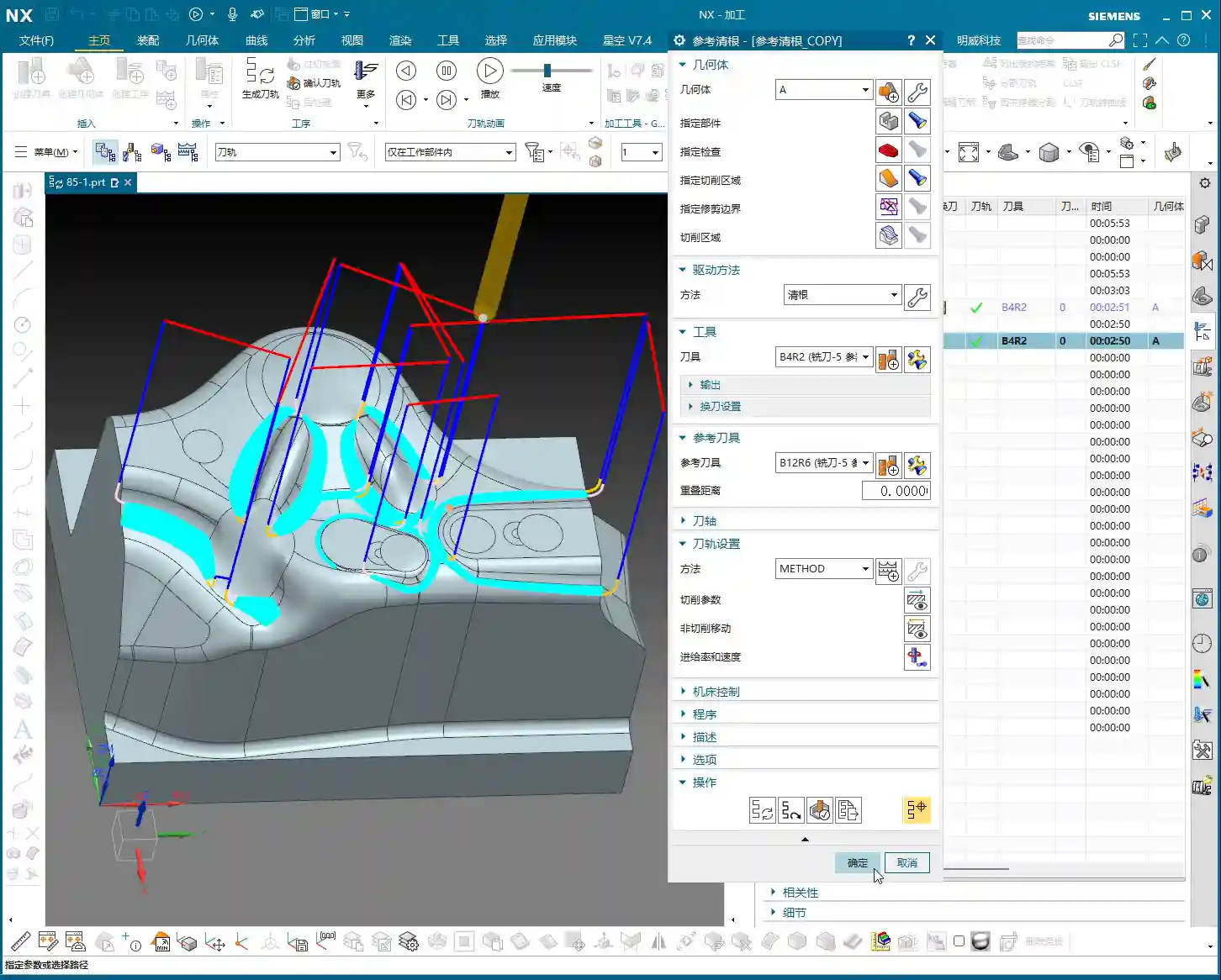
    Master Wang’s Insights: The Essence of Corner Cleanup Modes

    Apprentices, you must understand that for Corner Cleanup (Rest Milling), especially in complex cavities and surfaces, the machining sequence and toolpath direction are paramount. I’ve personally put together a highly effective and efficient combination strategy that I use most often – it’s one of my core specialties.

    The Ultimate Combination: Zig-zag Up + Outside-in Alternating + Smooth

    The most effective toolpath pattern I use, and one that consistently delivers the best results, is “Zig-zag Up,” paired with an “Outside-in Alternating” cutting sequence. Crucially, always remember to enable the “Smooth” option. Why do I emphasize this?

    • Zig-zag Up: In this mode, the tool travels up from the bottom, then down from the top, in a reciprocating motion. Unlike simple one-way cutting, which requires the tool to retract and return after each pass, Zig-zag Up effectively reduces retractions and maintains continuous cutting, making it particularly suitable for cavities with a certain draft angle.
    • Outside-in Alternating: This cutting direction is the core principle! It ensures the tool starts from the periphery of the Corner Cleanup area and gradually moves inward. This guarantees sufficient space for engagement, preventing the tool from making a full-width cut at the beginning. It significantly reduces the risk of excessive Depth of Cut (DOC) and chipping. Especially for harder materials like titanium alloys and high-temperature nickel-based superalloys, this cutting method effectively protects the tool and extends its life.
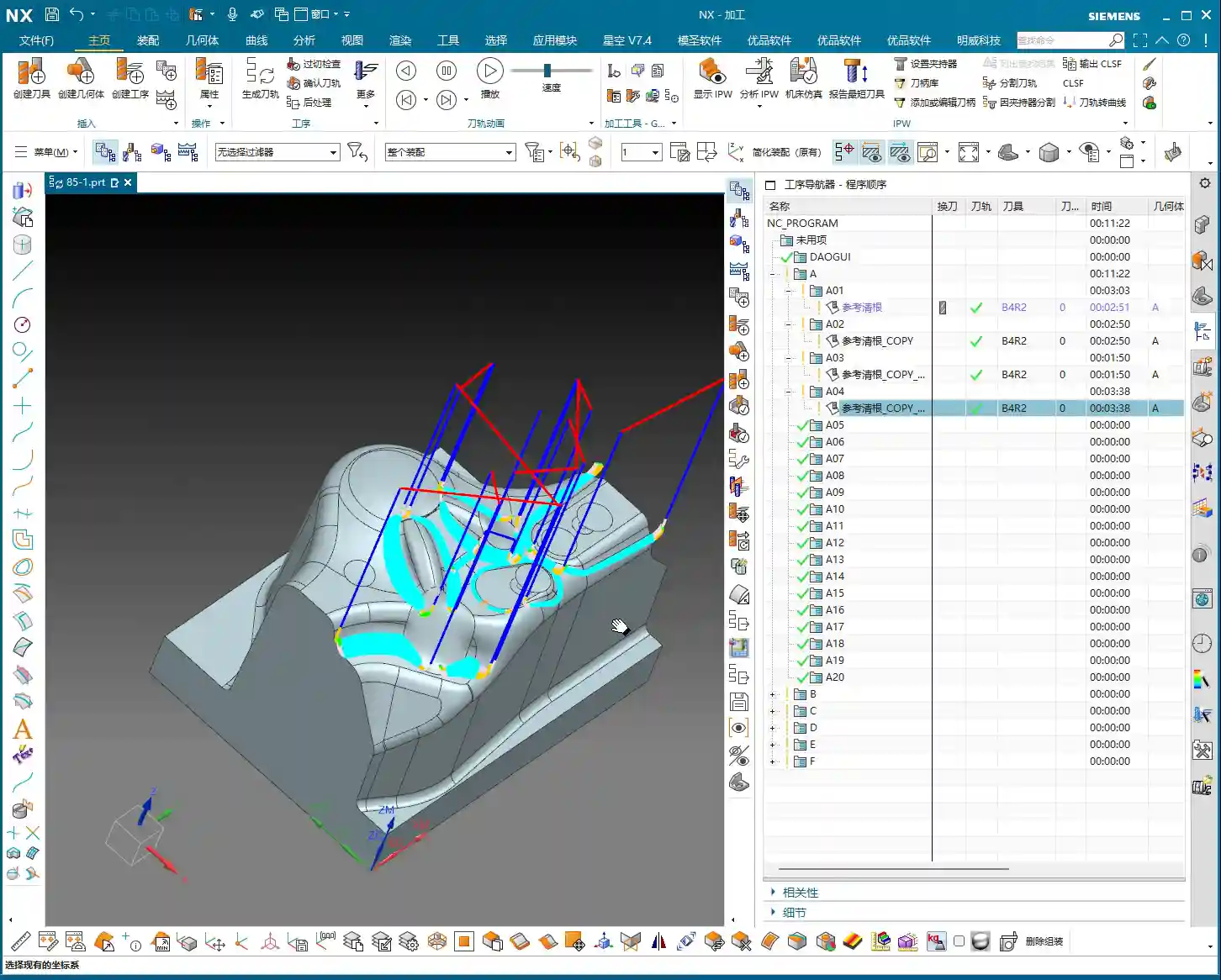
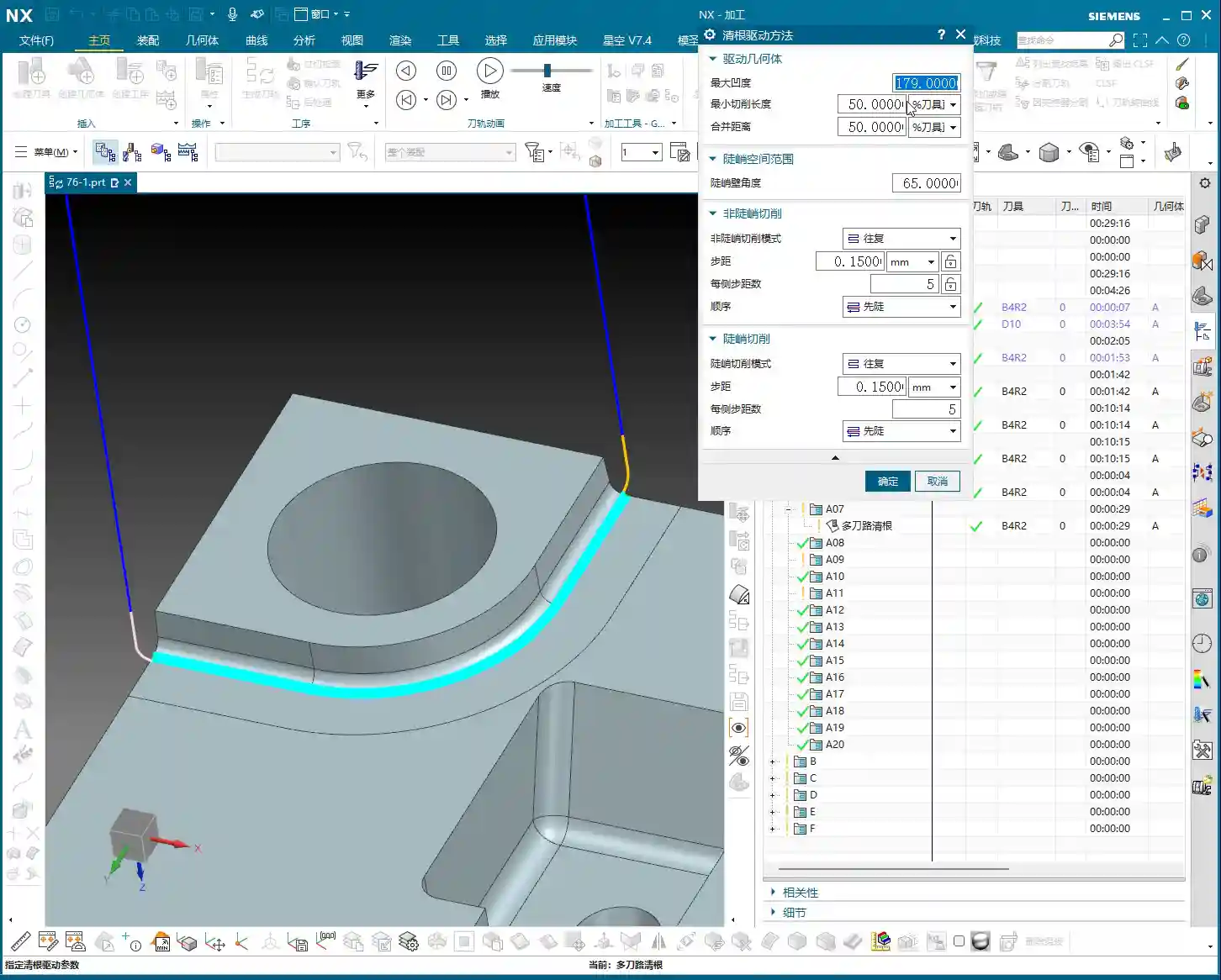
    • Smooth: This option is extremely important, yet often overlooked. Enabling “Smooth” makes the toolpath very fluid, eliminating sharp turns and acute angles, which reduces machine shock and vibration. Sometimes, if you notice the tool “jumping” (the tool suddenly lifts and drops, which is very damaging), it’s likely because your Stepover setting for “Smooth” is too small. A smaller Stepover can be counterproductive due to frequent tool retractions. I typically adjust the Stepover based on tool diameter and material; for example, when performing corner cleanup with a ball end mill, a Stepover of 5%-10% of the tool diameter is usually sufficient, but always observe the cutting sparks and sound in real-time.

    This combination strategy ensures the tool maintains a relatively stable cutting load during Corner Cleanup (Rest Milling), resulting in smooth toolpaths, high machining efficiency, and improved part surface quality. Don’t just rely on software simulations; during actual cutting, you need to observe the sparks at the cutting edge and listen to the cutting sound – that’s where true skill lies.

    Detailed Explanation of Common Corner Cleanup Modes

    One-way Horizontal

    As the name suggests, this mode involves unidirectional, horizontal tool movement. After completing a pass, the tool retracts to the start point before beginning the next. This method might be suitable for simple flat areas or shallow groove Corner Cleanup, but it’s generally inefficient due to excessive time spent on air cuts and retractions. If you use this in complex cavities, your machining time will be simply wasted on tool retractions.

    Of course, if you enable the “Smooth” option, the toolpath can become spiral-like, cutting downwards in circles, which looks much cleaner and can achieve some Corner Cleanup effect. However, overall, it’s less efficient and flexible than the “Zig-zag Up” mode.

    Zig-zag Horizontal

    This is an upgraded version of One-way Horizontal, where the tool cuts back and forth with no tool retraction in the Z-axis direction, reducing idle travel. It steps down one layer, then cuts horizontally in a reciprocating motion. This can be considered for cleaning the root areas of square or rectangular features. However, for complex Corner Cleanup regions or those with draft angles, this mode is less adaptable than “Zig-zag Up.”

    Zig-zag Up Horizontal

    This mode is quite similar to “Zig-zag Up,” but it emphasizes horizontal reciprocating cuts followed by a Z-axis ascent. Compared to my “Zig-zag Up + Smooth” combination strategy, if “Smooth” is not enabled, it might produce a more noticeable stepped appearance in the Z-axis direction, and toolpath transitions won’t be as smooth. Therefore, even when using this mode, I usually enable “Smooth” to ensure more fluid tool movement.

    Considerations for Depth Machining Modes

    In Siemens NX, some modes have “Depth” in their names, which sounds impressive-sounding, but their practical application depends on your workpiece characteristics and machining requirements.

    One-way Depth Machining

    This mode involves unidirectional vertical plunging, with the tool retracting and returning after each cut. If you want to perform stepped deep cuts at a specific point or area, this could be considered. However, it’s rarely used alone for general Corner Cleanup due to its inefficiency. Personally, if I were to do something like this, I’d opt for helical plunge milling instead, which is more direct and ensures more uniform tool engagement.

    Zig-zag Depth Machining

    Similar to One-way Depth Machining, except the tool can perform reciprocating plunging. Again, these depth machining modes are typically not the first choice for Corner Cleanup, unless you are specifically cleaning the bottom of blind holes or deep, narrow slots. In most complex cavity Corner Cleanup scenarios, their efficiency and tool life protection are not ideal.

    Special Mode: Follow Periphery

    Follow Periphery

    This mode is also very useful. It enables the tool to follow the contour of the Corner Cleanup area, progressing inward or outward layer by layer. For regularly shaped Corner Cleanup regions, especially those with well-defined boundaries, it can generate very clean toolpaths. However, there’s a point to note: how does it determine “inward” versus “outward” cutting? This requires you to have a clear understanding of the model boundaries and desired toolpath. If it feels awkward to use, or you’re unsure if its cutting direction is what you want, then just stick to Zig-zag Up – it’s generally more reliable.

    The Philosophy of Mode Selection: “Plunge Milling” vs. “Area Milling”

    In Siemens NX, you might sometimes notice that the cutting mode options within “Area Mill/Contour Area” and “Plunge Mill/Contour Profile” operation types look similar. However, you must understand that their application scenarios are different.

    • “Area Mill/Contour Area”: This is typically used for machining an overall area or surface. It’s based on a plane or region, where the tool cuts horizontally and then steps down layer by layer. The modes we discussed earlier, such as Zig-zag Up, Zig-zag Horizontal, and Follow Periphery, are most commonly used here, primarily to cover the entire Corner Cleanup region.
    • “Plunge Mill/Contour Profile”: The name itself implies a focus on depth-oriented machining. For instance, if you need to mill a deep hole or clean the bottom of a deep, narrow slot, you would likely use modes within the “Plunge Mill” operation type, as it emphasizes the tool’s plunging strategy in the Z-axis direction.

    Therefore, when selecting a mode, you must first determine your primary objective: do you want to efficiently clear an area (select the appropriate mode under “Area Mill” operations), or do you want to more effectively handle depth-oriented cutting (select the appropriate mode under “Plunge Mill” operations)? Generally speaking, for Corner Cleanup, most of the time, we’re selecting within “Area Mill.” Remember what I said: Zig-zag Up, Outside-in Alternating, and with Smooth enabled – these three are your powerful tools within “Area Mill.”

    Summary: Pitfall Avoidance Guide

    1. Mode selection must align with the workpiece: There’s no one-size-fits-all mode. The shape, depth, and material hardness of the Corner Cleanup region all influence your choice. Don’t just blindly apply them.
    2. Effectively utilize the “Smooth” function: It makes toolpaths smoother, reduces machine shock, protects the tool, and improves surface quality. However, the Stepover setting must be reasonable; too small will lead to frequent retractions.
    3. Beware of “Tool Jump”: When the tool suddenly lifts and drops during machining, it’s often caused by unreasonable toolpath settings, too small a Stepover, or sudden changes in cutting angle. This can cause chipping and even damage the workpiece.
    4. Machining sequence is crucial: Outside-in cutting is generally safer and effectively prevents “excessive Depth of Cut (DOC).”
    5. Don’t solely trust software simulations: Simulations are just theoretical. In actual machining, tool wear, machine accuracy, and fixture rigidity all influence the outcome. Observe cutting sparks and listen to the sound – that’s the machine “talking” to you.
    6. Prioritize cost efficiency: Every programming task must consider tool costs and machining time. Avoiding unnecessary idle travel and optimizing toolpaths are fundamental skills for every good engineer.

    Alright, that’s all for today. Go back, practice more, think more, and next time we’ll discuss other practical tips. See you!

    [EXCERPT]
    Master Wang provides practical guidance on Siemens NX Corner Cleanup (Rest Milling) modes. He highlights “Zig-zag Up + Outside-in Alternating + Smooth” as the most practical and efficient combination, capable of reducing air cuts and protecting tools. He thoroughly explains the advantages, disadvantages, and application scenarios for One-way/Zig-zag Horizontal, Depth Machining, and Follow Periphery modes. Furthermore, Master Wang discusses the strategic choice between “Plunge Milling” and “Area Milling” operations and concludes with a pitfall avoidance guide, emphasizing real-world experience and cost-efficiency.

    👤 About the Author:
    The author is a veteran CNC machining professional with 15 years of industry experience, specializing in UG NX programming. This article is an original work representing personal practical insights.

    ⚠️ Copyright Notice: Unauthorized reproduction or distribution without prior communication is strictly prohibited.