Tag: NX Machining

  • Siemens NX Area Milling: In-depth Analysis of Non-Steep and Steep Machining Strategies – Master Wang

    📝 Key Takeaways:

    Siemens NX Area Milling: Practical Deep Dive into Non-Steep and Steep Machining

    Hello everyone, I’m Master Wang. Today, we’ll pick up whe…

    Hello everyone, I’m Master Wang. Today, we’ll pick up where we left off with area milling, focusing on machining strategies for “non-steep” and “steep” areas. The textbooks make this sound complicated, but in actual practice, there are plenty of pitfalls!

    I. Review of Machining Modes: One-Way and Zig-zag

    Last time, we touched on one-way machining. Let’s quickly review it again today. One-way machining, as the name suggests, means the tool only cuts in one direction. After each pass, the tool lifts, rapids back, and then re-engages to cut again. If you think about it, how efficient can that really be?
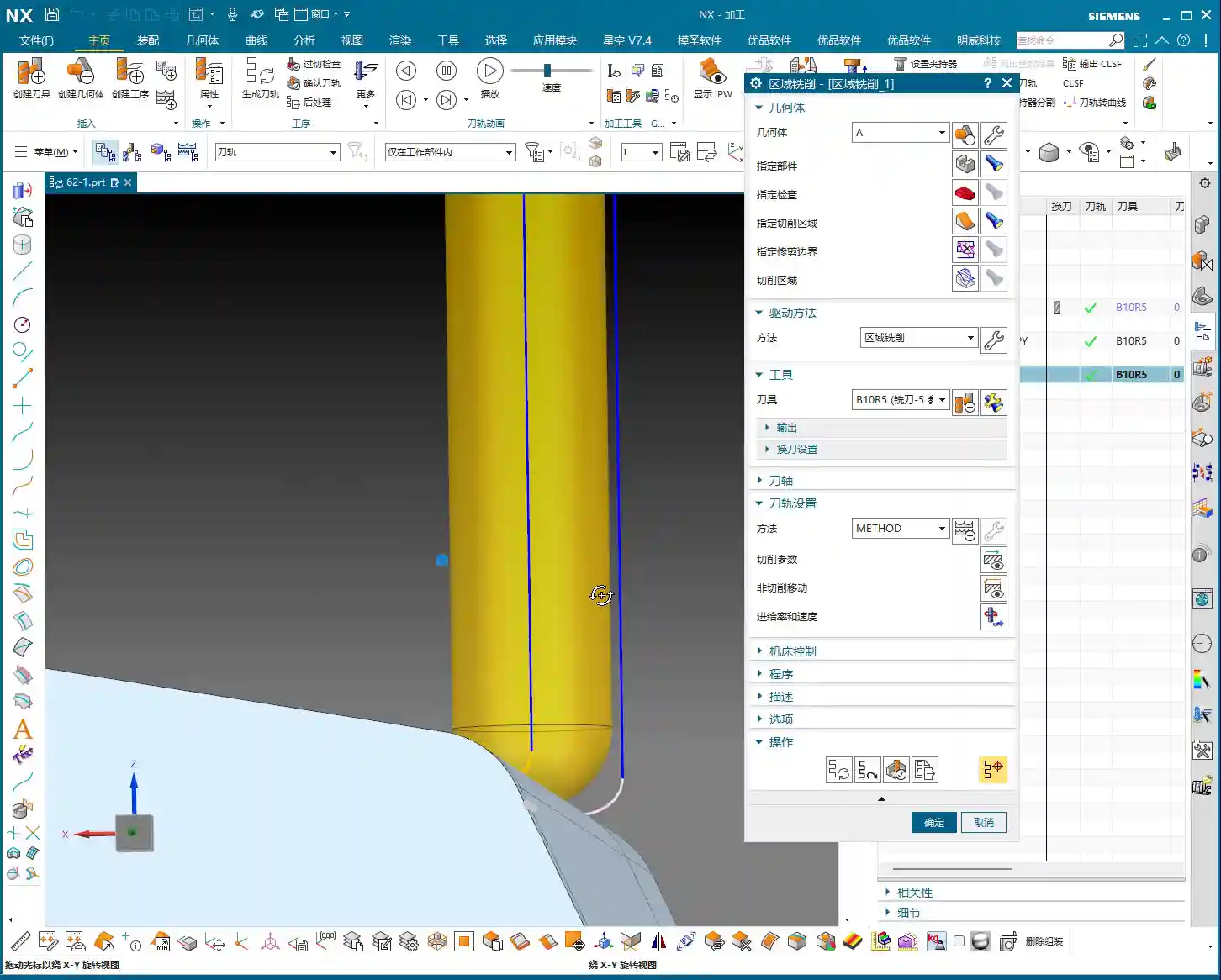
    One-Way Machining: Low Efficiency, Best Used Sparingly

    “Listen up. This kind of one-way machining might occasionally be used in our shop for certain linear, narrow areas with specific surface finish requirements. But for general sidewall milling, I’m telling you, the time it spends lifting and retracting is longer than its actual cutting time. You’re wasting machine time, and that’s real money! So, unless it’s a special case, use it sparingly, or even avoid it entirely.”

    Zig-zag Machining: The Foundation of Area Milling

    In contrast, “Zig-zag” machining is the workhorse of area milling. The tool sweeps back and forth like a broom, progressively stepping down in the Z-axis while cutting back and forth in the X or Y direction. It’s highly efficient and versatile. It’s the default in Siemens NX. As we’ve covered before, the parameter settings here are the same, so I won’t elaborate further.
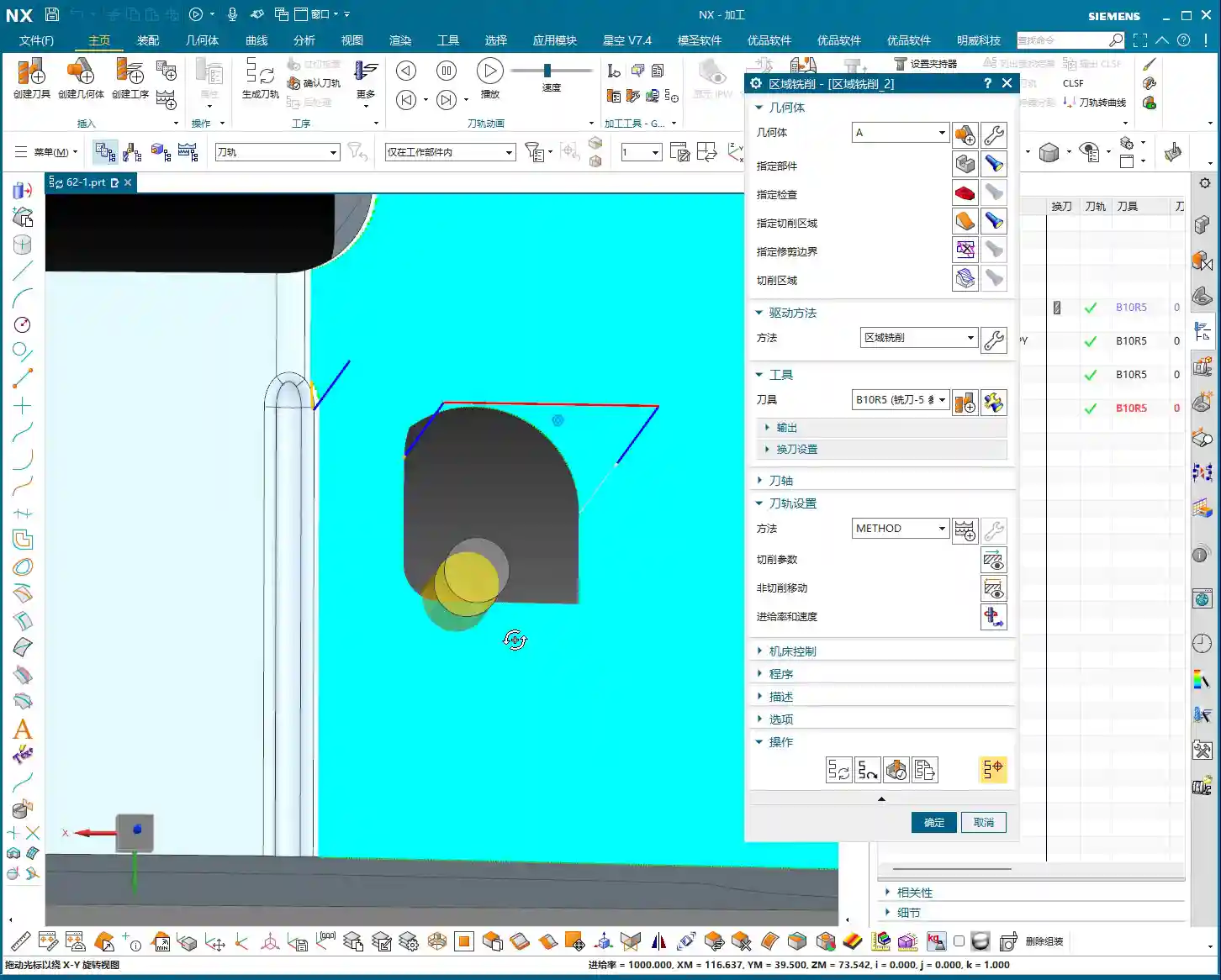
    II. Zig-zag with Ascent: A Small Trick to Improve Surface Quality

    “Within ‘Zig-zag machining,’ there’s a less commonly used option called ‘Zig-zag with Ascent.’ At first glance, you might think this feature is redundant—just a simple tool lift, right? But when used correctly, it’s a ‘hidden helper’ for improving surface quality!”

    What is Zig-zag with Ascent?

    In zig-zag machining, when the tool reaches the end of a path and needs to turn to machine the next line, it doesn’t just move horizontally. Instead, it will first perform a slight upward Rapid move, then move horizontally, and finally Linear interpolation to cut. It’s like a person lifting their leg to change direction instead of dragging their feet.
    Master Wang’s Practical Tip: Combine with ‘Smoothing’ for Enhanced Finishing Pass Quality

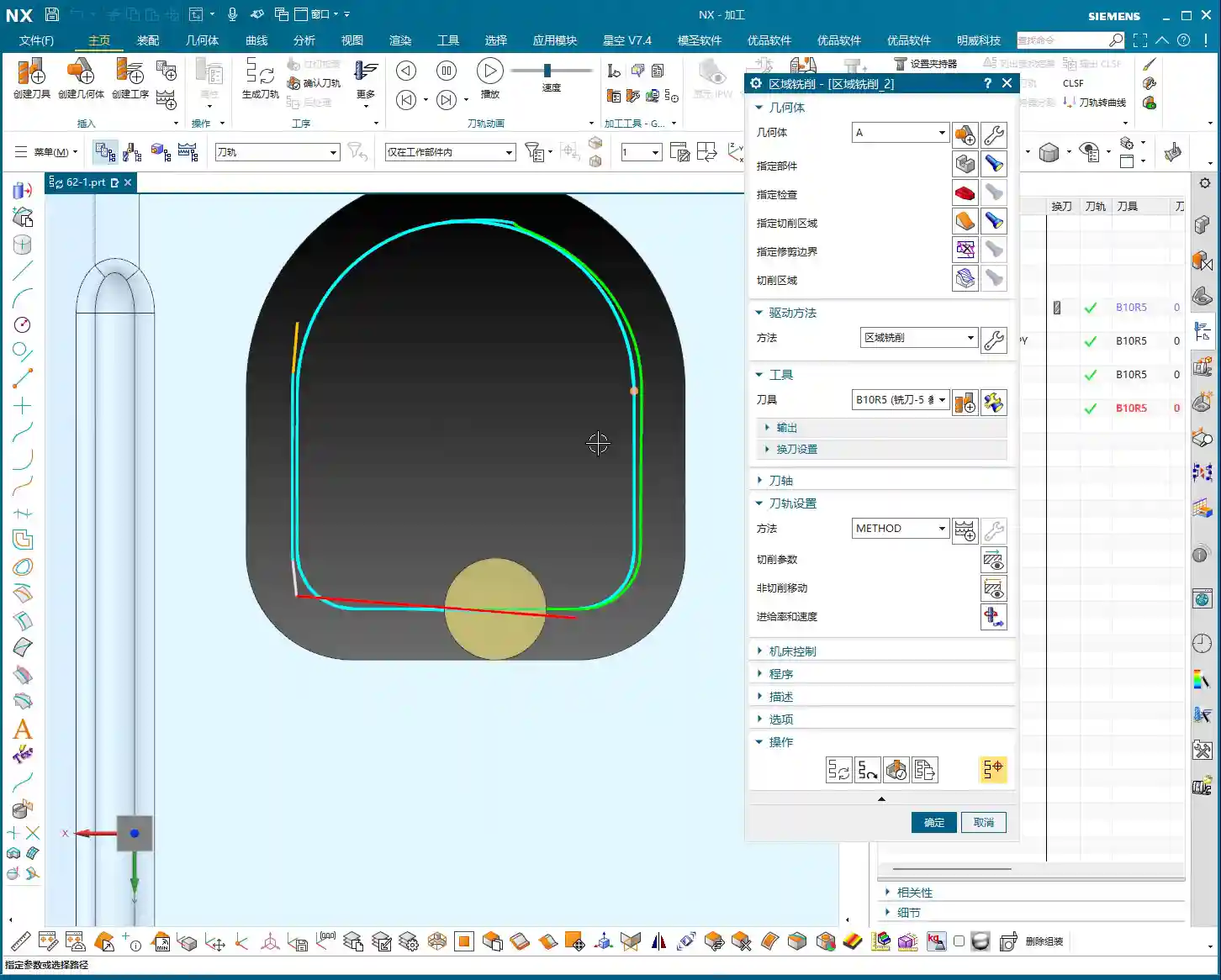
    “This ‘Zig-zag with Ascent’ feature, especially during a finishing pass, delivers exceptional results when combined with the ‘Smoothing’ parameter. I used to have some junior guys constantly complain about ‘drag marks’ or ‘rubbing’ on finished surfaces, and premature tool wear. One look at their toolpaths, and it was just standard zig-zag, with messy, dragging movements in the corners.

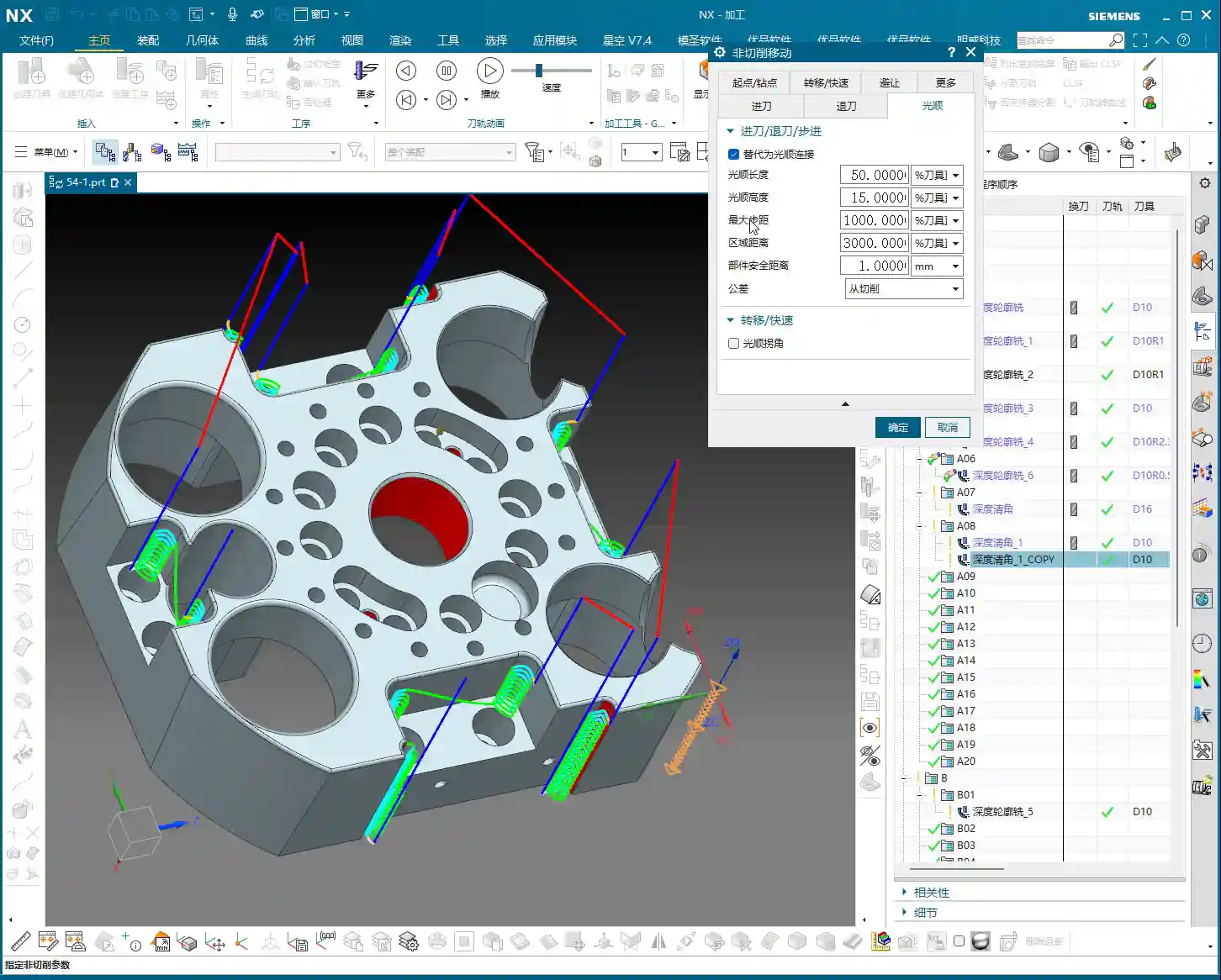
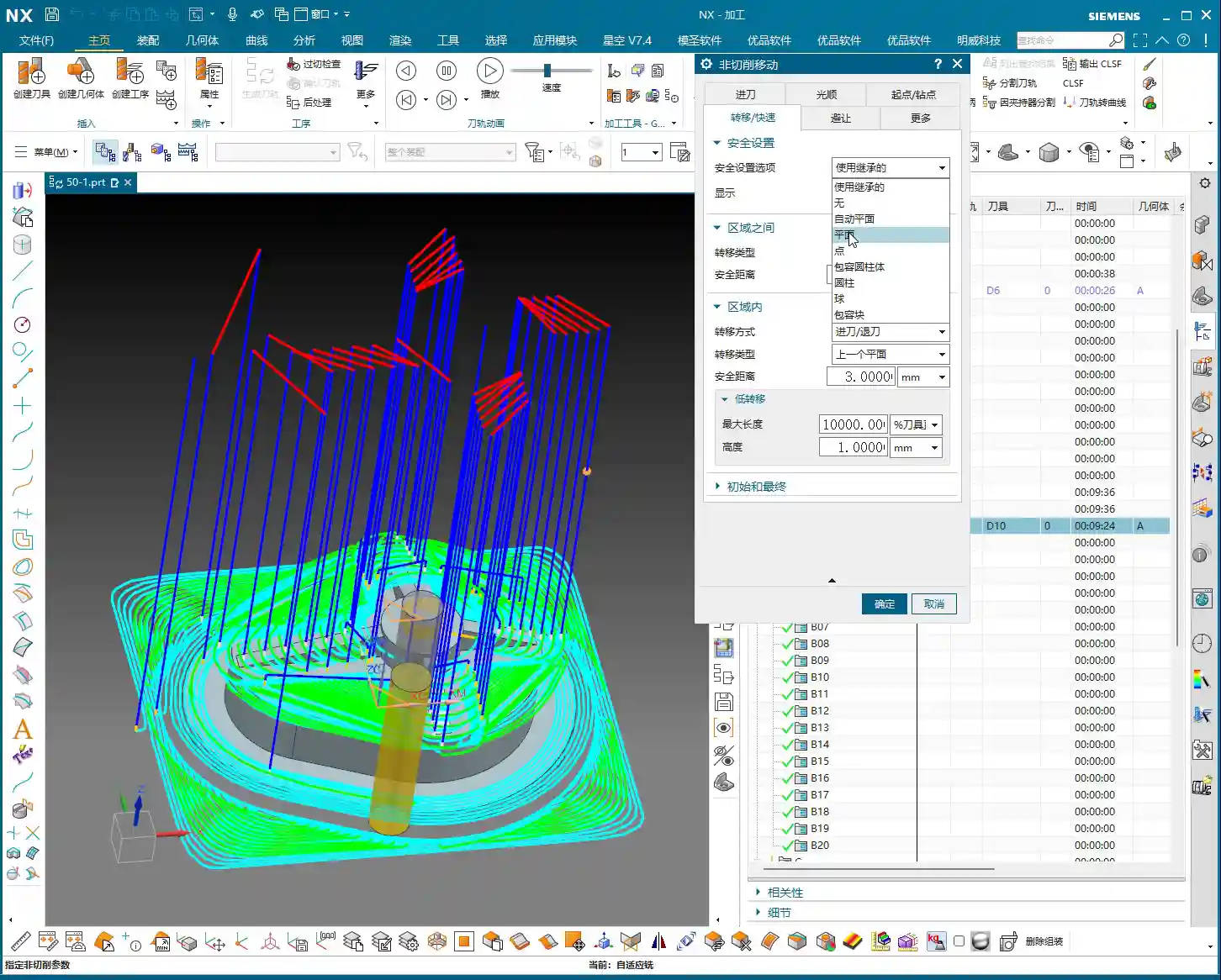
    At that point, you’d enable the ‘Smoothing’ function within ‘Non-cutting Moves,’ and adjust parameters like ‘Maximum Stepover’ for smoothing (e.g., I’m setting it to 5000 here – this is just a demo value; adjust based on actual conditions). You’ll notice the tool performs a subtle lift when transitioning between toolpaths. This lift isn’t about how high the tool jumps; it’s about momentarily disengaging the cutting edge from the material before retracting, preventing secondary friction and drag marks during the return traverse. For mirror finishes or parts with extremely high surface quality demands, this small adjustment can save you a lot of polishing and buffing work, elevating the product’s quality!”
    III. Core Distinction: Machining Logic for Non-Steep vs. Steep Areas

    Now, let’s talk about today’s main event – “Steep” and “Non-Steep” areas. These two concepts are the most easily confused and problematic aspects of area milling.

    ‘Non-Steep’ Areas: The Preferred Choice for Shallow Slopes

    “Non-Steep” area machining, as the name implies, is used for machining areas with relatively shallow slopes. Its toolpaths typically run along the part’s contours or parallel to the XY plane, progressively stepping down. This is the first choice for most flat surface milling and shallow pocket milling. The logic here is: the tool’s bottom cutting edge is primarily engaged, with the side cutting edge playing a secondary role.
    ‘Steep’ Areas: The Go-To for Sidewalls and Deep Cavities

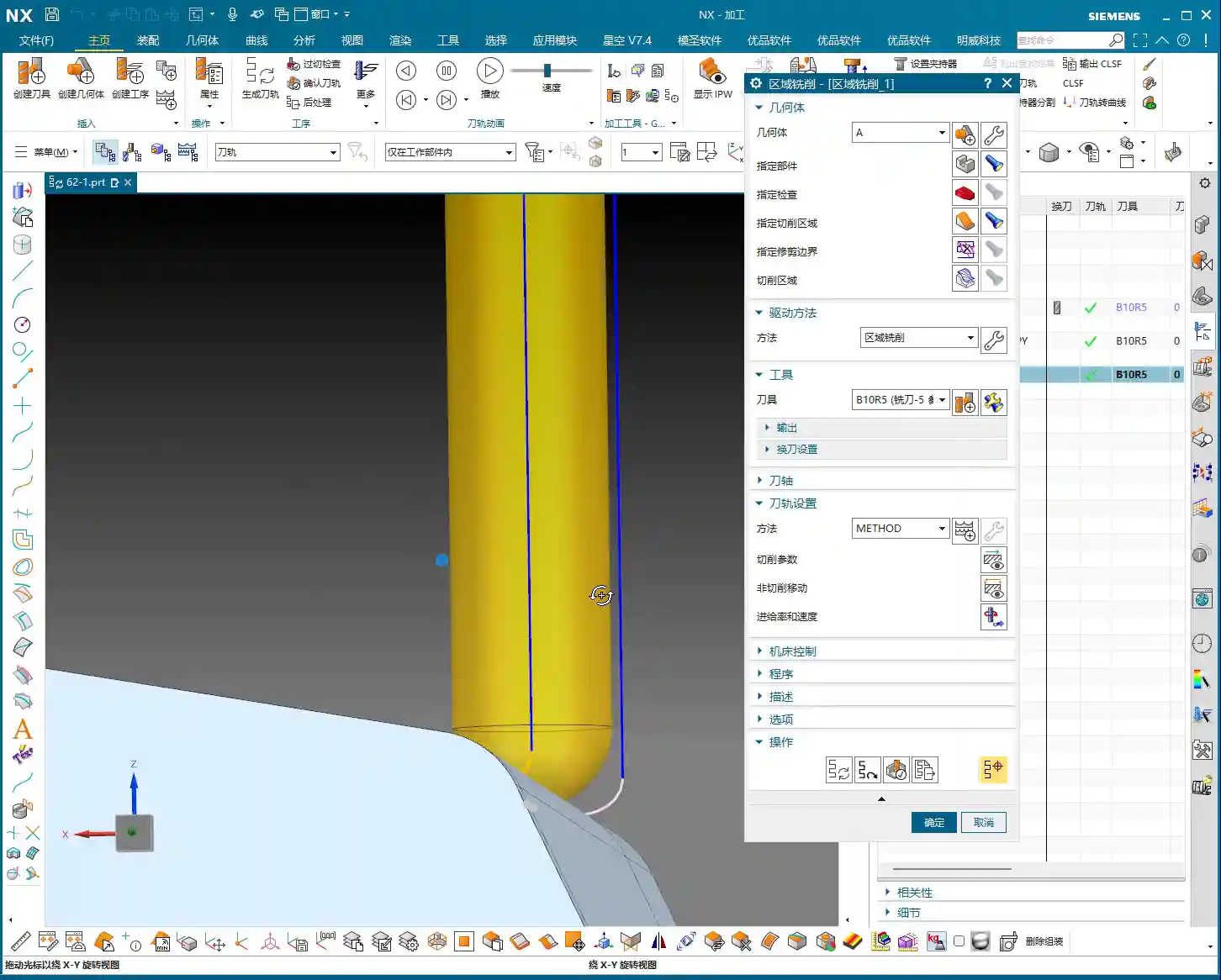
    Conversely, “Steep” area machining is specifically designed for tackling very steep slopes, near-vertical sidewalls, or deep cavities. Its toolpaths typically run along the steep surface parallel to the Z-axis, or step down perpendicular to the tool axis. In this scenario, the tool’s side cutting edge is primarily engaged, with the bottom cutting edge playing a secondary role. This method better utilizes the cutting efficiency of the tool’s side edge, ensuring sidewall perpendicularity and surface quality.

    Master Wang’s Hard-Learned Lesson: The ‘Angle Limit’ Pitfall!

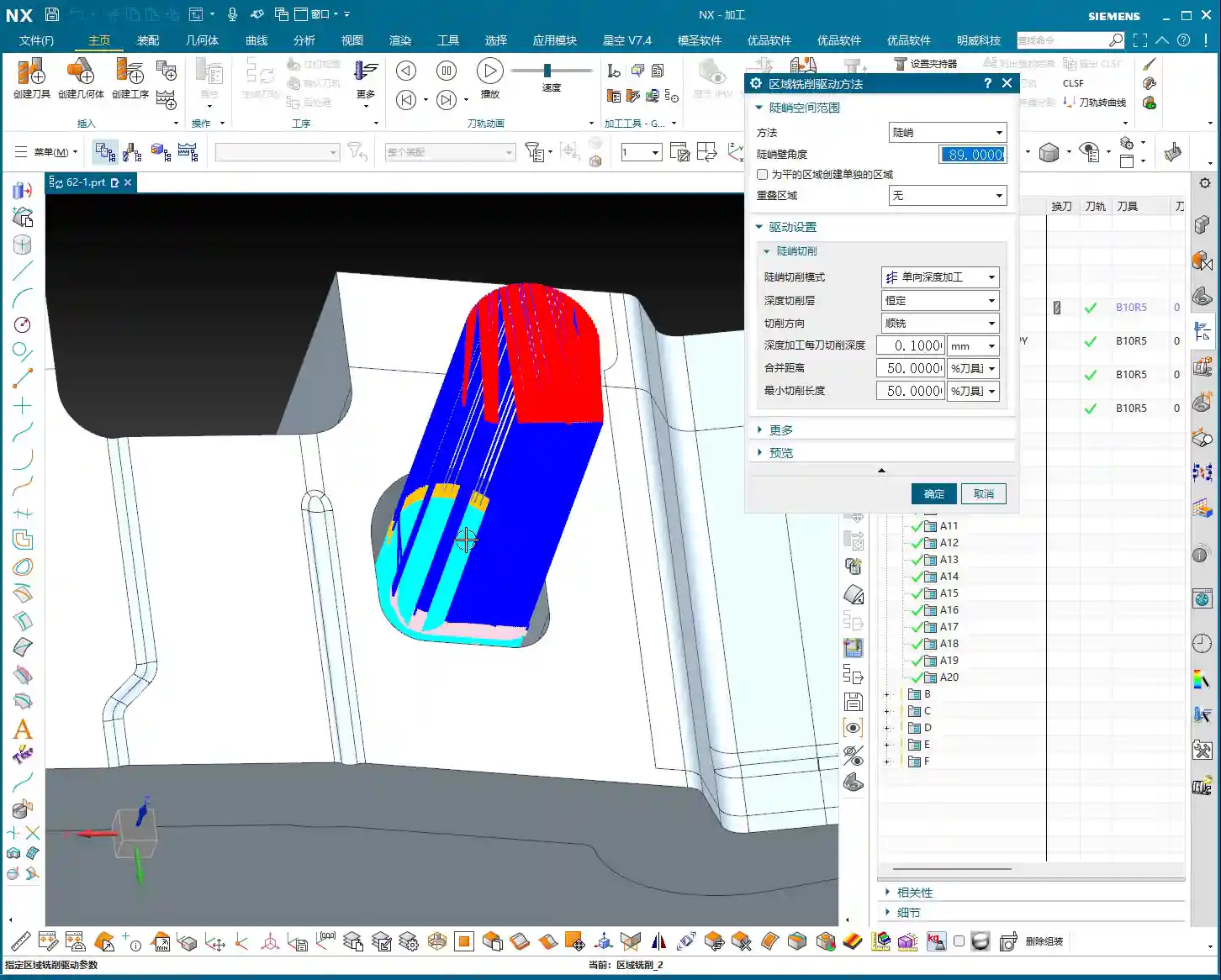
    “Listen up, the most common problem area is the ‘Angle Limit’! In Siemens NX, whether for ‘Non-Steep’ or ‘Steep,’ there’s an angle range setting. For example, you set a threshold angle of, say, 65 degrees.
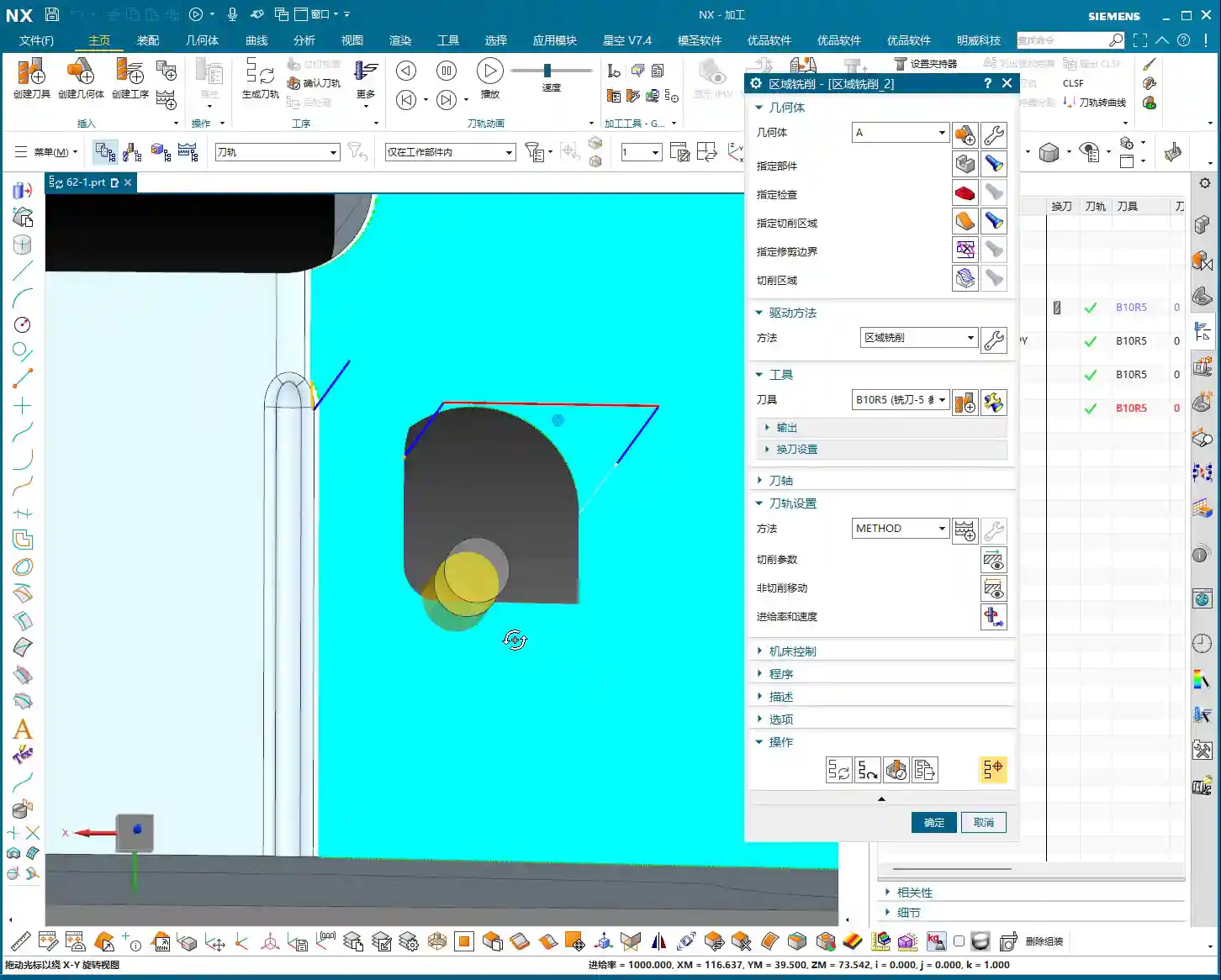
    • If you select ‘Non-Steep Area’ machining, it will only machine areas with a slope less than 65 degrees.
    • If you select ‘Steep Area’ machining, it will only machine areas with a slope greater than 65 degrees.

    The angle value might be the same, but the machining range they represent is completely opposite! I’ve seen countless newcomers try to machine a near-90-degree vertical wall using ‘Non-Steep’ and then set the angle limit to 89 degrees. The software sees, ‘only angles below 89 degrees are considered non-steep,’ so your 90-degree face won’t be machined. What’s worse, even if you loosen the limits and force it to machine, what kind of machining is it to use the bottom of a flat end mill to scrape a vertical wall? That’s destroying tools and ruining parts! High chatter, poor surface quality, short tool life – your costs will skyrocket!

    IV. Practical Drill: How to Select and Set Up Correctly

    Let’s dive straight into practical operation.
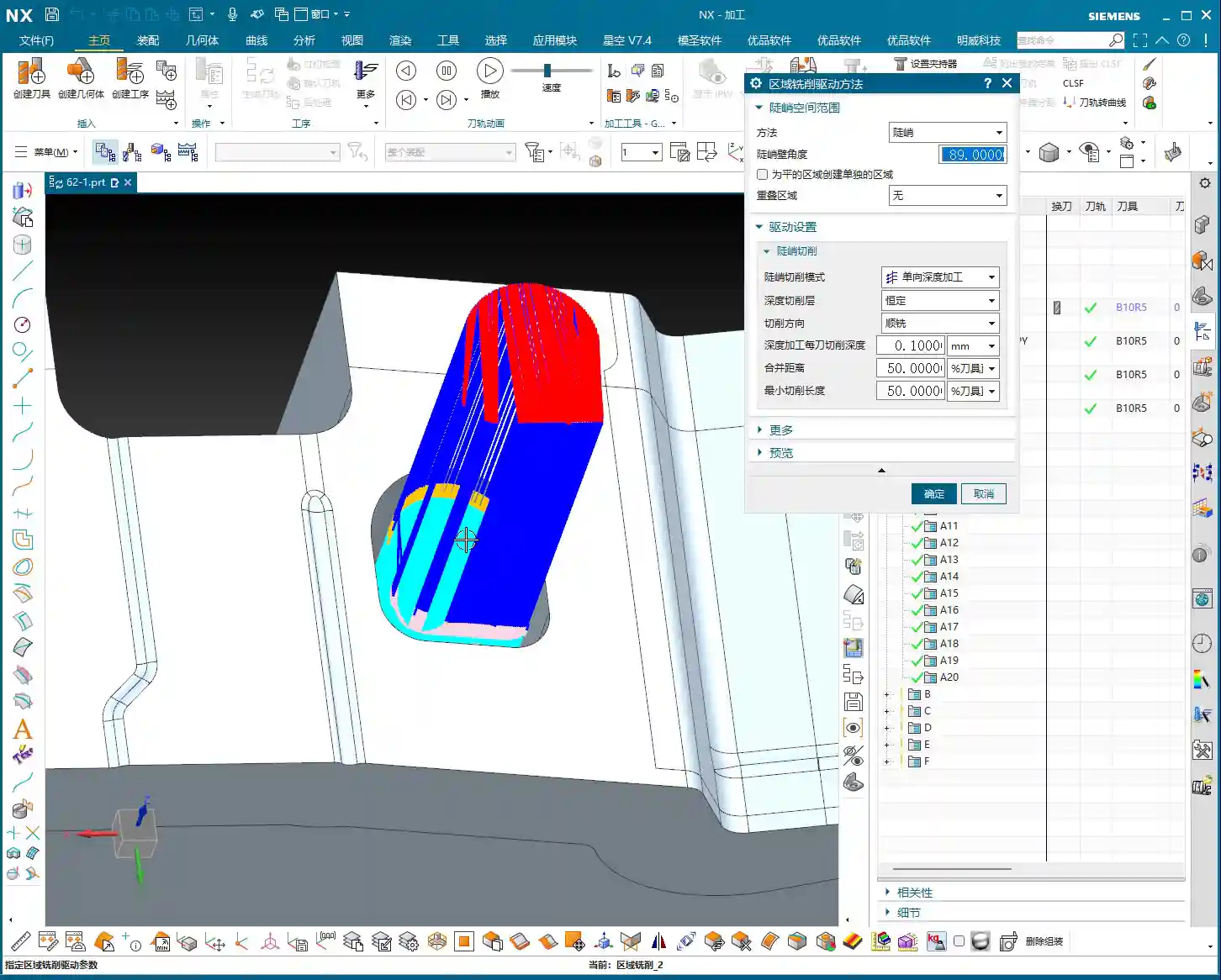
    Pitfalls of Non-Steep Area Machining

    “As you just saw, I selected a cavity that looked quite steep, but the software defaulted to ‘Non-Steep’ machining. The resulting toolpath looked like ‘climbing a ladder’ on a vertical surface, going down and up, using the tool’s bottom edge to rub against the sidewall. I’m telling you, this kind of toolpath is absolutely unacceptable in production! Especially on complex surfaces, the tool often floats in the air or only uses its tip to cut. Not only is efficiency low, but the surface can also be scarred.

    So, when you encounter such steep areas, you can’t just stubbornly force a non-steep approach. In these situations, we typically use helical milling (cutting down gradually with the side edge), or even more advanced smooth contour milling, paired with specialized tooling, to achieve high efficiency and quality.”
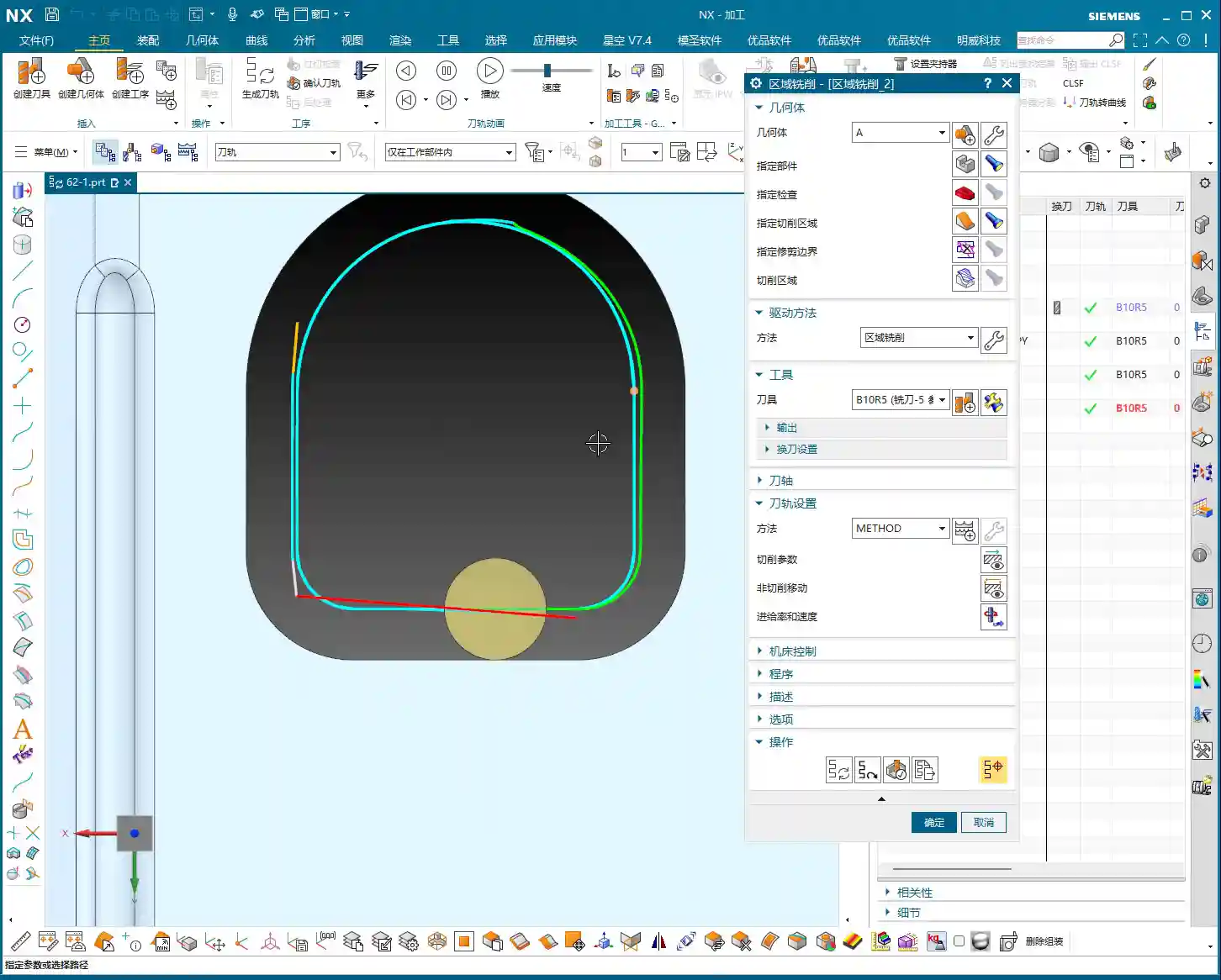
    The Correct Approach for Steep Area Machining

    “When you switch the machining method to ‘Steep Area,’ you’ll immediately see the toolpath change. It will obediently follow the steep wall, gradually stepping down with a small ‘Depth of Cut (DOC)’ per pass. For instance, we set the ‘Depth of Cut (DOC)’ here to 0.1mm or 1mm (actual value depends on material and accuracy requirements) – this is the golden rule for machining sidewalls.

    In this mode, the tool’s side edge is fully utilized, cutting forces are even, machining is stable, and both surface quality and tool life are ensured. Remember, for steep areas, you must use a steep strategy! Don’t try to find a ’roundabout solution’; you’ll only be digging yourself a hole.”

    Non-Cutting Moves: Optimizing Entry and Exit for Open Areas

    In the “Non-cutting Moves” settings, in addition to the “Smoothing” we discussed earlier, there are also entry methods for “Open Areas.” Here are a couple of options:

    • Parallel to Tool Axis: The tool enters or exits the cut with a smooth arc or line, parallel to the tool axis. This method provides stable trajectories, is suitable for finishing passes, and reduces impact.
    • Perpendicular to Tool Axis: The tool enters or exits the cut perpendicular to the tool axis, usually appearing as a straight upward and downward lift (i.e., “ascent” behavior). This is particularly effective in situations requiring rapid disengagement from the cutting zone or to avoid sidewall friction.

    “These two, ‘Parallel to Tool Axis’ and ‘Perpendicular to Tool Axis,’ are the most commonly used entry methods when dealing with open areas. Switching flexibly based on part geometry, material, and surface requirements can significantly boost machining efficiency and surface quality. Don’t underestimate these details; this is what separates you from those ‘programmers’ who just click buttons!

    Prioritizing Machining Modes

    To summarize, there are four most commonly used machining modes in area milling:

    1. Zig-zag: Most common, highly efficient, suitable for roughing and semi-finishing of most non-steep areas.
    2. Follow Periphery: Suitable for specific contours, where the toolpath follows the boundary.
    3. Helical: Often used for deep cavity machining; smooth entry, less chip accumulation.
    4. Zig-zag with Ascent: Suitable for finishing passes, reduces drag marks, and improves surface quality.

    “Among these four, ‘Zig-zag’ is used the most and is practically the default option for area milling. ‘Zig-zag with Ascent,’ as I mentioned, is a great aid for finishing passes. As for other modes like one-way, they can largely be shelved; production efficiency dictates everything!”

    Summary: Pitfall Avoidance Guide

    1. Steep vs. Non-Steep: The core lies in angle range and cutting edge engagement. Non-steep machining uses the tool’s bottom edge for flat surfaces; steep machining uses the tool’s side edge for sidewalls. The logic for their angle limits is opposite, so be sure to distinguish them!
    2. Don’t try to force a “Non-Steep” strategy on “Steep” areas. Attempting to machine steep regions by loosening non-steep angle limits typically leads to uneven tool loading, poor surface quality, and drastically reduced tool life. When a “Steep Area” strategy is required, use it diligently.
    3. “Zig-zag with Ascent” is a powerful tool for finishing passes. Combined with the “Smoothing” function, it effectively reduces drag marks and improves the finishing quality of complex surfaces.
    4. Understand the logic of non-cutting moves. “Parallel to Tool Axis” is primarily for smooth tool entry, while “Perpendicular to Tool Axis” is for rapid lift-off and disengagement in specific scenarios. Flexible selection based on actual conditions optimizes toolpaths and reduces risks.
    5. Combine theory with practice. No matter how good a software simulation looks, ultimately you need to observe the cutting sparks on the machine, listen to the cutting sound, and examine the actual part’s results. More contemplation and hands-on experience are what truly make you skilled!

    👤 About the Author:
    The author is a veteran CNC machining professional with 15 years of industry experience, specializing in UG NX programming. This article is an original work representing personal practical insights.

    ⚠️ Copyright Notice: Unauthorized reproduction or distribution without prior communication is strictly prohibited.
  • NX Fixed Contour Milling In-depth: Non-steep Region Machining and Stepover Optimization – Master Wan

    📝 Key Takeaways: Master Wang teaches you NX Fixed Contour Milling for non-steep regions, deeply analyzing the “Edit button” parameters. Learn stepover optimization, master the secrets of “On Component” and “First Plane” to avoid toolpath pitfalls, and improve machining efficiency and part accuracy.

    Hello everyone, I’m Master Wang. Picking up where we left off, once the program is generated, it’s time for fine-tuning and optimization. Listen closely: in this machining industry, textbook theory is fundamental, but what truly allows you to make a living and produce quality work is the practical know-how and deep understanding of parameters that you won’t find in books.

    Choosing Drive Methods and Avoiding Template Traps

    As we’ve discussed before, after generating a machining program, some areas will require modification. Generally, we rarely touch the main program itself, as it’s often a very simple framework. So, what exactly do we modify? It’s nothing more than cutting parameters and non-cutting parameters. These two elements are crucial in determining the toolpath and the resulting machining quality.

    Fixed Contour Milling: The Essence of Drive Methods

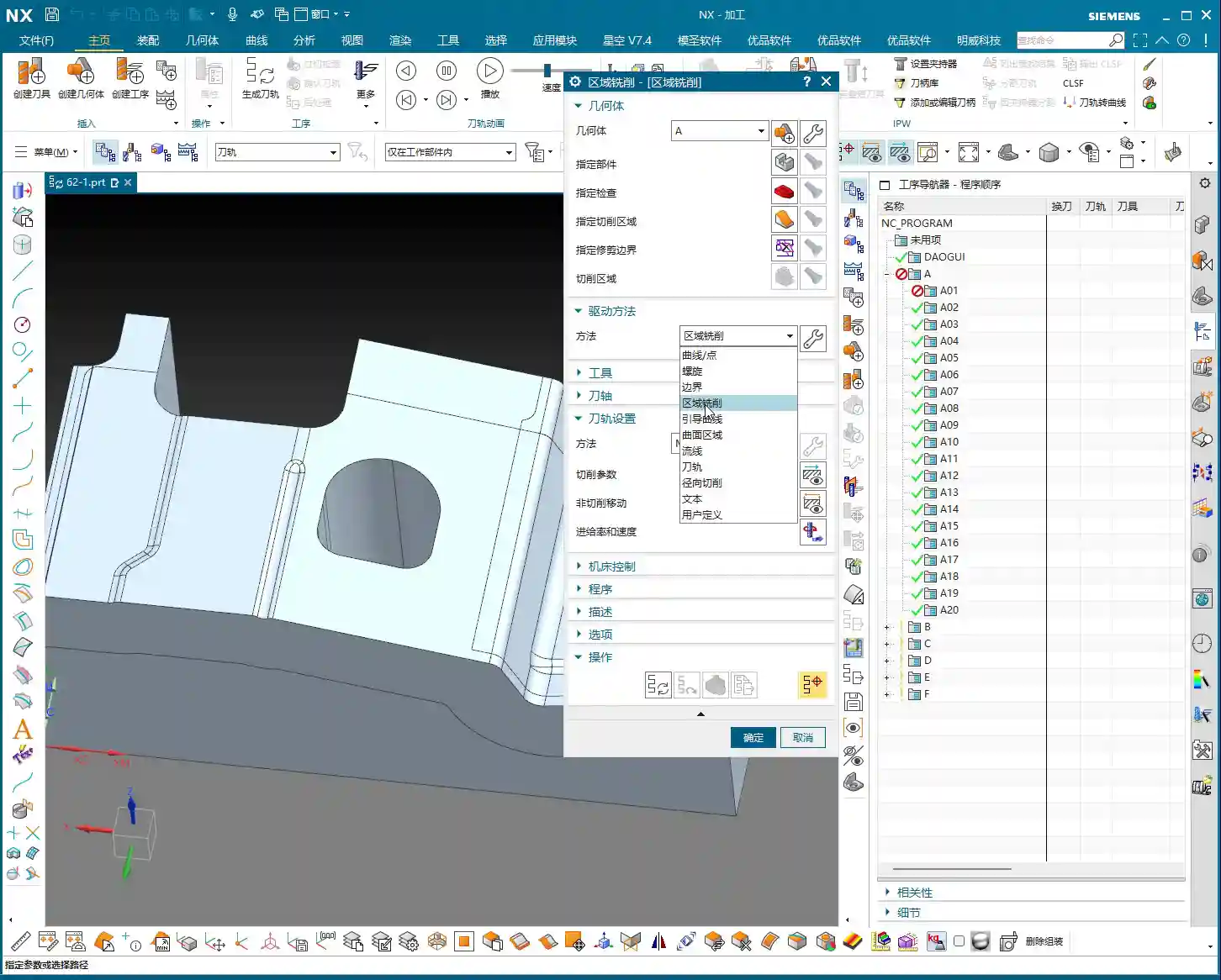
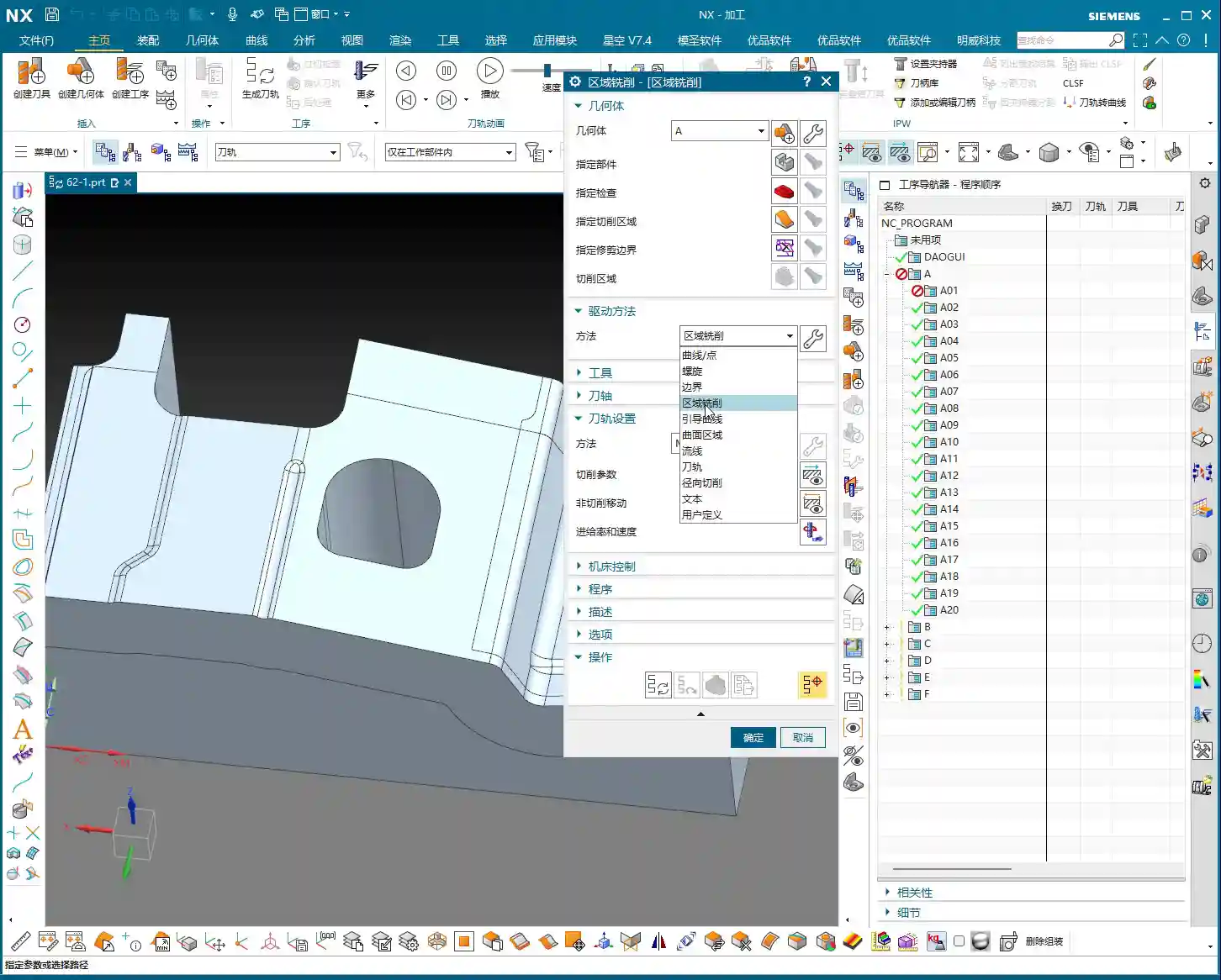
    Today, we’ll focus on drive methods. The “Surface Milling” method we’re currently using is actually a type of “Fixed Contour Milling” in NX. Don’t underestimate it; Fixed Contour Milling has many intricacies. Things like “Curve Point,” “Boundary,” “Guide Curves,” and so on—these are all its “sub-methods.”

    Template Rules: Do Not Alter Casually

    Here’s a major pitfall you need to engrave in your mind: if you’re using the template I set up for you to generate programs, the drive method was already locked in during its creation—for example, it was specifically designed for “Surface Milling.” So, even if you see options in the parameter interface to change to other methods, such as “Curve Point” or “Guide Curves,” never change them arbitrarily!

    Why? Because when I created the template, all parameters and logic within it were set up specifically for the “Surface Milling” method. If you change it, it might appear different on the surface, but all the underlying associated parameters will go haywire! At best, the toolpath will look messy; at worst, it will lead to a tool crash and scrap the part, leaving you with nothing but regret. Just remember: during the initial learning phase, if you want to use a specific method, directly select the corresponding operation for that method; don’t mess around with parameters in the dialogue box. Once you gain enough experience, become a master, and fully understand the internal logic of NX, then you can start experimenting on your own. Sharpening the axe doesn’t delay chopping wood; a solid foundation is essential for long-term success.

    The ‘Edit’ Button: Your Parameter Adjustment Command Center

    Now, let’s focus on the most important button—that “little white hand” (which is the “Edit” button). In all Fixed Contour Milling operations, whether “Surface Milling” or anything else, ninety percent of the critical parameters we need to change or adjust are located within this ‘Edit’ button. Consider it the “central brain” for machining this program; its every action directly impacts the final part quality and machining efficiency. As for other parameters, either the defaults are fine, or we’ve covered them previously, so I won’t elaborate further here.

    The Machining Essence of Non-steep and Steep Regions

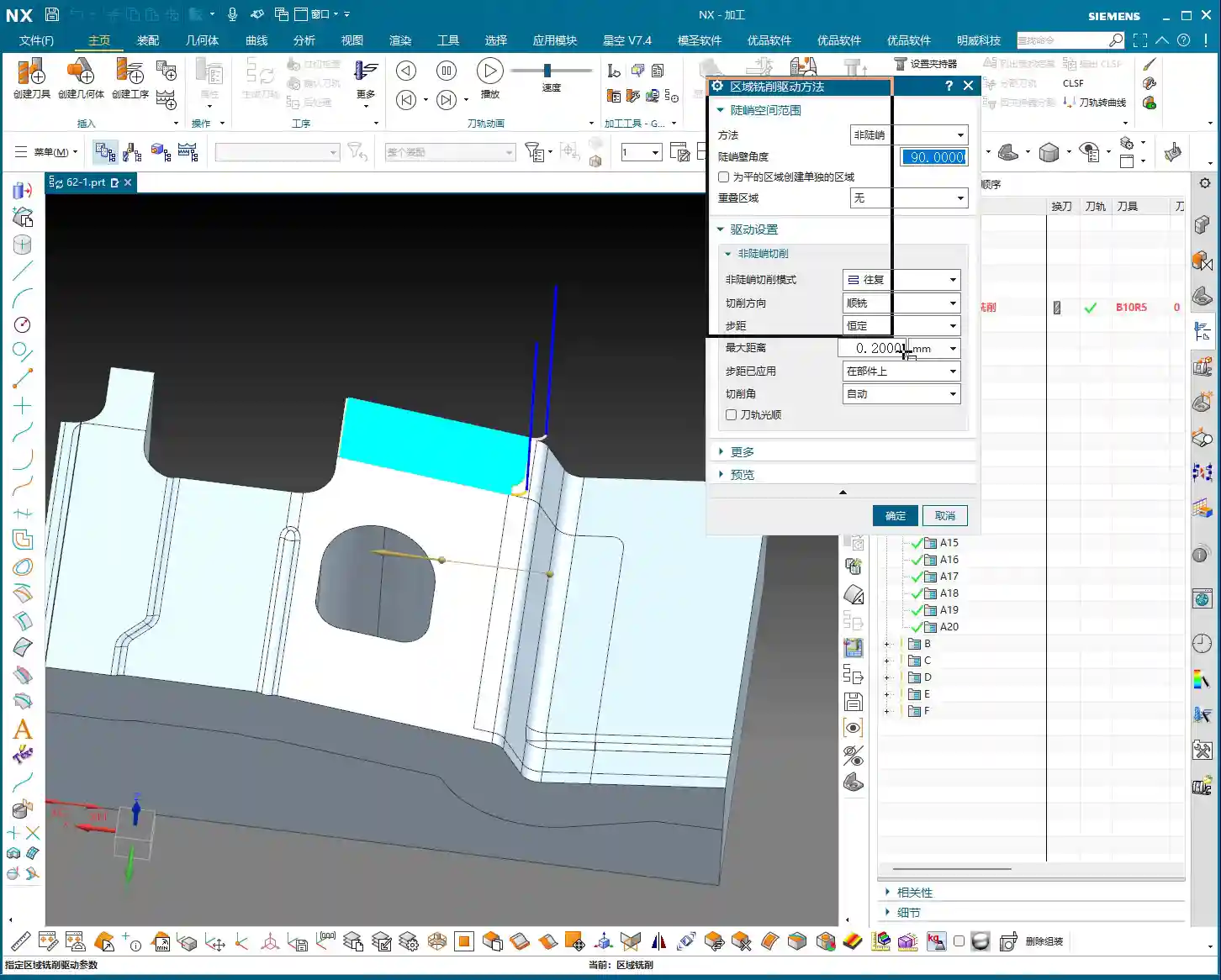
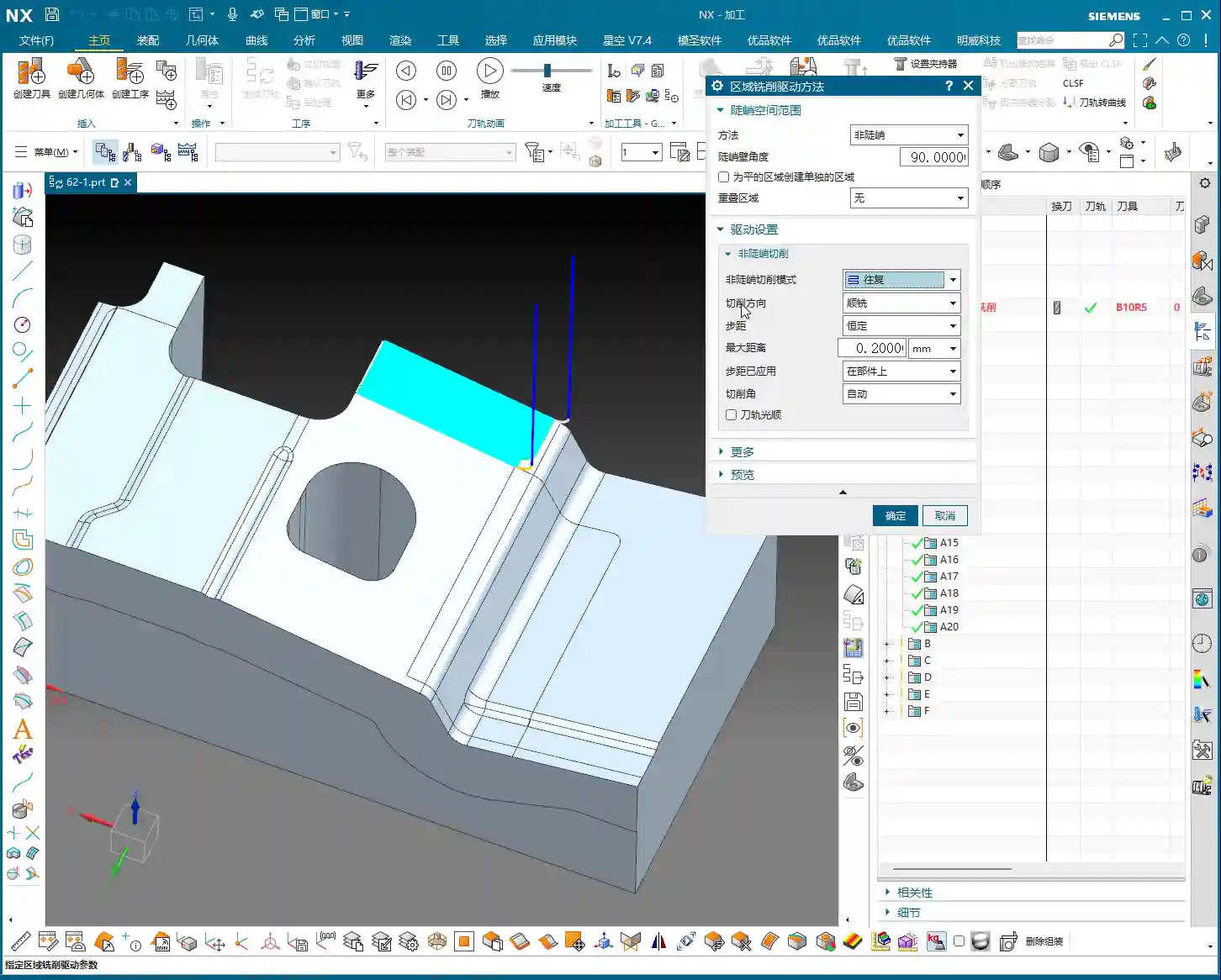
    Clicking the ‘Edit’ button, the first thing you’ll see is ‘Method’. Currently, our template defaults to ‘Non-steep’. So, what exactly do ‘Non-steep’ and ‘Steep’ mean?

    • Non-steep: Simply put, these are areas with gentle slopes, relatively flat regions. Imagine climbing a mountain where the incline isn’t too severe. In NX, if a surface has a small inclination angle, it’s considered a “Non-steep” region.
    • Steep: Conversely, these are areas with very steep slopes, even nearly vertical regions. Like climbing a mountain’s sheer cliff face. In NX, if a surface has a large inclination angle, it falls into the “Steep” region category.

    Since we’ve selected the “Non-steep” method, you can temporarily ignore the “Steep Angle” settings, as they are not relevant to our current chosen method. Later, we’ll delve into “Steep and Non-steep” machining and “Steep Machining.” Those are different modes; don’t get them confused for now.

    Non-steep Machining Mode and Cutting Direction

    Within “Non-steep Machining Mode,” you’ll find several options: “Zigzag,” “One-way,” “Profile,” “Along Periphery,” and so on. While there seem to be many, only a few are commonly used. These modes determine the tool’s cutting path. We won’t go into detail on each today; let’s primarily discuss cutting direction.

    Cutting direction offers two types: “Climb Milling” and “Conventional Milling.” In our “Contour Milling” scenario, truthfully, the difference in results between Climb Milling and Conventional Milling is minimal, unlike in Face Milling where the distinction is much clearer. Therefore, in general, just stick to the default; there’s no need to specifically change it. You won’t see much change if you do, so don’t waste time looking for trouble.

    Practical Optimization of Stepover Parameters

    Next up is the main event—Stepover. Stepover is the lateral distance the tool moves with each pass; it directly impacts your part’s surface roughness and machining efficiency. Our commonly used stepover type is “Constant” (i.e., fixed stepover).

    So, what’s the appropriate setting for “Constant Stepover”? There’s no absolute value; it depends on your material, tooling, part accuracy, and surface finish requirements. However, based on my 15 years of experience, I can give you a practical range:

    • For finishing passes, the stepover is generally set between 0.15mm and 0.3mm.
    • If extremely high surface finish is required, it might need to be even smaller, for example, 0.1mm or less.
    • If you’re roughing or the surface requirements aren’t strict and you just want to quickly remove material, then the stepover can be increased, for example, to 0.4mm or 0.5mm.

    Remember this principle: The smaller the stepover, the smoother the machined surface, but the longer the machining time; the larger the stepover, the higher the machining efficiency, but the rougher the surface. You must learn to balance these factors based on the actual situation to find the optimal sweet spot. This is the true skill in machining!

    Stepover Application: On Component vs. First Plane

    Finally, let’s talk about the two options in “Stepover Application”: “On Component” and “First Plane”. At first glance, these two options might seem similar, but in practice, especially when machining complex surfaces, their impact can be significant!

    • On Component: This is the default setting in NX and the one we use most frequently. It means the tool’s stepover is measured and applied directly on the actual surface of the part. The tool will follow the part’s surface as closely as possible, ensuring consistent stepover within the actual cutting area. In this mode, the toolpath adjusts according to the surface’s geometry, striving for uniform machining across the entire part surface.
    • First Plane: This option is quite interesting. When you select “First Plane,” NX will prompt you to choose a plane, and then it will project the tool’s stepover onto this plane for calculation, rather than calculating it directly on the part’s surface. This can lead to a problem: on inclined or undulating surfaces, the actual stepover during cutting might deviate from your set value, potentially resulting in uneven toolpaths.

    For instance: imagine you’re machining a wavy surface. If you use “On Component,” the tool will follow the undulations of the wave uniformly. But if you use “First Plane” and select a horizontal plane, the tool’s stepover will be uniform in the horizontal direction, but at the crests and troughs of the wave, the actual cutting distance might increase or decrease. While sometimes the toolpath differences aren’t obvious to the naked eye, these discrepancies will become apparent at the part’s edges, corners, or specific geometric features, affecting the final surface quality and potentially causing tool marks.

    Therefore, my recommendation is that unless there are specific requirements, generally use “On Component”. If you absolutely must use “First Plane,” then you must very carefully inspect the toolpath, and even verify it through test cuts. Don’t just rely on the software’s flawless simulation; you need to observe the cutting sparks and feel the part’s surface—those are the real-world tests!

    Summary: Pitfall Avoidance Guide

    1. Templates are paramount, do not alter methods: When using preset templates, do not arbitrarily change the drive method within the parameter dialogue box. During initial learning, directly select the operation corresponding to your desired method to prevent internal parameter conflicts.
    2. The ‘Edit’ button is key: All detailed parameters for Fixed Contour Milling are located within the “Edit” button. Mastering it means mastering the key to toolpath optimization.
    3. Non-steep is fundamental: Understand the characteristics of “Non-steep” regions. It is our default method for processing most part surfaces.
    4. Stepover requires fine-tuning: Based on part accuracy and surface roughness requirements, set the stepover appropriately (recommended 0.15mm-0.3mm), balancing machining efficiency and quality.
    5. ‘On Component’ vs. ‘First Plane’: The devil is in the details: Prioritize “On Component” to ensure the toolpath closely follows the actual surface. If using “First Plane,” thoroughly inspect the toolpath’s actual effect in complex geometric areas to avoid machining defects.
    6. Practical experience is paramount: Theoretical knowledge is foundational, but hands-on operation, observing cutting sparks, and inspecting part surface quality are the keys to improving your skills and solving real-world problems.

    👤 About the Author:
    The author is a veteran CNC machining professional with 15 years of industry experience, specializing in UG NX programming. This article is an original work representing personal practical insights.

    ⚠️ Copyright Notice: Unauthorized reproduction or distribution without prior communication is strictly prohibited.
  • Siemens NX Fixed Contour Milling Cutting Area Deep Dive: An Experienced Pro’s Practical Secrets and

    📝 Key Takeaways: Master Wang explains the Cutting Area function in Siemens NX Fixed Contour Milling. He focuses on the practical application of toolpath “splitting” and “merging,” emphasizing the importance of upfront CAD modeling to avoid blind CAM operations. He shares real-world experience not found in textbooks, helping the next generation improve machining efficiency and precision.

    Introduction: Straight Talk from the Shop Floor

    Hello everyone, I’m Old Wang. Starting today, we’re diving deep into a crucial module in Siemens NX: Fixed Contour Milling. This feature is used extensively in real-world machining, especially for complex surfaces – you can’t get away from it. Today, we’ll begin with one of its fundamental and core commands: Cutting Area. Listen up, lads, this isn’t something you’ll truly grasp just from reading books. You need to run it on an actual machine, watch the cutting sparks fly, to truly understand it!

    Let me clarify the learning order: first, we’ll master the “Cutting Area,” then gradually move on to others. We’ll set aside those relatively complex and harder-to-understand commands for now. Once we’ve built a solid foundation, we’ll tackle the tough stuff. But don’t underestimate these basic commands; they’re more than sufficient for everyday 3-axis machining. For those special commands, we’ll discuss their “unique tricks” when we get to them.

    Cutting Area: First Look – From Toolpath Generation to Problem Identification

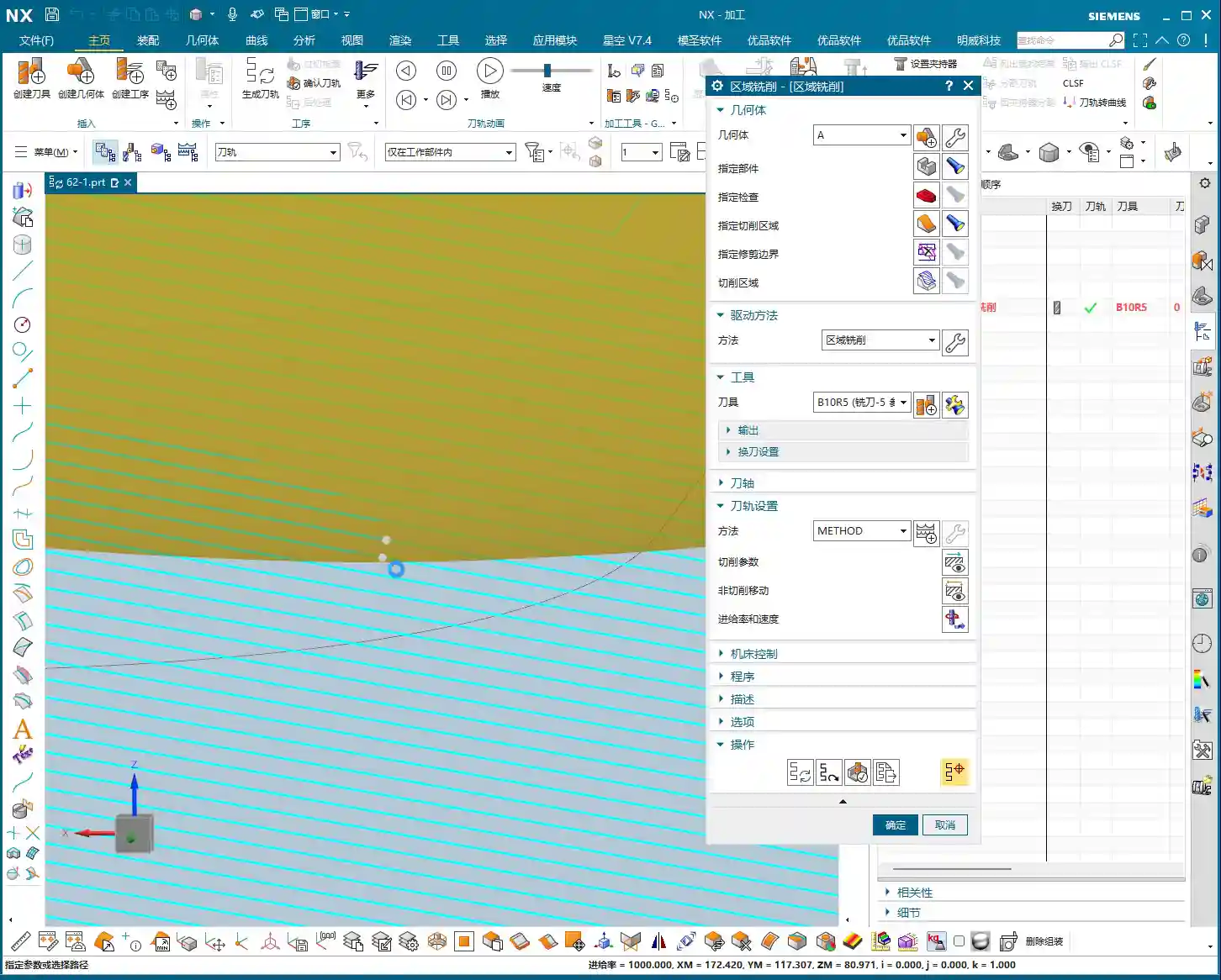
    Let’s get straight to it. In NX, select the “Fixed Contour Milling” operation, then click “Cutting Area.” When the interface opens, it might look familiar, as many parts are similar to the machining operations we’ve covered before. But there are new features too, such as “Drive Method” and the direct “Specify Cutting Area” option. Previously, we mostly used “Specify Part” (or “Specify Body”), but now we can define the machining area with much greater precision.

    Step One: Select Part, Define Area, Select Tool

    First, Step One, as per usual, select the part you intend to machine. If you don’t select the part, you can’t do anything – that’s fundamental!

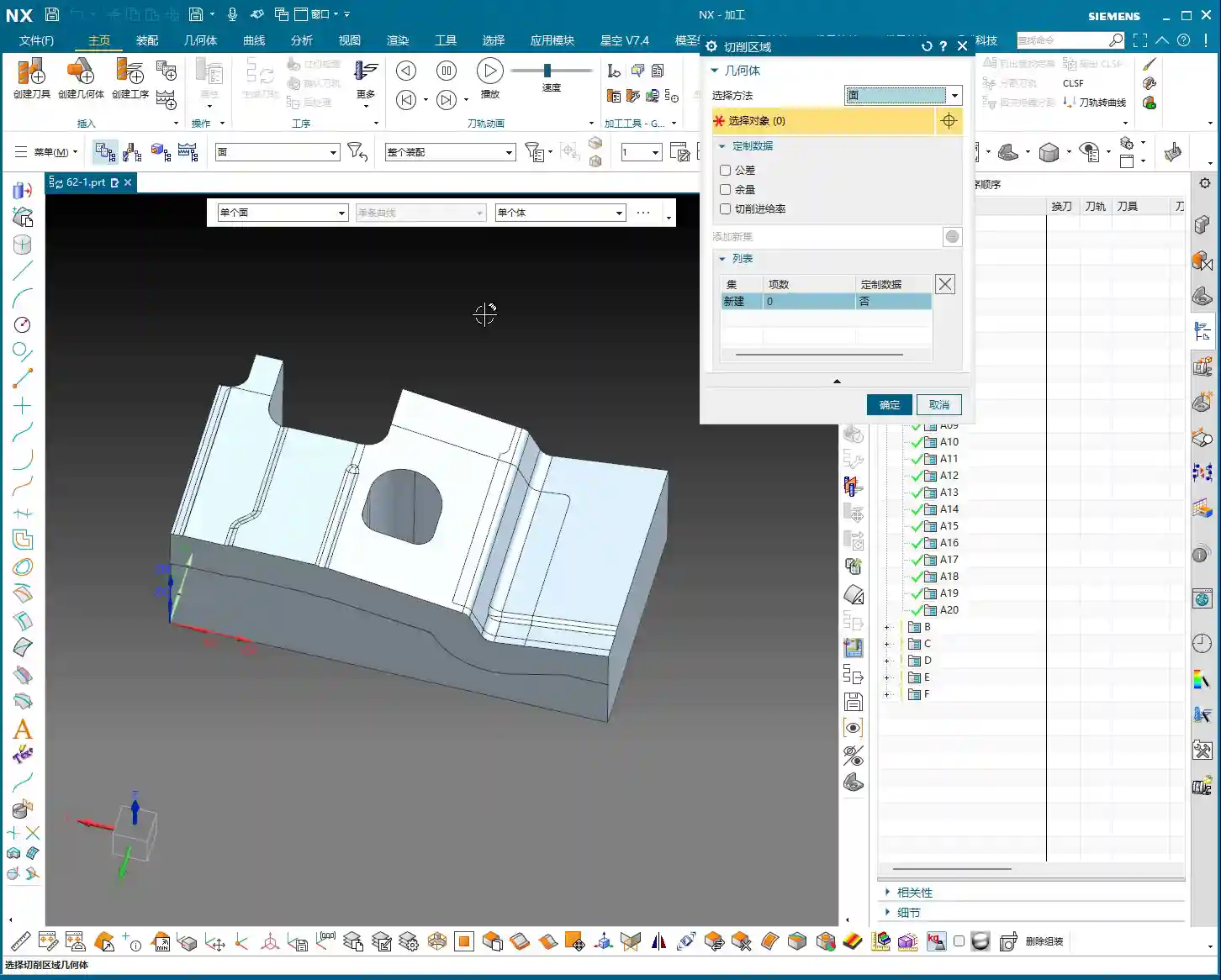
    Next, Step Two, which is today’s main focus – Specify Cutting Area. The meaning is simple: you’re telling the software: “Of this entire part, which specific section do I want to machine? Don’t get it wrong!” Just click on any face you want to machine; for example, if I click this face, it will define that face as the Cutting Area.

    Then, Step Three, select the tool. For “Fixed Contour Milling,” especially for Contour Milling operations like this, we typically use a ball end mill. For example, a B4R5 tool (4mm diameter, 5mm ball radius) is one we commonly use. Once the tool is selected, let’s generate the program!

    Initial Toolpath Evaluation: Limitations of Default Settings

    Once the program is generated, play it back and see if it’s machining along the selected face using a Contour Milling approach. You’ll see it plunges from one side and then contours its way across to machine the other. Clearly, this is a Contour Milling program. The default toolpath might look fine and capable of machining, but everything needs optimization. For instance, consider the entry point. Wouldn’t it be much more sensible to start the cut from the edge of the workpiece rather than plunging directly onto the surface? This reduces impact and extends tool life. Don’t just rely on software simulations; you need to observe the cutting sparks and the actual machining conditions!

    Advanced Cutting Area: The “Secrets” of Splitting and Merging

    Alright, now we’re going to delve into the “Cutting Area” parameters. Open up the operation parameters; the “Specify Part” stuff, you already know that. Let’s jump straight into how this Cutting Area really works.

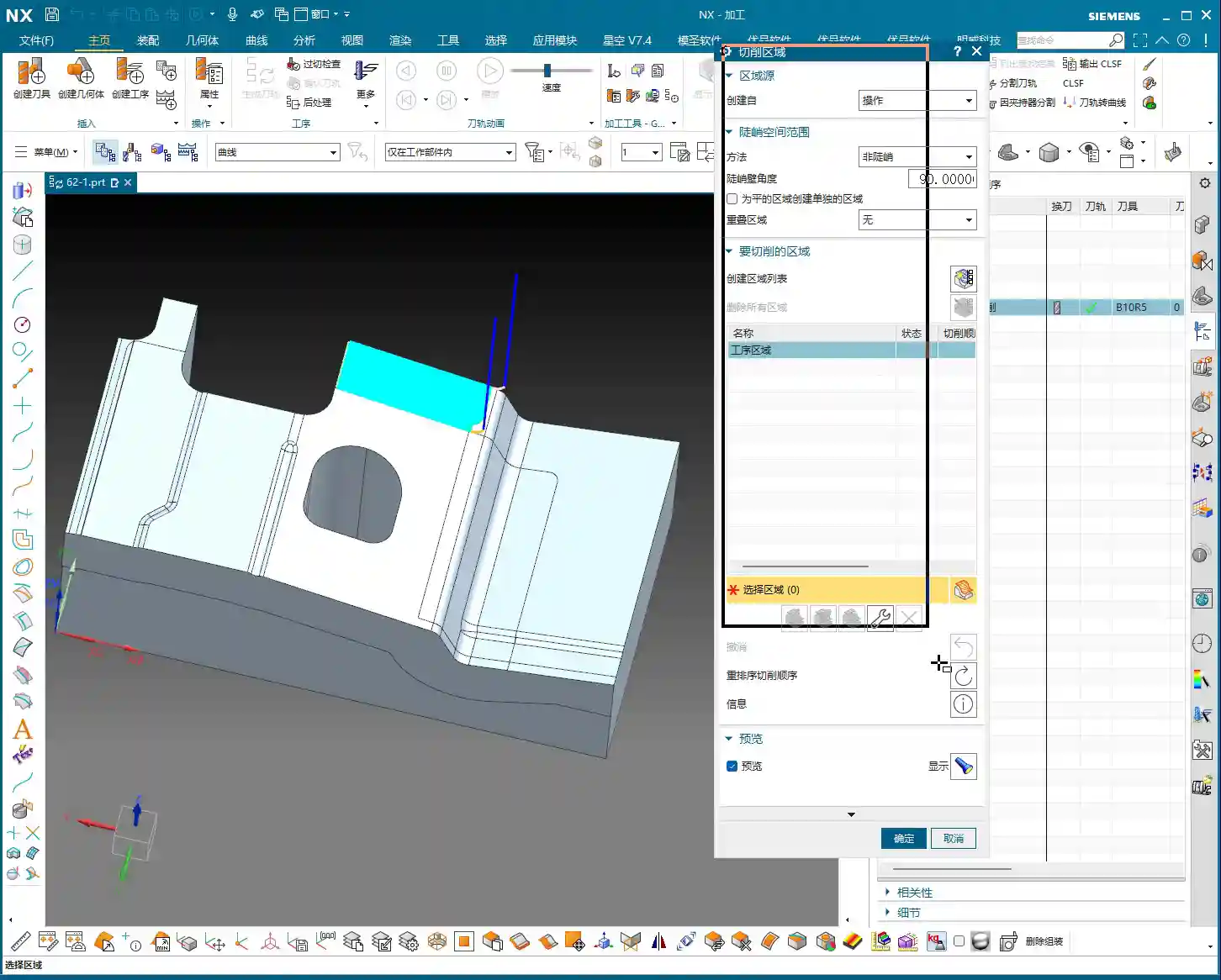
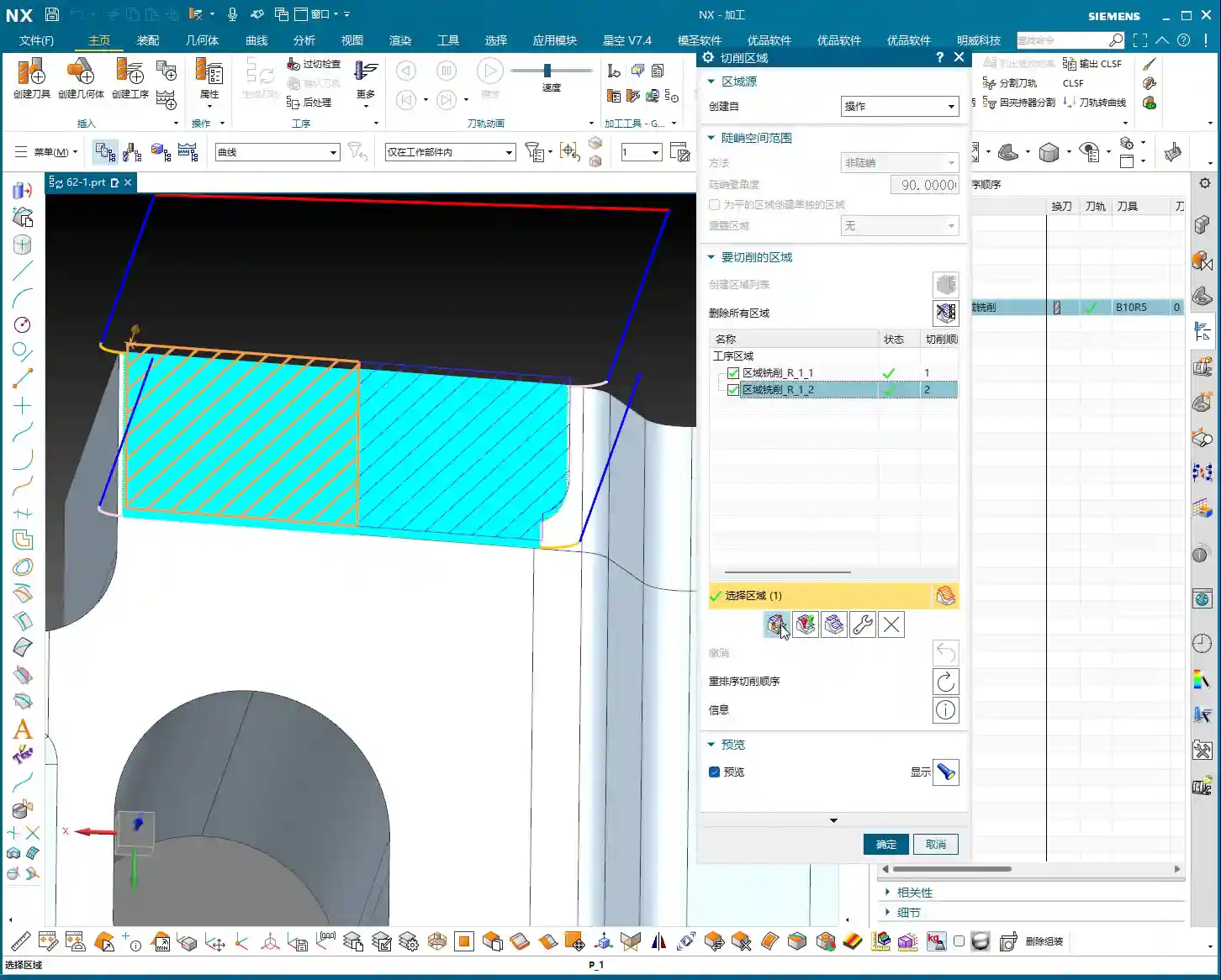
    Click inside, and you’ll see a bunch of options, like “Tool Path Direction Range” and so on. Don’t worry about those for now; some of them are adjusted elsewhere. But the most crucial part is the “Create Region List” at the bottom. What’s this list for? Simply put, it allows you to perform fine-tuned adjustments, or even “surgical operations”, on your currently generated toolpath.

    Toolpath “Splitting”: It’s Not as Simple as You Think

    Once you’ve created the region list, you’ll see several new functions: “Split,” “Merge,” “Edit,” and “Delete.” Let’s talk about “Split” first.

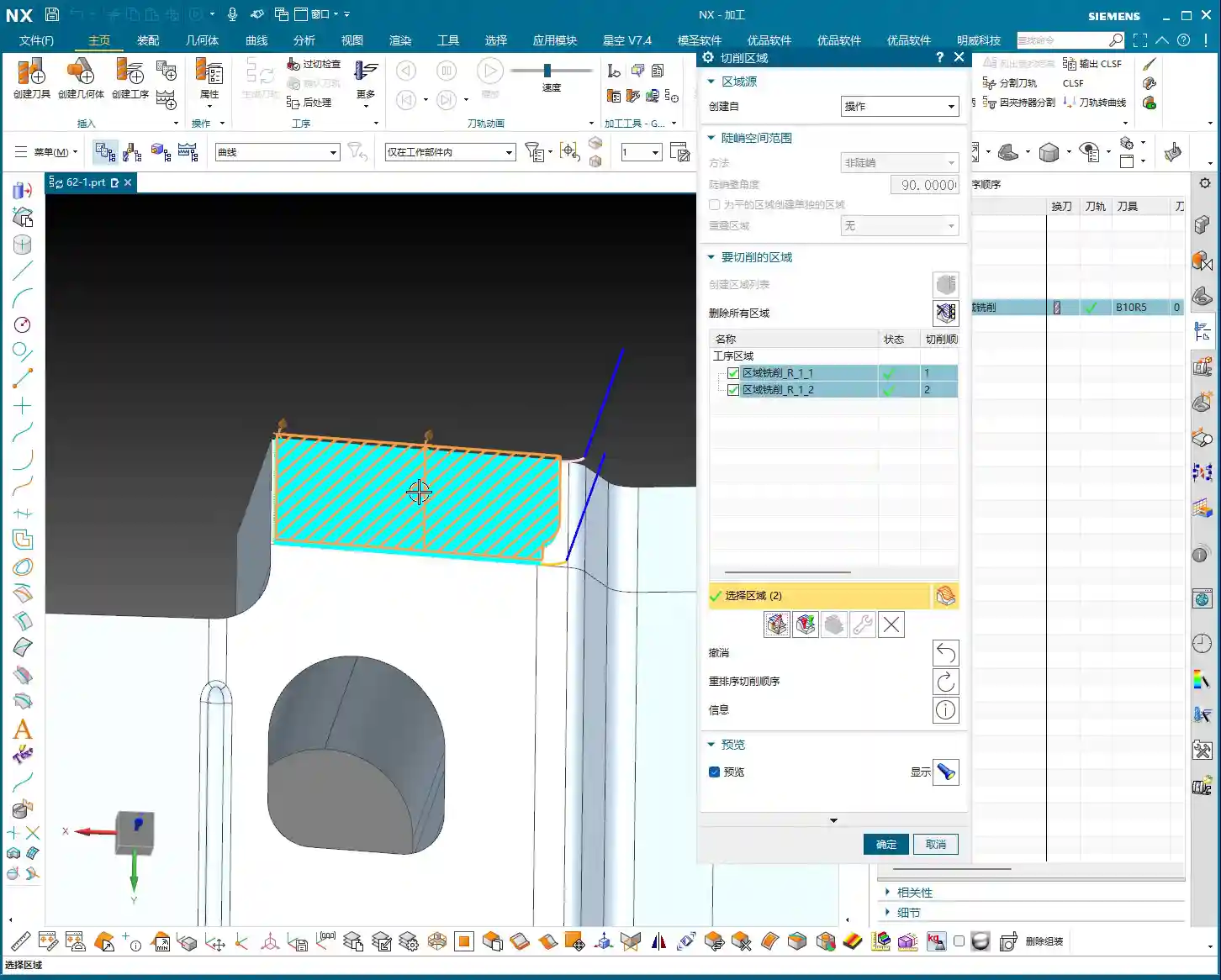
    Click “Split,” and it will prompt you to define a cutting line or plane. For example, if I just drag a plane, once confirmed, you’ll see that what was originally a single, complete machining area has been distinctly divided into two sections. Generate the toolpath again, and it will machine one section first, then perform a retract, and then jump to machine the other. Seems like a powerful feature, right? But listen closely, here’s a practical tip that textbooks won’t tell you:

    • In actual practice, we rarely use this “Split” function directly within the CAM environment. Why? Because splitting toolpaths directly in CAM is less effective than clearly defining the distinct areas during the CAD modeling stage.
    • My experience tells me that if you truly want to divide a large surface into several smaller areas for machining, the best approach is to pre-process it in your CAD software. Use functions like “Curve on Surface” or “Divide Face” to split the original geometry. For instance, you could draw an auxiliary line on the surface, then use that line to divide the face into two. This way, when you select the “Cutting Area” in CAM, you can directly choose your pre-divided sub-faces instead of trying to split the toolpath.
    • The advantage of this front-loaded processing is: clearer logic, more precise control, and fewer errors. When you’re modeling, you can clearly define the boundaries of each machining area, avoiding unexpected issues caused by on-the-fly splitting in CAM, such as poor toolpath transitions or unnecessary retracts. Taking this extra step upfront can save you ten steps of rework later!

    Toolpath “Merging”: The Reverse of Splitting

    Once you understand “Split,” then “Merge” is straightforward; it’s simply the reverse operation of “Split.” If you’ve separated an area and want to restore it as a single entity, use “Merge.” Click “Merge,” and it will prompt you to select a target region, and then select the region to merge. Once confirmed, these two regions will reconnect into one. The toolpath will also regenerate accordingly, reverting to its state before you performed the split.

    So, “Split” and “Merge” essentially let you either break down a generated toolpath for individual processing or combine separated ones back together. The functions themselves are direct, but knowing where and how to use them effectively requires careful consideration.

    Application in Special Cases: Emergency and Fine-Tuning

    Of course, that’s not to say these in-CAM “Split” and “Merge” functions are entirely useless. In certain special circumstances, such as when you only want to fine-tune a very small local area, or in emergencies where quick segmentation is needed and you don’t want to go back and modify the model, they can certainly be helpful. However, generally speaking, they are emergency measures, not standard operating procedure.

    Summary: Pitfall Avoidance Guide

    Alright, you should now understand the purpose of the “Split” and “Merge” functions within the “Cutting Area” that we discussed today. But remember what I, Old Wang, always say:

    1. Prioritize Processing in the CAD Environment: Unless absolutely necessary, do not perform complex toolpath splitting directly within the CAM operation. Your model geometry is the foundation; properly defining areas within the model is the correct approach. This ensures toolpath quality, reduces retracts, and improves efficiency.
    2. Proficiency in CAD Modeling is the Foundation for CAM: Whether it’s turning, milling, planing, grinding, or NX programming, everything is ultimately based on geometry. Solidify your fundamental CAD modeling skills, and you’ll find many advanced CAM functions intuitive to use, even allowing you to bypass a lot of unnecessary hassle.
    3. Focus on Actual Cutting Performance: No matter how perfect a software simulation is, it cannot replace the cutting sparks and real-world results on the machine. When making any adjustments in CAM, always visualize the tool’s actual cutting state, consider material properties, and machine accuracy – that’s the mark of a true master machinist!

    There are many methods; choose the one that best suits your current working conditions and cost efficiency. Personally, most of the time, I handle it by drawing lines and splitting faces, because it gives me greater control and is less prone to errors.

    Alright, that’s all for today. In the next lesson, we’ll continue with other topics. Thanks for watching, and see you next time!

    👤 About the Author:
    The author is a veteran CNC machining professional with 15 years of industry experience, specializing in UG NX programming. This article is an original work representing personal practical insights.

    ⚠️ Copyright Notice: Unauthorized reproduction or distribution without prior communication is strictly prohibited.
  • Siemens NX Deep Profile Helical Milling Practical: Master Wang’s Hands-on Guide to Efficient Corner

    📝 Key Takeaways: ** Master Wang personally reveals real-world secrets of Siemens NX Deep Profile Helical Milling! From face selection to helical plunging, discover how to achieve efficient Corner Cleanup, eliminate residual material at the bottom, optimize Stepdown and residual material, effortlessly tackling complex Contour Milling challenges like fillets and chamfers. Practical tips you won’t find in textbooks will help you boost machining efficiency, avoid common machining pitfalls, and master 0.005mm-level precision control. **

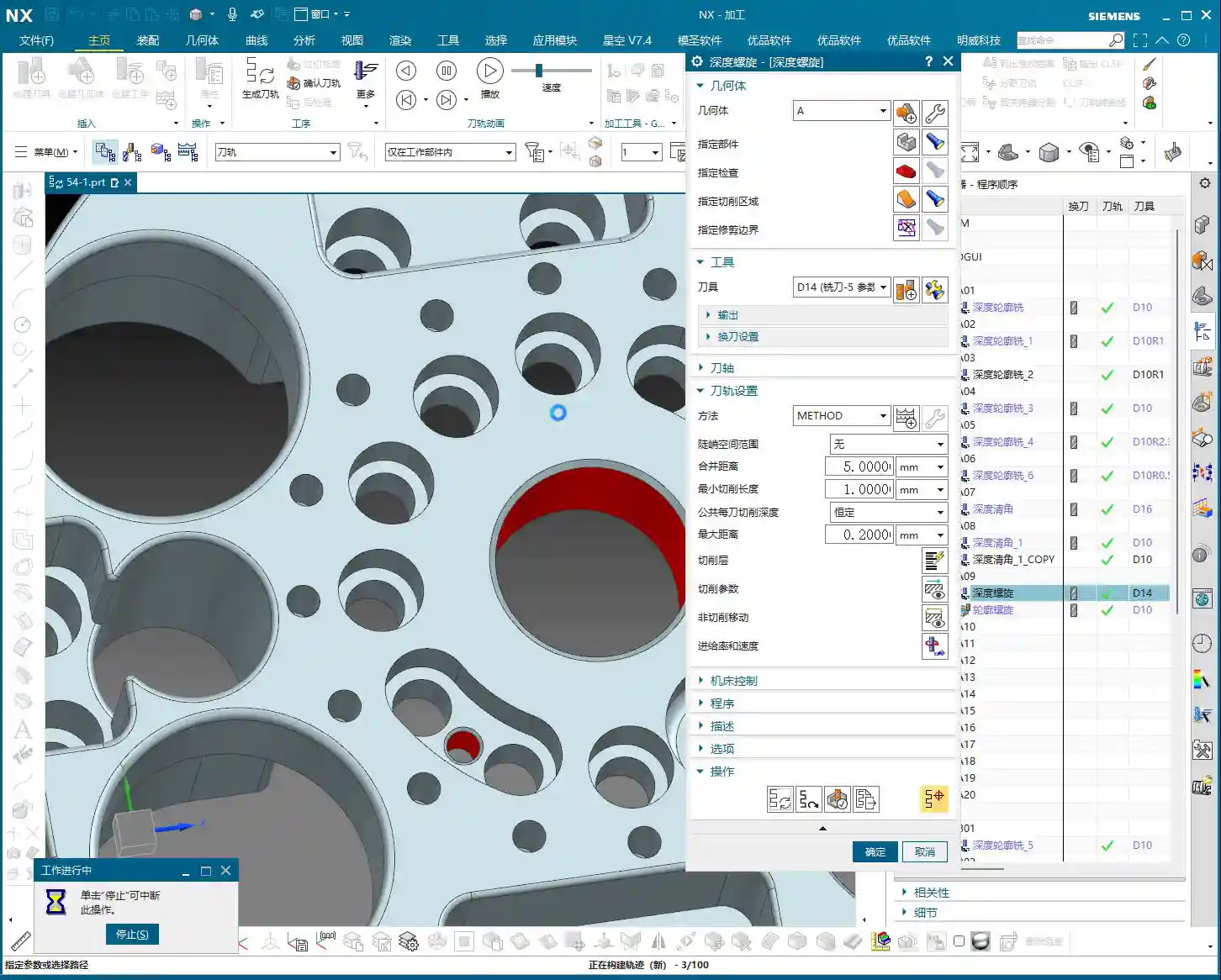
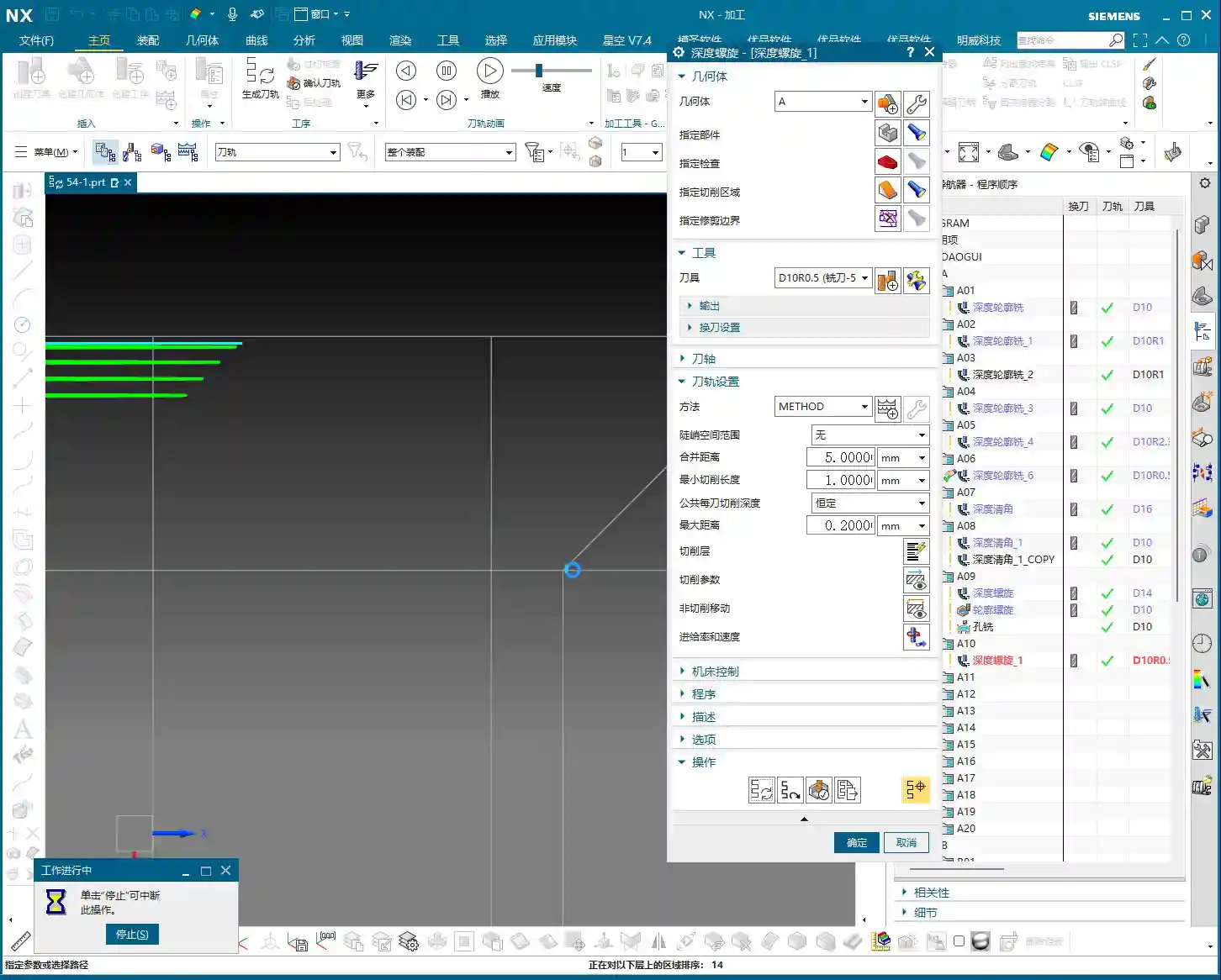
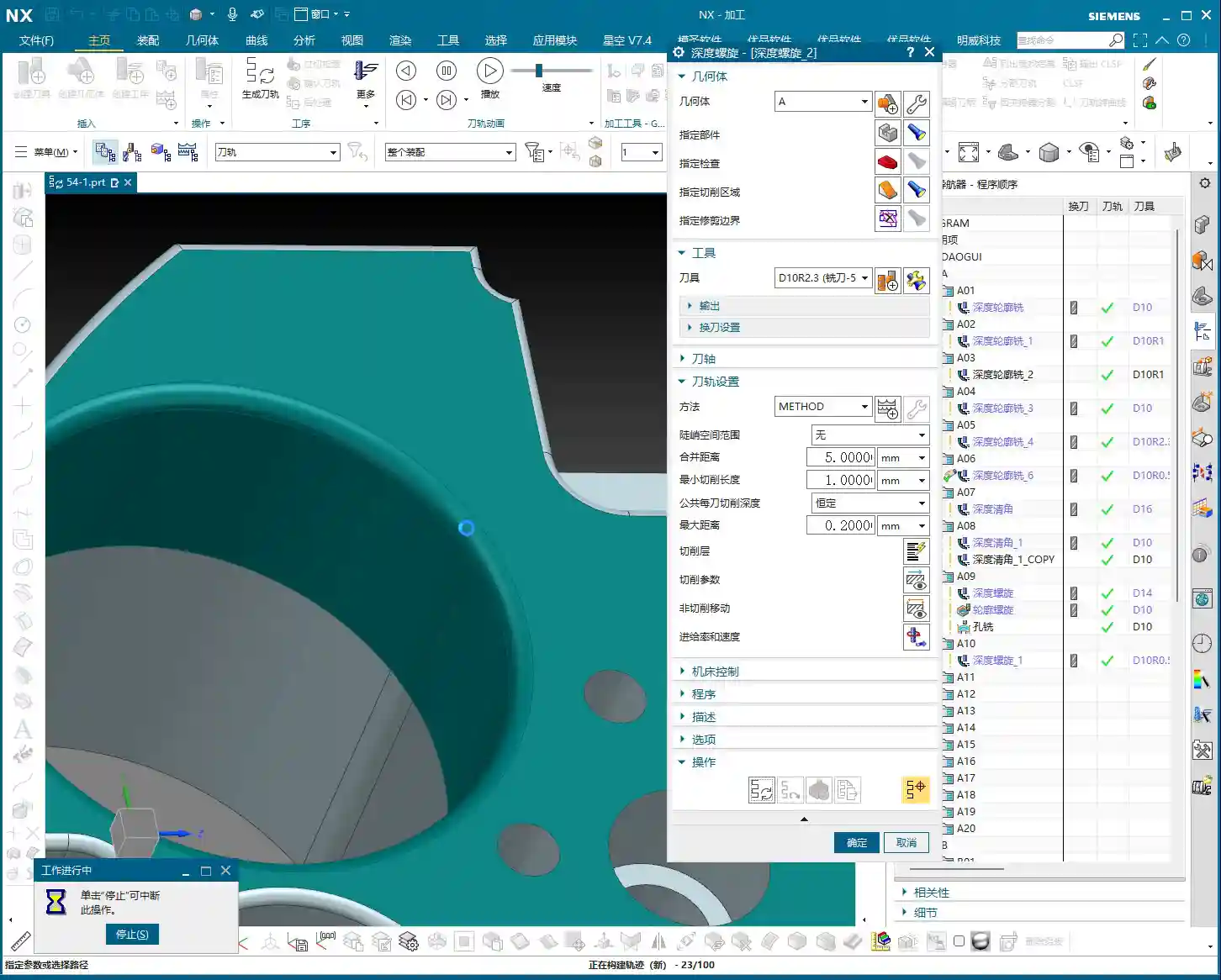
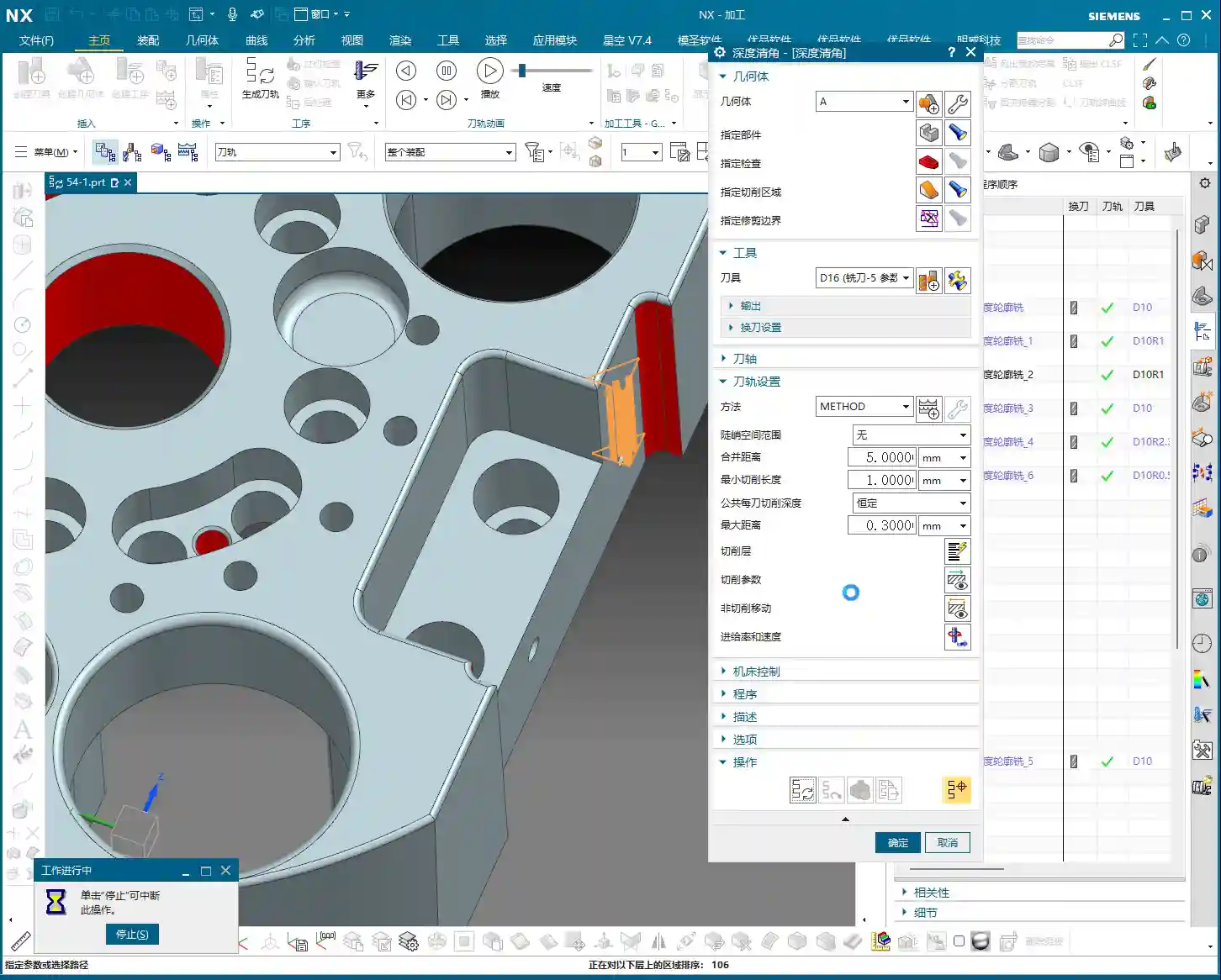
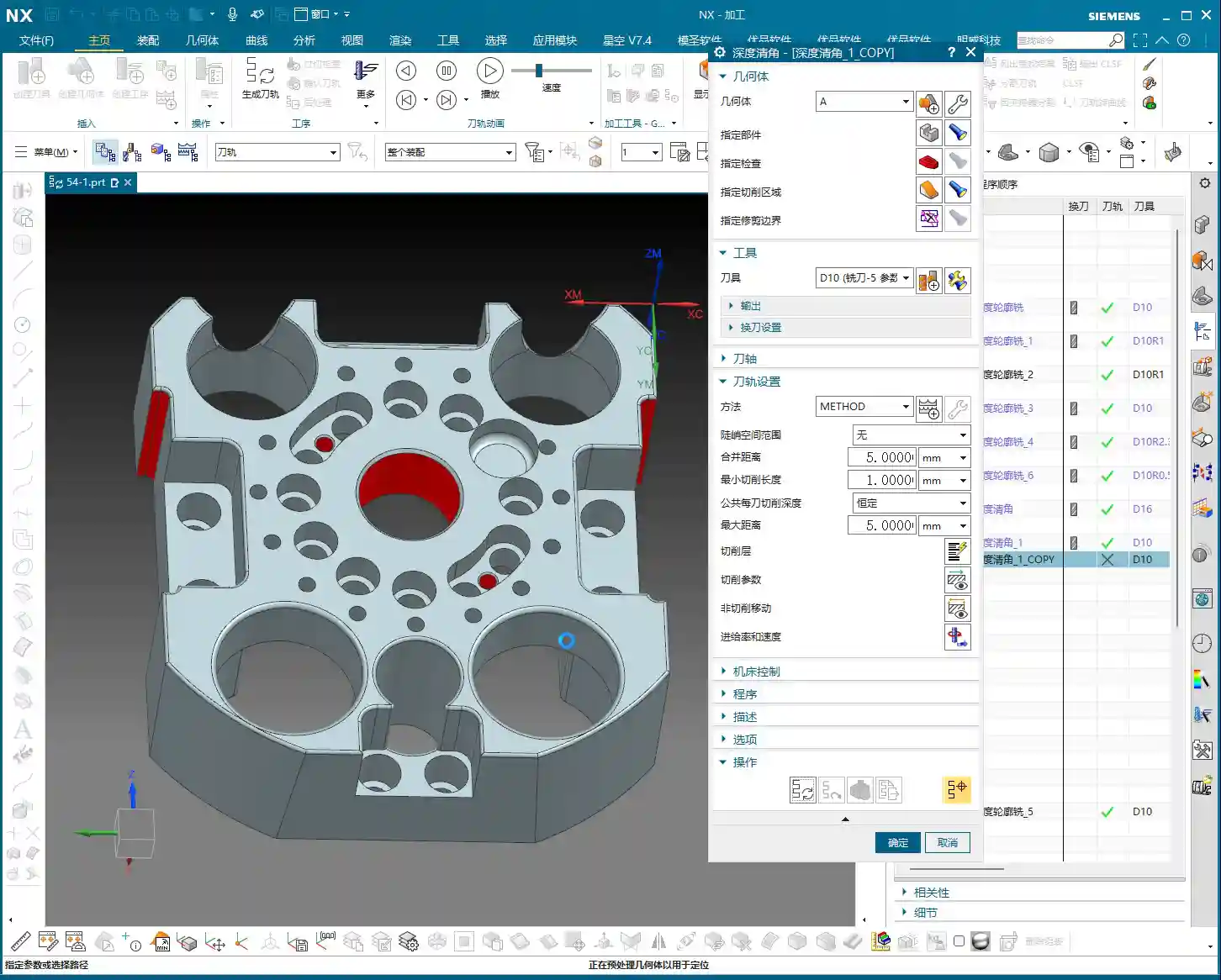
    Hello everyone, I’m Master Wang. Today, we’ll continue discussing the machining module in NX (Siemens NX), especially this **Deep Profile Helical Milling** operation. Listen up, this isn’t just about clicking a few buttons in the software interface; there’s a lot more to it!

    What is Deep Profile Helical Milling? Listen to me explain!

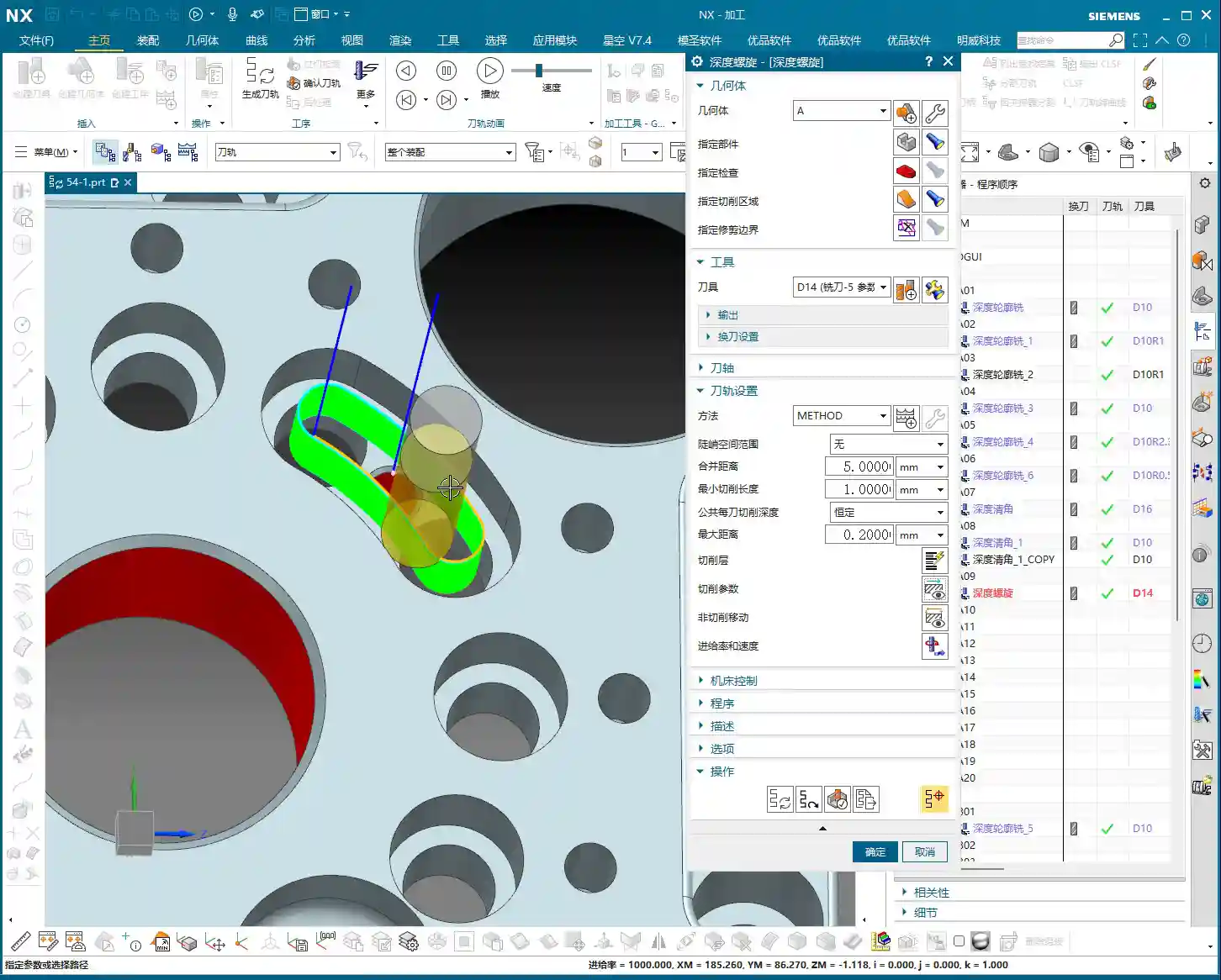
    You guys have probably used “Profile Helical Milling” before, right? With that, you select an edge or a profile curve, and it plunges along that curve, drawing a yellow helical line downwards. It’s fine for open shapes or simple holes. But this **”Deep Profile Helical Milling”** we’re talking about today, it’s different.

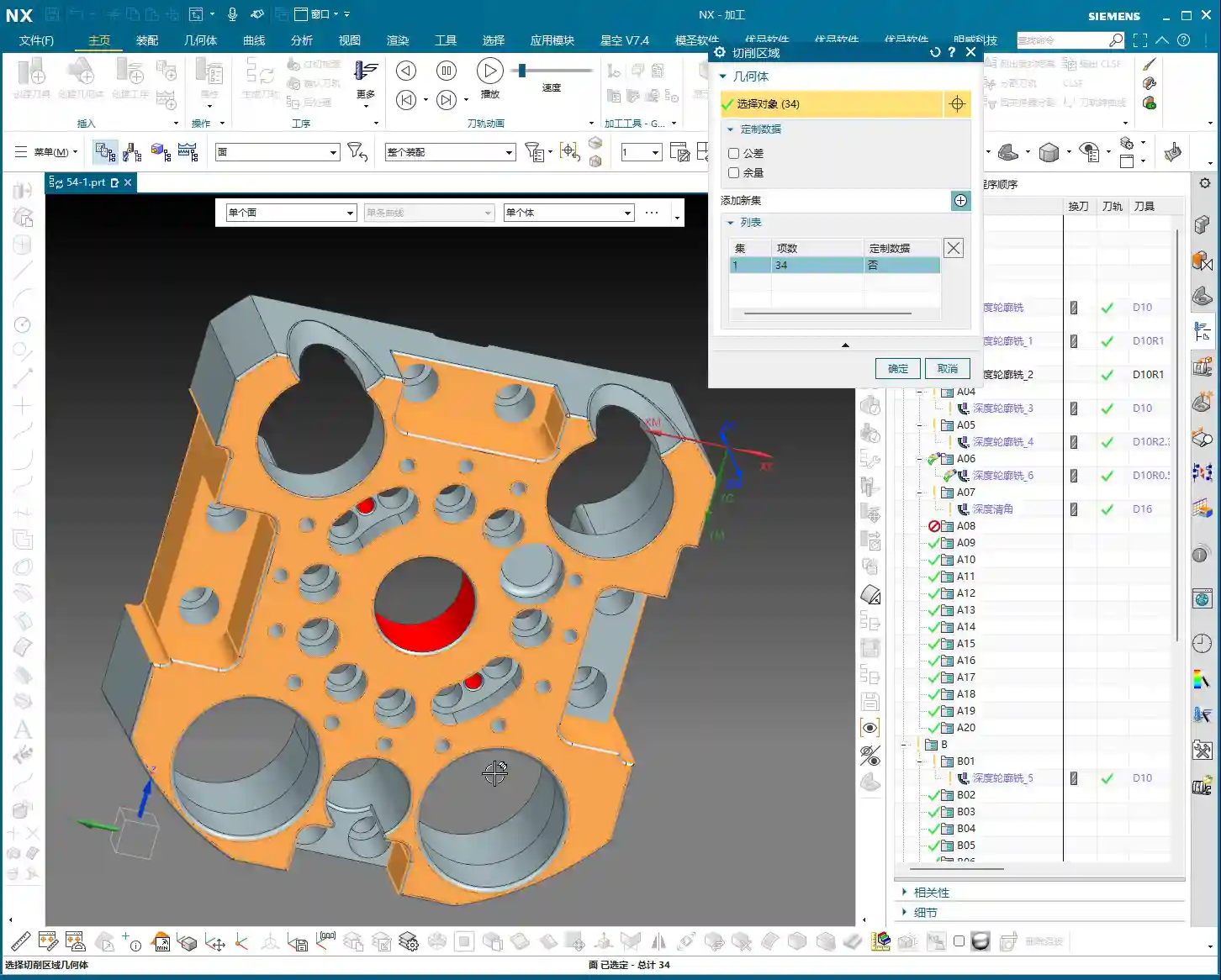
    Simply put, it focuses more on **selecting “faces” to define the machining area**, especially for enclosed areas with vertical walls. It can recognize the solid faces you select and then perform helical plunging. This approach is much more effective and hassle-free for machining deep cavities or when precise control of side walls is required during Roughing, compared to simple Profile Helical Milling.

    Face Selection Secret: Bid Farewell to the “Sketching Lines” Era

    Listen up, this is the first key point! In “Deep Profile Helical Milling,” you don’t select lines; you select **vertical “wall faces”** (that is, faces perpendicular to the bottom surface). See, when you choose this function, it prompts you to select faces, and you should select the side wall faces that need to be machined. Don’t foolishly select a line; that would be no different from regular Profile Helical Milling and would limit your toolpath flexibility.

    Once you select the faces, the software understands that the area is enclosed. It will automatically plan a top-to-bottom, spiraling toolpath based on your set parameters to clear the entire region. This efficiency is much higher than tracing lines one face at a time, especially for irregularly shaped deep cavities, saving you a lot of manual line selection hassle.

    The Secret to Helical Plunging: The Key is “Ramp Angle”

    Want the tool to truly “helix” down instead of plunging in “stair-step” segments? There’s a crucial setting here: in the “Connect” tab, find **“Ramp Along Part”**. You need to check this! Then, set the **“Ramp Angle”** below it to 0 degrees. Yes, you heard that right, 0 degrees!

    Why 0 degrees? Because we want it to smoothly helix down along the specified face, like a drill, rather than having an angled plunge. Setting it to 0 degrees allows the tool to completely follow the side wall downwards, avoiding impact and reducing the risk of Chatter and Tool deflection. This benefits both tool life and surface quality. This is a practical tip that textbooks might not emphasize!

    Efficiency and Precision: The Balance of Stepdown and Residual Material

    Stepdown Settings: Balancing Calculation Speed and Machining Quality

    When setting the **Stepdown** (which is the depth of cut for each pass), there’s a little trick. If you’re just quickly verifying the toolpath or running a simulation on your computer, you can set a larger Stepdown, for example, 5 mm. This speeds up program calculation, and you’ll see the results quickly. But listen up, this is just for “getting a general idea”!

    However, when it comes to actual machine tool machining, especially during Roughing, the Stepdown can’t be set so casually. You need to determine it based on material hardness, tool diameter, and machine rigidity. For instance, machining titanium alloy and common aluminum will definitely require different Stepdown values. For typical Roughing, we might set it between 0.2 mm and 1 mm. A Stepdown that’s too large can lead to Tool deflection, while one that’s too small is too time-consuming. **Don’t just rely on software simulation; observe the cutting sparks!** Stable, normally colored sparks indicate that your parameters are set correctly.

    Residual Material Control: A Critical Step for Finishing

    **Residual Material** (also known as “stock to leave for the next operation”). During the Roughing phase, a certain amount of residual material is typically left, for example, 0.3 to 0.5 mm, to be removed during the Finishing pass. However, if the current operation is the final Finishing pass, then remember to set the residual material to 0. Setting it to 0 allows the tool to mill away all excess material, achieving the dimensions required by your drawing.

    Especially when pursuing high precision like ±0.005mm, residual material control is crucial. Not an iota can be overlooked. If you find that the machined dimensions consistently deviate, the first thing to check is your residual material settings, as well as the machine tool’s accuracy compensation.

    Deep Profile Helical Milling vs. Other Machining Strategies

    Comparing with Profile Helical Milling: Where’s the Advantage?

    As mentioned before, “Profile Helical Milling” primarily involves selecting lines; it only knows to follow the lines you’ve chosen. But “Deep Profile Helical Milling” involves selecting faces, allowing it to recognize the entire enclosed area. So, if you have multiple holes or several similarly shaped deep cavities to machine, by directly selecting multiple faces with “Deep Profile Helical Milling,” it can automatically plan the toolpaths for you, **saving you the hassle of selecting lines and stitching them together one by one**. Moreover, it performs more stably and generates more continuous toolpaths when dealing with complex surfaces and varying cross-sections.

    Comparing with Hole Milling: A Victory for Flexibility

    Surely some apprentices will ask: “Master Wang, isn’t this just drilling holes? Can’t we just use ‘Hole Milling’?” Well, for simple circular holes, “Hole Milling” is indeed more direct and efficient. However, if this “hole” isn’t a regular circular hole, or if it features chamfers, fillets, or even an irregular shape, then “Hole Milling” won’t be sufficient.

    This is where the advantage of “Deep Profile Helical Milling” shines. It can perform helical machining along your selected irregular faces, **perfectly adapting to various complex hole and cavity shapes**. It’s like having two tools in your hand: a standard kitchen knife and a Swiss Army knife. When encountering complex situations, the Swiss Army knife is clearly more flexible and effective. For us in machining, it’s about learning to choose the most suitable machining strategy based on the part’s characteristics—that’s how you get the job done, and done well!

    Troubleshooting: Chamfers, Fillets, and Bottom Residual Material

    Chamfer and Fillet Machining: One Tool Does It All!

    Many times, parts not only have holes but also require chamfers (C-angles) or fillets (R-angles). For example, if the drawing calls for a C1 chamfer or an R0.5 fillet, with “Deep Profile Helical Milling,” you simply select the corresponding chamfer face or fillet face. Then, choose an appropriate tool—such as an R0.5 ball nose end mill or a chamfer tool—and it will machine these intricate features for you along a helical path. This is much more time and effort-efficient than using several different operations to handle these details, and the toolpaths are smoother.

    Bottom Corner Cleanup: How to Avoid “Leftovers”

    This is an old problem, and many novices often make this mistake. When you use a bull nose end mill or a ball nose end mill to machine the bottom of a deep cavity, due to the tool’s radius, it often cannot completely clear the residual material in the bottom corners, always leaving a little “root,” or a small triangular remnant. Don’t be fooled by software simulations; once you machine it on the machine, you’ll find there’s residual material.

    The solution is simple: in your program, find the **“Part Stock”** or **“Extension”** option and extend the toolpath downwards a bit. For example, extend it by 2.5 mm, or directly by **50% of the tool diameter**. This way, the tool’s radius can reach the very bottom, thoroughly clearing away those pesky residual materials. This is about “knowing not just what to do, but why to do it”—don’t just look at the surface; pay attention to the details.

    Summary: Pitfall Avoidance Guide

    • Select Faces, Not Lines: When using “Deep Profile Helical Milling,” always select the correct vertical wall faces, not contour lines; this greatly simplifies programming.
    • Core Helical Plunging Setting: In “Connect,” check “Ramp Along Part” and set the “Ramp Angle” to 0 degrees to ensure smooth helical plunging and avoid Tool deflection.
    • Set Stepdown Appropriately: For simulation, you can set it larger to speed up calculation. For actual machining, adjust it to 0.2mm~1mm based on material, tool, and machine rigidity to ensure stable cutting and normal sparks.
    • Zero Residual Material for Finishing: If the current operation is a Finishing pass, ensure “Residual Material” is set to 0 to meet precise dimensional requirements.
    • Extend for Bottom Corner Cleanup: When machining deep cavity bottoms with an R-radius tool, extend the toolpath downwards by 2.5mm or **50% of the tool diameter** in the toolpath settings to thoroughly remove bottom residual material.
    • Match Tool to Feature: When machining chamfers or fillets, select a matching tool (e.g., R-radius tool, chamfer tool) to achieve a single-pass formation.
    • Don’t Blindly Trust Software Simulation: Simulation is only a reference; ultimately, you must observe the actual cutting effect, sparks, and chips, and adjust based on experience.

    Remember these points, and you’ll avoid many detours in Siemens NX Deep Profile Helical Milling. Your programs will be not only efficient but also produce high-precision parts. In today’s fiercely competitive industrial product market, the ability to manually produce high-precision, high-quality parts is your greatest competitive advantage!

    👤 About the Author:
    The author is a veteran CNC machining professional with 15 years of industry experience, specializing in UG NX programming. This article is an original work representing personal practical insights.

    ⚠️ Copyright Notice: Unauthorized reproduction or distribution without prior communication is strictly prohibited.

  • Siemens NX Deep Contour Rest Milling, Spatial Range, and Smoothing Techniques: Master Wang’s Hands-o

    📝 Key Takeaways:

    NX Deep Contour Rest Milling in Practice

    Co…

    Core Essentials of Deep Contour Rest Milling

    The Essence of Rest Milling and Roughing Strategies

    Alright, listen up everyone. Today we’re going to talk about a “specialty” within NX Deep Contour Milling – Rest Milling. Simply put, this technique is for ensuring your finishing pass leaves no unmachined areas. Don’t let the name “Rest Milling” fool you; its real purpose is to thoroughly clean up those areas where larger tools couldn’t reach during roughing, leaving residual material.

    Typically, we start roughing our workpieces with a large tool. For instance, if you have an internal corner radius of R10, using a small tool directly to mill it would be incredibly inefficient. So, you’d usually begin by roughing with a larger tool, say a Ø32mm (approx. 1.26 inch) end mill. After roughing, those tight corners, like the R10 radius, will inevitably have a larger radius than R10, or rather, more residual material. This is where our Rest Milling program steps in.

    What tool should you use for Rest Milling? That depends on the size of the residual radius and your finishing requirements. For an R10 corner, you might opt for a Ø16mm (approx. 0.63 inch) end mill. Why? Because a Ø16mm tool can access an R8 corner, making it more than capable for an R10 corner, while also maintaining decent efficiency. Remember, tool selection is always a balance between efficiency and accuracy.

    NX Rest Milling Programming: Step One – Geometry and Tool Selection

    In NX, find the “Deep Contour Rest Milling” function. Once you’re in, the first step is to select the geometry.

    Pay attention here; this is a major pitfall that textbooks might not cover in detail! When selecting the rest milling region, NEVER select ONLY the fillet face! You must select all faces around the fillet that need to be machined, including the bottom face. Why? Think about it: the tool is smart, but it’s not psychic. If you only give it an isolated fillet face, how will it know what size tool you used for roughing previously? How will it know the exact distribution of residual material? It can’t reference previous toolpaths, so it won’t be able to generate a rational, complete rest milling path. The result will be incomplete cleaning, messy toolpaths, or even a collision.

    Therefore, when selecting geometry, you need to provide the tool with “complete environmental information” so it can accurately determine where residual material exists and where rest milling is needed. Don’t be lazy; every face that needs to be selected must be included!

    Regarding tool selection, as we discussed, if you used a Ø32mm (approx. 1.26 inch) tool for roughing, you’ll need a smaller one for rest milling, such as a Ø16mm (approx. 0.63 inch) end mill. The principle is simple: smaller tools can access areas larger tools couldn’t reach.

    Spatial Range: The Art of the Reference Tool

    The Core Secret of Rest Milling: The Reference Tool

    Alright, everyone, the core of Rest Milling, and its sole critical difference from standard Deep Contour Milling, lies in the “Reference Tool” setting within “Spatial Range.” This is knowledge I, Master Wang, have refined over years, and you must grasp it thoroughly.

    You need to tell NX which tool you used for roughing previously. For example, in “Spatial Range,” enable the “Reference Tool” option, then select the Ø32mm (approx. 1.26 inch) tool you used for roughing. NX will automatically calculate the areas that tool couldn’t mill based on its profile – these are the residual material areas your current smaller tool needs to clear. Without this “reference,” Rest Milling is a meaningless term; it won’t know where to clean.

    Further down, there’s also “Cut Extension Distance” (or “Extension Distance”). This parameter allows your rest milling toolpath to extend slightly beyond the reference tool’s path. Why the need for extension? Because you might want the tool to cut a bit more to ensure all residual material is completely removed, preventing even the slightest “unmachined spots.” I usually set it to around 2mm (approx. 0.08 inch), but the exact value depends on the actual situation and material. You can also think of it as adding this distance to the reference tool’s diameter, simulating a slightly larger virtual tool (e.g., Ø34mm / approx. 1.34 inch), to calculate the range that needs to be cleared.

    Avoiding Pitfalls: Extended Application of Cutting Levels

    Many beginners ask why their rest milling program always starts cutting from the middle. Shouldn’t it start from the top? This happens when the “Extension Distance” in “Cutting Levels” isn’t set correctly.

    If your rest milling depth is 2mm (approx. 0.08 inch), and you want the tool to start with a helical ramp down from the top, you need to set the “Extension Distance” to 1mm (approx. 0.04 inch) in the “Cutting Levels” settings. This way, the tool will start milling from the top of the workpiece, not the middle of the fillet, ensuring the completeness of the entire rest milling process. Don’t underestimate this 1mm; sometimes it can determine whether you’ll have a collision or the quality of your surface finish.

    One more thing, practical experience tells me that Deep Contour Rest Milling programs can be quite slow to calculate. If you set the Stepover too small, you’ll be waiting a while – enough time to grab a cup of tea, or even catch up on the neighborhood gossip. So, the Stepover setting must also balance efficiency; don’t just blindly aim for the smallest value.

    Smoothing Strategy: Enhancing Machining Quality

    Understanding “Smoothing”: More Than Just Fillets

    In NX, this concept of “Smoothing” is a vast topic. It’s not a single idea. What we’re discussing today is “Smoothing” within “Non-Cutting Moves.” This “Smoothing” isn’t about the smoothness of a fillet or radius on your workpiece; it controls the stability of the tool during path connections, lead-in, lead-out, and the overall movement process.

    Think about it: if the tool suddenly accelerates, makes sharp turns, or has jerky lead-in/out moves during machining, it will leave tool marks on the workpiece surface, potentially cause machine chatter, and reduce tool life. Therefore, “Smoothing” in “Non-Cutting Moves” is designed to ensure the overall fluency of the toolpath, making the tool move as smoothly as silk, avoiding any “hesitation” or “jerking” feeling.

    Typically, I set this smoothing value to around 5mm (approx. 0.2 inch). This value both ensures a smooth toolpath and prevents the program from calculating too slowly. If this value is set too small, you’ll find that during simulation, the tool moves sluggishly, like a snail, and the tool motion will appear stiff and unnatural.

    Smoothing Parameters: The Secrets of Length and Height

    Within the smoothing parameters, there are two key components you need to understand:

    1. Smoothness Length: This refers to the horizontal extension distance of the tool from its current position to the next cutting point. It determines the degree of smoothness during transitions in the planar direction. In simple terms, it ensures that when the tool changes direction, it doesn’t turn abruptly but instead carves a smooth arc.
    2. Smoothness Height: This refers to the vertical transition height of the tool in the Z-axis direction. It ensures that when the tool performs Z-axis feed or retraction, there are no sudden axial changes, but rather a gentle transition.

    These two parameters are usually already optimized by experienced engineers in NX machining templates. For most situations, you can simply use the default template values; there’s no need to blindly modify them yourself. But as a qualified machinist, you must understand what each of them does. When issues arise, you’ll know where to start making adjustments.

    Summary: Your Pitfall Avoidance Guide

    As Master Wang, I’ve summarized these hard-hitting practical insights for you today. Every point is based on real-world experience, so commit them to memory!

    • Major Pitfall in Geometry Selection: When performing Deep Contour Rest Milling, CRITICAL: NEVER select ONLY the fillet face! You must select all machining faces around the fillet that need to be cleared, as well as the bottom face. This is to provide NX with “complete environmental information,” allowing it to understand where residual material is and what the previous tool’s machining range was. Otherwise, your rest milling toolpath will be messy, won’t clean properly, and may even cause a collision. Don’t be lazy; this is crucial!
    • Spatial Range Must Be Enabled: The core essence of the rest milling program lies in the “Reference Tool” setting within “Spatial Range.” This tells NX which tool you used for roughing previously, allowing it to intelligently calculate “uncut regions” that require rest milling. If this function isn’t enabled, rest milling is a meaningless term.
    • Fine-tuning Cut Extension Distance: The “Cut Extension Distance” parameter should be flexibly set based on the actual residual material left after roughing and the size of your rest milling tool. Experience dictates that it’s better to extend slightly more than necessary than to leave unmachined areas. However, don’t set it too large, or you’ll end up with air cuts.
    • Smoothing Settings Require Attention: “Smoothing” in “Non-Cutting Moves” is key to ensuring toolpath fluency and improving surface quality. It’s generally recommended to set it to around 5mm (approx. 0.2 inch). If set too small, you’ll find the program calculates like a snail, and simulations will be sluggish and choppy, affecting your ability to evaluate the toolpath.
    • Simplify Complexity: For fillets or holes of different sizes and depths on a workpiece, it’s best to create multiple separate rest milling programs. One program should only clear regions with similar features (e.g., one program for all R5 corners, another for all R10 corners). The advantage of this approach is easier management, more efficient optimization, and simpler localization and debugging of issues. Don’t try to use one program for everything; that often leads to errors and wastes time.
    • Prioritize Templates, Understand the Principles: Most smoothing parameters and other settings in NX machining templates have already been optimized by experienced engineers. If there are no special requirements, using templates directly can save a lot of trouble. However, as an excellent machinist, you must understand the principles behind these parameters; this is your fundamental skill and your confidence to solve complex problems.

    👤 About the Author:
    The author is a veteran CNC machining professional with 15 years of industry experience, specializing in UG NX programming. This article is an original work representing personal practical insights.

    ⚠️ Copyright Notice: Unauthorized reproduction or distribution without prior communication is strictly prohibited.
  • UG NX Practical Guide: In-Depth Explanation of Tool Rolling and Cut Below Tool Contact Point to Avoi

    📝 Key Takeaways: Master Wang provides a detailed explanation of UG NX toolpath optimization, focusing on “Tool Rolling” and “Cut Below Tool Contact Point.” This ensures clean edges and thorough corner cleanup at the bottom, eliminating residual material and avoiding air cuts. The tutorial offers an in-depth analysis of the practical advantages and disadvantages of “Cut Between Levels,” emphasizing that for complex parts, side walls and bottom surfaces should be machined separately to enhance both efficiency and quality. This guide distills fifteen years of hands-on experience, imparting techniques not found in textbooks, to help you truly master NX programming.

    Master Wang’s Talk: Advanced Siemens NX Machining Techniques

    Hello everyone, I’m Old Wang. I’ve been in this industry for fifteen years, and the experience I’ve gained from hands-on work in the shop floor—that’s something you won’t learn from textbooks. Today, we’re not going to talk about abstract theories; we’re diving straight into practical insights. Let’s discuss some easily overlooked parameters in Siemens NX programming that have a huge impact on machining quality and efficiency.

    Especially for complex surfaces and precision parts, these details determine whether you get it “right the first time” or have to “rework and modify the mold.” Listen up, this is all hard-earned, valuable experience.

    I. Tool Rolling: Making Your Toolpaths More “Smooth”

    In Siemens NX “Z-level Profile Milling” or “Depth Contour Milling” operations, we often encounter an option called “Roll Tool on part edges”. Many novices might think this is an unimportant option, or simply don’t know what it does. But Master Wang tells you, if you use this correctly, it can significantly improve the edge quality of your part.

    What is Tool Rolling?

    Let’s use an analogy. With a normal toolpath, when approaching a right angle or sharp corner, the tool’s center path directly follows the model’s edge, and the tool side “cuts straight through.” However, if you select “Roll Tool on part edges”, the software automatically adjusts the tool’s tilt angle, allowing the tool to “roll” smoothly over these edges. This is like running your hand over a sharp edge: is it more painful to slide straight across, or more comfortable to roll over it slightly tilted? Rolling over it is definitely smoother.

    Practical Application and Key Pitfalls to Avoid

    • Purpose: Primarily to improve the surface quality of part edges, reduce burrs, and prevent tool impact. This effect is especially noticeable when machining parts with chamfers or fillets. It helps distribute cutting forces more evenly and extends tool life.
    • Effect: You’ll notice the toolpath will “turn slightly” when approaching an edge, as if to “smooth out that little corner”. Don’t just stare at the simulation in the software; those are theoretical paths. On the actual machine, you need to observe the cutting sparks and listen to the cutting sound to determine if the tool is running smoothly and engaging properly.
    • When to Use: Generally, if you’re only performing roughing or if edge finish requirements are not high, you typically don’t need to select this option. The extra “rolling” motion might slightly increase machining time. However, for finishing passes, especially for edge refinement on high-precision parts such as mold cavities or turbine blades, this option becomes very important.

    II. Cut Below Tool Contact Point: The Secret to Clearing Residual Material

    This option in Siemens NX is called “Cut below tool contact point”. Often, when machining a curved surface with a ball end mill or a radius tool, theoretically the tool reaches the bottom, but in reality, a small amount of residual material might still be left along the bottom edge. This is due to the tool’s geometry.

    Core Principle: True Contact Between Tool and Workpiece

    Imagine you’re using a ball end mill to machine a deep groove. When the theoretical tool contact point (typically the tool tip or the lowest point of the radius) reaches the bottom edge of the groove, if “Cut below tool contact point” is not selected, the software will consider that spot “machined to depth,” and the toolpath will stop extending downwards. However, due to the spherical part of the ball end mill, a small amount of unmachined material might still be hidden beneath the edge. The software won’t continue cutting further down because it believes there’s nothing left for the tool to contact on that main surface.

    However, when you select this option, Siemens NX intelligently determines that even if the theoretical tool contact point has reached the boundary, as long as the tool’s “actual cutting portion (e.g., the spherical part of a ball end mill)” can still engage the model, it will continue extending the cut downwards until the residual material in that corner is completely removed. As illustrated in the diagram, one toolpath will extend further down than the other.

    An Essential Option for Precision Machining

    • Function: Ensures that residual material at the intersection of vertical walls and bottom surfaces is completely removed, resulting in sharper, more precise edges. This is crucial for parts requiring strict dimensions and surface quality.
    • Misconception: Some might think this could lead to overcutting, but that’s not the case. Siemens NX considers the tool’s true geometry during calculations and won’t cut downwards indefinitely. It only machines material that “theoretically should be cut, but might be missed due to tool geometry limitations.”
    • Efficiency and Quality: If you don’t select this option, you’ll likely need a second tool or subsequent manual finishing to remove these residual materials, which undoubtedly increases cost and time. Especially when machining deep pockets, ribs, or performing corner cleanup on molds, this option can save you a lot of trouble.

    III. Cut Between Levels: Optimizing Paths to Improve Surface Finish

    In Siemens NX machining operations, especially in some 3D milling strategies like “Depth Contour Profile” or “Z-level Profile Milling”, you might see the parameter “Cut between levels”. This function is primarily designed to add extra toolpaths between existing cutting levels to achieve a better surface finish or more uniform machining allowance.

    Principle and Application Scenarios

    As its name suggests, Cut Between Levels inserts additional intermediate toolpaths between our established normal cutting levels. It doesn’t simply increase the Depth of Cut (DOC), but rather, builds upon existing toolpaths by adjusting the stepover to increase the cutting density on angled and curved surfaces. The result is a reduction in the “stair-stepping” marks left by the previous tool on these surfaces, leading to a smoother surface transition.

    • Advantages: For finishing passes on parts requiring high surface finish, Cut Between Levels can significantly improve results. It can effectively reduce surface roughness without substantially increasing overall machining time.
    • Disadvantages (to Note): If misused, especially on complex open geometries, it might generate redundant toolpaths or even “imperfect” toolpaths, which can actually decrease efficiency.

    Master Wang’s Practical Experience: Separate Machining is More Reliable

    Although Siemens NX provides some conveniences, allowing you to process both side walls and bottom surfaces simultaneously in a single operation using Cut Between Levels—for example, in “Depth Contour Milling”, when you select it, it will attempt to finish the side walls and then finish the bottom surface as well. However, having worked in this field for so many years, my advice to you is: unless it’s a very simple part, always try to machine the side walls and bottom surfaces in separate finishing passes!

    Why?

    1. Control: Separate machining allows for more precise control over the machining parameters for each area. The cutting conditions, tool selection, and stock allowance strategies for bottom surfaces and side walls can differ significantly.
    2. Machining Stability: For “open geometries,” forcing a single toolpath to simultaneously finish side walls and bottom surfaces can very likely lead to “less-than-perfect” toolpaths, or even issues like chatter and overcutting.
    3. Not for Novices: For beginners just learning Siemens NX, I do not recommend using “Cut Between Levels” to simultaneously process both side walls and bottom surfaces right from the start. Stick to using “Planar Milling” for finishing bottom surfaces and “Depth Contour Milling” for finishing side walls. Operate separately, step by step, and build a strong foundation. Once you gain sufficient experience, then consider these advanced combined techniques.

    Summary: A Guide to Avoiding Pitfalls

    • Tool Rolling: Consider for finishing passes on edges; generally not needed for roughing. Always observe the actual cutting effect.
    • Cut Below Tool Contact Point: Addresses residual material at the intersection of vertical walls and bottom surfaces, ensuring thorough corner cleanup, improving precision, and reducing subsequent rework.
    • Cut Between Levels: Improves surface finish on angled and curved surfaces. However, for complex parts, when performing finishing passes on side walls and bottom surfaces, try to machine them separately. Don’t sacrifice long-term reliability for short-term convenience.

    Remember, textbooks teach theory, but the shop floor hones experience. Observe more, ask more questions, and practice more to truly become a skilled machining master!

    👤 About the Author:
    The author is a veteran CNC machining professional with 15 years of industry experience, specializing in UG NX programming. This article is an original work representing personal practical insights.

    ⚠️ Copyright Notice: Unauthorized reproduction or distribution without prior communication is strictly prohibited.
  • Siemens NX Deep Contour Milling Practical Guide: Optimized Cutting Layers & Boundary Extension, Unve

    📝 Key Takeaways:

    Deep Contour Milling: Practical Insights into Cutting Layers and Boundary Extension

    Alright, listen up, young…

    Alright, listen up, young machinists! Today, Master Wang is going to share some critical, practical knowledge about deep contour milling—the kind of stuff they don’t teach you in textbooks, but that you absolutely need on the shop floor. Specifically, we’ll talk about cutting layer control and the boundary extension function. Use them wisely, and you’ll boost efficiency; mess them up, and you’ll be scrapping parts, wasting time, and burning through tools. Don’t just rely on software simulations; look at the cutting sparks and the chip color—that’s where the real skill lies!

    I. Cutting Layer Control in Deep Contour Milling

    Deep contour milling, as the name suggests, is primarily used for finishing parts with sloped surfaces, deep cavities, and internal radii. Its main characteristic is the ability to follow the part geometry layer by layer. However, *how* these layers are machined is where the critical knowledge comes in.

    1. Understanding “Stepdown”: The Key to Machining Efficiency and Surface Quality

    Look, once we’ve selected “Deep Contour Milling” and specified the tool, the next step is to set the Stepdown (Depth of Cut per pass or Step Length). This isn’t just a number you can randomly input. For example, if you choose 0.2mm, the tool will machine down in 0.2mm increments. But here’s a pitfall: when machining slopes, if your Stepdown is too large, the surface finish will definitely suffer. You’ll get noticeable tool marks, and it could even lead to excessive Depth of Cut (DOC).

    • Small Stepdown: Better surface quality, but longer machining time. Tool wear is also more uniform.
    • Large Stepdown: Higher efficiency, but poorer surface roughness, especially on sloped surfaces, where it can easily create noticeable step lines, uneven tool loads, and even tool chipping.

    My usual practice is to use a larger Stepdown for roughing, leave some stock, and then switch to a smaller Stepdown for the finishing pass. It’s the same principle as sanding a part by hand.

    2. Finishing Pass Depth and Fillet Corner Cleanup Issues

    Listen up, this is a critical point! When you’re deep contour milling to the bottom of a feature, especially if there’s a fillet (radius) at the workpiece’s base, have you ever noticed that even when the tool clearly reaches the bottom, that fillet always seems to be unfinished? Or perhaps the bottom looks flat, but the dimension is slightly off?

    The problem lies here: the software typically defaults to letting the tool’s bottom just touch the selected bottom surface. However, the cutting edge of the tool has a radius; it cannot perfectly conform to that theoretical “point.” This is especially true for ball nose end mills or bull nose end mills, which have a radial bottom edge. If the tool’s bottom radius is the same size as the workpiece’s bottom fillet, the tool will stop as soon as its center reaches the endpoint. Naturally, the fillet at the bottom won’t be fully cleaned up.

    We need to make the tool go a bit deeper to thoroughly clean up that fillet. How do we do this?

    1. Open the Levels settings.
    2. Find the Bottom parameter. This typically displays the Z-coordinate of the workpiece bottom.
    3. Critical Step: After this value, manually add a negative value, for example, add -0.2 (or +0.2, depending on your NX version and preference, meaning to make the tool go an additional 0.2mm). For instance, if the bottom is -100mm, you’d change it to -100.2mm.
    4. NX’s Quirks: Sometimes, after you change a value, the interface might not react immediately, or it might still show the old value. Don’t panic! After entering the value in the box, click on another empty area or simply click “OK”, and it will take effect. This is a common quirk of NX; you’ll get used to it.

    This slight over-cut is essential to ensure that the tool’s effective cutting edge thoroughly machines the workpiece’s fillet. When manufacturing precision parts with ±0.005mm (approx. 0.0002 inch) accuracy requirements, these meticulous details are what make the difference.

    II. Toolpath Strategies: Climb, Conventional, and Mixed Milling

    Now that we’ve covered cutting layers, let’s talk about toolpath selection. In deep contour milling, there are several commonly used cutting strategies: climb milling, conventional milling, and mixed milling.

    1. Climb Milling

    Listen up, Climb Milling is when the tool’s rotation direction is the same as the feed direction. The tool begins cutting at the maximum chip thickness, and the cutting forces push the workpiece down into the workholding, resulting in a relatively stable cut.

    • Advantages: Good surface finish, relatively longer tool life, less prone to burr formation.
    • Disadvantages: Requires high machine rigidity and is particularly sensitive to backlash in the ball screws. If the machine has significant backlash, a ‘creeping’ effect can occur, impacting accuracy.
    • Typical Toolpath: Cut, retract, plunge, cut again. As demonstrated in the video, the tool repeatedly lifts and plunges. While not the most efficient, it’s often used when surface quality is a critical requirement.

    2. Conventional Milling

    Conventional Milling is when the tool’s rotation direction is opposite to the feed direction. The tool begins cutting at the minimum chip thickness, and the cutting forces tend to lift the workpiece.

    • Advantages: Relatively lower machine precision requirements, less prone to ‘creeping’ effects.
    • Disadvantages: Surface quality is typically inferior to climb milling, faster tool wear, and prone to burr formation.
    • Use Cases: Rarely used alone for finishing passes. Generally considered for roughing when chip evacuation is critical or when machining specific materials.

    3. Mixed Milling (Zig-zag)

    Mixed Milling, simply put, is “go forward, then come back, go forward, then come back.” It combines the characteristics of both climb and conventional milling; one direction is climb milling, and the reverse direction is conventional milling. If you see a toolpath in the video that doesn’t retract but moves back and forth directly, that’s mixed milling.

    • Advantages: Highest efficiency, shortest toolpath, eliminates numerous tool retracts.
    • Disadvantages: Inherits the drawbacks of both climb and conventional milling. When machining in the conventional milling direction, surface quality and tool wear may be affected.
    • Use Cases: A preferred choice, especially when surface quality requirements are not absolute top-tier, but high efficiency is crucial. For instance, mixed milling is an excellent option for most roughing and semi-finishing operations. Think about it: fewer retracts mean fewer air cuts, which saves time, and time is money!

    Typically, climb milling is frequently used for finishing vertical walls, and mixed milling is also common, but conventional milling is relatively rare. Why? Because finishing walls demands a good surface finish, where climb milling excels. Mixed milling offers high efficiency and a good balance. You need to select your strategy based on the workpiece material, accuracy requirements, surface finish requirements, and machine condition. There’s no one-size-fits-all solution, only the most suitable approach.

    III. Boundary Extension: Optimizing Toolpaths and Preventing Residual Material

    Now let’s discuss a very practical function: Extend along Boundary. This feature sounds simple, but when used correctly, it can significantly improve your machining quality and efficiency, preventing many costly rework issues.

    1. Why is Boundary Extension Necessary?

    Often, when machining a pocket or a contour, the tool’s center follows the boundary. This means that the tool’s radius portion will leave a small amount of residual material on the workpiece edge. This is especially true in corners or along pocket edges, as the tool cannot achieve a perfect 90-degree cut, always leaving a slight amount of material. Over time, you’ll find that the edges aren’t sharp enough, or dimensions have slight deviations.

    Therefore, by making the tool extend slightly beyond the boundary, you can completely remove this residual material, ensuring clean edges and precise dimensions. This is the core purpose of boundary extension.

    Consider this: an aerospace component or a precision mold with even a tiny bit of residual material on its edges—can you still call that “precision”? This directly impacts product assembly and performance, and could even lead to an entire batch being scrapped, resulting in significant losses.

    2. NX Operation: Extension Parameter Settings and Practical Effects

    This function in NX is typically found in options related to Non-Cutting Moves or Cutting Parameters. You can set a distance, such as 10mm, in the Extend section. Once this parameter is set, the toolpath will extend outwards from the boundary line by that specified distance.

    But! Here’s another pitfall! If you’re using the default “Automatic” setting, the tool will extend along all boundaries, including top, bottom, left, and right. This can lead to problems.

    • Unnecessary Extension: Some workpieces may not require extension at the top and bottom. Extending there could even cause collisions with fixtures or interfere with other machining operations.
    • Misconception: Many people assume “Extend along Boundary” only affects horizontal directions, but NX’s automatic mode is comprehensive.

    3. Combining with Cutting Layers: Precise Control of Extension Range

    This is the real “master technique” Master Wang is teaching you! When you only want the tool to extend sideways, and not upwards or downwards, you can’t rely solely on the “Extend along Boundary” parameter.

    You need to use the Levels settings, specifically the “Top” and “Bottom” options. Once you have explicitly selected the top and bottom surfaces to be machined here, then combine it with the “Extend along Boundary” function, and you’ll see the magic happen.

    Because you have already constrained the tool’s machining range in the Z-axis through “Top” and “Bottom,” the “Extend along Boundary” function will only extend along the edges of these defined surfaces. It will no longer blindly extend upwards or downwards.

    This is the combined use of “Levels” and “Extend along Boundary.” Listen closely, this isn’t something you’ll easily find in software tutorials; it’s hard-earned, real-world experience. When machining enclosed pockets, once you’ve selected the top and bottom surfaces, the tool can extend horizontally, but it’s “locked” in the vertical direction because there are no more “edges” for it to extend along vertically!

    4. Challenges with Complex Workpieces: Extension in Closed Regions

    As mentioned in the video, if you’re machining a completely enclosed pocket, like a box. If you’ve selected the side walls of the pocket as the machining area, how can the tool “extend along the boundary”? Where would it extend to?

    In this situation, NX will not allow you to extend, or rather, any generated extended toolpath will have no practical meaning. Because it’s a closed region, the tool is already inside, and there’s no “external” space for it to extend into. So, when faced with this, don’t blindly set an extension; it’s pointless.

    You need to understand that NX’s functions are static; it’s the operator who’s dynamic. You can’t rigidly apply every feature; you must flexibly adjust based on the workpiece’s geometry and machining requirements. That’s the true wisdom in mechanical machining.

    Summary: Pitfall Avoidance Guide

    1. Fillet Corner Cleanup: When deep contour milling a bottom fillet, it’s crucial to make the tool go a bit deeper (e.g., add a negative or positive value to sink the tool in the Z-axis direction) in the Bottom parameter within the Levels settings. This ensures the fillet is thoroughly machined to size. Don’t forget to click an empty area to refresh NX!
    2. Toolpath Strategy Selection: For roughing and semi-finishing, prioritize Mixed Milling for high efficiency and fewer air cuts, which effectively reduces costs. For finishing passes on side walls requiring high surface quality, consider Climb Milling. Conventional milling is rarely used.
    3. Boundary Extension Control: The default “Extend along Boundary” extends in all four directions. When you only want the tool to extend horizontally, you must combine it with selecting the Top and Bottom surfaces within the Levels settings to clearly define the tool’s machining range in the Z-axis. This makes the extension function behave as intended.
    4. Workpiece Geometry Limitations: When machining a completely enclosed pocket, it’s not advisable to set “Extend along Boundary” because the tool cannot extend outwards. Setting it would be futile and could even lead to errors.
    5. Real-World Verification: Any parameter modification must be verified after a machine dry run or a small-scale trial cut. Carefully observe the toolpath, chips, sparks, and even feel the workpiece to truly confirm the effect. Software simulation is just a reference; actual machine performance is paramount.

    Remember, these are insights Master Wang has painstakingly accumulated over fifteen years, honed through practical experience—you won’t just find them in any textbook. Practice more, observe more, and analyze more, and you’ll truly master NX and become a qualified expert!

    👤 About the Author:
    The author is a veteran CNC machining professional with 15 years of industry experience, specializing in UG NX programming. This article is an original work representing personal practical insights.

    ⚠️ Copyright Notice: Unauthorized reproduction or distribution without prior communication is strictly prohibited.

  • NX Deep Contour Milling Toolpath Optimization: Engineer Wang Explains Depth Layers, Merge Distance,

    📝 Key Takeaways: Engineer Wang provides expert insight into core parameters for NX Deep Contour Milling: Merge Distance to control tool lifts, Minimum Cut Length to prevent inefficient micro-cuts, and a multi-layered Depth Layer strategy for fine-tuned machining. This guide will help you optimize your toolpaths and boost machining efficiency.

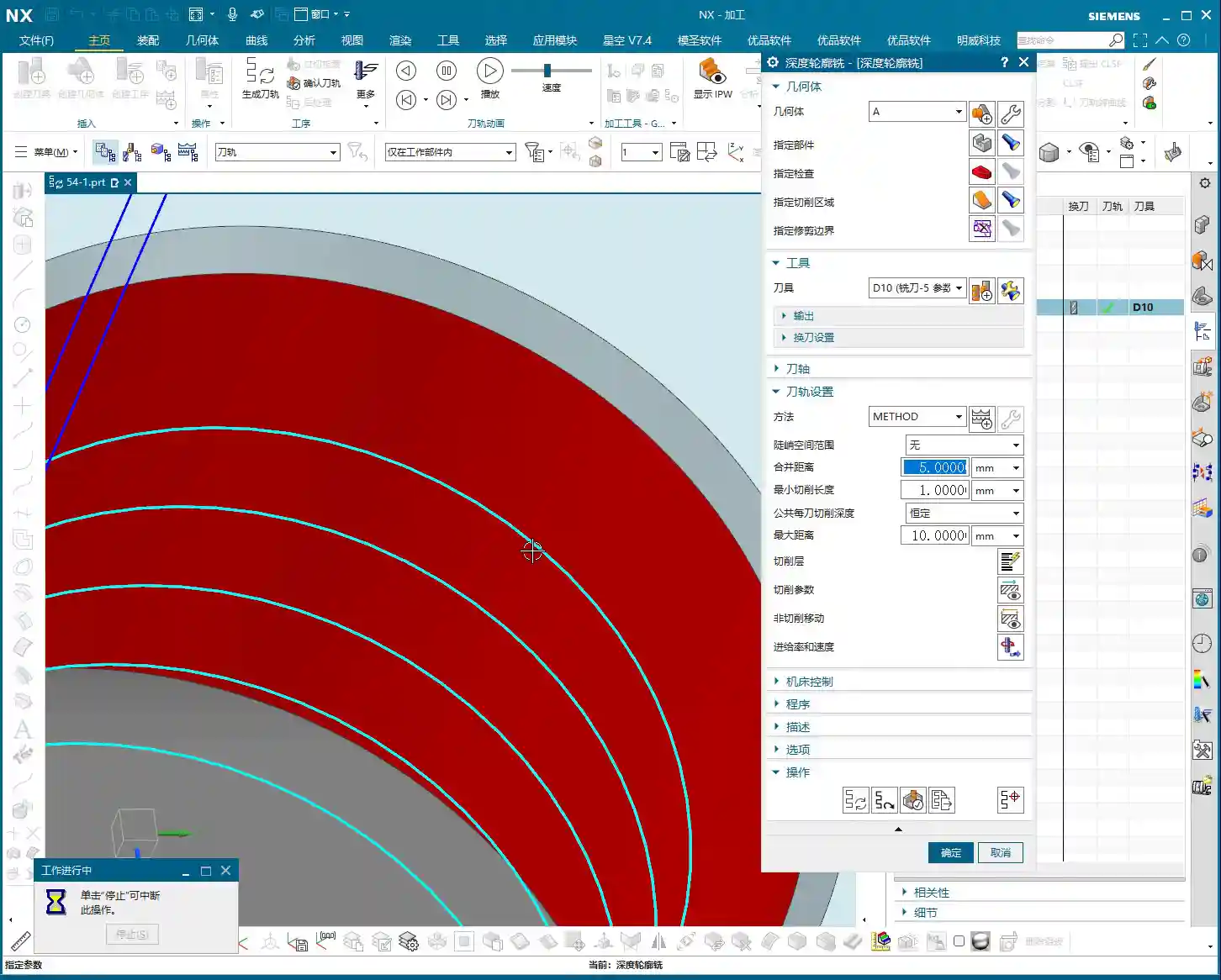
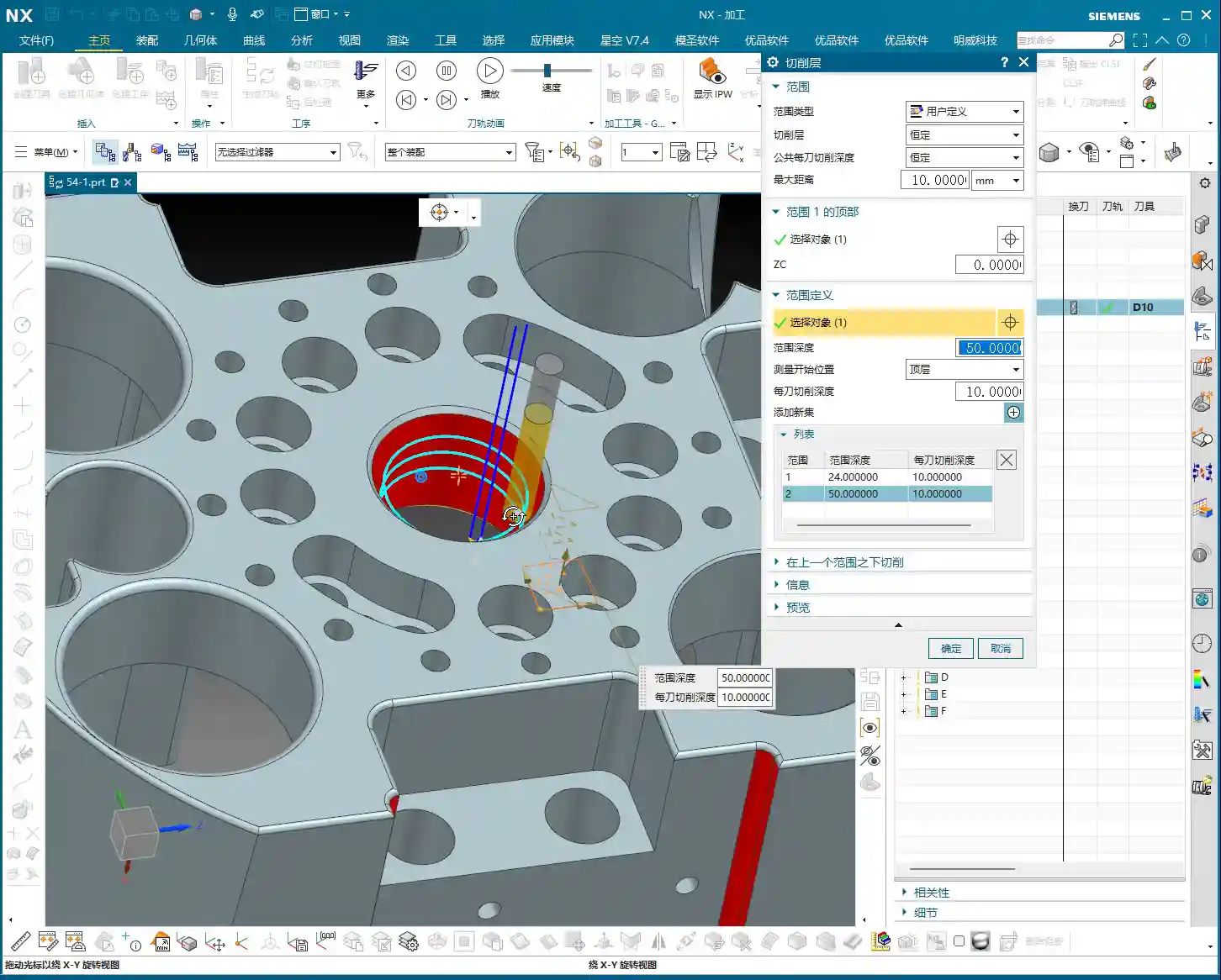
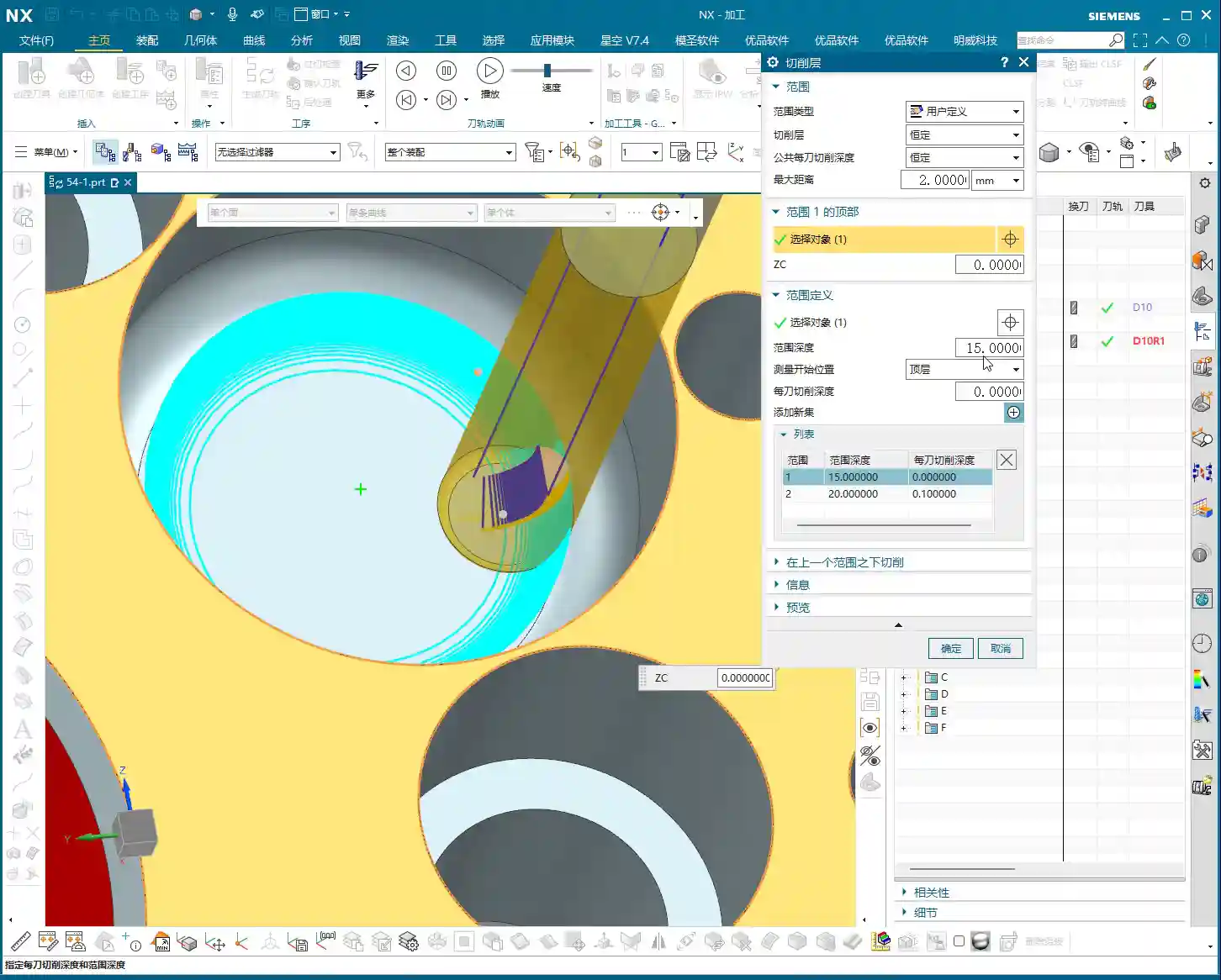
    Hello everyone, this is Lao Wang, Engineer Wang. Today, let’s continue to discuss those seemingly minor parameters in Siemens NX that actually dictate your machining efficiency and part quality. Listen up, these are practical experiences you won’t find in textbooks.

    I. Merge Distance: Connecting Toolpaths, Reducing Idle Moves

    We’ve discussed “Merge Distance” before in other operations, like DB-type machining and Planar Profile Milling. Simply put, it controls whether the tool will lift and rapid traverse or remain engaged and connect between different cutting regions.

    Practical Example: Deciding Between Tool Lifts and Continuous Motion

    For instance, imagine you’re machining a part with an empty space in the middle, or a 5 mm gap between two cutting regions. If you set the Merge Distance to 10 mm, Siemens NX will consider these two areas connected because 10 mm is greater than the 5 mm gap. The tool will then move directly across without lifting. The machining path will be continuous.

    However, if you set the Merge Distance to 1 mm, NX will recognize that 1 mm is much smaller than the 5 mm gap, indicating a definite need for a tool lift. In this scenario, you’ll see the tool rapidly lift, then move to the next cutting point before re-engaging. This is what we call a “tool lift” or “rapid traverse,” which is represented by blue rapid move lines (G00) in the program.

    So, this parameter gives you a choice: if you want the tool to maintain continuous motion to avoid unnecessary tool lift and plunge times, set it larger. If you prefer explicit tool lifts for clearer path segmentation, set it smaller. The specific value depends on your part’s features and your efficiency requirements. However, if your part is a fully continuous circle or any other closed, continuous shape, then “Merge Distance” becomes irrelevant, as there are no gaps to “merge.” You can simply ignore it.

    II. Minimum Cut Length: Avoiding Short, Inefficient Paths

    The “Minimum Cut Length” parameter, as its name suggests, controls the shortest distance the tool will machine. In complex contours, Siemens NX sometimes generates very short cutting paths, perhaps just a few tenths of a millimeter. These short paths are inefficient on a real machine, prone to chatter, and can accelerate tool wear.

    Practical Example: Eliminating Ineffective Micro-Cuts

    If your Minimum Cut Length defaults to 1 mm, Siemens NX will ignore all cutting paths shorter than 1 mm. This effectively eliminates those “junk” micro-cuts. The tool will only execute a cut when its length meets or exceeds your set value. This is beneficial for maintaining stable toolpaths, reducing unnecessary tool wear, and improving overall efficiency.

    Typically, the default 1 mm is sufficient. In my years of experience, I rarely change this parameter. It primarily addresses fragmented geometric features, helping to keep the toolpath “cleaner.” For these less common scenarios, it’s good to simply be aware that this function exists.

    III. Depth Layers: Fine-tuned Control for Deep Machining

    Alright, here’s the main event. These “Depth Layers” are one of the core elements in Deep Contour Milling, something I’ve emphasized repeatedly in Cavity Milling. Frankly, how well you program in Siemens NX and how optimized your toolpaths are largely depend on your understanding and application of “Depth Layers.”

    Depth Layers Basics: Why Only One Layer?

    When you open “Depth Layers,” do you find it defaults to “One Layer”? Don’t be surprised, it’s completely normal. This is because there might only be a single flat area requiring machining between the tool and the part, or the system automatically determines that only one depth layer is needed to achieve the goal. For example, if you’re simply side milling a straight wall, one depth layer is sufficient.

    Top Face and Bottom Face: Controlling the Start and End of the Cut

    The “Top Face” and “Bottom Face” options are used to precisely define the start and end positions of your cut. Whichever face you select, the tool will begin or end its deep machining operation from that face. For example, if you select the part’s top face as the “Top Face,” the tool will start its downward cutting motion from there.

    Another example: for a 48 mm deep circular hole, if you set the “Bottom Face” to Z=-20 mm, the tool will only machine to that depth, effectively machining half the hole. This is extremely useful in practical machining, for instance, if you only want to machine a specific region or if you’re machining in stages.

    Multi-Layer Depth of Cut: Flexible for Complex Geometries

    The most powerful aspect of “Depth Layers” is the ability to add multiple layers and define a different “Depth of Cut (DOC) per pass” for each. For example, on a part where the first 20 mm is a straight wall and the subsequent 30 mm is a large fillet. For the straight wall section, you can take a deeper cut, say 5 mm DOC per pass. When you reach the fillet, to ensure surface finish, you might need to reduce the DOC per pass to 1 mm or even smaller. This allows for much finer control.

    The operation is straightforward: add a new layer, then specify a new Z-axis depth range for this layer, and finally, set an independent Depth of Cut (DOC) per pass for it. This way, the tool can machine with varying depths of cut in different Z-axis regions.

    This principle is similar to how we sand a panel: for rough grinding, you remove more material; for fine grinding, you go thinner; and for polishing, you need an even shallower Depth of Cut (DOC). The same logic applies in the software: the closer you get to finishing passes, especially in areas with demanding curved or angled surfaces, the smaller your Depth of Cut (DOC) needs to be, and your Stepover should be adjusted accordingly. Conversely, for straight walls or roughing stages, both Stepover and Depth of Cut (DOC) can be more aggressive, prioritizing efficiency.

    Optimization Options and Standard Practices

    There’s also an “Optimization” option within “Depth Layers,” which is quite complex and involves strategies for optimizing toolpath connections. We’ll skip that today. Later, when I program a more intricate part, I’ll dedicate a separate lesson to thoroughly explain what this “optimization” means and how to use it to truly boost efficiency.

    However, there’s one point I want to emphasize: in Deep Contour Milling, we have a standard practice. Regardless of whether you’re only machining one face, if the part has clear top and bottom faces, we tend to select both of them. Why? This ensures that Siemens NX, when calculating the depth layers, can more accurately capture the part’s overall depth information, leading to more logical toolpaths. While sometimes, if you’re only machining one face, selecting both might not make a difference, cultivating this good habit can prevent many subsequent issues.

    Practice, Practice, Practice!

    These “Depth Layers” are absolutely critical for us in Siemens NX programming. Not just in Deep Contour Milling, but in Cavity Milling as well. Their utility is immense. So, I highly recommend you all go back and practice. Sketch a few parts with varying depths and shapes, then try using “Depth Layers” to control the Depth of Cut (DOC) for each pass and observe the toolpath changes. Only by hands-on practice and critical thinking can you truly master these practical tips.

    Summary: Pitfall Avoidance Guide

    1. Merge Distance: Bigger Isn’t Always Better

    • Don’t blindly set the Merge Distance to a very large value. While it can reduce tool lifts, if there are obstacles or non-cutting regions in between, it could lead to tool collisions or inefficient cutting.
    • Select an appropriate value based on the actual gaps in the workpiece to ensure both efficiency and safety. If the gap contains features like bosses, even if a continuous cut is possible, you must consider whether the tool will interfere with these features.

    2. Minimum Cut Length: Be Careful Not to Delete Critical Paths

    • The default value of 1 mm is usually sufficient, but if you encounter tiny features that genuinely require machining, and your set Minimum Cut Length is too large, these features might be ignored, leading to incomplete machining.
    • For parts with extremely high precision requirements and very small feature sizes, this value might need to be set smaller, but you must balance tool life and machining stability.

    3. Depth Layers: Don’t Treat Theory as a Panacea

    • Multi-layer Depth of Cut (DOC) offers flexible control, but you must consider material, tooling, and machine rigidity holistically. Not all situations are suitable for large or small depths of cut.
    • Newcomers often focus solely on beautiful software simulations, neglecting real-world machining issues like chatter, chip evacuation, and cutting forces. Remember: Don’t just rely on software simulations; observe the cutting sparks, listen to the cutting sound, and feel the machined surface!
    • The Z-axis ranges and DOC per pass for multi-layer cutting must be precise, especially for the final finishing pass layers. The depth of cut should be small, and the Stepover should also be fine to ensure surface quality.
    • Make it a habit in Deep Contour Milling to always select the workpiece’s top face and bottom face as the boundaries for your depth layers. Even if the current operation doesn’t strictly require it, this provides the system with more comprehensive geometric information, facilitating subsequent adjustments and optimizations.

    👤 About the Author:
    The author is a veteran CNC machining professional with 15 years of industry experience, specializing in UG NX programming. This article is an original work representing personal practical insights.

    ⚠️ Copyright Notice: Unauthorized reproduction or distribution without prior communication is strictly prohibited.
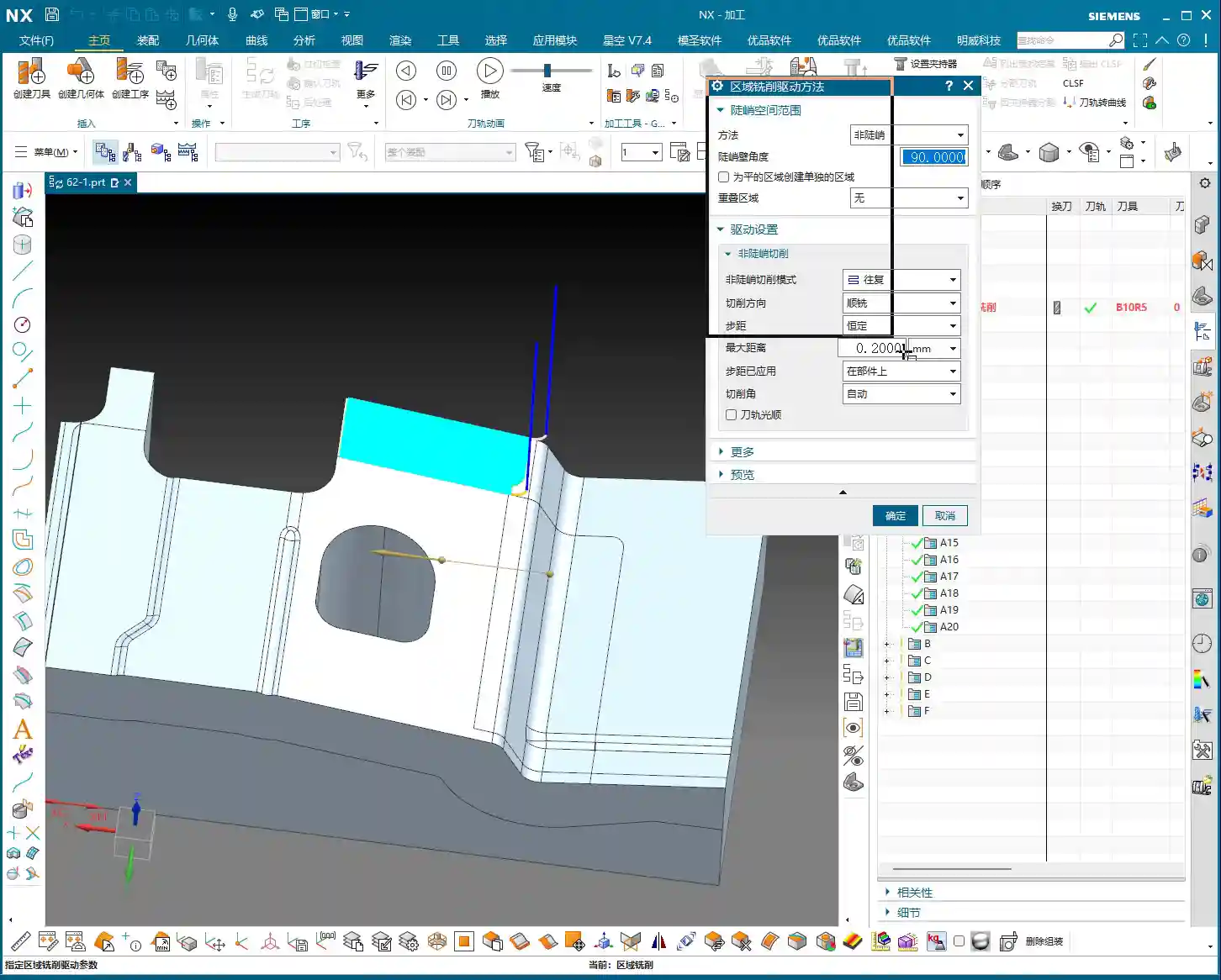
  • Siemens NX Dynamic Milling in Practice: Master Wang Teaches You Toolpath Optimization, Risk Mitigati

    📝 Key Takeaways: ** Master Wang guides you through Siemens NX Dynamic Milling, from cutting strategies to parameter optimization. He’ll show you step-by-step how to avoid the notorious “fragile central remnant” during machining, achieve safe and efficient “hole-milling style” center material removal, and enhance machining accuracy and efficiency for complex parts through refined non-cutting move management. **

    In-Depth Analysis of Dynamic Milling Strategies

    Initial Stock Handling and Toolpath Direction

    Master Wang: “Listen up. Last lesson, we discussed tool engagement length. With dynamic milling, you’ve got to understand the actual condition of your raw material stock. Especially when the stock height exceeds the programmed start plane, the tool must begin cutting from above – that’s common sense. Siemens NX will automatically plan the initial entry point based on your defined stock information. But that’s just the basic setup; the real magic comes later.”

    Risks of Traditional Helical Milling

    Master Wang: “Take a look at this diagram, especially when performing Corner Cleanup or machining deep cavities. If we stick to the default helical milling strategy, it spirals outwards layer by layer. It looks like it’s clearing the material, but the problem arises at the very end, especially when you reach the center, where it can leave behind a ‘fragile central remnant.’ This thing is like an isolated island, with no support. If the tool sweeps across it, at best it’ll get knocked off, spraying chips everywhere. At worst, it’ll cause tool breakage or even damage the workpiece. This is serious business, understand? Core Pain Point: Default helical milling often leaves a thin-wall ‘fragile central remnant’ in the center area, which can easily shatter, damaging the tool and the part.

    “Hole-Milling Style” Center Material Removal

    Master Wang: “So, when you encounter this situation, we need to switch our approach. Just like we mill a hole, we need to ‘mill out’ the material in the center, spiraling from top to bottom. In Siemens NX, we can switch to this mode, and it won’t leave that ‘fragile central remnant’ in the middle. The tool will act like a drill, first plunging to the bottom, then spiraling upwards or downwards to lift and cleanly remove all the remaining material from the entire central area. This method is safe, stable, and good for both the tool and the workpiece. Solution: Employ a ‘hole-milling style’ center material removal strategy to ensure residual material is safely removed from the center outwards, avoiding thin-wall remnants.

    Practical Siemens NX Parameter Optimization Techniques

    Cutting Direction and Toolpath Generation

    Master Wang: “Next, let’s talk about toolpath direction. In Siemens NX dynamic milling, there’s a ‘Transform Direction’ option. By default, it’s usually climb milling, where the tool’s cutting direction is the same as the feed direction, ensuring stable cutting and good chip evacuation. But if you set this percentage to 50%, it will switch between climb milling and conventional milling. The toolpath might look ‘prettier’ and run ‘smoother,’ reducing the number of retracts. But old Master Wang here has to warn you, this is not recommended for all materials. For some materials, like titanium alloys and superalloys, conventional milling can lead to work hardening, increased tool wear, and even chipping. So, unless you have absolute confidence in the material properties and tool performance, it’s generally advisable to maintain a single climb milling direction to ensure machining stability. This is a lesson from experience that textbooks might not emphasize.”

    NX Parameter Path: Connect -> Tool Path -> Transform Direction (Step %)

    Non-Cutting Moves: Refined Control of Retract Height

    Master Wang: “Next up are non-cutting moves, which we often call ‘retracts’ or ‘lifts.’ In 2D dynamic milling, I’ve talked about ‘Retract Distance’ and ‘Large Distance.’ In 3D, these two parameters are integrated. Specifically, this ‘Rapid Transfer‘ parameter controls the tool’s retract height when moving between adjacent cutting regions. The default value might be set very high, say 100mm. Think about it, if you retract that high for every transfer, your air cutting time becomes excessive, completely wasting efficiency! Unless the raw stock is unusually tall or there are obstacles, I generally recommend setting it to 3mm or 5mm, or even 1mm is often enough. Go as low as possible; that’s how you squeeze out efficiency.”

    NX Parameter Path: Non-Cutting Moves -> Rapid Transfer -> Retract Height

    Safe Initial/Final Retracts and Efficient Intermediate Transfers

    Master Wang: “But there’s a pitfall here, listen closely! If you set the ‘Rapid Transfer’ too low across the board, then the retracts for the very first cut and the very last cut will also be low. If the safety clearance isn’t sufficient for the first cut onto the workpiece, you’re looking at a collision. The same goes for the last cut: if the program finishes with the tool at a low position, an operator might accidentally bump it. So, we need to balance safety and efficiency. The solution is this: In ‘Non-Cutting Moves,’ find the ‘Initial‘ and ‘Final‘ retract settings. Change their type from ‘Relative to Plane’ to ‘Absolute,’ and then set both to 100mm (or a higher safe value). This way, at the start and end of the program, the tool will safely retract to a high position, while intermediate rapid transfers will use our defined low retract (e.g., 3mm), ensuring efficiency. Now that’s experienced operating!”

    NX Parameter Path: Non-Cutting Moves -> Initial/Final -> Type changed to “Absolute” -> Distance set to 100

    Advanced Application: Creating In-Process Workpiece (IPW)

    Understanding the Function and Significance of “Create Workpiece”

    Master Wang: “After the program runs, you might need to machine the next operation, or perhaps flip the part for machining. Siemens NX has a very practical function here called ‘Create Workpiece.’ After a simulation, you can click ‘Create,’ and it will generate an independent geometric body representing the remaining material after the current program is finished. What’s the use of this, you ask? It’s simple: it becomes the ‘stock’ for your next operation! For example, after milling one side, you generate this workpiece. Then, you flip the part and directly set this generated workpiece as the initial stock for the second side. This avoids repetitive measurements and ensures more accurate data. For multi-sided machining and fine-finishing complex surfaces, this is an absolute game-changer, greatly improving programming efficiency and subsequent machining accuracy!”

    NX Function Path: After Simulation -> Create (Create Workpiece)

    Summary: Pitfall Avoidance Guide

    • Beware of the “Fragile Central Remnant”: When dynamic milling deep cavities or performing Corner Cleanup, pay close attention to whether the toolpath might leave a “fragile central remnant” of material in the center area. This residual material is extremely unstable and can easily be knocked off by high-speed tool cutting, leading to tool breakage, workpiece damage, or even safety hazards. Always switch to a “hole-milling style” or similar strategy to ensure safe removal of central residual material.
    • Don’t Blindly Set Retract Height: Never allow the tool to retract too high during intermediate rapid transfers; otherwise, excessive air-cutting time will severely reduce efficiency. Based on actual conditions, set the ‘Rapid Transfer‘ to a low value of 3-5mm, or even 1mm, to minimize air time and boost overall efficiency.
    • Initial and Final Safety Are Non-Negotiable: When setting intermediate transfer retracts, remember to separately configure the ‘Initial‘ and ‘Final‘ retracts to a safe height (e.g., 100mm). This ensures the tool starts from a safe high position at the beginning of the program and safely retracts from the workpiece at the end, preventing collision risks due to low-position entry or low-position program completion.
    • Cleverly Utilize Workpiece Linking: For multi-operation or multi-sided machining, you must use the ‘Create Workpiece‘ function after simulation. Generating the remaining material from the current operation as the initial stock for the next operation will significantly improve the accuracy and efficiency of subsequent programming. This is an essential skill for complex part machining.
    • Cutting Direction is Not Trivial: Switching between climb milling and conventional milling should not be done casually. While mixing both directions might make the toolpath appear “prettier,” conventional milling can lead to work hardening and rapid tool wear when machining special materials. Until thoroughly validated, maintaining a single climb milling direction is often more stable and safer.

    👤 About the Author:
    The author is a veteran CNC machining professional with 15 years of industry experience, specializing in UG NX programming. This article is an original work representing personal practical insights.

    ⚠️ Copyright Notice: Unauthorized reproduction or distribution without prior communication is strictly prohibited.
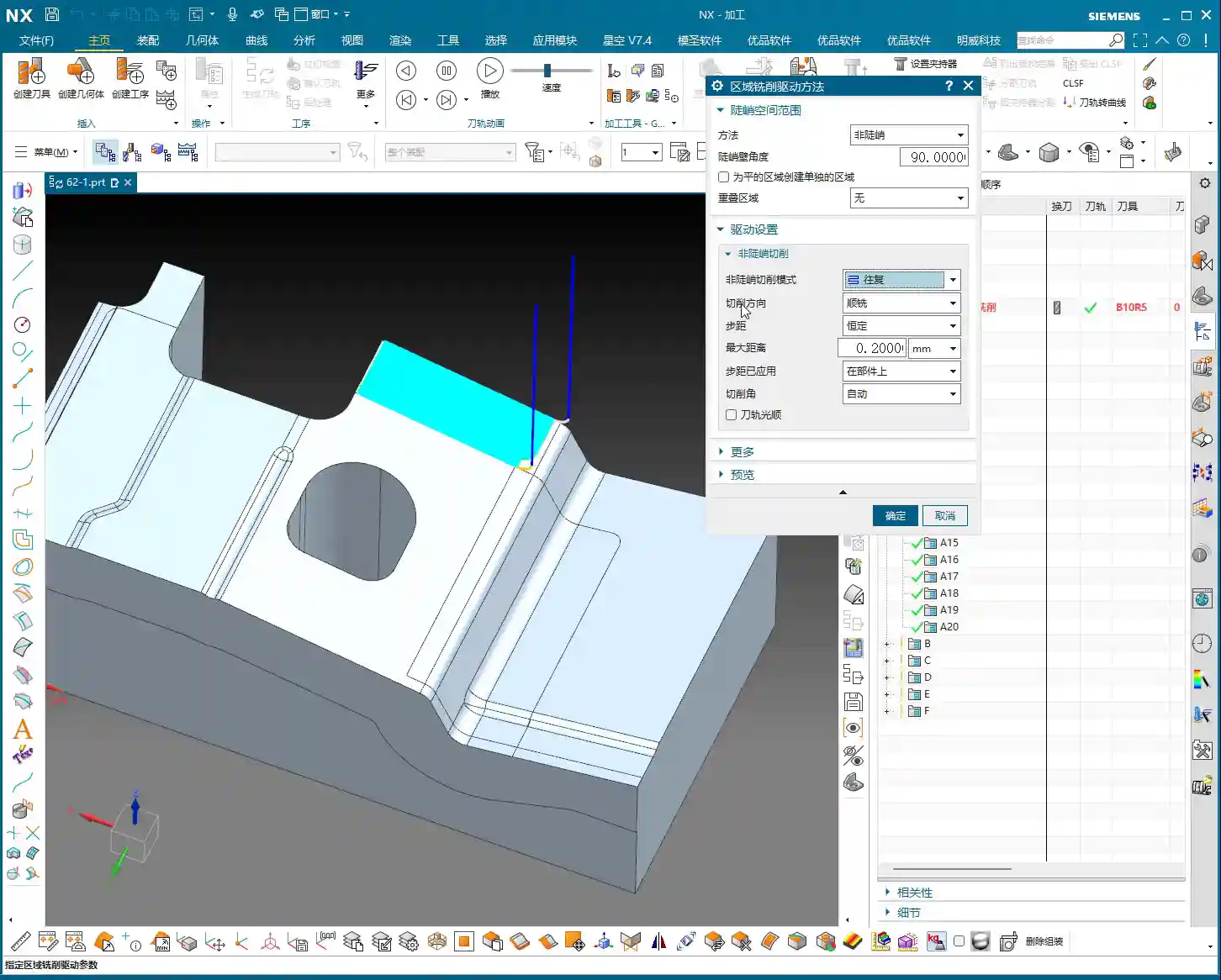
  • Siemens NX Hardcore Thread Milling Practice: Master Wang’s Secrets to Tool Path Optimization and Pre

    📝 Key Takeaways: Master Wang provides a hands-on guide to hardcore Siemens NX thread milling. Starting with an M26x1.5 fine pitch thread case study, this guide details tool creation, parameter settings, multi-pass cutting techniques, and the advantages of climb milling. It also reveals exclusive tips for troubleshooting NX program errors and achieving precision control, helping you move beyond textbook knowledge to tackle real-world machining challenges and produce high-accuracy threaded parts.

    Hello everyone, I’m Master Wang. Today, we’re diving into something hardcore: the final piece of 2D machining, and a common stumbling block for many novices—thread milling.

    Listen up. If you’ve mastered the commonly used commands we’ve covered, what I’m going to explain today will be much easier to grasp. We’ll save the less common ones for later, once your fundamentals are solid; otherwise, it’ll be pointless.

    Thread Milling Tool Creation and Parameter Setup

    Let’s get straight to it. What are we doing? Thread milling! In NX, select “Thread Milling” and confirm.

    Why Choose Thread Milling?

    Many newcomers get confused when they see “Thread Milling.” But in essence, it follows the same principles as Hole Milling, with a similarity of up to 90%. Don’t let the name intimidate you; as long as you’ve mastered the tricks for hole milling, you’ll quickly pick up thread milling. It simply focuses more on the unique geometry and machining requirements of threads.

    Today, let’s discuss a real-world job: an M26×1.5 fine pitch thread, with an actual outer diameter of 24.5mm. This isn’t just a random example; it’s an actual production task.

    Thread Milling Cutter Selection and Naming

    The first step is to create the tool. Here’s a pitfall: NX templates typically do not include thread milling cutters. Don’t waste your time looking for one there. Instead, switch to “System” and find “Thread Mill.”

    Once created, the naming must be standardized. Listen up: just name it M26×1.5. It’s simple and clear; at a glance, you’ll know exactly what it’s for, saving you from any confusion.
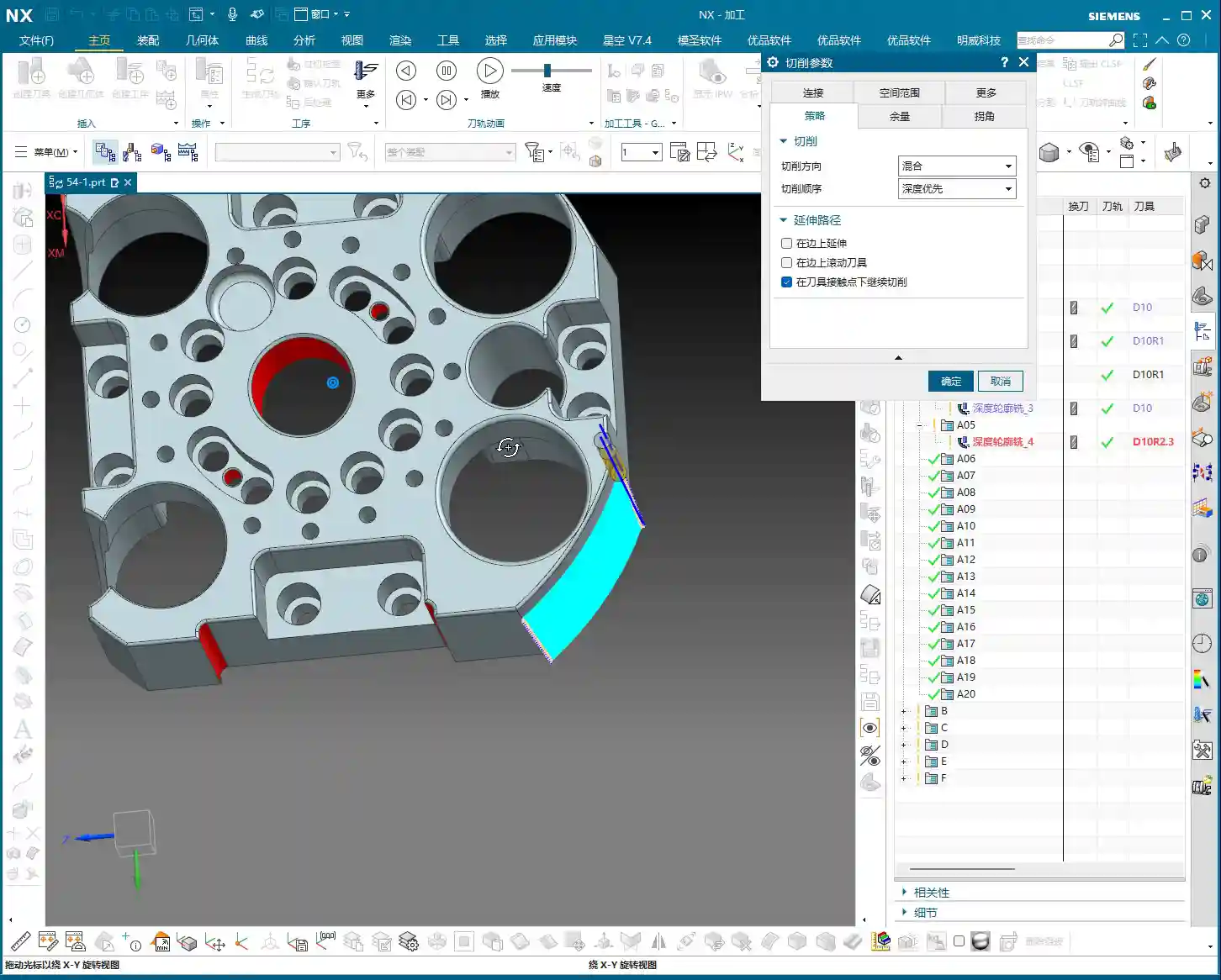
    Optimal Tool Diameter and Pitch Combination

    For the tool diameter, we can choose 16 mm. Why 16? Look, for an M26 thread using a 16 mm tool, there’s about a 3 mm gap between the inner and outer diameters. This clearance is perfectly sufficient for an M26×1.5 thread. This is practical experience; textbooks might not teach you this calculation.

    Next is the core parameter: pitch. As we mentioned at the start, this is an M26×1.5 thread, so the pitch here must be 1.5. Dare to enter one wrong digit, and you’ll produce scrap—don’t say I didn’t warn you!

    You can ignore the number of tool flutes for now; it looks pretty much like a T-slot cutter, nothing special.

    Precise Thread Profile and Length Settings

    Regarding the thread profile type, listen up: it must be metric! If you dare to select inch, the resulting thread will be scrap and won’t match the actual product. Leave other parameters alone for now; the most critical one is the pitch, you must ensure it is absolutely correct.

    For the tool length, we generally don’t need to be overly precise; just ensure it’s sufficient for normal machining. The key, I’ll emphasize again, is the pitch, which must be 1.5. Once the tool is created, you’ll have a thread milling cutter that resembles a T-slot cutter.

    Thread Milling Process Flow and Parameter Optimization

    Now that we have the tool, it’s time for the program. For geometry selection, simply select the hole you want to thread mill, just like with hole milling.

    Geometry Selection and Thread Size Recognition

    For setting thread dimensions, here’s a shortcut: don’t choose “from table.” Those are theoretical data and too rigid. Instead, select “from model.” NX will automatically determine the major diameter of the thread, saving you the trouble of manual measurement and providing greater accuracy.

    This differs slightly from hole milling. Thread dimensions are critical.

    Empirical Values for Major Diameter, Minor Diameter, and Machining Depth

    Listen carefully: for the major diameter here, we need to manually adjust it to 26. NX’s automatic recognition might not be accurate. The minor diameter is 24.5.

    Here’s the crucial point: for the thread length (depth), we cannot mill directly to the exact required depth. A thread milling cutter is not a drill; it cannot cut to full depth in one pass! The thread cutter is prone to heavy cutting and chipping at the bottom, so always leave an allowance. For instance, if we need to mill 25 mm deep, we’ll set the actual machining depth to 25, but you must remember that this 25 mm is where the tool finally reaches, and the actual effective thread depth might only be 23 mm. This gives the tool some breathing room and helps ensure thread quality. Remember, it’s better to cut a little shallow than to ruin the tool by going full depth.

    Multi-Pass Cutting: The Secret Weapon for Roughing

    For feed rate properties, just set it to 100% and don’t worry about it.

    Now, let’s look at a very important parameter: Max stepover distance. What does this mean? This is the essence of multi-pass cutting during roughing! If you set it to 0.2, it means the tool will take a 0.2 mm radial cut per side per revolution. Since it’s thread milling, the tool completes a full revolution around the thread, so the actual material removed per pass is 0.4 mm (0.2 mm per side × 2). Consider that an M26×1.5 thread has a pitch of 1.5 mm; if you don’t use multi-pass cutting, one single pass will ruin it! Especially for raw blanks, multi-pass cutting is essential. Take small bites; don’t try to hog it all at once! This is a golden rule for protecting your tools and ensuring machining quality.

    Climb Milling: The Preferred Direction for Thread Machining

    In the cutting parameters, why should you choose climb milling? Listen up! When thread milling, we almost always use climb milling, moving from top to bottom. Conventional milling isn’t necessarily wrong, but it cuts from bottom to top, which can lead to chatter, faster tool wear, and a poor surface finish. My experience dictates: choose climb milling, cutting from top to bottom! This ensures stable cutting, longer tool life, and high-quality threads. When you set up your NX templates, you should make this the default setting to establish good habits.

    Tool Path Extension and Material Allowance Management

    Regarding tool path extension, it’s similar to hole milling: top extension, bottom extension, adjust according to actual conditions, generally without major changes. Allowance control is also simple: roughing must leave an allowance, for example, 0.5 mm. For finishing, set the allowance to zero to cleanly machine the thread.

    Program Duplication and Common Issue Resolution

    Once the roughing program is done, how do you handle finishing? The easiest method is to copy and paste, then modify the parameters. For finishing, change the allowance to 0. But there’s a pitfall here, listen up!

    Pitfalls of Program Duplication and Correction

    After you duplicate a program, the tool path generated for the new program sometimes still reflects the old one. Strange, right? This is a minor quirk in NX. The correct approach is to: first click on the old program above it to deselect it, then click on the new finishing program. Only then will it truly refresh the tool path. Otherwise, you might think you’ve changed the parameters, but the tool path remains the old one, and all your efforts will be wasted! Don’t be fooled by the software’s illusion; this can lead to major problems during actual machining.

    Regarding cutting passes here, for roughing, we typically use “no cutter compensation” or “cutter compensation” strategies to enable multi-pass cutting. For finishing, this isn’t necessary; just go for a single pass to final size.

    Practical Application of Thread Go/No-Go Gages

    Remember this: After machining a thread, you must use thread Go/No-Go gages! Don’t expect to machine it to final size in one pass; that’s wishful thinking! Especially for roughing, first leave some allowance. For example, use the Go gage to check if it fits. If it doesn’t, mill a tiny bit more. If it’s too large, it’s scrap and you’ll have to start over! Never rush; take your time. Ensuring accuracy is the top priority.

    Solution for ‘Red’ NX Programs

    Finally, let me teach you about a minor quirk in NX, especially in operations like hole milling and thread milling: your program keeps turning red, isn’t that annoying? That indicates it needs approval. Don’t panic! Simply right-click on the red program, select “Object,” then click “Approve”, and it will no longer be red! This is just how the software behaves; you need to work with it, don’t fight it, or it will just keep showing you red.

    Summary: Pitfall Avoidance Guide

    1. Standardize Tool Naming: Name tools by thread specification (e.g., M26x1.5) for clarity.
    2. Pitch is Key: Whether for the tool or the thread dimensions, the pitch must match the actual requirements; otherwise, the thread will be scrap.
    3. Metric Priority: The thread profile type must be metric. Do not select inch, or it will be scrap.
    4. Leave Allowance for Depth: A thread milling cutter cannot cut to full depth in one pass. The machining depth should be slightly shallower than the actual thread depth to prevent heavy cutting and chipping at the bottom.
    5. Multi-Pass Roughing: Utilize the “Max stepover distance” parameter for multi-pass cutting to protect the tool and enhance machining stability, especially for raw blanks.
    6. Prefer Climb Milling: Thread milling typically uses climb milling (from top to bottom) to reduce chatter and ensure surface quality and tool life.
    7. Exercise Caution When Duplicating Programs: After duplicating a program, you must first deselect the old program, then select the new program and regenerate the tool path to ensure parameter updates take effect.
    8. Go/No-Go Gages are Paramount: After thread machining, you must use thread Go/No-Go gages for inspection. Do not blindly trust the program, especially for roughing, leave an allowance for trial cuts before finishing.
    9. Don’t Panic if Program Turns Red: Right-click “Object” -> “Approve” to resolve the minor quirk of NX programs turning red.

    👤 About the Author:
    The author is a veteran CNC machining professional with 15 years of industry experience, specializing in UG NX programming. This article is an original work representing personal practical insights.

    ⚠️ Copyright Notice: Unauthorized reproduction or distribution without prior communication is strictly prohibited.