Blog

  • Siemens NX Side Milling Practical Guide: Master Wang Teaches High-Efficiency Material Removal, Say G

    📝 Key Takeaways:

    Siemens NX Side Milling Expert Tutorial

    Sid…

    Side Milling: An Efficiency Powerhouse in Practice

    What is Side Milling? Stop Calling It “Corner Cleanup”!

    Alright folks, listen up! Today we’re continuing from our last discussion on planar milling and profile milling, but what we’re covering this time isn’t just a simple “Corner Cleanup” operation. I’ve noticed some of the younger generation confusing these, and that simply won’t do! What we’re talking about today is the real deal: “Side Milling”.

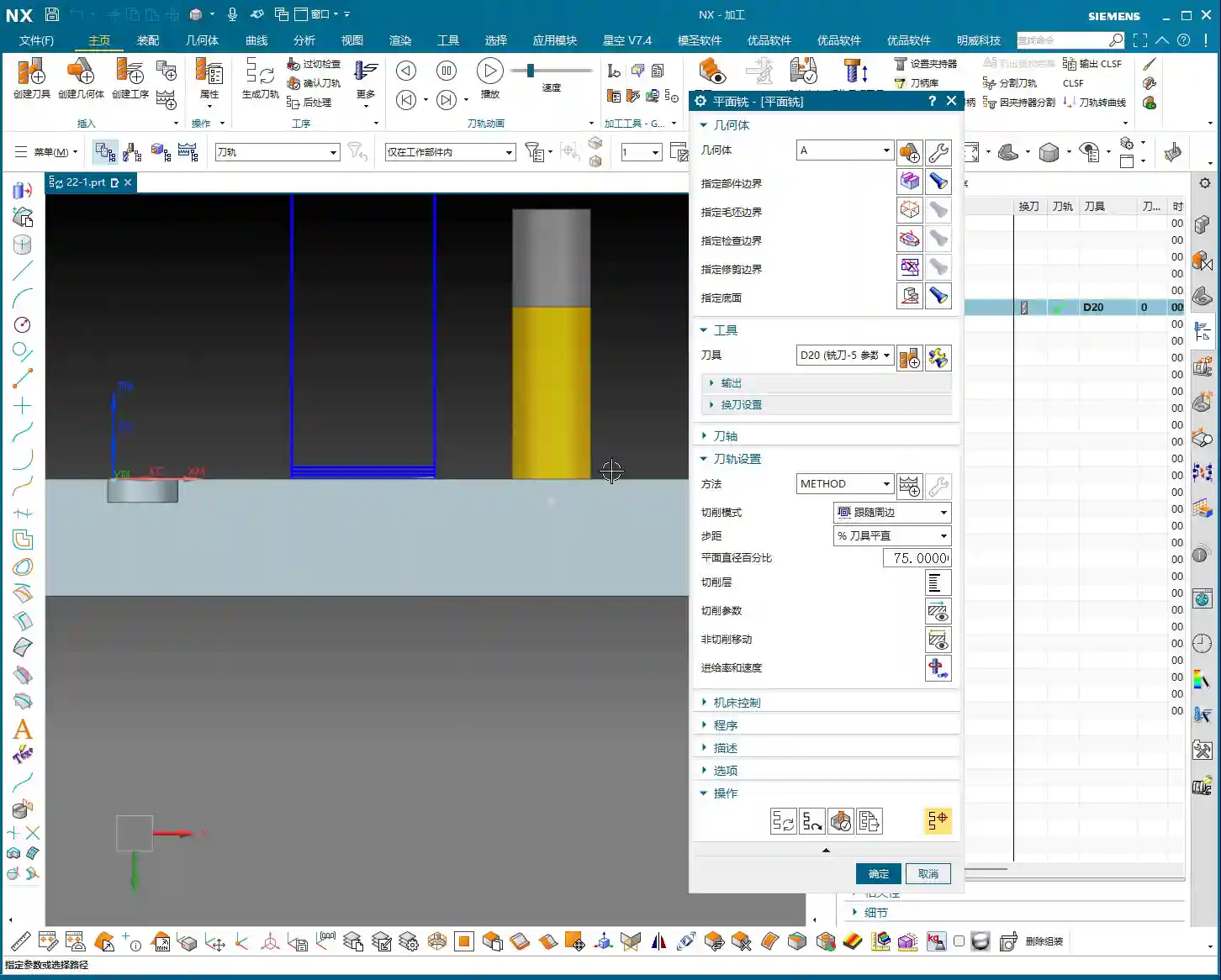
    “Corner Cleanup” is just that—it’s for removing residual material from corners. “Side Milling,” on the other hand, is more like an efficient Roughing or semi-finishing method, especially suited for clearing large areas of excess material on the outer or inner sides of a part. Its core idea is to utilize the tool’s side cutting edge for machining, gradually stepping into the workpiece, much like dynamic milling (or trochoidal milling) on a CNC machine. It doesn’t plunge and take the entire Depth of Cut at once; instead, it works in layers or steps, advancing laterally. This method is highly efficient and ensures uniform tool loading.

    Boundary and Stock Material Handling: Using a 5mm Roughing Allowance as an Example

    Let’s say we’re starting with stock material cut from the outside, for instance, a part profile cut by a laser cutting machine. While laser cutting offers high precision, for subsequent Finishing, we typically leave a 3 to 5 mm allowance on each side. This time, I’ll use a 5 mm single-side allowance as an example to thoroughly explain how to efficiently remove it using side milling.

    When facing this type of external stock material, you could certainly use planar profile milling, as we discussed before, cutting layer by layer from the top down, engaging with the tool’s end face. However, that method is less efficient and often leads to uneven tool wear. The better approach is to use side milling; it allows you to remove this stock with fewer toolpaths and a much more stable cutting posture.

    In-Depth Analysis of Siemens NX Side Milling Parameters

    Geometry Selection and Machining Region Definition

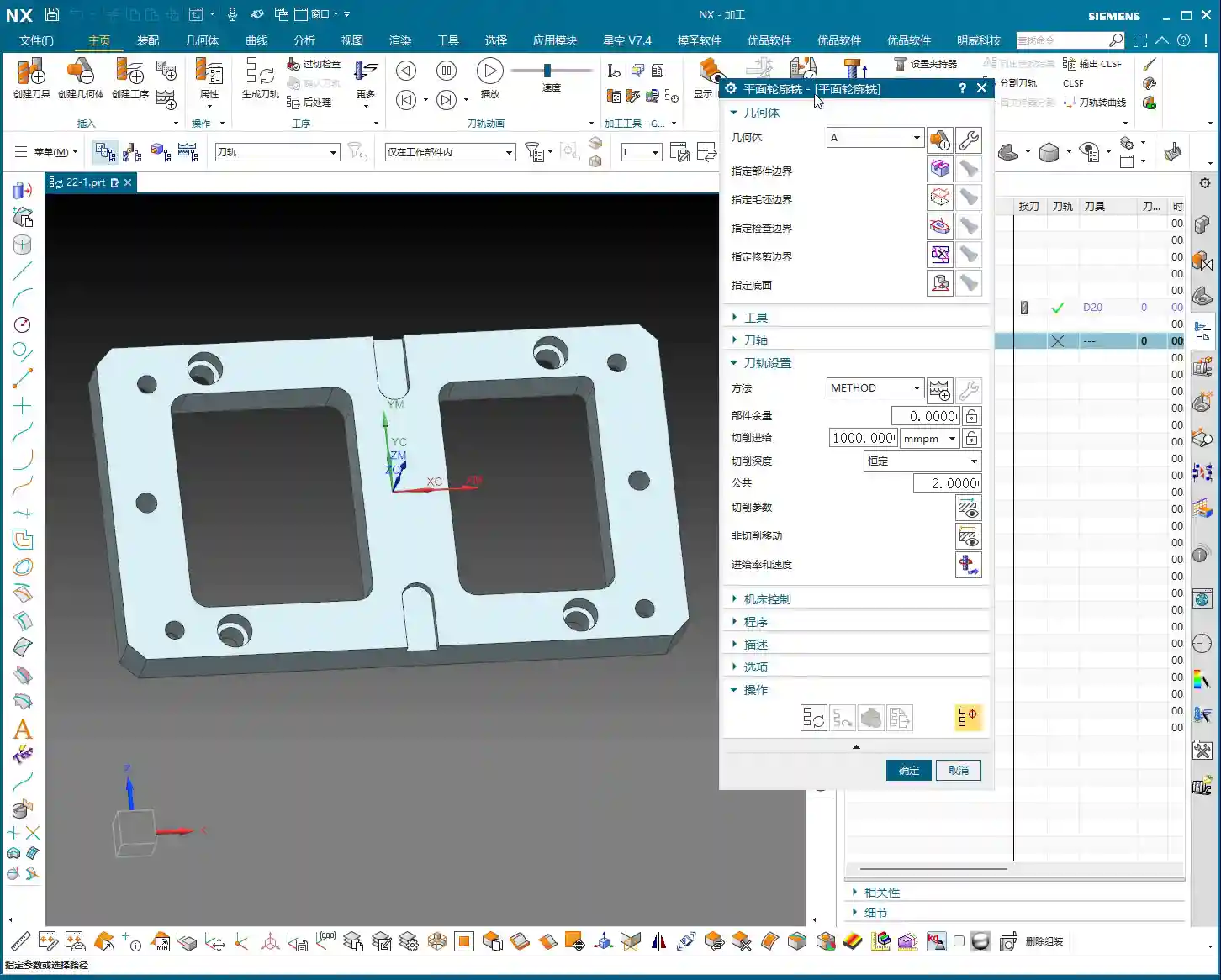
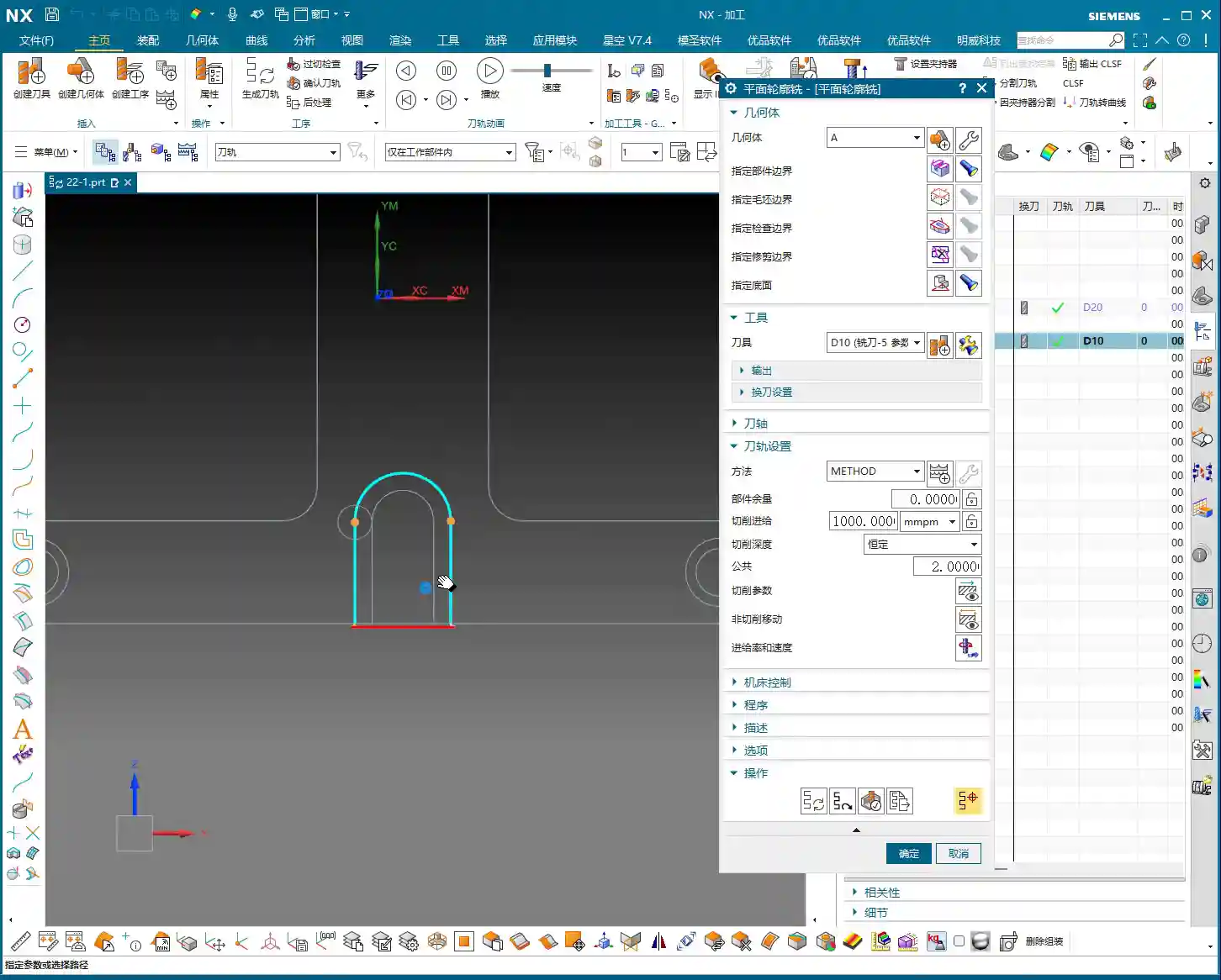
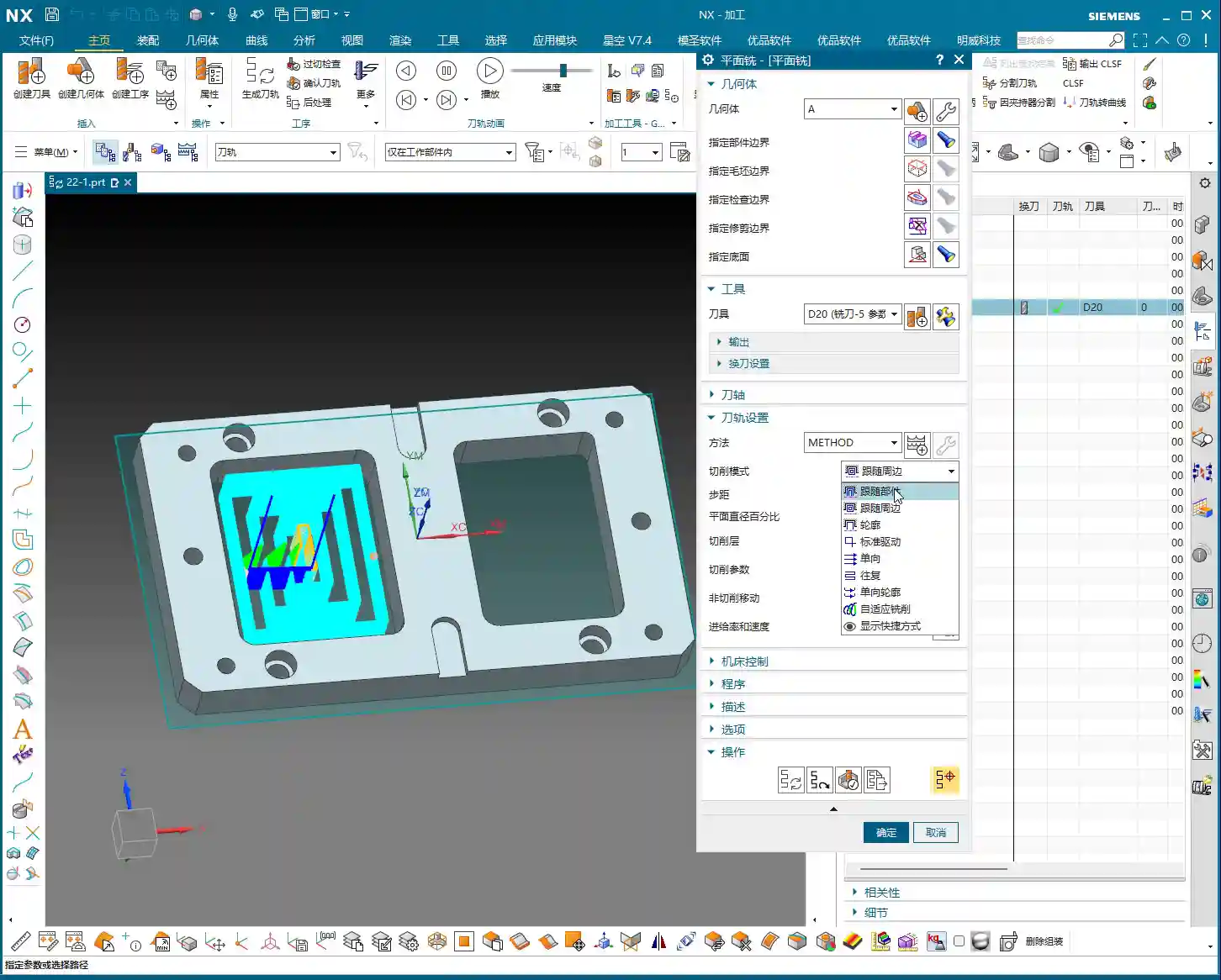
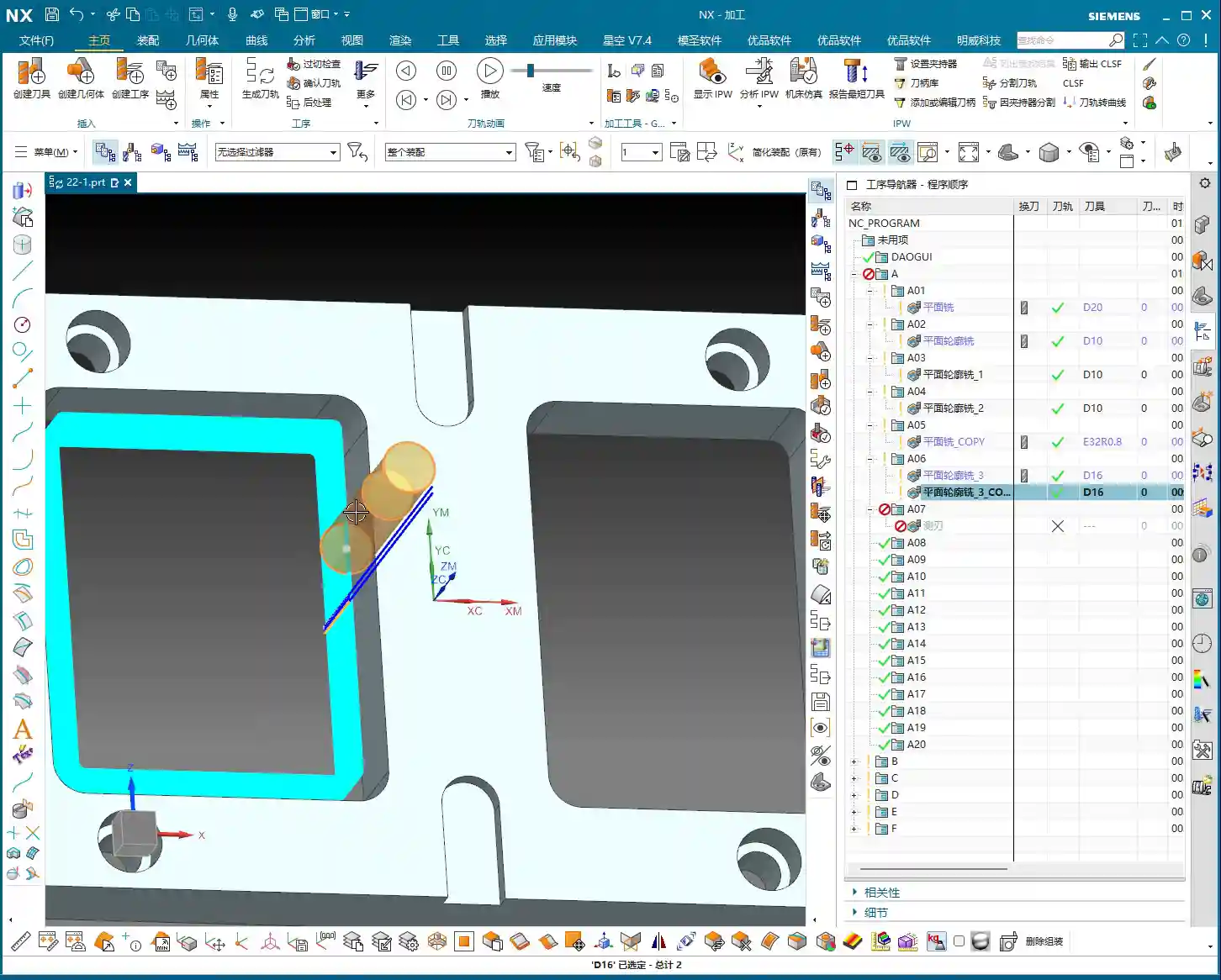
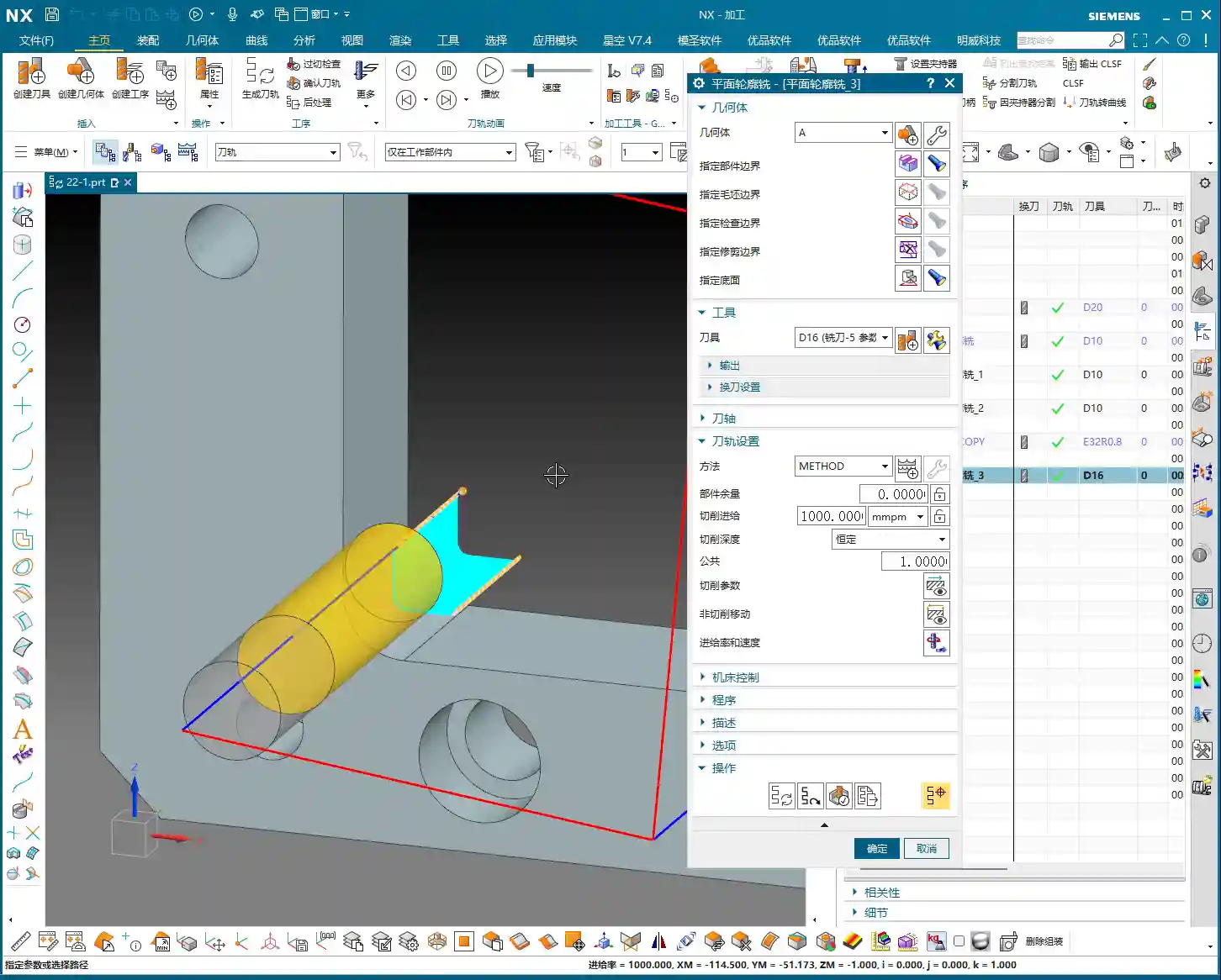
    First, access the “Side Milling” command in Siemens NX. This command’s interface is quite similar to planar milling, so don’t panic. The first step is to select the geometry you intend to machine.

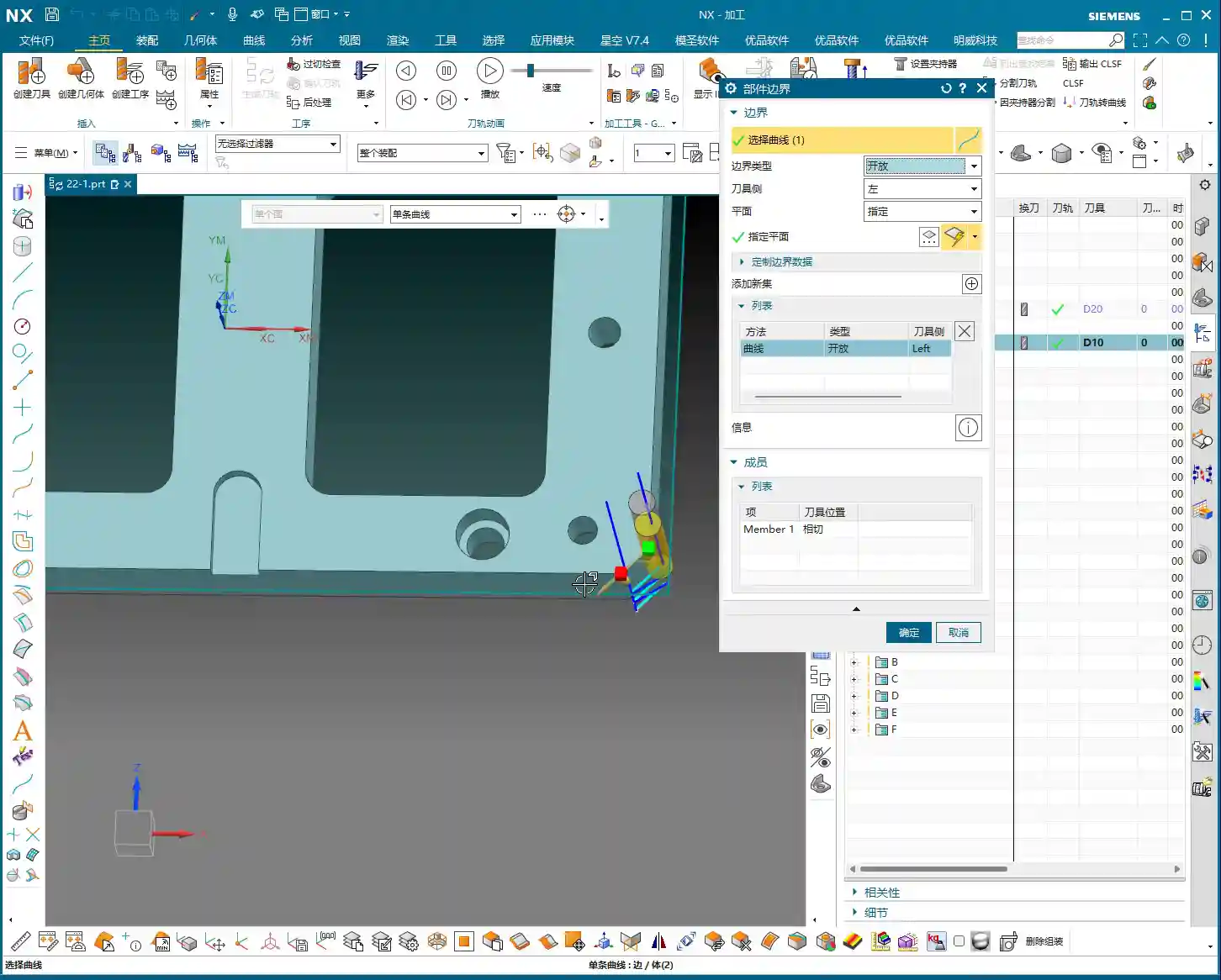
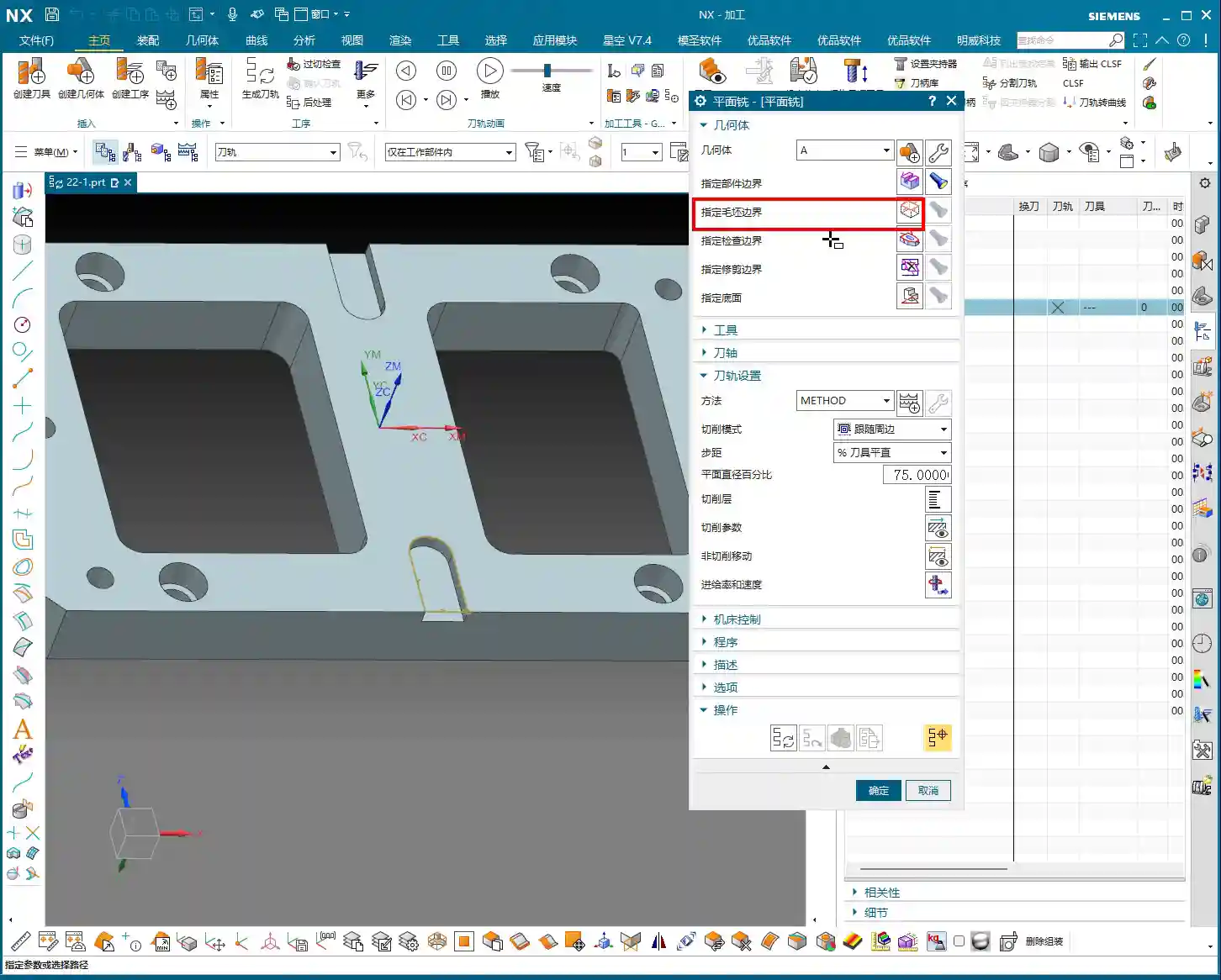
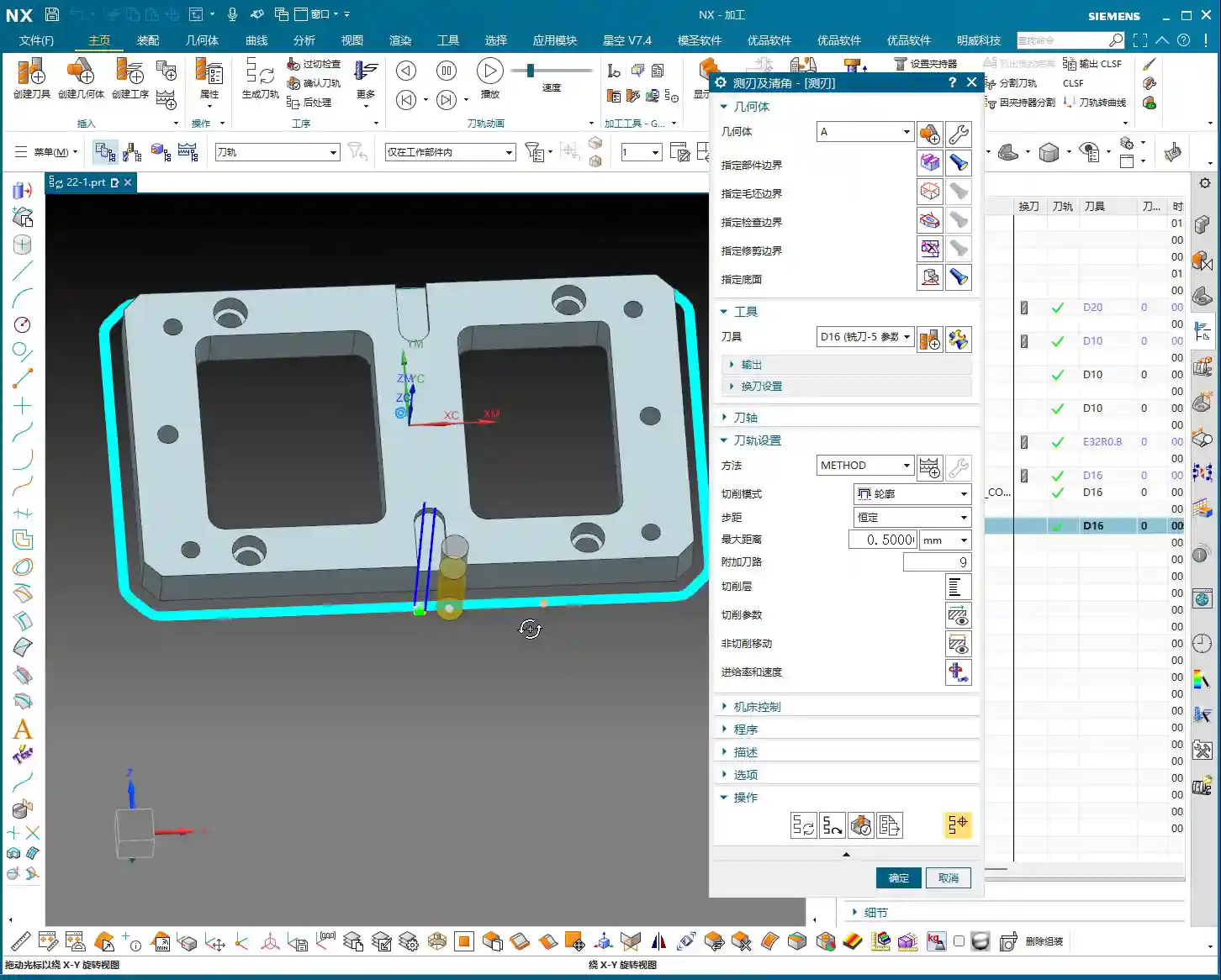
    * Specify Boundary: Click “Select Curves” and choose all the profile boundaries you want to machine. Pay attention here: if the default “Tangent Connectivity” doesn’t work, then simply use Single Selection and click each individual line segment. The system will automatically “project” these boundary lines onto your specified plane, using them as the machining path.
    * Machining Region: After selecting the boundaries, the system will ask if you want to machine the inside or the outside. Since we’re clearing external stock, we’ll choose Outside.
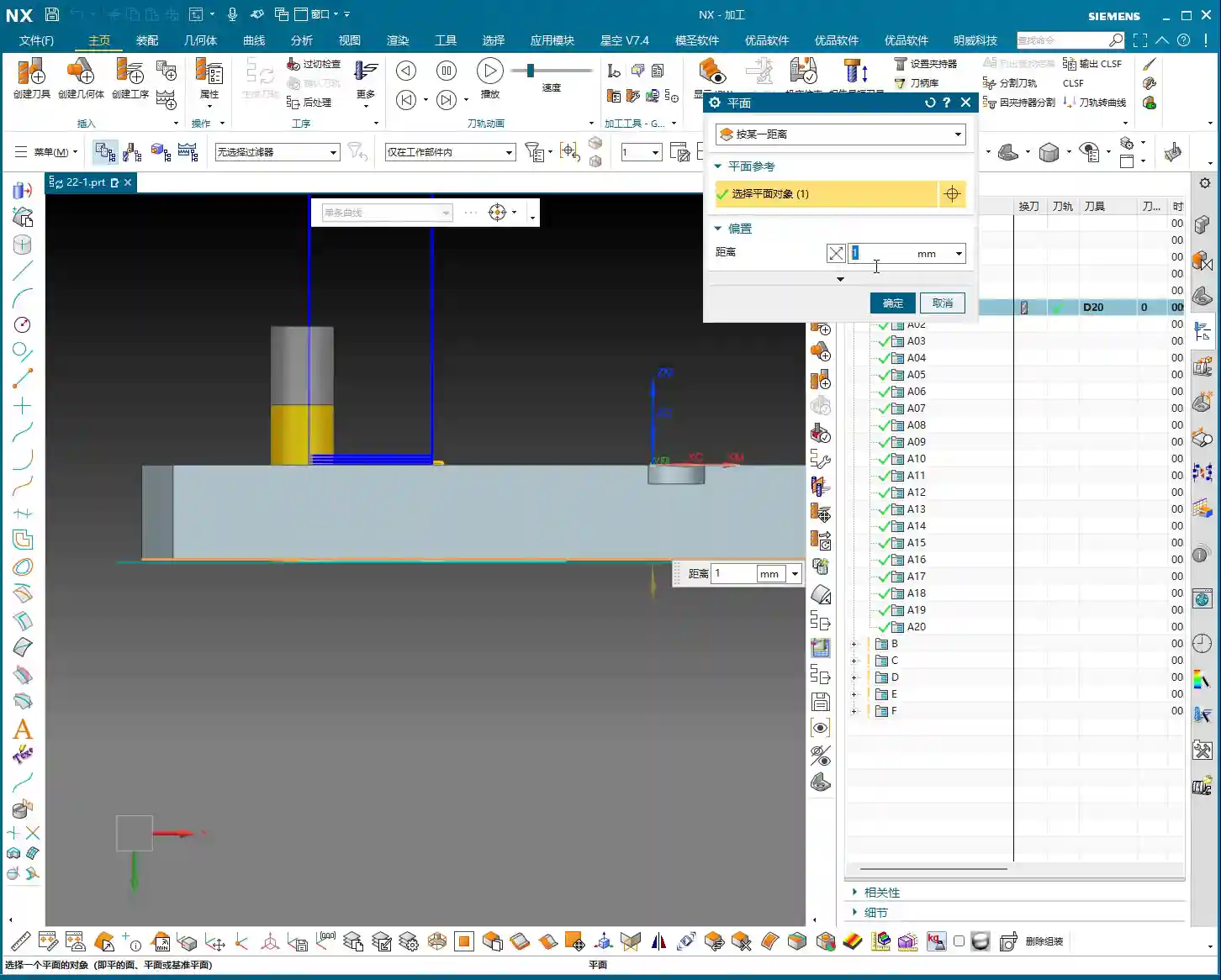
    * Specify Plane: The start plane is usually the top face of the workpiece, and the bottom plane is the depth you intend to machine to.

    Core Algorithm for Toolpath Stepover and Additional Passes

    Next are the most critical parameters for “Side Milling,” these are practical tips not often found in textbooks, so listen up:

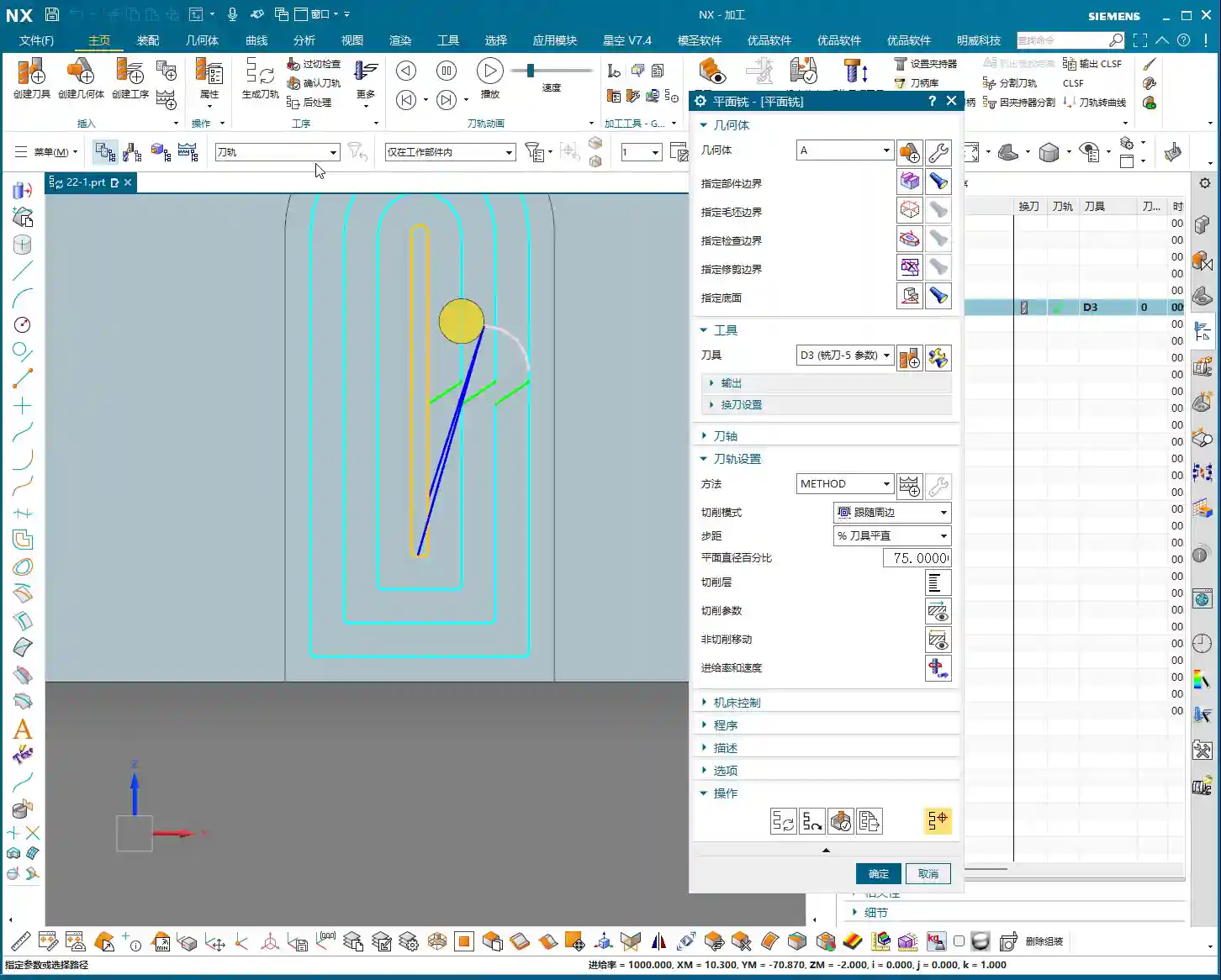
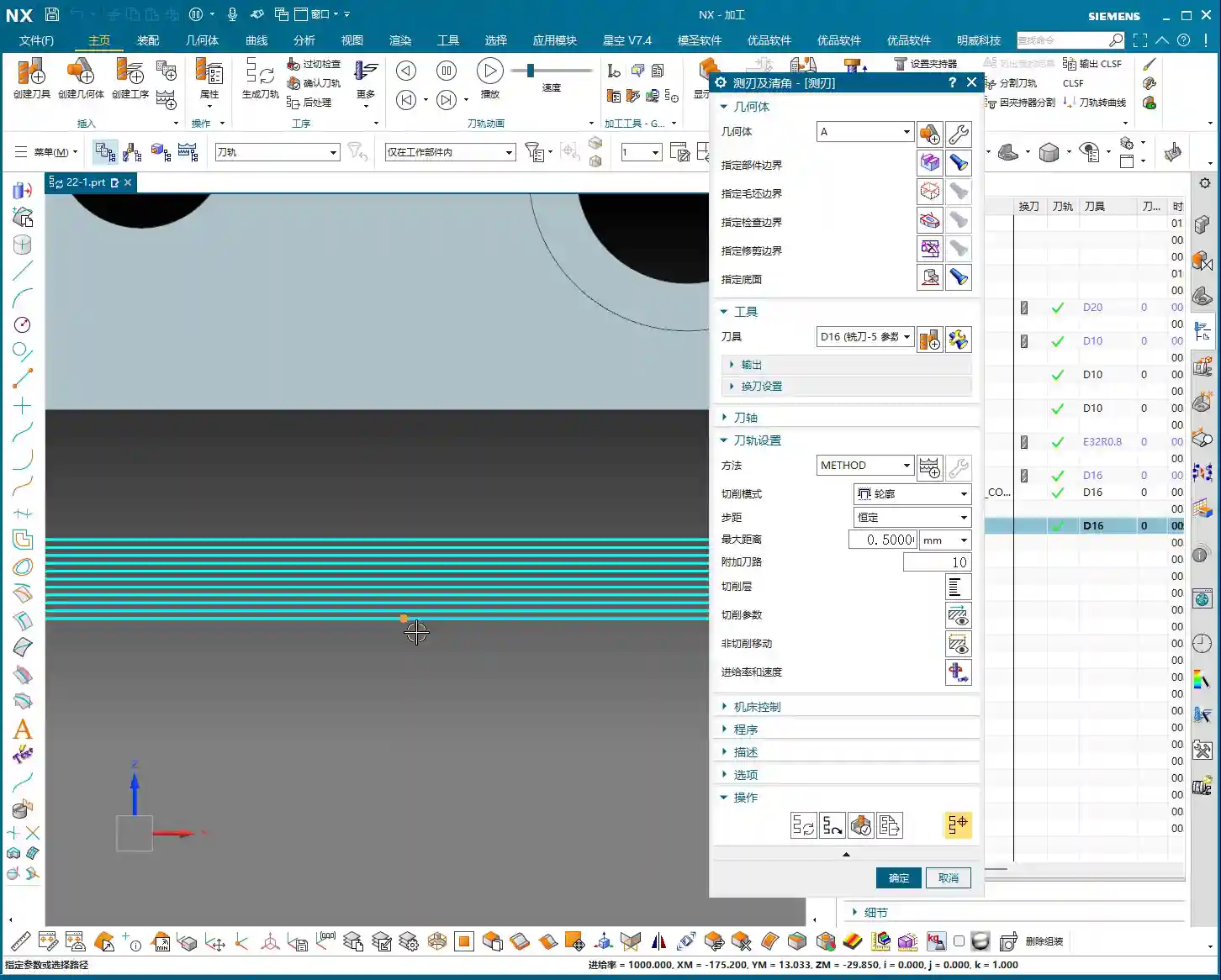
    * Stepover: This parameter determines the lateral feed distance for each cut. The default value is typically 0.5mm. This means the tool moves 0.5mm deeper into the workpiece with each pass.
    * Additional Passes: This is paramount! It determines how many extra cuts are made besides the first one. There’s a little trick here, so pay close attention to the calculation:
    * Suppose we want to clear 5mm of single-side stock, with a 0.5mm Stepover per pass.
    * Theoretically, 5mm ÷ 0.5mm/pass = 10 passes.
    * However, “Additional Passes” here refers to the number of extra toolpaths added beyond the first pass. So, if a total of 10 passes are needed to remove the 5mm, then the additional passes should be 10 – 1 = 9 passes.
    * Similarly, if we want to clear 3mm of stock, with a 0.5mm Stepover:
    * 3mm ÷ 0.5mm/pass = 6 passes.
    * The additional passes would be 6 – 1 = 5 passes.
    * Remember: Don’t count the first pass as “additional,” otherwise, you might remove too much or too little stock!
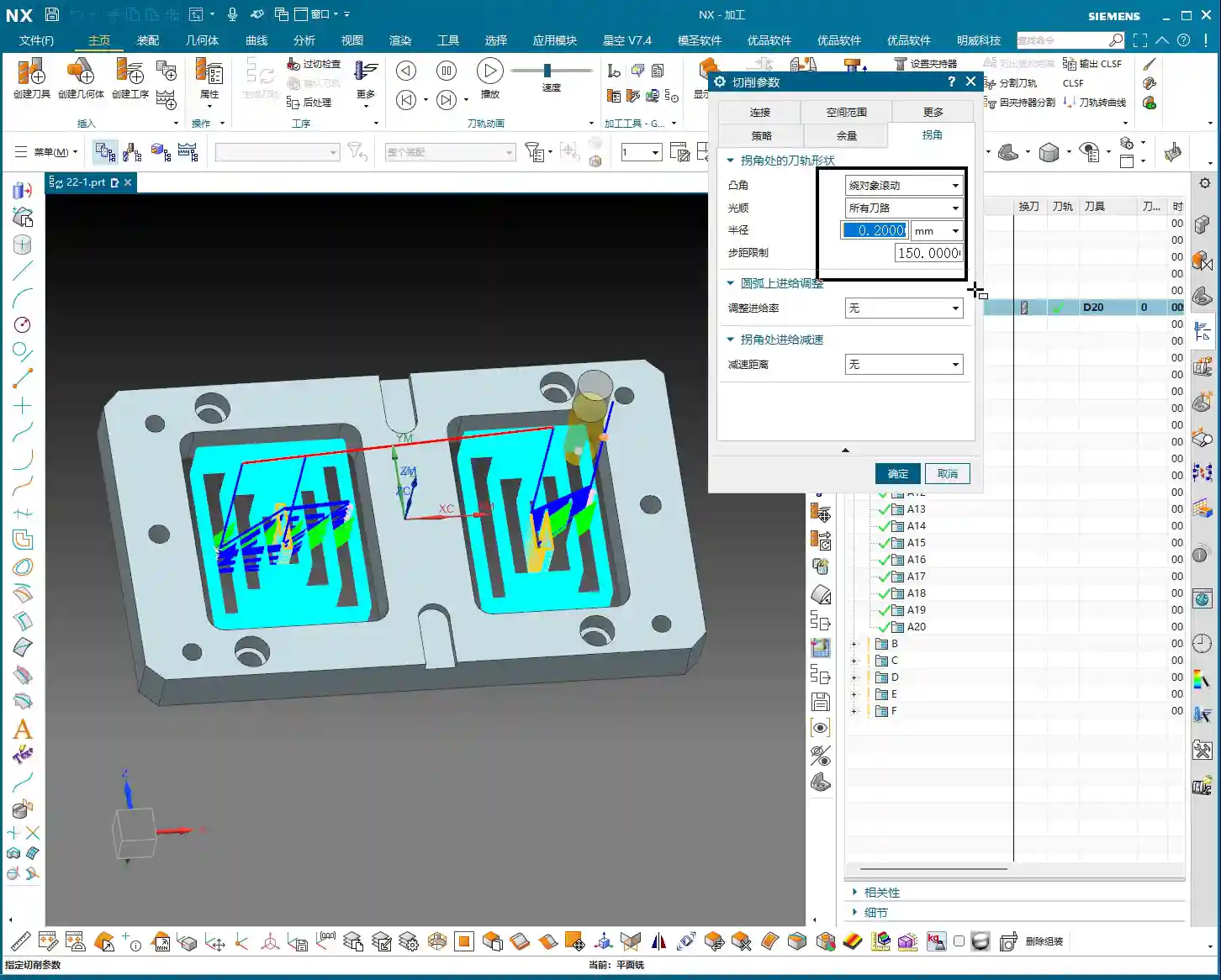
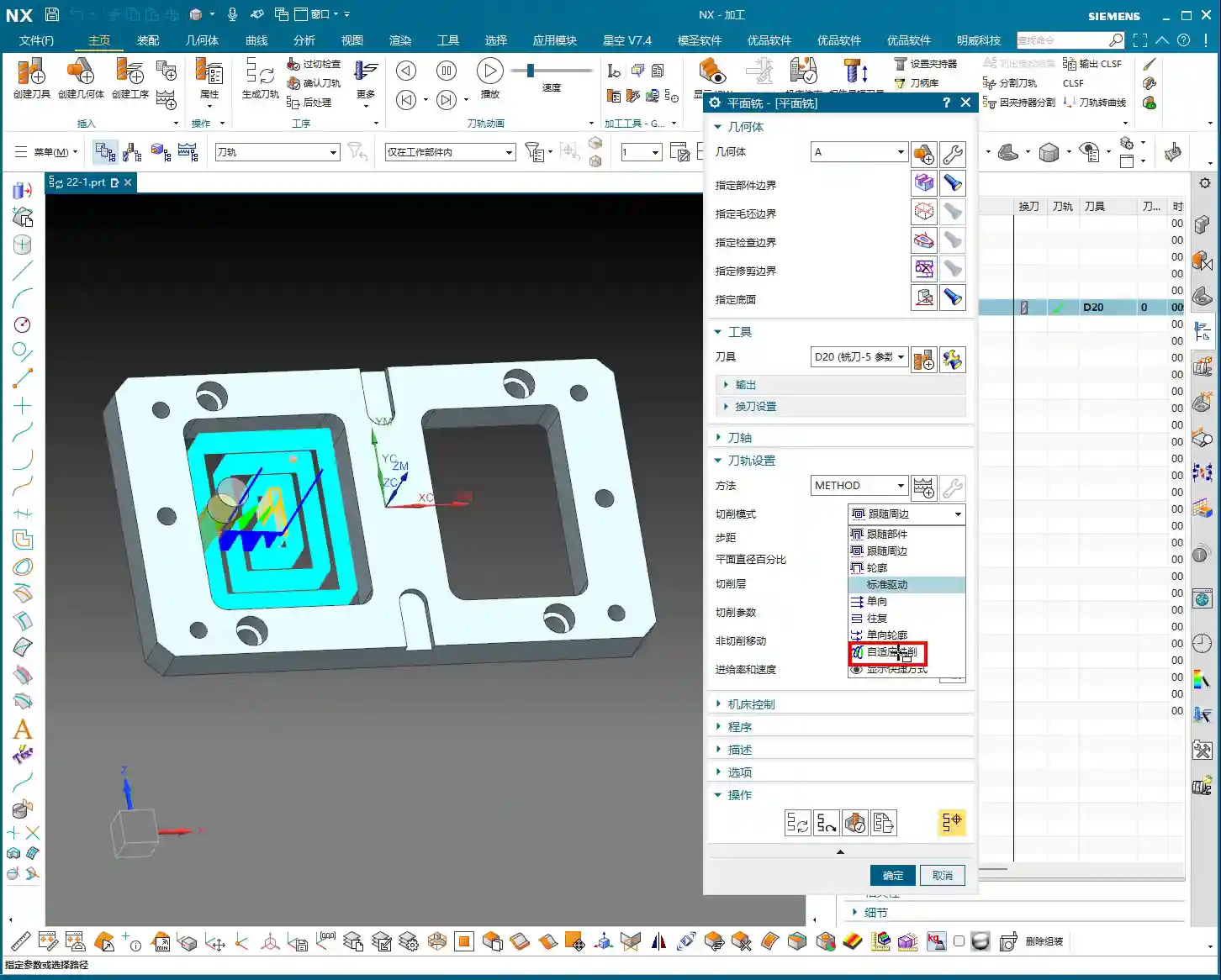
    * Cutting Pattern: When using “Side Milling,” Siemens NX will usually automatically set the cutting pattern to “Contour”. You do not need to change it, nor should you consider changing it to something like “Follow Tool Edge” or similar; that will certainly cause problems, and the program won’t run.

    Multi-Depth Machining: Strategy for Deep Holes or High Stock Material

    In most cases, side milling is a “single-pass full depth” operation. That is, it machines from the top face all the way down to your set bottom depth. However, if the workpiece is particularly deep, or if taking such a large Depth of Cut in one go would cause excessive tool wear, then we’ll need to use multi-depth machining.

    * Find the “Depth Increments” option within “Cutting Parameters.”
    * Change the default “Single Pass Full Depth” to “Constant.”
    * Then set the “Depth Per Cut”. For instance, if you want each pass to take 20mm, then enter 20. This way, if the total depth is 40mm, it will automatically divide it into two layers for machining.
    * The benefits of multi-depth machining are more uniform tool loading, improved chip evacuation, higher machining stability, and effectively extending tool life.

    Master Wang’s Insights: Siemens NX Templating and Operation Tips

    The “Templating” Advantage of Side Milling

    Some of the younger generation might notice that the parameters within “Side Milling” look remarkably similar to, or even identical to, what we’ve covered for “Planar Milling” or “Profile Milling.” Why is that?

    The truth is, many operations in Siemens NX are “packaged” or, you could say, “templated” based on underlying modules. This “Side Milling” feature is essentially using the “Planar Milling” function with a preset set of parameters specifically optimized for side cutting. The benefit of this is that it makes our operations more convenient and faster, eliminating the need to modify a bunch of parameters every time, thus reducing the chances of errors. It solidifies the most common side cutting scenarios for you, greatly boosting programming efficiency.

    So, there’s no need for us to get hung up on whether its underlying mechanism is planar milling. Just know what it can do and how to execute it in the fastest and most stable way—that’s what matters!

    Naming Conventions and Operational Details

    When creating operations in Siemens NX, there are a few small points to pay attention to:

    * Naming Conflict: If you’ve already created an operation named “Side Milling” and try to create another one, the system will prompt you that operations with the same name are not allowed. Don’t be foolish in this situation; just add a number or symbol to the end, like “Side Milling 1” or “Side Milling.1”. This is how the software logic works, and we have to go with it.
    * Practice Makes Perfect: These operations form the foundation of your proficiency. After each lesson, make sure to machine a few parts yourself, click around, and input parameters multiple times. Practice reveals the truth; don’t just listen to me talk, get your hands dirty!

    Summary: Pitfall Avoidance Guide

    Master Wang trains apprentices by never getting bogged down in fancy theories, only by teaching practical skills that are useful in real-world scenarios and help you avoid common pitfalls. Let me quickly recap the essence of today’s lesson for you:

    * Don’t Confuse Terminology: Remember, “Side Milling” is not “Corner Cleanup”. Its focus is on using the tool’s side cutting edge to remove stock incrementally, boosting efficiency.
    * Calculate “Additional Passes” Carefully: This is a trap! It’s crucial to remember: Total Passes = Additional Passes + 1. Miscalculate even one step, and you might not clear all the stock, or worse, leave no allowance for Finishing.
    * Don’t Mess with the Cutting Pattern: In side milling, the cutting pattern defaults to “Contour”. Don’t blindly change it; it’s already the optimal solution.
    * Cleverly Use “Depth Increments” for Deep Machining: When machining depth is significant, learn to set the “Depth Per Cut” for multi-depth machining. This effectively protects the tool, improves machining quality, and boosts efficiency. Don’t just think about going full depth in one pass; that’ll wear out your tool!
    * Naming Conventions are Fundamental: Don’t get stuck because of duplicate names; learn to add a sequence number or identifier to the name. This is basic software operation common sense.
    * Real-World Cutting Spark Beats Simulation: No matter how realistic Siemens NX simulation is, it can’t compare to the cutting sparks and sounds from an actual machine tool during machining. A good machinist can judge the quality of a toolpath and whether the Depth of Cut is appropriate just by listening and observing the sparks. Don’t just rely on software simulations; go down to the shop floor and observe the actual conditions!

    Alright, that’s all for today. Go back, practice more, ponder on these concepts, and make them your own! See you next time!

    👤 About the Author:
    The author is a veteran CNC machining professional with 15 years of industry experience, specializing in UG NX programming. This article is an original work representing personal practical insights.
    ⚠️ Copyright Notice: Unauthorized reproduction or distribution without prior communication is strictly prohibited.
  • NX Planar Profile Milling Corner Cleanup and Reference Tooling in Practice: Master Wang Teaches You

    📝 Key Takeaways: ** Today, Master Wang will personally guide you through the ultimate technique for NX Planar Profile Milling Corner Cleanup. The core lies in applying the “Reference Tool” feature. By accurately setting the roughing tool information, the Corner Cleanup tool can intelligently identify and remove residual material, preventing tool crashes. Concurrently, Master Wang shares practical experience on selecting end mills (E-type tools) and setting the overlap distance, ensuring both machining quality and efficiency. **

    Introduction: The Importance of Corner Cleanup – Small Details, Big Impact

    Listen up, folks! Last time, we covered roughing side wall treatment and tool compensation – these are fundamental skills. But today we’re tackling a tough nut to crack – Planar Profile Milling Corner Cleanup. Don’t think Corner Cleanup is just about switching to a smaller tool and milling away. There’s a lot more to it. Mess it up, and you’re either leaving residual material or causing tool crashes – all wasted effort. In our line of work, you need to be observant and know your stuff. These practical tips, which you won’t find in textbooks, Master Wang will break down and explain thoroughly today!

    Residual Material from Roughing: Why Corner Cleanup is Necessary?

    The ‘Side Effects’ of Large Tool Roughing

    In machining, to improve efficiency, we typically use larger tools for roughing. For example, you might use a D32 flat end mill for roughing a part’s side walls. This D32 tool can quickly mill away most of the material, no problem. However, issues arise when the part’s internal corner radius is smaller than the roughing tool’s radius.

    For instance, if your part has an R10 internal corner radius. A D32 tool has a radius of R16. Obviously, an R16 tool cannot perfectly enter an R10 corner. It can only follow an R16 path, which means it will inevitably leave a ring of residual material at the R10 corner. If this residual material isn’t cleaned up, subsequent finishing passes will be problematic. The finishing tool will first encounter these roughing remnants, which could, at best, affect dimensional accuracy and surface quality, or at worst, cause immediate tool breakage!

    Residual Material Traps Invisible to the Naked Eye

    Don’t just rely on software simulations. When the tool runs on the machine, the cutting sparks and sounds are the most accurate feedback. Sometimes, the screen looks perfectly clean, but in reality, a thin layer of residual material remains. You might not even spot this with your eyes, but it’s physically there, waiting to cause problems for your subsequent finishing passes. Therefore, this Corner Cleanup step must not be overlooked!

    The Core of NX Corner Cleanup: The Clever Use of Reference Tools

    ‘In-Process Workpiece’ and ‘Reference Tool’: NX’s Intelligent Recognition

    So, how can you intelligently and efficiently remove this residual material in NX? The core feature lies in the ‘Reference Tool’. Listen up, this is the soul of NX Corner Cleanup!

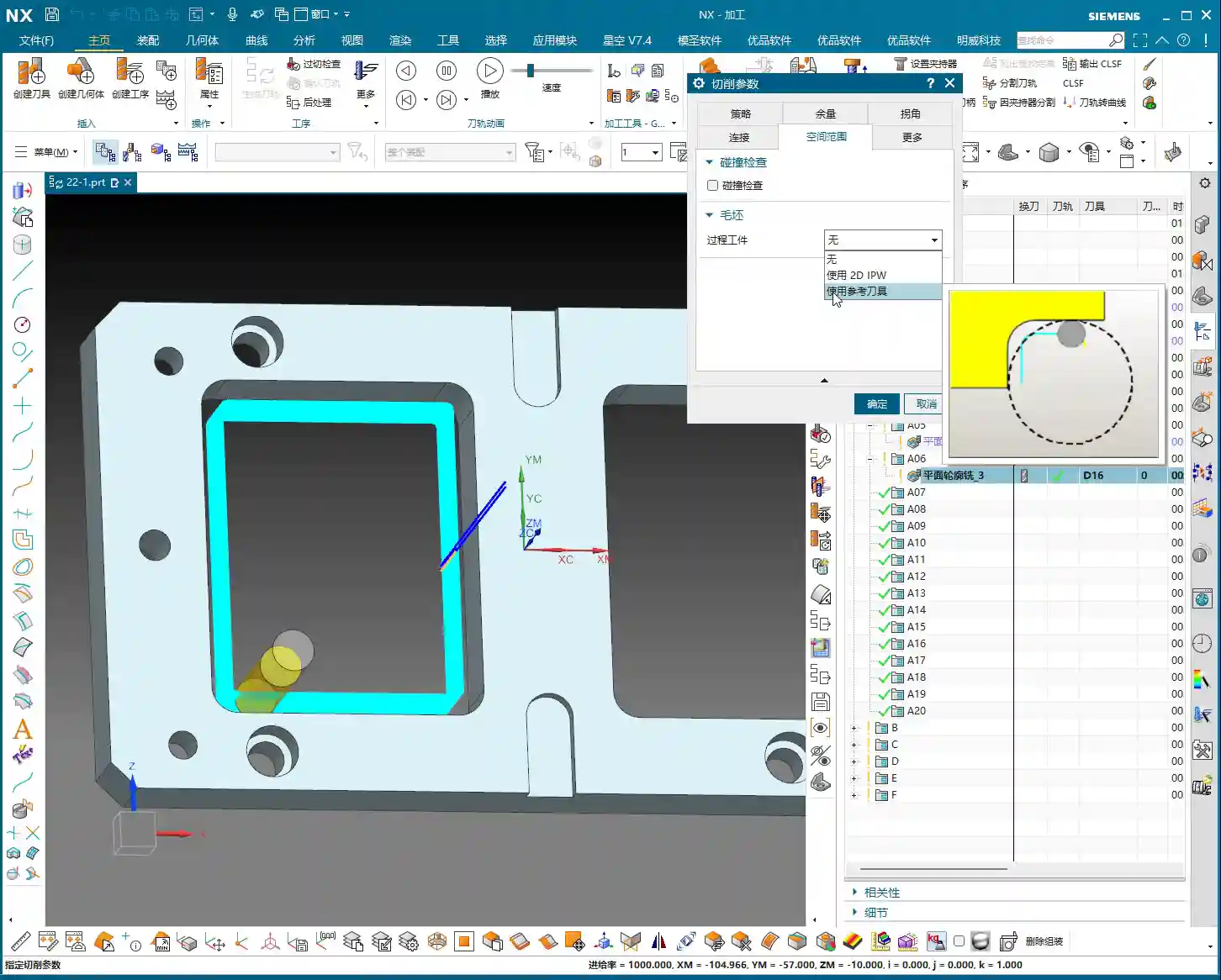
    After selecting the ‘Planar Profile Milling’ operation, go into the tool path parameters, find the ‘Containment’ tab, and within it, a sub-option called ‘In-Process Workpiece’. Click on it, and you’ll see a crucial checkbox: ‘Use Reference Tool’.

    This function means: you are telling the current Corner Cleanup tool that the area it needs to machine is where the previous roughing tool could not reach. In other words, the Corner Cleanup tool won’t re-mill the entire surface; it will only ‘target’ the residual material and strike precisely. This significantly saves machining time and protects the tool.

    Selecting the Correct Reference Tool

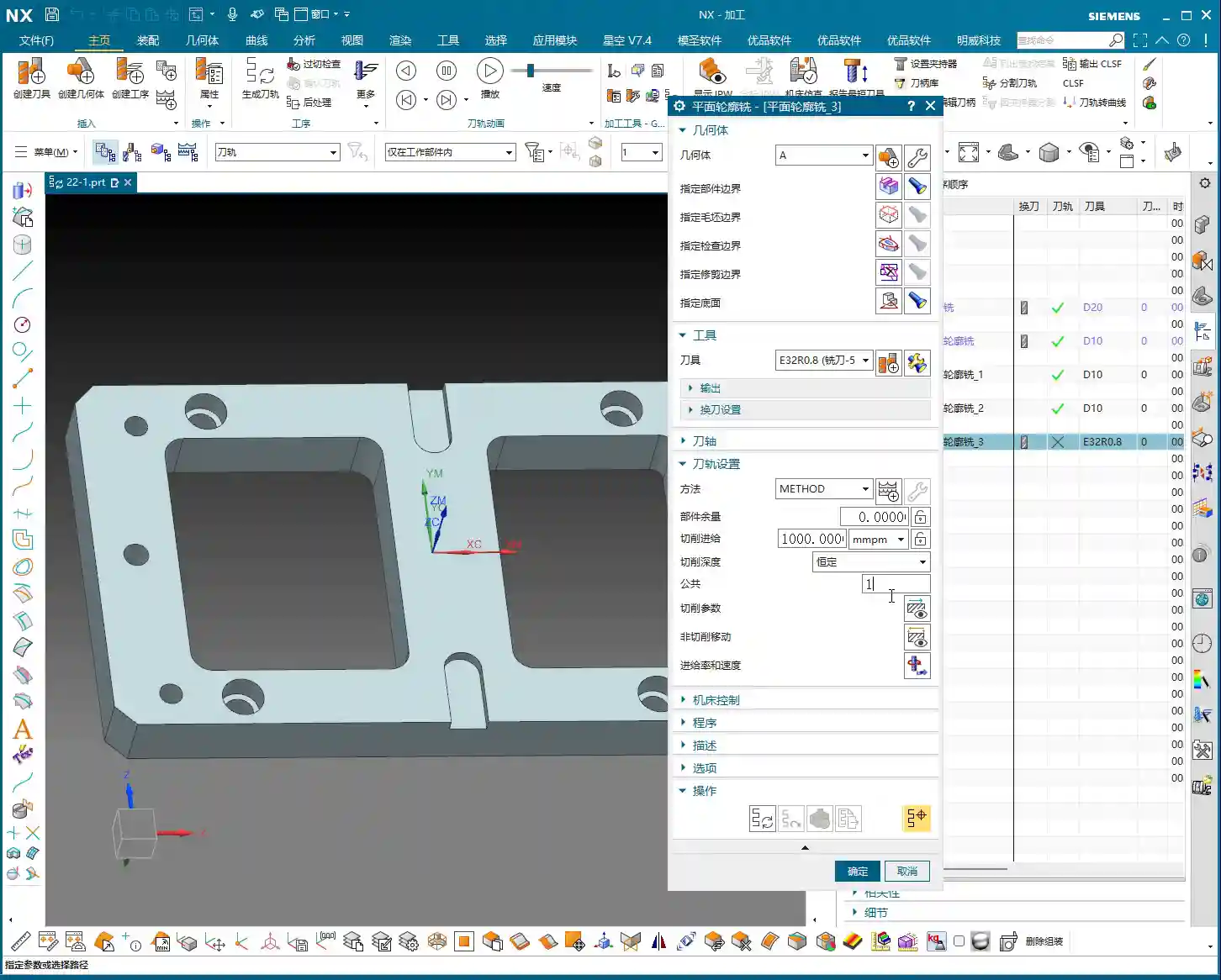
    The selection of the reference tool is crucial. You must select the previous tool (or any earlier tool) that left residual material. If your roughing operation used a D32 flat end mill, then for Corner Cleanup, you should designate this D32 tool as your reference tool.

    For example, if we are now using a D16 tool for Corner Cleanup. NX will automatically calculate the areas that the D32 tool could not access, based on the geometry of your defined D16 tool and the D32 reference tool, and then only allow the D16 tool to machine these specific areas. Pretty clever, right? That’s the beauty of intelligent machining!

    Parameter Deep Dive: Overlap Distance and Reference Tool Selection

    ‘Overlap Distance’: Safety First, Results Foremost

    Within ‘Containment,’ besides the reference tool, there’s another parameter called ‘Overlap Distance’. What does this parameter mean? It makes the Corner Cleanup tool path extend slightly beyond the residual material area, essentially ‘going a bit further.’

    Why the need to go a bit further? This is to prevent tool crashes and ensure thorough cleaning. If the Corner Cleanup tool path stops precisely at the edge of the residual material, there’s a risk of tiny remnants being left behind, or vibration during tool entry/exit, affecting surface quality. So, Master Wang’s experience is that the default value of 2mm is usually reliable, but you can adjust it based on the actual situation. For instance, for precise Corner Cleanup, I might set it to 0.5mm to 1mm to ensure thorough cleaning without excessive air cutting.

    The ‘E’ vs. ‘R’ Debate for Reference Tools: Master Wang’s Exclusive Secret

    In NX, tools typically come in E-type (End Mill, flat bottom) and R-type (Ball Nose, ball-end or corner radius) variations. When setting up reference tools, there’s a very important practical trick.

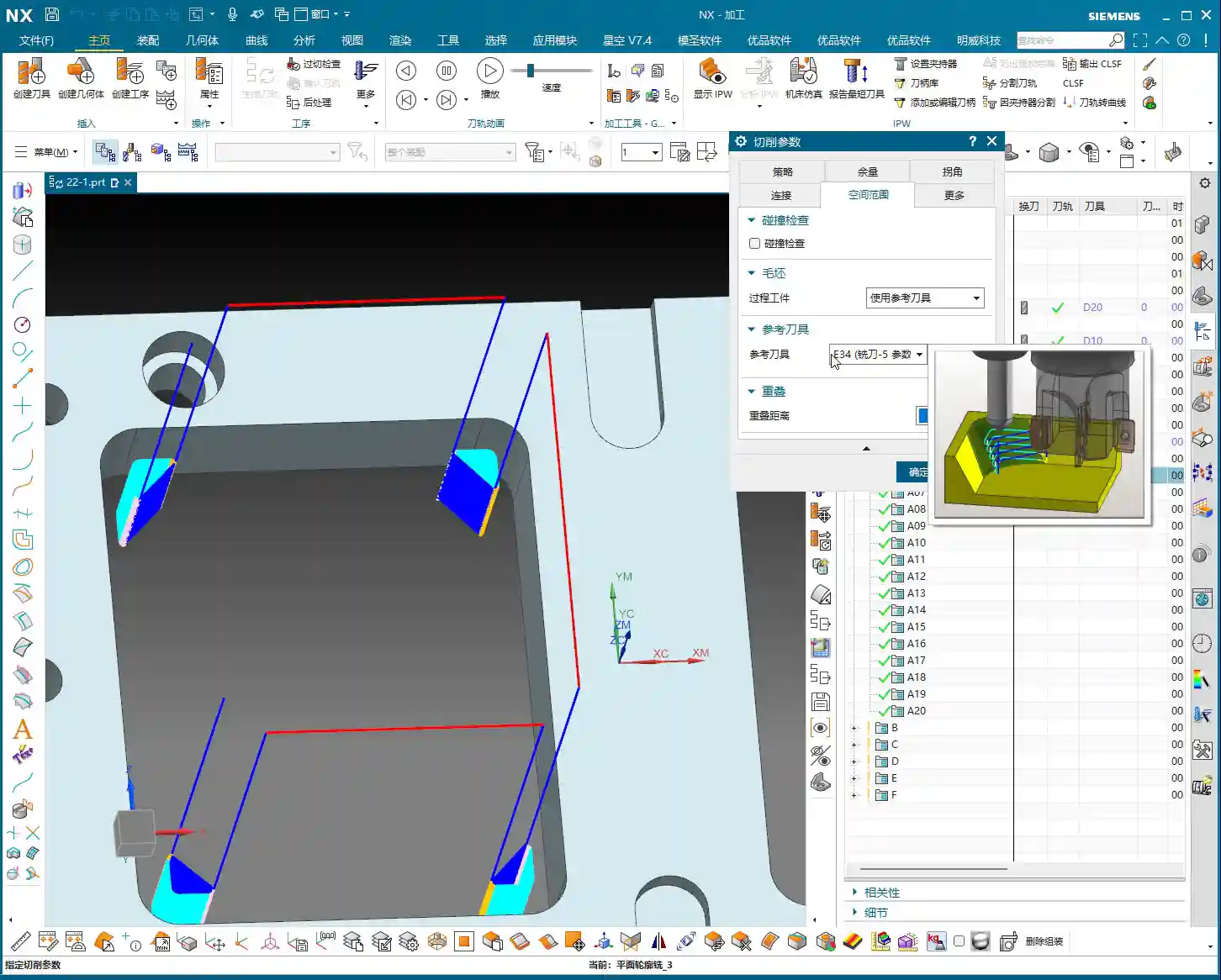
    If your roughing tool is an E32 (i.e., D32 diameter, no corner radius), then when defining the reference tool, it’s best to use an E-type tool for reference as well. Even better, Master Wang typically references a slightly larger E-type tool, such as an E34, and then sets the overlap distance to 0.

    Why is this done? Because when NX calculates residual material, it uses the shape of your defined reference tool as the basis. If you reference exactly a D32 tool, even with an overlap distance set, sometimes at the roughing and Corner Cleanup tool path transition, a minute ‘witness mark’ (a trace of residual material) might still be left. However, by referencing an E34, you’re essentially telling NX that ‘the previous tool’ was even larger than D32. This causes the D16 Corner Cleanup tool path to extend further outward, completely sweeping away any tiny bit of residual material that D32 might have left. This ensures thorough cleaning while avoiding unproductive air cutting caused by overlap distance – these are hard-earned insights from years of experience!

    Conversely, if you used a D32 flat end mill for roughing but referenced a D32R0.8 (with an 0.8mm corner radius) tool, then NX would assume the roughing tool had an R0.8 corner. The calculated residual material area would be smaller, potentially leaving remnants in some places, forcing you to add an extra pass – isn’t that just wasted time? Therefore, matching the tool type and size is particularly critical here.

    Corner Cleanup Strategy: Climb Milling vs. Mixed Milling

    Choosing the Right Cutting Method

    In precise operations like Corner Cleanup, the choice of cutting method also influences the final result. NX offers options such as Climb Milling, Conventional Milling, and Mixed Milling.

    Master Wang typically recommends Climb Milling for Corner Cleanup. The advantages of Climb Milling are that the cutting force direction aligns with the feed direction, leading to relatively longer tool life and better machined surface quality, making it especially suitable for Corner Cleanup operations that require a good surface finish. While Mixed Milling can improve efficiency in some situations, for scenarios like Corner Cleanup which demand stable cutting, Climb Milling offers higher reliability.

    Summary: Pitfall Avoidance Guide

    1. Understand the essence of the ‘Reference Tool’: It’s not about re-machining the entire part, but intelligently identifying and removing residual material left by the previous tool. This is key to improving efficiency and tool life.
    2. Precisely select the reference tool: Ensure your chosen reference tool accurately reflects the shape and size of the tool used in the previous roughing step. If the roughing tool was a flat end mill (E-type), select an E-type for reference.
    3. Master Wang’s Exclusive Secret: If roughing with a D32 flat end mill, for Corner Cleanup, you can reference an E34 (a slightly larger E-type tool) and set the overlap distance to 0. This thoroughly removes residual material, prevents minute ‘witness marks,’ and reduces air cutting. If your reference tool is the same size as the actual roughing tool, then the overlap distance must not be 0; a 2mm setting is recommended.
    4. The importance of overlap distance: It ensures the tool path extends slightly beyond the residual material area, preventing tool crashes, and ensuring thorough Corner Cleanup. This parameter is often overlooked by newcomers.
    5. Use Climb Milling for Corner Cleanup: For fine machining operations like Corner Cleanup, Climb Milling generally provides better surface quality and tool life.
    6. Think outside the box: Don’t be rigid! Features like ‘Reference Tool’ and ‘Tool Compensation’ are interchangeable across many operation modules in NX, for example, Floor and Wall Milling can also utilize these techniques. Learning to apply principles broadly is how you master NX and become a true expert!

    Corner Cleanup is an art that you won’t master just by clicking a few buttons. It requires a deep understanding and extensive experience with tools, materials, machines, and Siemens NX software. Practice extensively, observe diligently. Don’t just listen to Master Wang; get your hands dirty, try things out, watch the cutting sparks, feel the machine vibrations – that’s where true skill comes from!

    👤 About the Author:
    The author is a veteran CNC machining professional with 15 years of industry experience, specializing in UG NX programming. This article is an original work representing personal practical insights.

    ⚠️ Copyright Notice: Unauthorized reproduction or distribution without prior communication is strictly prohibited.
  • NX Guide: 机床控制、加刀补讲解

    📝 Key Takeaways:

    [VIDEO_HERE]

    👤 About the Author:
    The author is a veteran CNC machining professional with 15 years of industry experience, specializing in UG NX programming. This article is an original work representing personal practical insights.

    ⚠️ Copyright Notice: Unauthorized reproduction or distribution without prior communication is strictly prohibited.

  • Siemens NX Planar Profile Milling: Master Wang Teaches Precise Boundary Control, Trim/Extend, Stock

    📝 Key Takeaways: **

    Siemens NX Planar Profile Milling: Boundary Control and Trim/Extend

    Hello everyone, Master Wang here. Today, let’s continue our discus…

    Hello everyone, Master Wang here. Today, let’s continue our discussion on boundary control in planar profile milling within Siemens NX programming. Don’t let this seem like a minor detail; in actual production, misunderstanding this can lead to serious consequences!

    Core Pain Point: Improper Boundary Handling Compromises Machining Quality

    My apprentices, when they first started, often messed up due to improper boundary handling. Either the workpiece wasn’t milled completely, or tool entry marks were too noticeable, or worse, they’d directly cause a tool crash or damage the workpiece. These aren’t things you learn from a textbook; you truly understand them by getting your hands dirty next to the machine.

    Milling Strategy Selection: The Trade-off Between Arc and Linear Tool Entry

    Listen up. The program’s default tool entry method, especially when encountering sharp corners or narrow areas, can easily cause problems if you use linear tool entry. The cutter plunges straight down or moves directly in, leading to obvious tool marks on the machined surface, and even excessive Depth of Cut (DOC) or burrs at corners. This is especially true when machining tough materials like titanium alloys or high-temperature nickel-based alloys; the chatter and tool wear will be unbearable!

    That’s why I usually change the tool entry method from linear to arc tool entry. An arc transition is much smoother, effectively reducing impact during tool entry, protecting the tool, and improving machined surface quality. This small change can save you a lot in rework and tool costs.

    Traditional Extension Method: Limitations of Modifying the Sketch

    You might ask, “Master Wang, why don’t I just extend the machining boundary line directly in the sketch?” Yes, that’s right. Like we learned before with the “Curve Length” function, you can simply extend the curve outwards by 2 mm, and the toolpath will naturally extend. This works fine for simple chamfers or single operations.

    However, this method has a major drawback:

    1. You’ve modified the original sketch. If this sketch is shared by multiple operations, or if there are other modeling requirements later on, your change could mess up other areas. This is what we call strong parametric associativity, leading to high modification risk.
    2. What’s worse, if you delete that extended auxiliary line, or accidentally rename it, your planar profile milling operation will instantly turn red! That means the program can’t find the reference geometry anymore, rendering it useless. Don’t just rely on the software simulation; make sure it can actually cut material.

    So, I generally make it a habit to put all these auxiliary lines and construction geometry into a separate layer, like layer 253, which I commonly use. This way, it doesn’t affect the main model and is easier to manage.

    Siemens NX Part Boundary Operations Explained: Say Goodbye to “Red Programs”

    What we’re going to learn is how to control boundaries within the machining operation itself. This way, you don’t have to touch the original geometry, and your program won’t easily “turn red.”

    Locating the “Part Boundary” Function

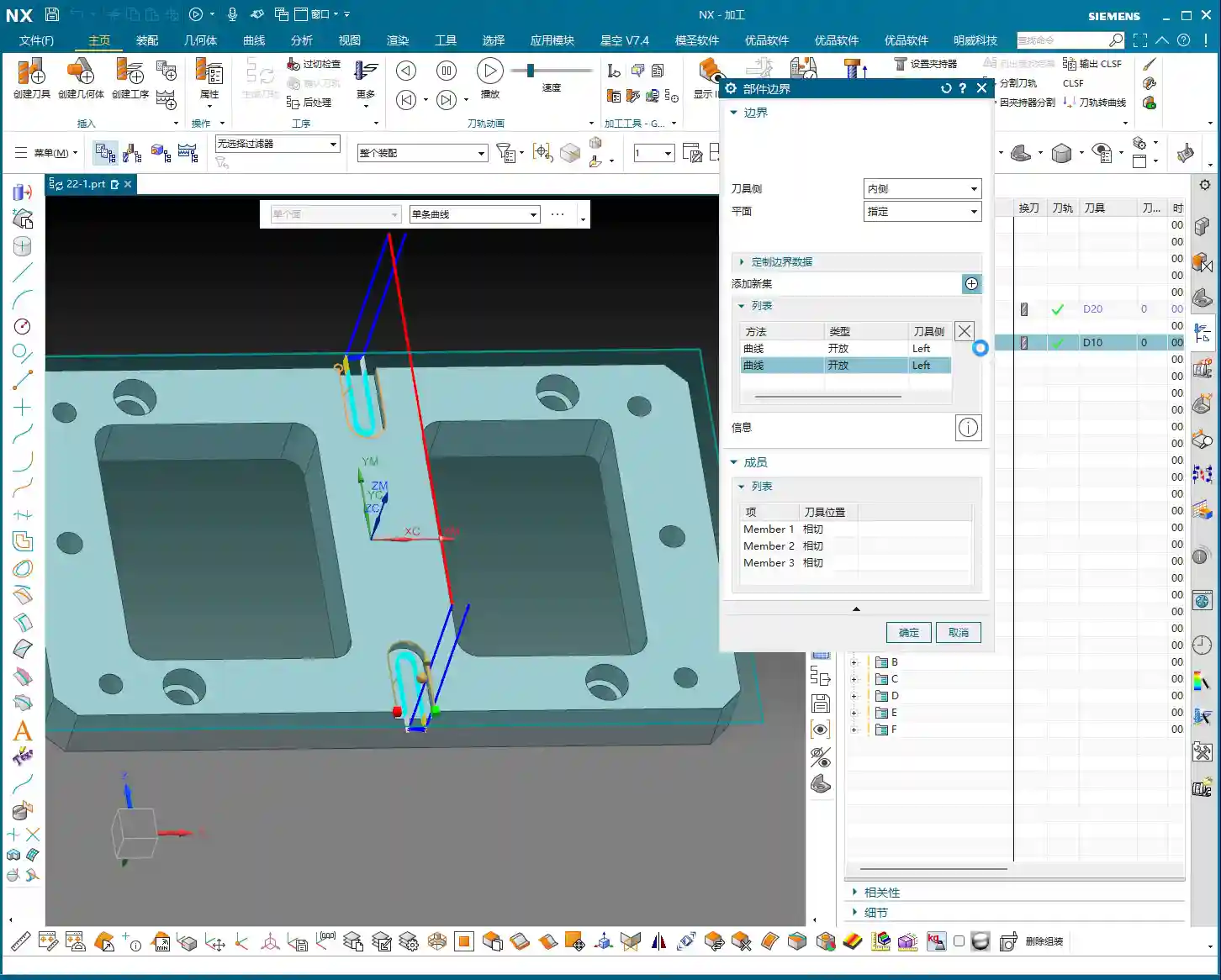
    Double-click your planar profile milling operation and find the “Part Boundary” option. Click it, and you’ll see the machining boundary lines currently selected for your operation. Initially, the program might only have one selected; for clarity, we can select a few more. In the list, clicking any line will cause it to highlight.

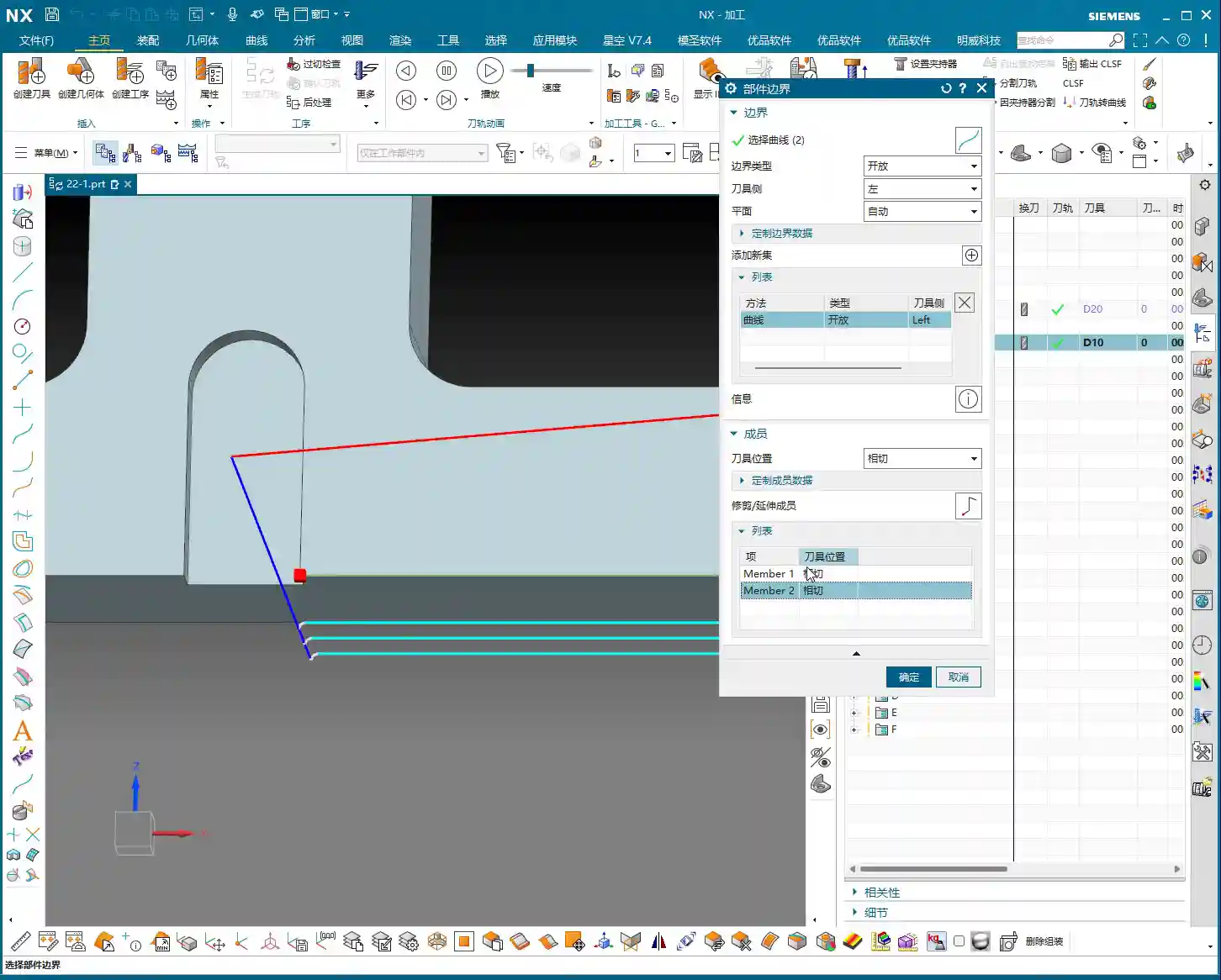
    Activating the “Trim and Extend” Function

    Once you’ve selected and highlighted a specific line in the “Part Boundary” list, you’ll notice a new function appears below: “Trim and Extend.” Pay attention: this function only activates when a line is selected and highlighted; otherwise, you’ll be looking for it forever. Many newcomers get confused here.

    Hands-on Operation: Precisely Extending Boundary Lines

    After activating “Trim and Extend,” you’ll see a circle. This circle is what you use to control extension or trimming. You can:

    1. Directly Drag: Just like dragging a line segment in CAD, pull the circle outwards to extend the toolpath; pull it inwards to trim the toolpath.
    2. Enter a Value: Directly input the desired extension or trim amount into the input box, for example, “2” mm. After confirming, the toolpath will follow your command.

    Remember this: the extension amount cannot be too small. If it’s too small for the tool to effectively engage, the machine will alarm out! This function allows you to extend or trim the toolpath without modifying the original geometry, so the program certainly won’t “turn red.” Talk about peace of mind!

    Tool Offsetting Selection: The Difference Between “Tangent” and “Open”

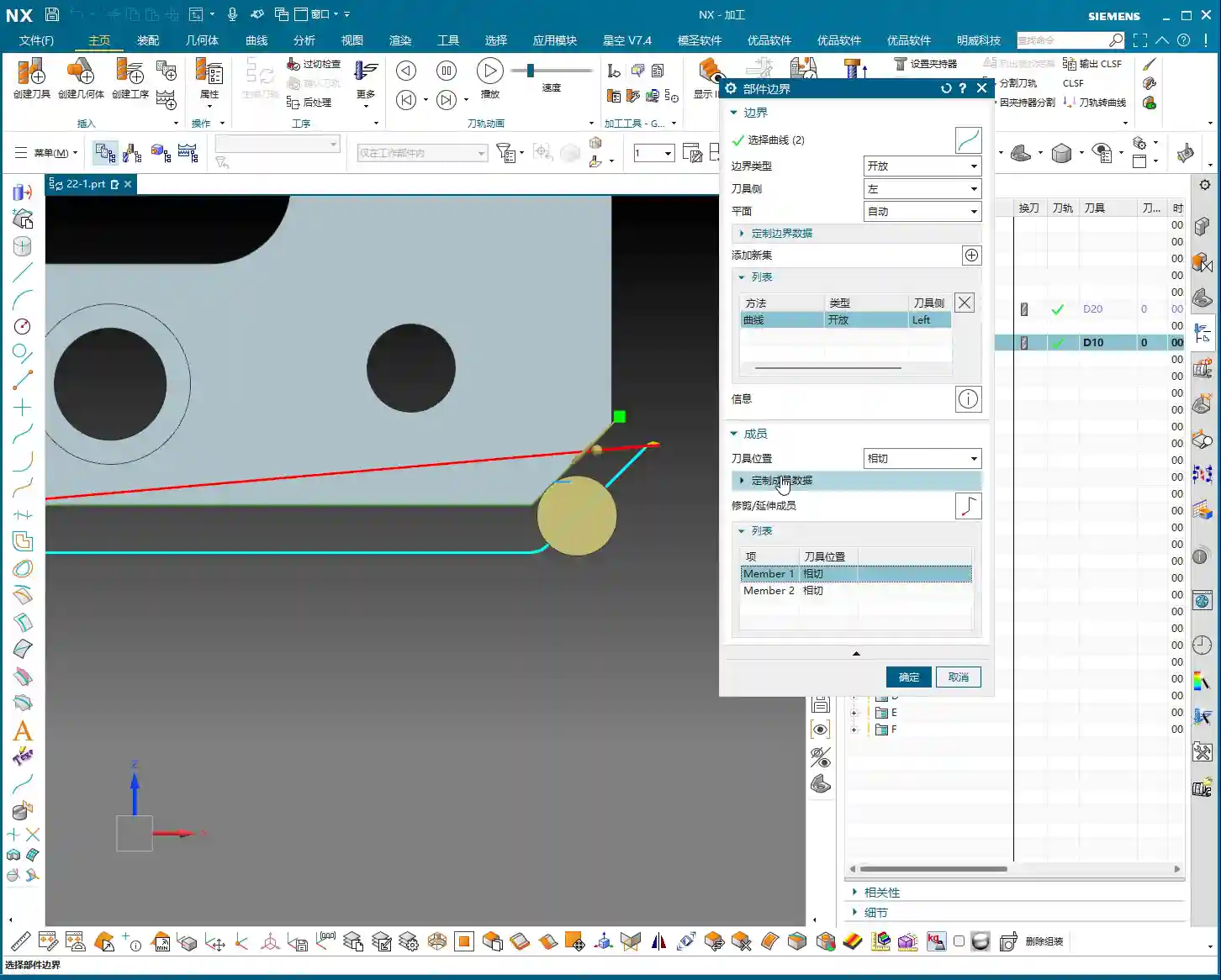
    Next to “Trim and Extend,” you’ll also see a “Tool Position” option, with two important choices: “Tangent” and “Open.”

    • Tangent: This means the tool will cut along your selected boundary curve, either on the outside or inside, while remaining tangent to the curve. This is the most common method, ensuring machining accuracy and surface quality.
    • Open: This essentially means “Trace”, where the tool center will directly follow the curve you’ve selected. It’s typically used for special machining scenarios, such as when you need the tool’s centerline to strictly follow a path, or in certain roughing operations. But be careful! This means the tool will cut directly on your boundary line. If you haven’t left any stock, your part will be scrapped!

    Don’t mix these two up. In real-world machining, especially for finishing passes, “Tangent” is your go-to option.

    Customized Cutting Parameters: Making Every Edge “Obey”

    Beyond extending and trimming, we can also apply individual parameter control to each machining boundary line. This function is a true gem when dealing with complex parts!

    Understanding “Customize Member Data”

    Within the “Part Boundary” function, select the line you want to adjust, then click “Customize Member Data.” Once this option opens, you’ll see the unique parameter settings for that specific line.

    Stock Control: Fine-Tuned to Each Machining Line

    The most important setting here is “Stock.” Normally, the stock we set applies globally to the entire operation. But here, you can set an independent stock value for each individual line. For example, if you have two boundary lines, one needs 10 mm of stock for roughing, and the other only 1 mm for a finishing pass, you can precisely control that here. This is a game-changer when machining asymmetrical or complex parts, or when you need multi-step finishing. Don’t underestimate these few millimeters of stock; they determine the machining difficulty and accuracy for your next operation!

    Tolerance and Feed Rate: The Value of Individual Adjustment

    Besides stock, you also have “Tolerance” and “Cutting Feedrate” here. While in practice we usually only manage stock, understanding these options gives you more tools to handle special situations. For instance, if a specific boundary segment requires higher precision, you can reduce its tolerance; if a segment experiences a heavy cutting load, you can even adjust its feed rate individually to ensure machining safety and extend tool life.

    However, newcomers, you must distinguish that these parameters apply only to the currently selected line, not to the entire operation! Mess this up, and once the program runs, your part is scrapped. It’s simply not worth it.

    Master Wang’s Experience: Boundary Universality in Planar Milling vs. Planar Profile Milling

    Today, we’ve focused primarily on planar profile milling, but I want to add that the logic behind many functions in NX is interconnected.

    Functional Interface Consistency

    If you open the Planar Mill operation and look at its parameters for boundary extension, trimming, and alignment, you’ll find they are almost identical to those in planar profile milling. The functions, methods, and values are all the same. This indicates that when Siemens NX designed these commands, universality was considered, making it convenient for us machinists.

    Distinguishing Application Scenarios

    So, if they’re so similar, why differentiate between planar milling and planar profile milling? It’s simple:

    • Planar Mill: Typically used for roughing or machining flat areas, focusing on efficiency and material removal.
    • Planar Profile Mill: It excels at machining sidewalls and profiles. It can perform a finishing pass (for side walls) or even roughing on sidewalls. It requires more precise boundary control to ensure the final profile shape and surface quality.

    Therefore, although the functions are similar, in practical application, you must choose the appropriate command based on your machining goals and workpiece characteristics. Using the right command gets the job done efficiently; using the wrong one often leads to rework or scrapped parts.

    Summary: A Guide to Avoiding Traps

    1. **Prioritize Internal Program Boundary Control**: Don’t easily modify the original sketch; avoid parametric chaos and “red programs.”
    2. **Arc Tool Entry is King**: Especially for finishing passes and difficult-to-machine materials, arc tool entry effectively protects the tool and improves surface quality.
    3. **Differentiate Between “Tangent” and “Open”**: For finishing passes, choose “Tangent.” Unless you have a specific requirement, do not use “Open” – it will scrap your part!
    4. **Make Good Use of “Customize Member Data”**: Set different stock allowances for different boundary lines to achieve precise machining and enhance process flexibility.
    5. **Understand Universality vs. Specificity**: While many function interfaces are similar, be clear about each command’s actual application scenario; don’t misapply them.

    Alright, that’s all for today. These are the real skills I, Master Wang, have painstakingly developed over fifteen years on the shop floor. I hope you can digest this well and avoid unnecessary detours! See you next time!

    👤 About the Author:
    The author is a veteran CNC machining professional with 15 years of industry experience, specializing in UG NX programming. This article is an original work representing personal practical insights.

    ⚠️ Copyright Notice: Unauthorized reproduction or distribution without prior communication is strictly prohibited.
  • ** Siemens NX Planar Profile Milling: Master Wang’s 15 Years of Practical Experience, Pitfall Avoida

    📝 Key Takeaways:

    👤 About the Author:
    The author is a veteran CNC machining professional with 15 years of industry experience, specializing in UG NX programming. This article is an original work representing personal practical insights.

    ⚠️ Copyright Notice: Unauthorized reproduction or distribution without prior communication is strictly prohibited.

  • In-Depth Analysis of Planar Milling Cutting Parameters in NX: Master Wang’s Hands-on Guide to Tool P

    📝 Key Takeaways: ** Master Wang reveals the secrets of planar milling cutting parameters in NX. An in-depth practical analysis of cutting direction, order, stock, and corner smoothing applications, teaching you how to optimize tool paths, avoid machining blind spots, reduce tool jumps, and boost machining efficiency. Master these techniques to streamline your machining processes! **

    Hello everyone, I’m Master Wang. Today, we’re continuing our discussion on machining within NX, focusing on planar milling cutting parameters. Listen up! Many of the parameters for planar milling are practically identical to what we covered with DBX (Face Milling). So, for those points we’ve discussed repeatedly, I won’t waste any more breath. Let’s get straight to the point and clearly lay out those practical tips that you won’t find in textbooks.

    I. Cutting Strategy: The Soul of Tool Path Planning

    Strategy dictates how your tool moves across the workpiece. Execute it well, and you get high efficiency and long tool life; mess it up, and you risk minor tool crashes or, worse, scrapped parts. So, pay close attention!

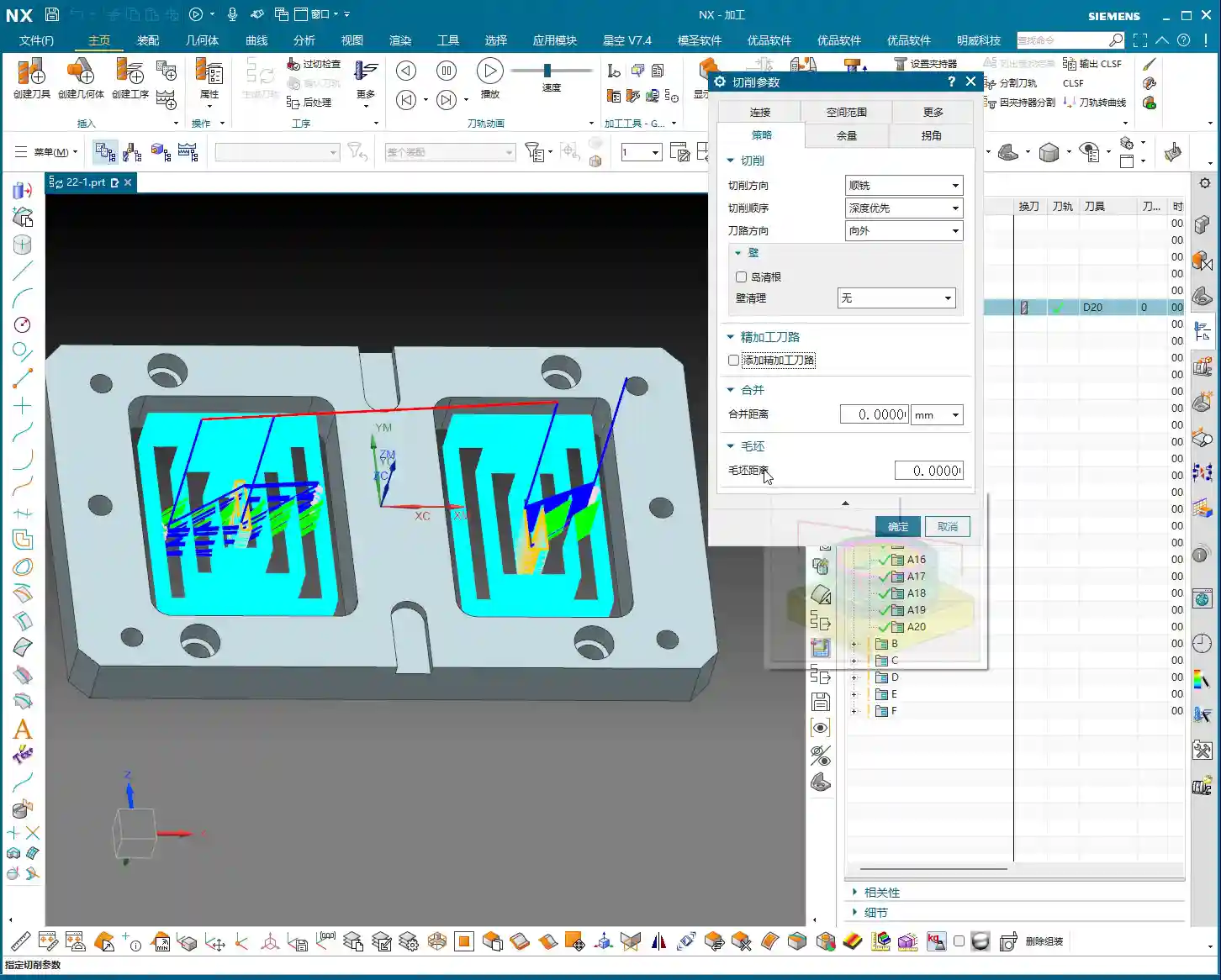
    1. Cutting Direction: The Ins and Outs of Climb vs. Conventional Milling

    There’s not much to say here; you have two choices: climb milling and conventional milling. We’ve covered this extensively with DBX, and it’s the same for planar milling.

    • Climb Milling: The tool’s rotation direction is the same as the feed direction. Cutting starts from the maximum chip thickness and gradually decreases, resulting in a stable cutting process, good chip evacuation, even tool loading, high surface quality, and extended tool life. Typically, we always choose climb milling.
    • Conventional Milling: The tool’s rotation direction is opposite to the feed direction. Cutting starts from zero chip thickness and gradually increases, leading to large fluctuations in cutting force, proneness to chatter, difficult chip evacuation, and poor surface quality. Only in special circumstances, such as uneven hardness on cast surfaces or excessive backlash in the machine tool, would conventional milling be considered.

    2. Cutting Order: The Choice Between Depth Priority and Layer Priority

    Here we have two new concepts: Depth Priority and Layer Priority. Don’t let similar names fool you; their execution is completely different and directly impacts your machining efficiency and surface quality. This option’s influence becomes particularly significant when machining multiple areas and depths.

    • Depth Priority: This area is prone to heavy cutting loads, so listen up!

      This means the tool will complete all machining depths for the currently selected area before moving to the next area and repeating the process. In layman’s terms, it’s like “plowing this entire acre clean, from deep to shallow, before moving on to the next acre.”

      Practical Experience: This approach, when machining structurally independent areas, can reduce frequent depth feed movements and tool lifts, resulting in more concentrated tool paths and sometimes higher efficiency. Especially for mold cavities, completing all depths of one cavity before moving to the next can minimize idle travel. However, if areas are far apart, frequent tool lifts (Z-axis retraction) and cross-area movements might increase non-cutting time.

    • Layer Priority:

      This is the opposite of Depth Priority. The tool will complete a specific depth of cut across all selected areas before stepping down to the next depth and repeating the machining for all areas. In other words, “first, lightly plow all the fields once, then deeply plow all the fields once.”

      Practical Experience: The advantage of Layer Priority is that it ensures relatively uniform cutting forces across the entire workpiece, leading to less deformation. Especially when machining thin-walled parts or easily deformable materials, this method effectively controls stress concentration and prevents part distortion. The drawback is that the tool frequently moves between different areas, potentially increasing idle travel paths.

      Master Wang’s Recommendation: Generally, I prefer to use Depth Priority. It allows the tool to continuously cut within a localized area, reducing wear from frequent axial movements of the machine, and makes it easier to observe the machining status of the current region. However, the specific choice should be flexible, based on workpiece geometry, material properties, and machine tool performance. Don’t just rely on software simulations; observe the cutting sparks and listen to the cutting sound—that’s where the real skill lies!

    3. Tool Path Direction: Inward vs. Outward

    This parameter determines the starting and ending direction of the tool’s cut. The “Inward” and “Outward” options are only available when using the “Follow Boundary” cutting pattern.

    • Outward: The tool starts cutting from the interior of the machining area and gradually moves towards the exterior.

      Practical Experience: Outward machining effectively evacuates chips from the center of the machining area, preventing chip accumulation that could lead to recutting or clogging. Especially in deep cavity machining, it ensures better chip evacuation and surface quality. It’s usually the preferred choice.

    • Inward: The tool starts cutting from the exterior of the machining area and gradually moves towards the interior.

      Practical Experience: This is suitable for scenarios where high precision is required for external contours, or when the external contour needs to be machined first before clearing internal residual material. However, pay attention to chip evacuation, especially in enclosed areas.

    • Follow Boundary vs. Follow Part:

      When you select Follow Boundary, you will have the “Outward” or “Inward” options. If you choose Follow Part, this option disappears. This is because “Follow Part” typically generates tool paths based on the model’s own topological structure, and the directionality is automatically optimized by the software. Remember, when the pattern changes, the parameters will also change, so keep that in mind!

    4. Other Strategies: Inheriting DBX’s Core Principles

    • Early Corner Cleanup: We’ve covered this in DBX; it’s for clearing residual material in corners beforehand to prevent the next tool from air cutting or overcutting.
    • Add Cutting Tool Path: Again, this was also detailed in DBX; it’s used to control how the tool enters and exits the cutting area, ensuring a smooth transition.
    • Merge and Merge Distance: This concept is identical to “Merge Distance” in DBX, except in planar milling, it’s located under “Strategy,” whereas in DBX, it might be under “Containment.” Any parameter named “Merge Distance” refers to consolidating scattered tool paths within a set distance to reduce tool lifts and idle travel, thereby improving efficiency. For example, setting a Merge Distance of 0.5mm (approx. 0.02 inch) means short tool paths within a 0.5mm range might be merged.
    • Blank Distance: If you haven’t specified a blank boundary at the beginning, this parameter typically won’t be used.

    II. Stock Control: The Balancing Act Between Precision and Efficiency

    Stock refers to the material you leave behind for subsequent finishing passes. If this isn’t set correctly, either there’s no material left for finishing, or the cutting amount is excessive. This is critical for the final part’s accuracy, so don’t be sloppy!

    1. Side Wall Stock and Bottom Face Stock

    • Side Wall Stock: As the name implies, this is the stock left on the side walls when the tool is cutting. For example, you might leave 0.2mm (approx. 0.008 inch) during roughing, and then perform a finishing pass.
    • Bottom Face Stock: This is the stock left on the bottom face. Similarly, leave 0.2mm (approx. 0.008 inch) during roughing, and then use an end mill or ball nose end mill for the finishing pass.

    These two stock values are the most commonly used and intuitive. The specific values should be determined based on the material, tool, machine accuracy, and final surface requirements. Experience tells me: Always leave sufficient stock, never too little. If you leave too little during roughing, finishing will be a headache.

    2. Other Stock Parameters and Tolerance

    • Check Stock: Similar to DBX, this specifies the clearance stock to avoid.
    • Trim Stock: Likewise, this is also found in DBX and is used to control tool path trimming.
    • Tolerance: Typically set to 0.05mm (approx. 0.002 inch) or smaller. It determines the precision of the tool path calculation. A smaller tolerance results in a finer tool path but longer calculation times and larger programs. Tolerance can be relaxed for roughing, but must be stringent for finishing.

    III. Corner Treatment: Details Determine Success

    Corners are areas where tools are most prone to wear and workpieces are most likely to encounter issues. Poor handling can lead to rough surfaces at best, or tool chipping and even scrapped parts at worst. Therefore, corner smoothing is an essential skill.

    1. Corner Smoothing: Protecting Tools, Improving Surfaces

    This function is incredibly important! Corner Smoothing involves inserting a small radius or smooth transition when the tool enters or exits sharp corner regions. This prevents the tool from directly cutting into angles of 90 degrees or less, thereby reducing cutting impact.

    • Parameter Settings: You can specify an absolute value (e.g., 0.2mm) (approx. 0.008 inch), or a percentage (e.g., 10% of tool diameter).

      Practical Experience: Don’t underestimate this small radius; it can significantly extend tool life, reduce machine impact and chatter, improve surface quality in corners, and prevent excessively deep cutting lines. Especially when machining hard materials, this setting can be a lifesaver. If there’s residual material in a corner but you don’t want the tool to hit it hard, adding a small radius transition will make the cutting much smoother.

    2. Other Corner Parameters

    • Adjust on Arc: This was also mentioned in DBX and is used to adjust tool paths in arc regions.
    • Corner Count Reduction: This is another DBX concept, used to optimize tool jumps and paths across multiple corners.

    These parameters are all the same as those in DBX. If you’ve forgotten what they mean, go back and review the DBX lesson; it explains them in more detail, as the fundamental principles are interconnected.

    IV. More Options and Containment: Advanced Settings Pointers

    In NX, the “More” section often conceals less frequently used, but critical, settings that can save you in a pinch.

    1. More Options: Safety First, Efficiency is King

    The “More” section typically includes:

    • Safety Distance: The minimum distance the tool maintains from the workpiece during non-cutting moves, to avoid collisions.
    • Tool Holder: Defines the geometry of the tool holder, used for interference checking.
    • Shank: Defines the geometry of the tool shank, also used for interference checking.
    • Tool Library: Used for managing and recalling tool data.
    • Cut Below: Controls whether the tool is allowed to cut into areas below a specified plane.

    We’ve discussed these parameters in detail in DBX, and their concepts are universally applicable. Proper settings ensure machining safety and prevent interference. If you have questions about these, check your DBX notes; you’re sure to find the answers there.

    2. Containment

    Containment for planar milling is relatively straightforward, not as complex as in DBX or the upcoming planar profile milling. Here, options like “Reference Tool” are typically used. In planar milling, we use it less because the machining area is primarily defined by boundaries. When we get to “Planar Profile Milling,” the application of “Containment” will be richer, and we’ll discuss it in detail then.

    V. Connections: The Bridge Between Tool Paths

    The “Connections” parameters control how the tool moves between different cutting regions, or between different tool path segments within the same region. Generally, NX’s default settings work quite well.

    This section is relatively universal, and the software typically optimizes it automatically. We only manually adjust connection parameters in special circumstances, such as needing strict control over lift height, feed rate, or having specific avoidance requirements. For everyday planar milling, you generally won’t need to touch it.

    Summary: Pitfall Avoidance Guide

    1. Parameter Reusability: Listen up! Most cutting parameters for planar milling, especially core functions like strategy, stock, and corners, are highly similar or even identical to DBX (Face Milling). Master one, and you can apply the principles to others, saving you a lot of trouble. So, if you’re unsure about something, first recall how it was explained in DBX.
    2. Depth vs. Layer Priority: Remember, Depth Priority tends to complete all depths in a single area before moving to another, suitable for isolated cavities; Layer Priority tends to complete the current depth across all areas before stepping down, suitable for thin-walled parts to prevent deformation. Incorrect selection will directly impact machining efficiency and part accuracy.
    3. The Value of Corner Smoothing: Don’t be stingy with that small radius! Corner Smoothing significantly reduces tool impact, extends tool life, and improves surface quality in corners. This is a highly practical technique in real-world machining.
    4. NX Display Issues: Sometimes, the NX model display can act up, with parts suddenly disappearing or appearing cut. Don’t panic! Double-click the left mouse button on the screen, or press Ctrl+F, to quickly restore the normal display. This is a common little trick in NX programming.
    5. Boundary Selection is Fundamental: The core of planar milling lies in your chosen boundaries and planes. As long as these boundaries and planes are selected correctly and understood thoroughly, subsequent parameter settings will be much simpler. This is the first and most critical step.
    6. Layout Iron Rule, Formatting Cleanup: Finally, though unrelated to machining, since I’m your master, I must teach you some “hardcore” stuff. From now on, all our technical documents must use HTML format, with titles, colors, and highlights exactly as I’ve instructed. Get these right, and your technical sharing will be more professional and impactful! This is a crucial step to make your products stand out in industrial product online promotion (SEO)!

    👤 About the Author:
    The author is a veteran CNC machining professional with 15 years of industry experience, specializing in UG NX programming. This article is an original work representing personal practical insights.

    ⚠️ Copyright Notice: Unauthorized reproduction or distribution without prior communication is strictly prohibited.
  • Siemens NX Planar Milling in Practice: Master Wang’s In-Depth Analysis of Depth of Cut & Machining S

    📝 Key Takeaways:

    Deep Dive into Planar Milling Core Parameters

    Hello everyone, I’m Master Wang. Today, we’re diving back into the world of Planar Milling…

    Hello everyone, I’m Master Wang. Today, we’re diving back into the world of Planar Milling in Siemens NX, specifically focusing on the main interface and Depth of Cut settings. These are critical parameters that directly impact machining quality and efficiency.

    Siemens NX Planar Milling Fundamentals: Boundary Selection and Machining Depth

    Listen up. For planar milling, the first step is Boundary Selection. You can’t mess this up. Whatever you select, that’s what it will machine. Don’t get distracted by the fancy software interface; the core logic is that simple.

    Key Point: Closed Boundaries and Specify Bottom

    When you’re doing planar milling, remember this ironclad rule: you must select a closed boundary. What does “closed” mean? It means all sides are sealed off, like a complete frame, a solid shape. If you select an open line segment, the software won’t recognize it, and you won’t be able to machine anything. This isn’t a joke; it’s practical experience. Don’t make rookie mistakes here.

    Now, let’s talk about the Specify Bottom parameter. This is a critical setting, as it determines the depth your tool will mill to. For example, if you specify a bottom face, the tool will typically machine down to that surface. However, in real-world operations, you can’t be dogmatic about it.

    Depth Control: Depth of Cut and Stock Adjustment

    Let me ask you, if a part needs to be milled through, do you just specify the bottom face as the very bottom of the part? Young engineers often do this. But the reality is, machines have tolerances, and tools wear down. What looks “just right” in simulation software often ends up being “just short” on the actual workpiece.

    So, here’s a trick I’ll teach you: If the part needs to be milled through (perforated), you typically need to add an offset of 1 to 2 millimeters (approx. 0.04 to 0.08 inch) downwards from the specified bottom face. For instance, if the bottom face is at Z0, you’d input “-1” or “-2”. This ensures a 100% through-cut and avoids rework.

    Conversely, if there’s a fixture or features you don’t want to touch beneath the bottom face, then you cannot over-mill downwards. In such cases, you can add an upward offset (a positive value) to the specified bottom face, such as “0.2” or “-0.2” (depending on your NX version, the sign might be reversed, but the goal is to raise the toolpath). This creates a safety margin, preventing tool collisions or machining unintended areas. Want to see the actual toolpath position? Right-click the toolpath, select “Face Analysis,” and you’ll see the toolpath’s distance relative to the face. This face analysis stuff has been covered in your modeling classes; review it regularly, don’t wait until you’re in a bind.

    Toolpath and Cut Pattern: Practical Choices for Siemens NX Planar Milling

    Tool selection? Nothing much to say here. Just pick one based on your workpiece material and requirements. Use whatever’s in your tool library; if there’s no suitable one, grind a custom tool yourself.

    Tool and Tool Axis: Default Selection for 3-Axis Machining

    Regarding the Tool Axis, for standard 3-axis machining, the default is always the Z-Axis. Don’t blindly change it unless you’re doing 5-axis work. Parameters like “Method” are the same; I’ve covered them many times before. For most situations, keep them at their default settings and don’t worry about them.

    Cut Pattern: The “Roughing” Philosophy of Planar Milling

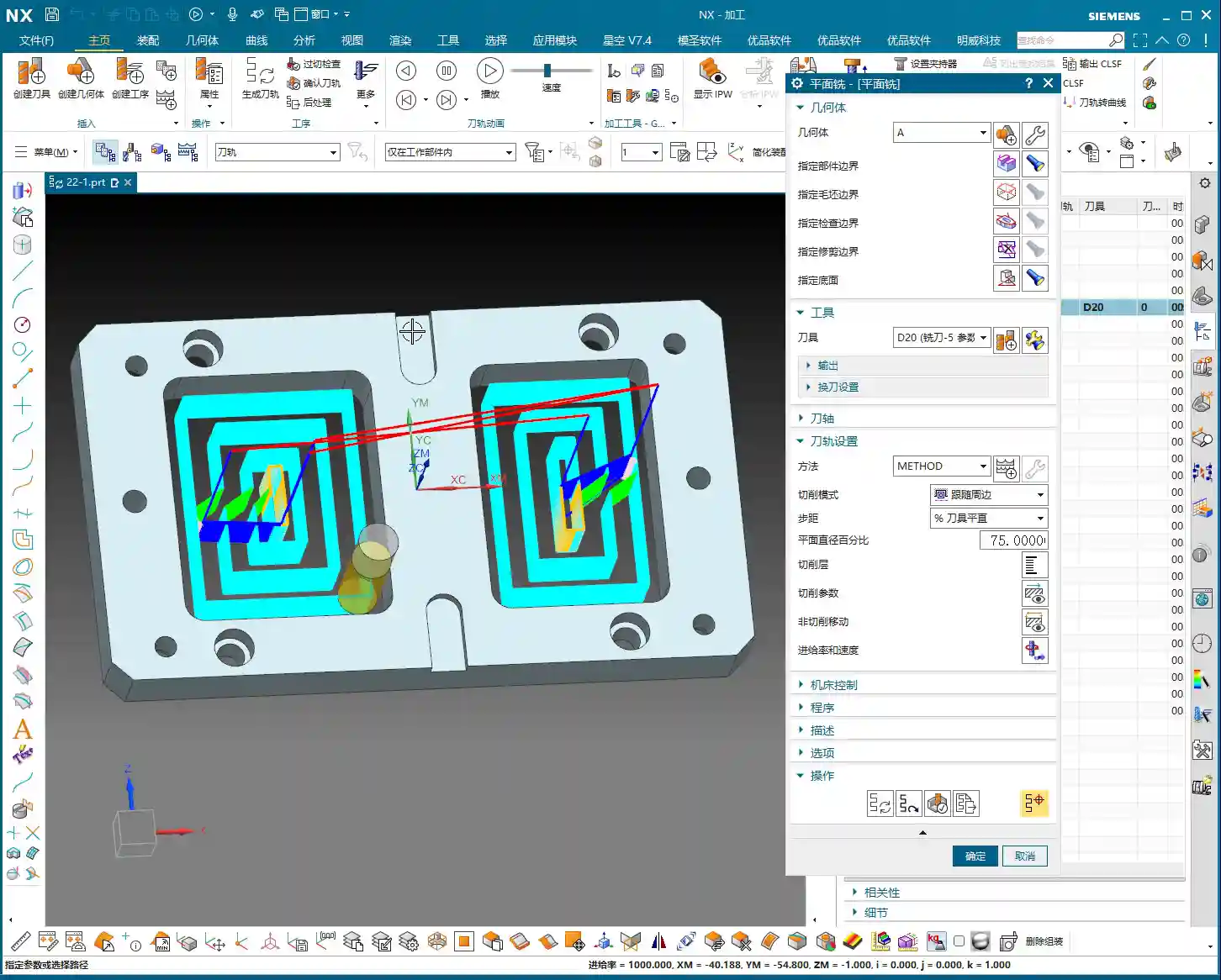
    Now, for the Cut Pattern – this is the core strategy for planar milling. While Siemens NX offers a ton of patterns like “Support Type Machining” or “Standard Drive,” honestly, for planar milling, we primarily use just a few:

    • Follow Periphery: The toolpath follows the part’s outer shape, spiraling inwards or outwards layer by layer. The visual effect and machining trajectory are quite clean, which is why I highly recommend it.
    • Follow Part: Similar to Follow Periphery, but sometimes the path can differ slightly. Actual machining results are also good.
    • Zigzag: The tool cuts back and forth in straight lines. Suitable for fast roughing of large flat surfaces, highly efficient, but prone to leaving tool marks at corners.
    • One-Way: Cuts only in one direction, lifting the tool on the return pass. This ensures even tool loading but involves more retracts, leading to relatively lower efficiency.
    • Profile: Pay special attention to this one. Profile mode only machines boundary lines, meaning the sidewalls, and does not machine the planar area itself. If you select “Profile” in a planar milling operation and find that the flat surface isn’t machined, don’t come asking me why – it’s because you haven’t understood the purpose of different modes.

    Master Wang tells you straight: in Siemens NX planar milling operations, we treat it as a “Roughing” tool. This means its primary purpose is to quickly remove large amounts of material. For this, Follow Periphery and Follow Part are the most reliable and commonly used options. If you want to “finish” the sidewalls (i.e., a finishing pass on the sidewalls), then don’t use the “Profile” mode within planar milling. Soon, we’ll learn about dedicated Planar Profile Milling, which is the professional way to finish sidewalls.

    Stepover: Balancing Efficiency in Lateral Cutting

    The Stepover parameter refers to the distance between the tool’s centerlines during each lateral movement. Siemens NX defaults to 75% of the tool diameter, which is a reasonable value for most situations. Too large, and you risk leaving steps; too small, and you’re just wasting time. You can adjust this flexibly based on the workpiece’s precision requirements, material hardness, and tool strength. However, there’s no absolute percentage for this; you’ll need to rely on experience and test cuts to find the optimal value.

    Core Parameters: Depth of Cut and Strategy

    Depth per Cut: The Trade-off Between Speed and Precision

    Finally, let’s talk about the Depth of Cut (DOC), specifically the Depth per cut. This value determines how much material you remove with each pass. Siemens NX might default to 1 millimeter (approx. 0.04 inch), but this entirely depends on your actual machining requirements and material. For instance, if you change it to 0.1 millimeter (approx. 0.004 inch), the toolpath will be very dense, increasing the number of cuts and improving surface finish, but the machining time will skyrocket. If you change it to 10 millimeters (approx. 0.4 inch), then naturally, each pass will take 10 mm, which is highly efficient, but it places much higher demands on machine rigidity and tool strength.

    This parameter is essentially the same as “Depth per cut” we covered in “Deep Bottom Base (DBB)” operations; the core concept is Depth of Cut (DOC). How much should you set it to? That depends on material properties, machine power, and tool material and strength. For aluminum, you can take deeper cuts. But for materials like titanium alloys or high-temperature nickel-based alloys, dare to take a deep cut? At best, you’ll break the tool; at worst, you’ll scrap the workpiece and have nowhere to vent your frustration. So, in such cases, you must reduce this value.

    To change it, go to the Depth of Cut parameters, find “Common”, and directly input your desired depth.

    In-Depth Analysis: “Finish Bottom” and “Constant” Modes

    Within the Depth of Cut settings, there are two modes you need to understand clearly:

    • Finish Bottom: This mode means “one cut to the bottom”. In other words, regardless of your set Depth per cut, it will make a single pass directly down to your specified bottom face. This is typically used for the final finishing pass or when high bottom surface precision is required with minimal stock remaining.
    • Constant: As the name implies, this mode proceeds layer by layer, following your set Depth per cut until it reaches the specified bottom face. This is the most common roughing mode, as it allows control over each layer’s material removal, ensuring machining stability and tool life.

    Simple enough, right? “Finish Bottom” is a clean single pass to the final depth, while “Constant” is a methodical, layered approach to cutting. Combining these two modes will cover most of your planar milling needs. Don’t overthink it; often, the simpler things are the most practical.

    Summary: Pitfall Guide

    That concludes our discussion on the planar milling main page and Depth of Cut settings for today. Remember these core points:

    • A closed boundary is the lifeline for planar milling; select it incorrectly, and you won’t be able to machine.
    • Specify Bottom must be used flexibly; apply an offset when needed. Especially for through-cuts, add an extra 1-2 millimeters (approx. 0.04-0.08 inch), and if there’s a fixture below, raise the toolpath.
    • Planar milling is primarily for roughing; the preferred cut patterns are “Follow Periphery” or “Follow Part”. For finishing sidewalls, use Planar Profile Milling.
    • Stepover and Depth per cut must be adjusted based on material and machine performance. There’s no absolute value, only the most suitable one. For hard or brittle materials, it’s better to take shallower, more passes to save both the tool and the part.
    • “Finish Bottom” is a single pass to the final depth, while “Constant” is a layered approach; choose according to your needs.

    As for feed rates, spindle speeds, rapid moves, and all that – I’ve lectured on those countless times before. Click into them yourself, and if you don’t understand, just experiment a few more times. With Siemens NX, you’ll only truly master it through practice, exploration, and comparing toolpaths generated by different parameter settings. Don’t just stick to theory; you need to observe the cutting sparks and listen to the cutting sound – that’s where the real skill lies!

    Next class, we’ll compare the cutting parameters across different machining operations to see which ones are common and which are unique, to deepen your understanding. There are no shortcuts here; it’s all about hands-on practice and critical thinking!

    👤 About the Author:
    The author is a veteran CNC machining professional with 15 years of industry experience, specializing in UG NX programming. This article is an original work representing personal practical insights.

    ⚠️ Copyright Notice: Unauthorized reproduction or distribution without prior communication is strictly prohibited.

  • UG Planar Milling “Specify Part Boundaries”: Master Wang Teaches You How to Precisely Define Machini

    📝 Key Takeaways:

    UG Planar Milling “Specify Part Boundaries”: A Practical In-depth Guide

    Introduction: The First Step in Machining, Boundaries Determine Success

    Listen up, everyone! I’m Old Wang, Master Wang. I’ve been grinding in the machining industry for fifteen years, from the shop floor to the programming desk, handling more parts than you’ve eaten rice. Today we’re talking about “Specify Part Boundaries” in Planar Milling. It sounds simple, but it’s the most fundamental and error-prone aspect of Siemens NX programming, especially for planar milling. Don’t underestimate it: incorrect boundary selection can lead to unnecessary air cuts and wasted time, or worse, scrapped parts, and even damaged tooling and machines! This is no joke; it’s real hard-earned money we’re talking about.

    Siemens NX Planar Milling, as the name suggests, generates 2D toolpaths, primarily for machining flat surfaces or steps. Its core principle is to mill downwards, layer by layer, along a boundary you define. So, you absolutely must define this “boundary” clearly.

    Core Function of Siemens NX Planar Milling’s “Specify Part Boundaries”

    What are “Part Boundaries”?

    Simply put, “Part Boundaries” tell the machine and the cutting tool, “You can only work within this area; stop once you cross this line!” It defines the tool’s horizontal machining limits. For any part we machine, we need a specific machining area. How do we define this? By specifying part boundaries. If chosen correctly, the toolpath will precisely follow the part’s contour; if chosen incorrectly, you’re in for trouble.

    Boundary Selection: Faces vs. Curves, Which is Better?

    In Siemens NX, there are typically two methods for specifying part boundaries: selecting “Faces” or selecting “Curves”.

    The Pitfalls of Face Boundaries

    Beginners might find selecting “Faces” convenient; you just click, and the entire face highlights. But I, Master Wang, advise you: try to avoid using “Faces” to specify boundaries, especially for complex parts! Why? Because a face might contain many unnecessary feature lines, or some face edges might not be clean, leading the software to automatically generate a boundary that isn’t what you intended. For example, if you only want to machine the contour of a block, but the face also has some small holes, selecting the face might cause the software to include the boundaries of these holes. The tool could then make unnecessary air cuts, or even worse, machine areas it shouldn’t. In actual production, this means wasted time and reduced efficiency.

    The Advantages of Curve Boundaries

    Selecting “Curves”, on the other hand, is what I, Master Wang, recommend most, and it’s the most commonly used method in production. Even if your part has no solid body, only a wireframe, you can still perform planar milling. The benefits of choosing curves are:

    • Precise Control: You select exactly which boundary line you want; it’s crystal clear and leaves no room for ambiguity.
    • Flexibility: Even if a feature’s face on the part is irregular, as long as the curve is accurate, we can still machine it.
    • Avoid Misoperation: Significantly reduces machining issues caused by incorrect automatic software detection.

    When selecting curves, functions like “Tangent Curves” can be used to quickly select continuous boundary lines, saving time and effort.

    Key Parameter Settings: Inside/Outside, Top Face, and Bottom Face

    Selecting the correct boundaries isn’t enough; there are several core parameters that directly determine whether your toolpath will effectively cut material.

    Tool Inside/Outside: Avoiding the Minefield of Overcutting and Undercutting

    After selecting the boundary lines, you must tell Siemens NX whether the tool should machine on the “Inside” or “Outside” of that line.
    * If your machining goal is to clear material from an internal cavity (e.g., milling a pocket or groove), then the tool must machine on the inside of the boundary line. If you select the outside, the tool will just wander around the exterior, leaving the inside untouched – that’s underrunning (undercutting), a wasted effort!
    * If your machining goal is to mill the external contour of a part, then the tool must machine on the outside of the boundary line. Conversely, if you select the inside, the tool will cut directly into the interior of your part – that’s overcutting, and the part is instantly scrapped!
    Don’t just rely on software simulations; look for the cutting sparks! On an actual machine, selecting the wrong inside/outside can truly be “one cut ruins everything.” This is where the tool is most likely to crash/overload and produce scrap, so you must keep a sharp eye on it.

    Top Face and Bottom Face: Defining Machining Depth and Range

    * Top Face: This defines the highest Z-axis plane where the tool begins machining. You must clearly tell the software at what height the tool should start its cut. If the top face is set too high, the tool will just rapid in the air, wasting time (air cuts); if set too low, it might directly collide with unmachined material, causing a tool crash.
    * Bottom Face: This defines the lowest Z-axis plane where the tool stops machining. It determines your machining depth. If the bottom face is set too shallow, material won’t be machined completely (undercutting); if set too deep, you might mill through the part or hit the fixture, which is another huge problem.

    Together, these precisely define the tool’s machining range in the Z-axis direction. You must specify them; do not rely on the software’s automatic detection, especially for complex or high-precision parts. Manual specification is essential to ensure foolproof operations.

    Considerations for Additional Boundaries: Check and Trim

    Beyond the core part boundaries, top face, and bottom face, Siemens NX also offers more advanced boundary control options.

    Specify Check Boundaries: Practical Techniques for Fixture Avoidance

    This “Specify Check Boundaries” function is similar to the “Check Geometry” we usually use, but here, it can only select lines. What’s its main purpose? It’s used to prevent the tool from colliding with fixtures or areas of the part that you don’t want to touch.
    For instance, if you have a part clamped with a strap clamp and you don’t want the tool to approach it, you can select the clamp’s outline as a check boundary. The tool will automatically avoid this boundary during machining. This is a crucial method for ensuring machining safety, preventing tool crashes, and reducing scrap. Remember, only lines can be selected here; don’t try to click solid faces.

    Specify Trim Boundaries: Controlling the Machining Area

    “Trim Boundaries” are used to further limit the machining area. For example, if you’ve selected a large face as a part boundary but only want to machine a small area on that face, you can use trim boundaries (such as point trimming or rectangular trimming) to confine the toolpath to that small area. This function is extremely useful in certain localized finishing pass or repair machining operations, preventing the tool from taking unnecessary paths and improving efficiency.

    Optimizing the Process: Multi-Area Machining and “Add New Group”

    The Clever Use of “Automatic Detection”

    When specifying the bottom face, you might encounter a problem: you want the tool to mill straight through to the part’s bottom, or to the bottom of a specific feature. In such cases, simply selecting a single face might not be sufficient. I, Master Wang, recommend that when you need to machine to a certain depth, especially for “through-machining,” you try switching “Specify Area” to “Automatic Detection”, and then select your desired bottom face. This allows the software to perform a more intelligent analysis of your selected face, ensuring the toolpath reaches your desired depth and avoids undercutting. It’s a great way to improve efficiency and robustness, saving you unnecessary detours.

    “Add New Group”: Key to Boosting Efficiency

    Sometimes, a part has multiple distinct areas that require planar milling, and these might not be on the same level or could have varying shapes. Are you going to create a new operation for each individual area? That would be incredibly inefficient!
    Siemens NX has a very practical function called “Add New Group.” You’ll find this button in the “Specify Part Boundaries” interface. Its purpose is to allow you to define multiple independent machining boundaries, top faces, and bottom faces within a single operation.
    For example, if a part has two separate grooves that need milling, you can define the boundaries, top face, and bottom face for the first groove in the first group; then click “Add New Group” and define the parameters for the second groove. This way, a single operation can generate toolpaths covering multiple areas, significantly reducing programming time and making subsequent program management much cleaner. This is one of the “secret weapons” for boosting efficiency in practical applications.

    Planar Milling Characteristics: It Only Recognizes Lines, Not Overcutting!

    Finally, I, Master Wang, must emphasize another point—a practical experience rarely taught in textbooks: the planar milling operation is very “rigid.” It only recognizes the boundary lines you specify; even if you’ve selected “allow overcutting,” it will not actively machine beyond that line. It won’t extend the toolpath to achieve a final shape like some other strategies. Therefore, if you want to cut slightly outside the boundary line, you’ll need to manually offset that boundary line outward a small amount. This point is crucial; many beginners stumble here, getting incorrect part dimensions and blaming the software. The software isn’t the problem; you just haven’t fully understood its “temperament”!

    Summary: A Guide to Avoiding Pitfalls

    Everything we’ve discussed today is a summary of my (Master Wang’s) years of experience; every word is solid gold. Remember these points to save yourself a lot of unnecessary hassle:

    1. Prioritize selecting “Curves” as part boundaries. This provides precision and control, avoiding interference from unnecessary features.
    2. Be extremely cautious when selecting inside/outside. This is a critical step that determines the fate of your part; selecting incorrectly leads directly to scrap.
    3. Top and bottom faces must be specified. Strictly control the Z-axis machining range to prevent air cuts, overcutting, and undercutting.
    4. “Specify Check Boundaries” only recognizes lines. Use it for fixture avoidance and to ensure machining safety.
    5. Make good use of “Automatic Detection” to define bottom faces. It’s more reliable, especially for through-machining.
    6. Master the “Add New Group” function. This enables one-time programming for multiple areas, boosting efficiency and reducing setup.
    7. Understand planar milling’s characteristic of “only recognizing lines.” If you need to machine beyond the boundary, manually offset the curve.

    Once you’ve mastered these points, you’ll truly be able to leverage Siemens NX’s planar milling, creating high-quality, high-efficiency toolpaths and producing parts that satisfy customers. This isn’t just about technical skill; it’s the foundation for our products to succeed in the market!

    👤 About the Author:
    The author is a veteran CNC machining professional with 15 years of industry experience, specializing in UG NX programming. This article is an original work representing personal practical insights.

    ⚠️ Copyright Notice: Unauthorized reproduction or distribution without prior communication is strictly prohibited.
  • Master Wang’s Expert Guide to NX Floor-Wall Milling: Roughing Through-Holes with No Bottom Face by U

    📝 Key Takeaways:

    NX Floor-Wall Milling: Practical Roughing of Through-Holes with “No Bottom Face”

    Hello everyone, I’m Master Wang. Today, we’re going…

    Hello everyone, I’m Master Wang. Today, we’re going to discuss the NX Floor-Wall Milling function, especially how to cleverly handle through-holes that have “no bottom face.” This is practical experience you won’t find in textbooks, so pay close attention—there’s a lesson in every detail!

    Preparation is Key: Program Post-processing

    For us in manufacturing, once a program is created, the first step is to generate the NC code. Don’t underestimate post-processing; there are many intricacies involved.

    Efficiency Secret: Batch Post-processing

    In Siemens NX, you can select a single operation and directly click the A04 Post-process button. However, if you have many operations, post-processing them one by one is too slow. Listen up: you can select all operations (or select the folder containing them), then directly click “Batch Post-process” in the post-processing menu. This generates NC code for all operations at once, saving time and effort—it’s a neat trick for boosting efficiency. As for the file format, whether it’s NC or MDF (e.g., for Siemens controllers), that depends on your machine and company standards; just make sure to select the correct one.

    Traditional Solution for “No Bottom Face” Through-Holes: Modeling to Create a Virtual Face

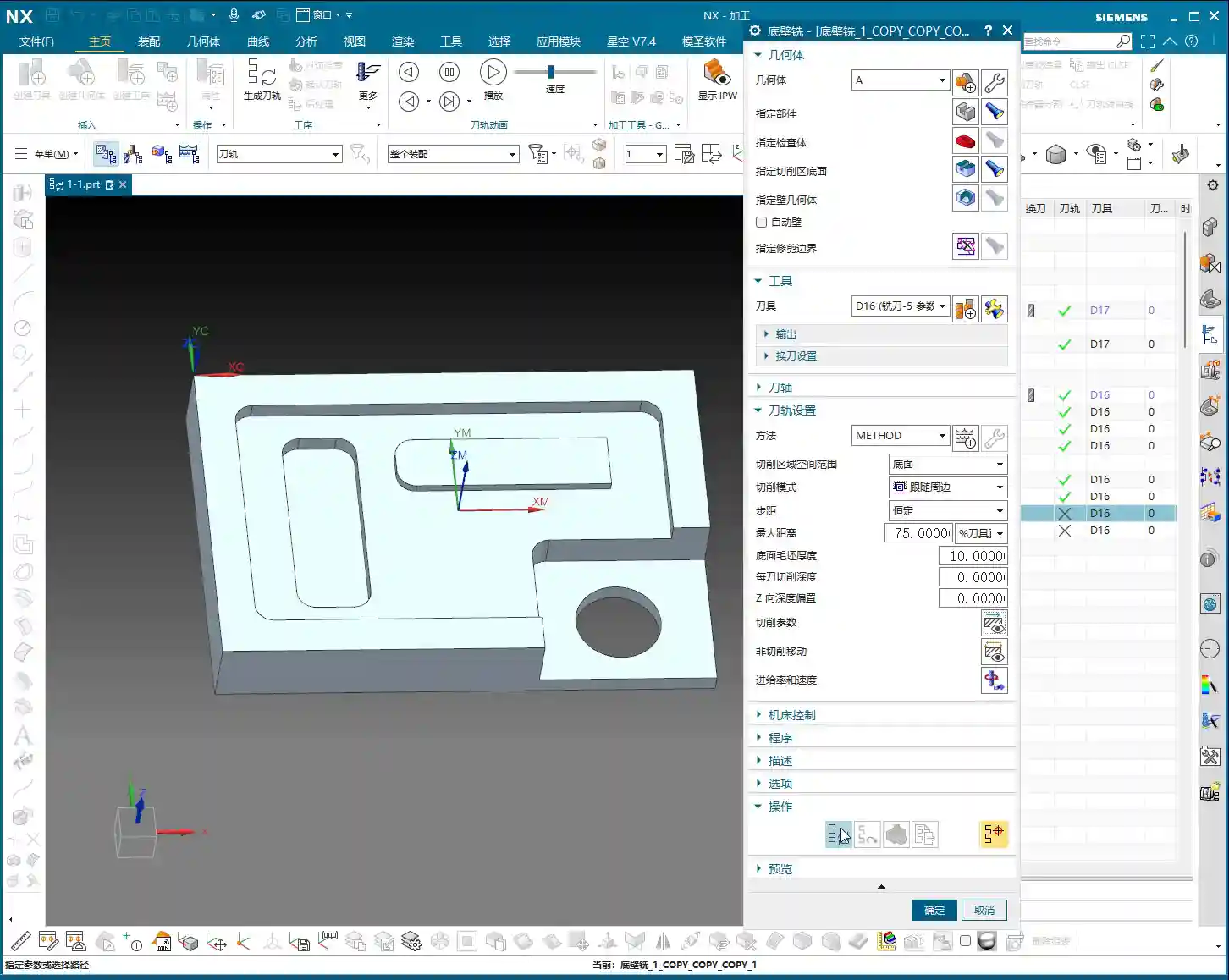
    Alright, back to today’s main topic. Floor-Wall Milling, as the name suggests, requires a bottom face. However, in real-world machining, you often encounter through-holes that are just smooth cavities—where’s the bottom face for you to select?

    Creating a Bounded Plane: A Virtual Bottom Face

    The most straightforward method is to “trick” the software by creating a bottom face for it. In the Modeling module, find the “Bounded Plane” function. By selecting the edge curves of the through-hole, you can generate a temporary sheet body, which we’ll use as our “bottom face.” Once this temporary bottom face is created, your machining operation will have a reference.

    Floor-Wall Milling Operation Settings: Pay Attention to the Filter

    After creating this virtual bottom face, we can proceed to create a Floor-Wall Milling operation as usual. When selecting the machining area, pay attention to one detail: the filter for “Specify Part” might default to “Sheet Body.” If you’re selecting a solid body, it won’t be recognized. In this case, you need to change it to “No Selection”, then select your entire part for machining. Don’t forget this detail, or the software will throw an error.

    Then, for specifying the bottom face of the cut area, select the Bounded Plane we just created. For the remaining parameters, such as the Depth of Cut (DOC), when roughing, I generally prefer to set it a bit larger (e.g., 1 mm). This increases machining efficiency; don’t just think about tool life, but also overall cost and lead time.

    The “Red Face” Warning for Geometry Changes: Don’t Mess with References

    Listen up: In NX, if your operation suddenly turns red, it usually means your original geometry or referenced objects have been modified or deleted. For instance, if you add a fillet to the part in Modeling, or delete a sheet body referenced by the operation, the machining operation will immediately show a “red face.”

    A “red face” means the operation is invalid and requires re-specifying the geometry or re-generating the toolpath. Therefore, once a machining operation is created, try not to modify or delete the original modeling geometry, especially any areas referenced by the operation. If you absolutely must make changes, be prepared to update the operation accordingly.

    When a Bottom Face Truly Doesn’t Exist: Roughing by Specifying “Walls”

    So, what if I don’t want to create a Bounded Plane in Modeling, or I simply want to rough directly using “walls”? Of course, there’s a way! However, personally, Master Wang doesn’t use this method very often.

    Master Wang’s Practical Choice: Planar Milling is More Efficient

    When I do machining, I prioritize efficiency and stability. For roughing such through-holes, if there’s truly no bottom face to reference, I generally opt for “Planar Milling”. It provides more direct toolpaths for planar contours and through-holes, and its parameter settings align better with my workflow. I typically use Floor-Wall Milling for situations where there’s a bottom face and side walls need finishing. However, since we’re discussing it today, I’ll explain clearly how to select these “walls.”

    Practical Demonstration of “Specify Wall”: Appears Similar, but There’s a Difference

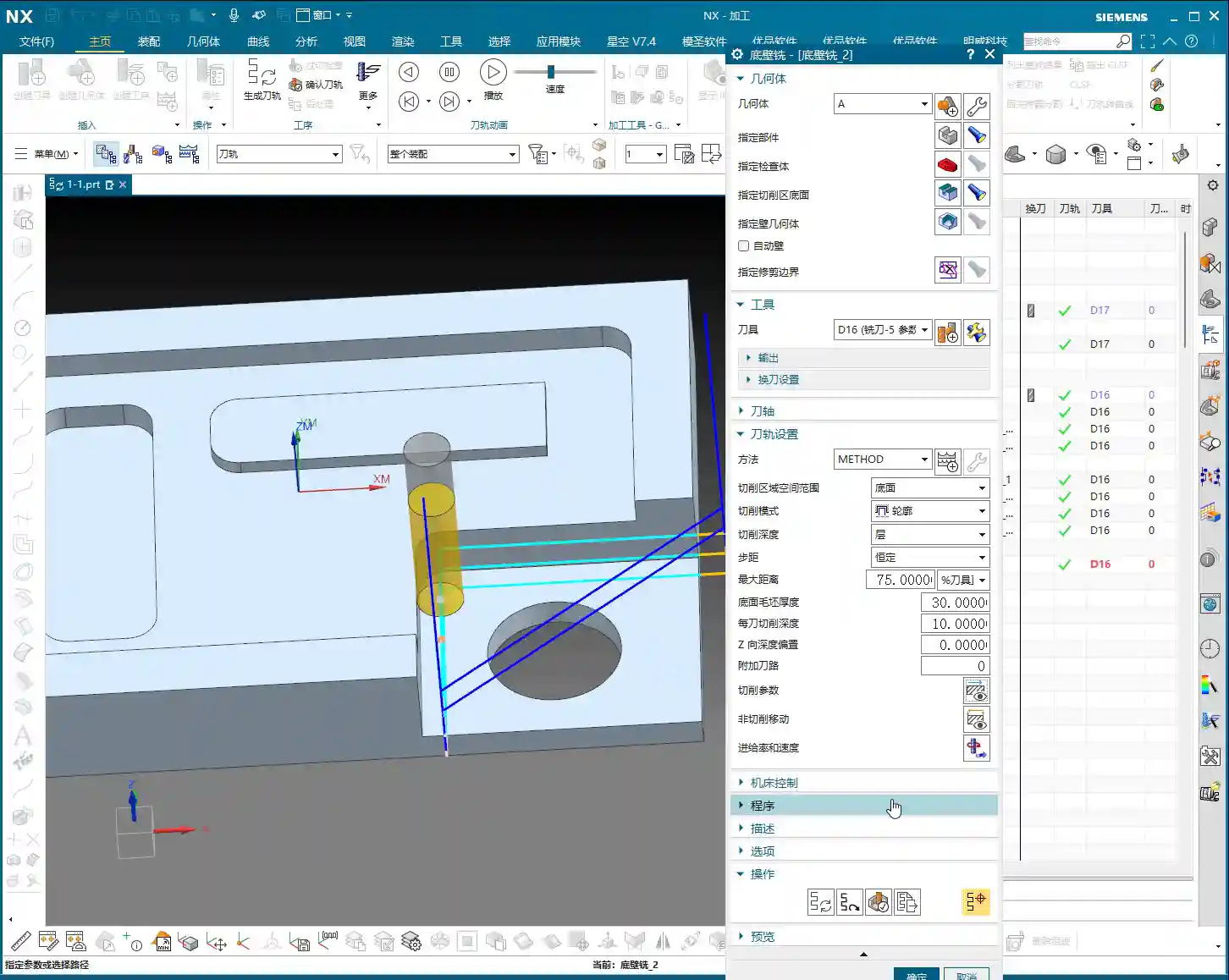
    When creating a Floor-Wall Milling operation, if you cannot specify a bottom face, you can select “Specify Wall” instead. At this point, you’ll need to select the inner wall faces of the through-hole. Then, generate the toolpath, and you’ll notice it looks identical to the toolpath generated when specifying a bottom face. It also cuts layer by layer according to the defined Depth of Cut (DOC) (e.g., 1 mm per pass for a total depth of 10 mm).

    Pitfall: Stock Allowance Setting Trap

    However, there’s a crucial pitfall here, pay close attention! When you choose “Specify Wall” for machining, the default “Part Stock” is ineffective! Any stock allowance you set there will not be recognized by the operation. Where is the actually effective stock allowance? It’s hidden under the “Walls” option, specifically in “Wall Stock”!

    If you use “Specify Wall” for roughing and want to leave stock on the side walls, you must set it in “Wall Stock.” This differs from our usual habit of setting a unified stock allowance in “Part Stock.” Many users stumble here, resulting in the operation finishing the side walls with no stock left—milling straight to the final dimension! That’s why I don’t use this method often; it’s too prone to errors, requiring constant vigilance.

    The “Z-Depth Offset” Secret for Depth Control

    Additionally, among the cutting parameters for Floor-Wall Milling, there’s a parameter called “Z-Depth Offset.” This parameter is particularly useful in certain specific situations.

    Its purpose is to allow the tool to cut a bit more or a bit less in the Z-direction. For example, if you want to machine a hole completely through, but the model’s Z-depth is exact, you can input a positive value here, such as “1”, and the tool will cut an extra 1 mm deeper, ensuring the hole breaks through completely. Conversely, inputting a negative value will result in less material being cut. This function is simple and practical, helping you solve many minor depth control issues.

    Summary of Floor-Wall Milling Functions and Cross-Operation Parameter Reuse

    Overall, the Floor-Wall Milling operation is very powerful and capable of many tasks:

    • Surface Finishing: Performing a finishing pass on plane surfaces.
    • Roughing: Typically by selecting a bottom face and using a “Level Periphery” cutting pattern for rough machining.
    • Bottom Face Finishing: Performing a finishing pass on the bottom plane.
    • Side Wall Finishing: Performing a finishing pass on side walls, with the option to leave individual stock allowances.

    While “Specify Wall” for roughing is an option, considering stability and error prevention, Master Wang personally rarely uses it for roughing. I more highly recommend creating a Bounded Plane in Modeling, or directly switching to a “Planar Milling” operation to handle through-holes without a bottom face.

    After discussing Floor-Wall Milling for so long, you’ll find that many parameters in NX machining operations are interconnected. For instance, “Cutting Pattern,” “Stepover,” “Cutting Parameters,” and “Non-Cutting Moves,” among others. Their names, functions, and locations are largely similar. Therefore, by mastering one operation, you can quickly get the hang of many others—this is the principle of “understanding one, understanding all.” In future discussions about other operations, I won’t dwell on these repetitive parameters; you can apply what you’ve learned and understand them by analogy.

    Summary: Pitfall Avoidance Guide

    • Batch Post-processing: When you have many operations, make good use of the batch function to generate all NC code at once, boosting efficiency.
    • Specify Part Filter: When selecting a part for machining, if it’s not recognized, check if the filter is set to “No Selection.”
    • Protecting Original Geometry: Once machining operations are created, try not to modify or delete the original modeling geometry referenced by the operations, otherwise, the operations will turn “red” and become invalid.
    • “Specify Wall” Stock Allowance Trap: When using Floor-Wall Milling and selecting “Walls” for machining, remember that “Part Stock” is ineffective! All side wall stock allowance must be set in “Wall Stock.” This is the most common place for errors, so be extremely careful.
    • Preferred Method for Through-Holes: For roughing through-holes without a bottom face, Master Wang personally recommends creating a “Bounded Plane” in Modeling as a virtual bottom face, or directly using a “Planar Milling” operation, to ensure stability and efficiency.
    • Z-Depth Offset: When fine-tuning machining depth, make judicious use of the “Z-Depth Offset” parameter, especially when machining through-holes.

    Alright, that concludes today’s practical experience sharing. In NX programming, attention to detail determines success or failure. These “textbook-untaught” tips require practice and thoughtful application to truly become your own hard-earned skills! See you next time!

    “`

    👤 About the Author:
    The author is a veteran CNC machining professional with 15 years of industry experience, specializing in UG NX programming. This article is an original work representing personal practical insights.

    ⚠️ Copyright Notice: Unauthorized reproduction or distribution without prior communication is strictly prohibited.

  • Siemens NX CNC Programming in Practice: Master Wang Guides You Step-by-Step Through Finishing Pass f

    📝 Key Takeaways: Master Wang provides an in-depth practical guide to Siemens NX Finishing Pass for bottom faces and sidewalls. He emphasizes setting stock allowance to zero for bottom face finishing and teaches how to resolve issues with high Z-approach in enclosed areas. For sidewall finishing, the “Contour” cutting pattern is key, with detailed instructions on optimizing lead-in/lead-out moves for smooth arc engagement, and practical settings for extension and overlap distances. Finally, he shares how to inspect machining quality by observing cutting “footprints” to ensure high-precision requirements are met.

    Hello everyone, I’m Master Wang. Last time, we discussed roughing operations. Now that the roughing programs are done and the parts are almost ready, today we’ll continue by explaining how to bring these rough parts to a precise finish, especially the finishing pass for bottom faces and sidewalls. This is where your true skill is tested; even a small mistake can lead to big problems. So listen up!

    Finishing Pass for Bottom Faces: One Pass, Zero Stock

    For bottom face finishing, our goal is a flat, smooth, and dimensionally accurate surface. Don’t expect to achieve perfection in one go; you need to start by tweaking your existing roughing programs.

    Quick Optimization by Copying Roughing Programs

    The easiest way is to simply copy your previously created roughing program. Once copied, we’ll modify the parameters.

    • Step One: Zero out bottom face stock allowance. During roughing, you definitely left stock on the bottom face, say 0.2mm. For the finishing pass, you must change “Part Stock” or “Bottom Stock” directly to 0. This ensures the tool cuts precisely to your defined bottom face, making it a single, accurate pass with no remaining stock.
    • Step Two: Sidewall stock allowance. If you plan to finish the bottom face and sidewalls separately, when finishing the bottom face, you can leave a slightly larger sidewall stock allowance, for example, 0.3mm. This prevents the tool from grazing the sidewalls during the bottom face finishing pass, avoiding secondary tool marks. If the pocket is shallow, you can finish both the bottom and sidewalls together, setting all allowances to 0. But for now, we’ll discuss them separately, so follow my lead.
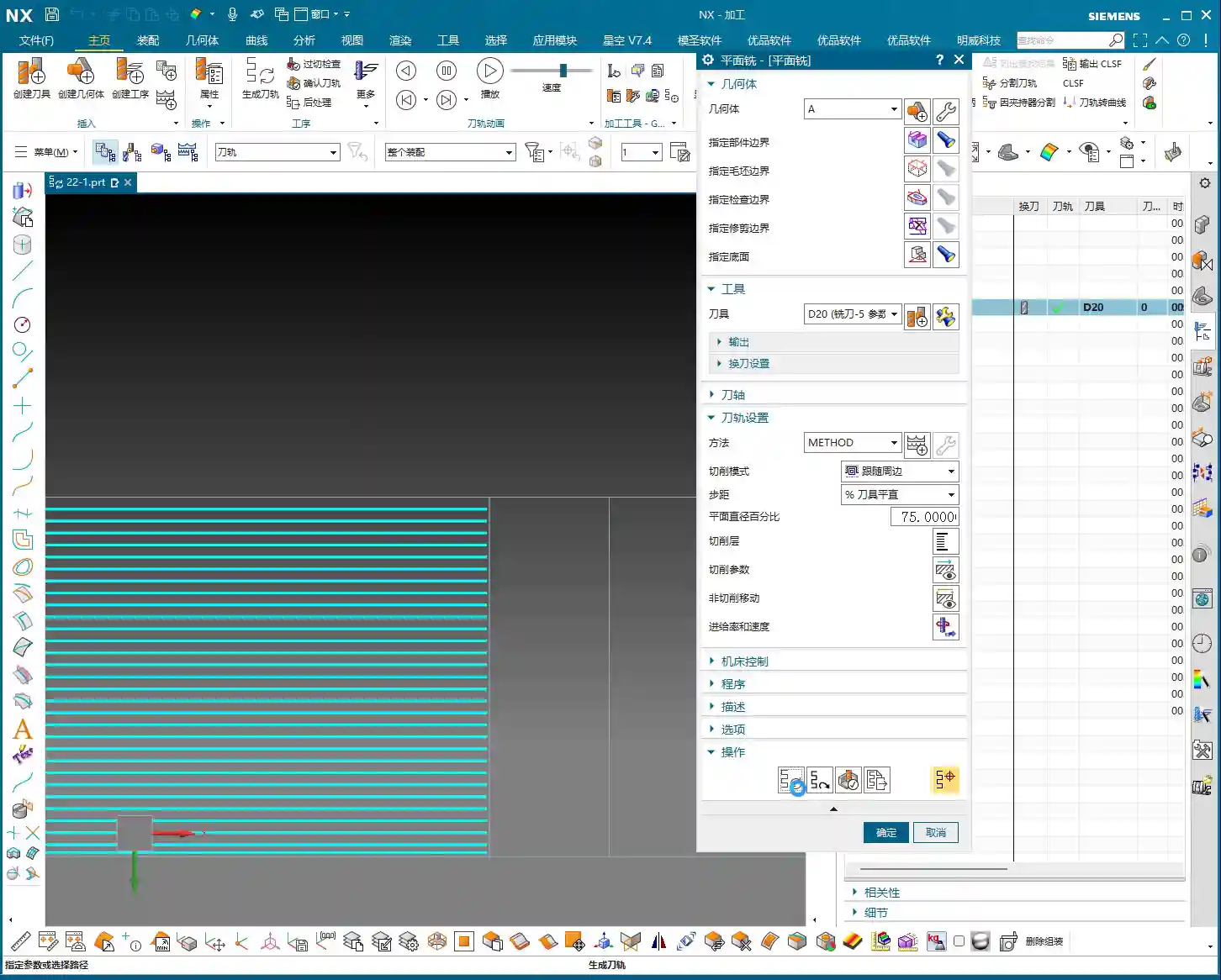
    Solving High Z-Approach in Enclosed Areas

    This is a common mistake newcomers make, and it’s not always thoroughly explained in textbooks. You might notice that in some enclosed cavities, the tool starts its entry from a high position, plunging vertically, sometimes even dropping from over ten millimeters – it sounds painful and can easily chip the tool!

    • Root Cause: This happens because the “Part Stock” (sometimes called “Safety Height” or “Initial Cut Depth”) you set during roughing was too large. For example, if you set it to 10mm for roughing, the finishing pass will default to starting its cut from that same high position.
    • Master Wang’s Tip: Listen up. In your finishing program, locate the parameter that controls the tool’s starting Z-height for engagement. This is typically “Part Stock” or a similar setting like “Safe Entry Height”. Reduce it significantly, for example, to 1mm. This way, the tool will approach the workpiece surface much closer before engaging, which is safer, more efficient, and eliminates unnecessary air cutting time.
    • Exception for Open Areas: If it’s an open area where the tool enters from outside the part, this issue of high Z-approach is irrelevant, as the tool won’t be plunging from above in the same way.

    Finishing Pass for Sidewalls: Contour Cutting is Key

    With the bottom face taken care of, let’s move on to the sidewalls. Finishing sidewalls requires much more finesse than bottom faces, especially regarding smoothness and tool mark control.

    New Program: Finishing Sidewalls from Scratch

    While I, Master Wang, typically copy and modify programs, to ensure you fully understand, we’ll create a new sidewall finishing program from scratch. Select the “Planar Mill” operation type, and continue using our D16 end mill.

    • Select Machining Face: For instance, if we’re finishing this sidewall, select the bottom face it originates from – essentially, the “root” of the sidewall.
    • Problem Alert: If you generate the tool path directly, you’ll notice it’s still finishing the bottom face! Why? Because “Planar Mill” defaults to machining bottom faces.

    Core Setting: Switch Cutting Pattern to “Contour”

    Listen up, this is the most critical step for finishing sidewalls!

    • Key Operation: In your program parameters, find the “Cutting Pattern” option. Decisively switch it to “Contour” from the default “Follow Part,” “Zigzag,” or other options.
    • Explanation of Function: Once you switch to “Contour” mode, Siemens NX will intelligently identify all sidewalls perpendicular to your selected bottom face and machine along their profiles.
    • Zero Stock Allowance: Similarly, for sidewall finishing, set all stock allowances (including bottom and sidewall stock) to 0. We want that crisp, clean finish!

    Optimizing Lead-in/Lead-out: Ditch Angled Plunge, Embrace Smooth Arc Engagement

    Even after setting the “Contour” mode, you might find the tool engaging at an angle. While it can still cut, this isn’t very efficient and tends to leave marks at the entry point, affecting surface finish.

    • Step One: Address the “angled plunge” phenomenon.

      • The Pain Point: The tool plunges into the material at an angle instead of vertically descending to the cutting plane and then linearly engaging. This is especially noticeable in enclosed areas.
      • Master Wang’s Tip: Go to the “Non-Cutting Moves” settings. There’s a parameter related to the entry method, often called “First Point of Yellow Line” (or “Engage Method”). Typically, it defaults to calculating for “Enclosed Areas.” You need to change it to “Same as Open Area”. This way, the tool will first descend to the cutting plane and then linearly engage, which is much safer.

    • Step Two: Ensure smoother engagement and eliminate tool marks.

      • The Pain Point: Even after fixing the angled plunge, a straight-line entry after vertical descent can still cause impact, leading to subtle tool marks.
      • Master Wang’s Tip: In the “Engage Type” setting, change “Linear” to “Arc”. Then set an appropriate arc radius, for example, 3mm. This allows the tool to smoothly engage the workpiece along an arc trajectory, minimizing impact and naturally improving surface finish.
      • Arc Extension (“Arc End Extension”): When using arc engagement, there’s also an “Arc End Extension” parameter. You can think of this as the extended length of the arc during lead-in or lead-out. For example, if you set it to 10mm, the tool will travel an additional 10mm along the arc before entering or after exiting the cut. What’s its purpose? It ensures the tool fully enters the cut or completely exits the material, preventing tool marks or incomplete machining in critical areas. There’s no fixed value; just observe the machining effect and adjust as you see fit.
      • Overlap Distance: The “Overlap Distance” is also very useful. For example, if you set it to 5mm, the tool path will extend by 5mm at connections or where the path loops back on itself, creating an overlap region. This effectively eliminates tiny unmachined areas and ensures overall machining consistency. Of course, not overlapping is also fine; it depends on your actual working conditions and precision requirements.

    Master Teaches You: Finishing Complex Part Sidewalls in One Go

    You might be thinking, if a part has many sidewalls, do I have to select them one by one? That would be exhausting! Master Wang tells you, there’s no need for such hassle.

    One Trick for Many Uses: The Ingenious Application of Planar Mill with Contour Cutting

    Our previously created sidewall finishing program already has the “Contour” cutting pattern and optimized lead-in/lead-out methods set up. Now, if you need to finish a sidewall with a more complex structure, such as one with grooves or multiple edges, how do you do it?

    • Quick Copy: Simply copy your previously optimized sidewall finishing program.
    • Select New Bottom Face: Then, you just need to select the bottom face corresponding to the new sidewall. For example, for the sidewalls of a square boss, you’d select the top face of that boss as the machining bottom face.
    • Intelligent Recognition: A miracle happens! Because you selected the “Contour” cutting pattern, Siemens NX will automatically identify all sidewalls around this bottom face and generate tool paths for finishing them. One bottom face, and all surrounding sidewalls are taken care of – saving time and effort!

    Acceptance Criteria: How to Determine if a Part is “Finished Correctly”

    No matter how well your program is written, the final result depends on the machining effect. How do you determine if the bottom faces and sidewalls are truly “finished correctly”?

    Visual Verification: Look at the Simulation, But More Importantly, the Cutting “Footprints”

    Don’t just stare at the software simulation; that’s just theory. Us old masters have our own trick: observing the tool path simulation’s “footprints.”

    • For Bottom Faces: In the Siemens NX tool path simulation, slow down the simulation speed and carefully observe the marks left by the tool as it passes over the bottom face. If you see a layer of uniform, subtle “overlap footprints” on the bottom surface, it indicates that the tool has thoroughly machined the bottom face. The more uniform these “footprints,” the better the surface finish.
    • For Sidewalls: Using the same method, drag the tool path and look for those tiny tool marks or overlapping trajectories. If these marks are clear and continuous, it means the sidewall finishing pass has also covered the entire area. If you find any areas without “footprints,” or if the “footprints” are not continuous, you’ll need to go back and check your parameters – perhaps the stock wasn’t removed completely, or the tool path didn’t fully cover the area.

    That concludes our lesson for today. Next time, we’ll discuss how to handle hole machining. Remember, practice makes perfect; keep practicing and keep thinking!

    Summary: Pitfall Avoidance Guide

    1. Zero stock allowance is an ironclad rule: For finishing any surface, the corresponding machining stock allowance must be set to 0, or all your efforts will be in vain.
    2. Exercise caution with Z-approach in enclosed areas: Don’t let the tool plunge directly from a high position. Be sure to adjust “Part Stock” or “Safe Entry Height” to around 1mm to reduce impact.
    3. For sidewall finishing, “Contour” cutting pattern is mandatory: This is the core of Siemens NX’s “Planar Mill” for finishing sidewalls; get this wrong, and you won’t be finishing the sidewalls.
    4. Optimize lead-in/lead-out; smoothness is paramount: Set “First Point of Yellow Line” to “Same as Open Area,” select “Arc” for the engage type, and reasonably set the arc radius and extension to eliminate tool marks and ensure surface quality.
    5. Set overlap distance appropriately: Especially in critical, high-requirement sidewall areas, proper overlap can prevent missed cuts and improve overall surface finish.
    6. Learn to “read the footprints”: Don’t just rely on the simulation; learn to judge if the actual machining is complete by observing the subtle marks in the simulation. This is a true skill taught by experienced masters!

    “`

    👤 About the Author:
    The author is a veteran CNC machining professional with 15 years of industry experience, specializing in UG NX programming. This article is an original work representing personal practical insights.

    ⚠️ Copyright Notice: Unauthorized reproduction or distribution without prior communication is strictly prohibited.